“There are some things in this world that are not meant to be known.”
— Joshua's father often says this, hinting at the dangerous nature of his scientific work.

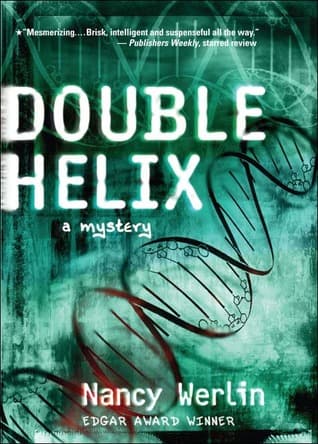
Nancy Werlin (2004)
Genre
Thriller / Mystery / Science Fiction
Reading Time
250 min
Key Themes
See below
Sign in to track this book
Eli's summer job with a geneticist uncovers the terrifying truth of his own existence, forcing him to question if he's a son or a scientific experiment.
Eighteen-year-old Eli Samuels is dealing with his mother's recent death from Huntington's disease, a genetic disorder. His father, a smart but distant man, pushes Eli to take a summer job at the Gathos Institute, working for Dr. Quincy, a Nobel Prize-winning geneticist. Eli, feeling a deep loss and growing anger towards his father's lack of emotion, reluctantly agrees. He is assigned to catalog old research papers and clean labs, a seemingly boring task. As he starts his work, Eli becomes interested in the institute's mysteries and the puzzling Dr. Quincy, whose work often crosses ethical lines in the pursuit of science.
While cleaning Dr. Quincy's old lab, Eli finds unsettling things. He finds strange, coded messages in the margins of research papers and a hidden room behind a bookshelf. Inside, he discovers old files, photographs, and scientific equipment that seem out of place. Among these items, Eli finds a photograph of a young woman who looks exactly like his mother. This discovery deeply troubles him, raising questions about his mother's past and his father's connection to Dr. Quincy, a connection his father has always played down.
Eli meets Vivian, Dr. Quincy's daughter, a smart and independent young woman who also works at the institute. Vivian is cautious about her father's intense scientific interests and understands Eli's curiosity. They quickly bond, sharing their suspicions about Dr. Quincy and the institute's hidden goals. Together, they start to put together clues from the hidden room and old documents, trying to understand the link between Eli's mother, Dr. Quincy, and the strange research being done. Their investigation leads them to believe that something more sinister than standard genetic research is happening.
Through their investigation, Eli and Vivian uncover a shocking truth: Eli was born a twin. His brother, Ben, died shortly after birth. This news deeply affects Eli, making him question his own identity and the circumstances of Ben's death. He confronts his father, who, under pressure, confirms Ben's existence but gives vague answers about his death and why it was kept secret. Eli's grief for his mother is now combined with the loss of a brother he never knew, and a growing feeling of betrayal by his father.
As Eli and Vivian continue to investigate, they find more evidence pointing to a groundbreaking, but ethically questionable, genetic experiment. They find documents detailing research into therapeutic cloning and genetic manipulation. Eli starts to connect the pieces: his mother's Huntington's disease, his father's work in genetics, Dr. Quincy's pioneering research, and his own unusual medical history. He begins to suspect that he is not just a twin, but a clone — a genetically identical copy created from his original self, Ben, to provide healthy cells or organs to cure Ben of a potential genetic illness, specifically Huntington's. This theory is terrifying and deeply personal.
Eli, with his growing suspicions and the evidence he and Vivian have gathered, confronts his father. His father, Dr. Samuels, finally breaks down and confesses the truth. He reveals that Eli was indeed a clone, created through in-vitro fertilization using genetically modified cells from his original twin, Ben. The procedure was an attempt to save Ben, who was diagnosed with early-onset Huntington's. Dr. Samuels and Dr. Quincy, driven by a desperate wish to save Ben and advance genetic science, worked together on the highly secret and ethically questionable project. Eli then confronts Dr. Quincy, who, without regret, explains his actions as scientific necessity and a pursuit of knowledge.
The revelation of his origins sends Eli into an identity crisis. He struggles with the idea that his life was not natural but a scientific creation, a means to an end. He feels like a replacement, a living experiment, rather than a beloved son. He grapples with the ethical implications of cloning and genetic engineering, questioning the limits of science and the definition of life. He understands his parents' desperation to save Ben, but he cannot accept it with the deception and the profound impact it has had on his own identity. Vivian provides much-needed emotional support as Eli navigates this complex moral situation.
Eli learns the full, tragic story of his original twin, Ben. Ben was born with a severe form of Huntington's, and despite the cloning attempt, his condition worsened quickly. The hope was that Eli, as a genetically healthy clone, could provide stem cells or organs. However, Ben's illness progressed too quickly, and he died as an infant. Eli realizes that his parents' actions, though misguided and unethical, came from an overwhelming love and a desperate attempt to save their child from a devastating genetic disease. This understanding, though painful, begins to soften his anger with empathy for their impossible situation.
Despite the tragic outcome with Ben, Eli and Vivian discover that Dr. Quincy has not stopped his ethically questionable research. They find evidence that he plans to continue human cloning experiments, possibly using other people. This news strengthens their resolve to expose Dr. Quincy. They realize that his ambition and lack of morals pose a significant threat, and that simply understanding his past actions is not enough; they must stop him from repeating them. The stakes are raised as they gather more proof of his ongoing unethical practices.
Eli and Vivian, now fully committed to stopping Dr. Quincy, carefully gather all the evidence they can find: research notes, coded messages, hidden files, and personal stories. They decide to take their findings to the authorities and the scientific community, knowing that exposing a Nobel Prize winner will be a huge task. They understand the potential negative reaction and personal cost, but they believe it is their moral duty. Eli's father, initially hesitant, eventually agrees to cooperate, finally taking responsibility for his past involvement and helping to bring down Dr. Quincy.
With the combined efforts of Eli, Vivian, and Dr. Samuels, Dr. Quincy's unethical human cloning experiments are exposed. The scientific community and the media react with shock and anger. Dr. Quincy faces severe professional consequences, including losing his institute funding and his professional license, effectively ending his career. The scandal brings a public discussion about the ethical limits of genetic engineering. For Eli, this resolution brings a sense of justice and closure, though the emotional scars of his discovery remain. He begins to build a new understanding with his father, based on honesty and shared responsibility.
After everything settles, Eli begins the long process of accepting his unique identity. He comes to terms with being a clone, understanding that while his origins are unusual, they do not define his worth or his humanity. He recognizes the love, however misguided, that drove his parents' actions. His relationship with his father, though still complex, starts to heal as they communicate openly. With Vivian by his side, Eli looks to the future, determined to live a life on his own terms, informed by his past but not limited by it, embracing the complexities of his existence.
The Protagonist
Eli transforms from a grieving, somewhat passive teenager into an active investigator who confronts his family's secrets and ultimately accepts his unique identity.
The Supporting
He moves from secrecy and emotional distance to confession, taking responsibility for his actions and beginning to rebuild his relationship with Eli.
The Supporting
Vivian strengthens her independence and moral convictions by actively working to expose her father's unethical research.
The Antagonist
Dr. Quincy remains unrepentant in his unethical pursuits, ultimately facing professional downfall due to his actions.
The Mentioned
N/A (already deceased)
The Mentioned
N/A (already deceased)
The novel directly addresses the moral and ethical problems of advanced genetic science, especially human cloning. It explores the limits of what is acceptable in pursuing scientific progress and the desire to overcome disease. Dr. Quincy represents the extreme view that scientific progress justifies any method, while Eli deals with the deep personal and existential questions raised by being a clone. The story makes readers consider the definition of humanity, the value of life, and the potential for misuse of powerful scientific tools, as seen in Dr. Samuels' desperate attempt to save Ben and Dr. Quincy's continued unethical research.
“Just because we can do something, does that mean we should?”
Eli's journey is one of self-discovery, as he uncovers the truth about his origins. The revelation that he is a clone deeply challenges his sense of self, his place in the world, and his understanding of his own existence. He struggles with feeling like an experiment or a replacement rather than an individual. The theme explores how our understanding of our past and our biology shapes who we believe ourselves to be. Eli's story focuses on his struggle to accept his unique origins with his personal identity, eventually moving towards acceptance and defining himself on his own terms, beyond his genetic makeup.
“I was a copy. A replacement. Not a person in my own right.”
Grief over his mother's death is Eli's initial state, but it quickly connects with themes of secrecy and betrayal. His father's long-held secret about Ben and Eli's true origins creates a deep split and a feeling of profound betrayal. The novel explores how secrets, even those born from love and desperation, can harm relationships and cause lasting pain. The grief for his mother is worsened by the discovery of a lost twin brother and the realization that his entire life has been built on deception. The story highlights how destructive secrets can be and the long-term results of well-intentioned but ethically questionable actions.
“All those years. All those lies. It was like my whole life was a secret.”
The novel examines the complex nature of family bonds and the extreme measures parents might take for their children. Dr. Samuels' and Eli's mother's desperate decision to clone Ben, driven by overwhelming love and fear of Huntington's, is a central exploration of parenthood. It questions where the line is between protecting a child and making morally compromising choices. The story also looks at the aftermath of such choices on the parent-child relationship, as Eli struggles to forgive his father. Ultimately, it explores the possibility of healing and rebuilding family relationships after deep betrayal, showing that love, though sometimes misguided, can be a powerful force.
“He did it for love. A terrible, desperate kind of love.”
A secret laboratory containing clues to the past.
The hidden room behind a bookshelf in Dr. Quincy's old lab serves as a crucial plot device. It acts as the initial catalyst for Eli's investigation, providing him with physical evidence like old files, photographs, and research notes that hint at the cloning experiment and his mother's connection to Dr. Quincy. This clandestine space symbolizes the secrets deliberately kept hidden and allows Eli to independently uncover truths that his father would not readily reveal. Its discovery creates immediate intrigue and propels the narrative forward.
A hereditary neurodegenerative disorder that drives the plot.
Huntington's disease is not just a medical condition in the novel; it's the central inciting incident and a powerful thematic element. Eli's mother's death from Huntington's and Ben's diagnosis are the direct motivations for the ethically dubious cloning experiment. The hereditary nature of the disease highlights the desperation of Eli's parents to save their child and underscores the allure of genetic engineering. It grounds the science fiction elements in a deeply human, tragic context, making the ethical dilemmas more resonant and personal for the characters.
A photograph that sparks Eli's investigation.
The photograph of a young woman remarkably similar to Eli's mother, found in Dr. Quincy's hidden lab, is a key plot device. This uncanny resemblance immediately raises Eli's suspicions and acts as a powerful visual clue, suggesting a deeper, hidden connection between his family and Dr. Quincy's research. It's the first tangible piece of evidence that challenges Eli's understanding of his family history and pushes him to investigate further, turning his mundane summer job into a personal quest for truth.
Cryptic notes that hint at a larger secret.
The coded messages and strange annotations found in the margins of Dr. Quincy's research papers serve as subtle but significant plot devices. They represent the deliberate obfuscation of information and the secretive nature of the experiments. These codes require Eli and Vivian to actively decipher them, engaging them in the mystery and slowly revealing fragments of the truth about the cloning project. They build suspense and reinforce the idea that powerful, hidden knowledge is being guarded within the institute.
“There are some things in this world that are not meant to be known.”
— Joshua's father often says this, hinting at the dangerous nature of his scientific work.
“You can't outrun your own DNA.”
— A recurring theme as Joshua uncovers the truth about his past and genetic predispositions.
“The past isn't just behind you; sometimes it's inside you.”
— Joshua reflects on how his inherited traits and family history shape his present.
“Every secret has a price.”
— As the web of secrets unravels, Joshua and his family face severe consequences.
“What if the monster isn't under your bed, but in your blood?”
— Joshua grapples with the terrifying implications of his genetic heritage.
“Sometimes the people who love you the most are the ones who hurt you the deepest, even if they don't mean to.”
— Joshua's feelings about his parents' actions and the impact on his life.
“Ignorance might be bliss, but it's also dangerous.”
— Joshua realizes that knowing the truth, however painful, is necessary for survival.
“The line between genius and madness is often just a matter of perspective.”
— Reflecting on the motivations and sanity of the scientists involved in the project.
“You can't change where you came from, but you can choose where you're going.”
— Joshua's resolve to forge his own path despite his genetic origins.
“The truth is a double-edged sword. It can set you free, or it can destroy you.”
— Joshua experiences both liberation and devastation as he uncovers the full truth.
“Some puzzles aren't meant to be solved, because the answer is too terrible to bear.”
— Joshua's initial reluctance to delve deeper into his family's past.
“Trust is a fragile thing, easily broken, hard to mend.”
— Joshua's trust in his parents and others is severely tested throughout the story.
“What makes a person real? Is it their memories, their body, or something deeper?”
— Joshua questions the nature of identity and self, given the revelations about his origins.
Ready to see how well you understood this book? Take our interactive quiz with 10 questions.







