“I'm not a baby! I'm a big kid!”
— Fudge Hatcher asserting his independence and maturity.

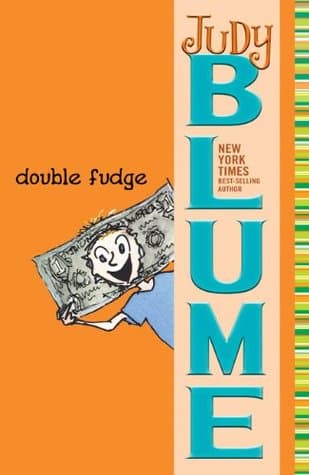
Judy Blume (2001)
Genre
Children's / Young Adult
Reading Time
180 min
Key Themes
See below
Sign in to track this book
Peter Hatcher's world is turned upside down when his younger brother, Fudge, becomes obsessed with money, and new relatives bring chaos to their already lively household.
The story begins with five-year-old Fudge Hatcher developing a strong interest in money. He starts collecting coins and bills, saying he will be rich. This obsession appears in various ways, such as him trying to 'buy' things from his family, like Peter's privacy or his mother's attention. Peter, now in sixth grade, finds his brother's new hobby annoying, as it often involves Fudge looking through his things or interrupting his attempts at a normal life. The family initially finds it funny but soon realizes it is a complete fixation, with Fudge even trying to 'sell' his baby sister, Tootsie, for a dollar.
The Hatcher family gets an unexpected letter from their relatives, the Fudges, who live in Hawaii. It turns out that Peter's grandmother, Nana, has a cousin named Howie Hatcher. Howie, his wife Norma, and their two children, Flora and Farley (also nicknamed Fudge), are planning a trip to New York and want to stay with the Hatchers. This news makes Peter worried. The idea of another 'Fudge' living in their already busy apartment, especially one from a family he has never met, is too much. He expects more disruptions to his life and privacy.
The Hawaiian Fudges arrive, and their presence immediately causes disorder in the Hatcher home. Howie and Norma are free-spirited and relaxed, quite different from the Hatchers. Their daughter, Flora, is a quirky, nature-loving girl who carries a pet rat named Uncle Feather in her pocket. Their son, Farley, who is the same age as Peter's Fudge, is also nicknamed Fudge. This leads to endless confusion and sibling rivalry between the two Fudges. The Hawaiian Fudges' habits, like walking around in swimsuits and eating unusual foods, create a culture clash that Peter finds embarrassing and hard to bear, especially when his friends are around.
With two Fudges in the apartment, the noise and disorder grow a lot. Farley, the Hawaiian Fudge, is as mischievous and attention-seeking as Peter's brother, Fudge. They constantly compete for toys, attention, and even the family's affection. This leads to many arguments, elaborate pranks, and general chaos. Peter is especially annoyed by the double Fudges. His own brother's antics are now stronger because of his Hawaiian counterpart, making his life even harder and less private than before. The two Fudges' shared nickname causes endless confusion for everyone.
Flora, the Hawaiian cousin, introduces her pet rat, Uncle Feather, to the Hatcher home. Peter is at first disgusted and scared by the rat, while Fudge is interested in it. Flora treats Uncle Feather like a family member, carrying him everywhere. The rat's presence causes a stir, especially for Mrs. Hatcher, who is not happy about having a rodent in her apartment. Uncle Feather appears often in the story, often escaping, causing scares, and showing more differences between the two families and how much they tolerate unusual pets.
Driven by his wish to be rich, Peter's Fudge starts making various plans to earn money. These include trying to 'sell' his drawings, charging people to watch him eat, and even trying to get a job at a local store. His efforts are mostly unsuccessful and often cause more trouble than profit. He even tries to 'invest' his collected money in strange ways. Peter finds his brother's constant search for wealth both irritating and sometimes embarrassing, especially when Fudge tries to involve him in his poorly thought-out plans. This obsession is a central funny part of the book.
After a long and often difficult stay, the Hawaiian Fudges finally announce they are leaving. While Peter at first is happy at the thought of getting his privacy and normal life back, he feels a surprising sadness. Despite all the chaos and embarrassment, he had gotten used to their eccentric presence. The two Fudges also say a tearful goodbye, showing that despite their rivalry, they had formed a bond. Their departure leaves the Hatcher apartment quieter, but also a little emptier. This marks the end of a unique and memorable time for the family.
Even after the Hawaiian Fudges leave, Peter's brother, Fudge, does not stop his money obsession. He continues to collect, count, and talk about money, though perhaps with slightly less strength than before. He learns some basic ideas about saving and spending, though in his own unique, Fudge-like way. Peter, accepting his brother's lasting quirks, continues to handle the difficulties of being Fudge's older brother. He realizes that some things, like Fudge's personality, do not change. The family tries to guide his interest in a more useful direction, teaching him about banks and allowances.
Throughout the time with the Hawaiian Fudges and his brother's money obsession, Peter grows personally. He learns to tolerate, and even sometimes appreciate, the chaos that Fudge brings into his life. He also realizes that despite his constant complaints, he cares deeply for his family, including his eccentric brother. Hosting the Hawaiian Fudges broadens his view and makes him appreciate his own family's unique ways. He accepts that his life will always be somewhat unusual with Fudge around, and he finds a way to cope and even find humor in it.
The Hatcher family eventually settles into a new 'normal.' For them, this still involves a fair amount of noise and unexpected events, mainly because of Fudge. Fudge's money obsession becomes a running joke, but also an accepted part of his personality. Peter continues to be the older brother who puts up with a lot, but with a new sense of acceptance and even affection for his little brother. The experience with the Hawaiian Fudges leaves a lasting impression. It reminds them of the joy and difficulties that come with family, both near and far, and strengthens their unique family bond.
The Protagonist
Peter learns to grudgingly accept his brother's eccentricities and the chaos they bring, finding a deeper, if still exasperated, love for his family.
The Supporting
Fudge continues to be himself, but his money obsession gives him a new focus, showing his developing, albeit quirky, understanding of the world.
The Supporting
She navigates the increasing chaos of her home with patience and attempts to guide Fudge's new obsession constructively, maintaining her role as the family's anchor.
The Supporting
He supports his family through the new challenges, offering perspective and maintaining his role as a steady, if sometimes amused, paternal figure.
The Supporting
Tootsie remains a baby, her main 'arc' being her growth into a more interactive member of the family, though still largely in the background.
The Supporting
Farley experiences New York life and forms a unique bond with his cousin, Peter's Fudge, before returning to Hawaii.
The Supporting
Flora introduces the Hatcher family to her unique interests and perspectives, particularly through her pet rat, before her departure.
The Supporting
Howie enjoys his visit to New York, reconnecting with relatives and sharing his family's unique lifestyle, before returning to Hawaii.
The Supporting
Norma enjoys her New York visit, sharing her family's unique customs, and contributes to the culture clash within the Hatcher home.
The Mentioned
Uncle Feather lives out his days as a beloved pet, causing minor commotions and serving as a symbol of the Hawaiian family's unique traits.
The main theme is the ongoing rivalry between Peter and Fudge. Peter constantly struggles with Fudge's behavior. He wants peace and privacy, but he eventually accepts his brother more deeply, though still with frustration. The arrival of Hawaiian Fudge makes this theme stronger, as Peter now deals with double the sibling chaos. Despite the frustrations, the bond between Peter and Fudge, and even between the two Fudges, shows an underlying affection that goes beyond the constant arguments. For example, Peter's thoughts often show annoyance but also moments of reluctant pride or concern for Fudge.
“Sometimes I think my little brother, Fudge, is a genius. Other times I think he's a pest. Most of the time I think he's both.”
Fudge's strong obsession with money drives much of the story. The book shows how a young child sees and values money. This ranges from collecting coins and bills to making elaborate, though silly, plans to earn it. Fudge's understanding of money is simple and often literal. This leads to funny situations where he tries to 'buy' family members or services. This theme contrasts with the more mature, though still developing, understanding of money held by Peter and the practical concerns of the adults. It shows different views on wealth and what it means.
“I'm going to be rich, rich, rich! I'm going to have so much money, I'll buy everything!”
The Hatcher home is a place of activity and chaos, largely because of Fudge. The arrival of the Hawaiian Hatcher family makes this stronger, bringing new personalities, cultural differences, and double the mischief with two 'Fudges.' The book humorously shows how families adapt (or struggle to adapt) to unexpected guests and changes in routine. It explores the give-and-take of family life, the compromises made, and the underlying love that keeps them together despite the constant disruptions. Peter's wish for peace is constantly challenged by his extended family's loving but loud nature.
“Our apartment was already small for five people and a baby. Now with five more, it felt like a sardine can.”
The visit from the Hawaiian Hatcher family highlights a culture clash. The New York Hatchers, especially Peter, are used to a certain routine and level of privacy. This is completely disrupted by the free-spirited, relaxed ways of Howie, Norma, Flora, and Farley. Their different customs, from clothing choices to pet preferences (like Uncle Feather the rat), create funny and sometimes embarrassing situations. This theme explores the difficulties and eventual, though sometimes reluctant, acceptance of different lifestyles and personalities within an extended family. It teaches Peter about tolerance and broadens his view.
“They were so different from us. It was like they lived on another planet, even though they were family.”
The story is told entirely from Peter Hatcher's point of view.
The entire narrative is filtered through the eyes and thoughts of Peter Hatcher. This allows readers to experience the frustrations, humor, and occasional tenderness of dealing with Fudge directly from Peter's perspective. It highlights his internal struggles, his exasperation with his brother, and his longing for normalcy. This device makes Peter a highly relatable character for young readers who may have younger siblings, and it allows for comedic timing and emotional depth as Peter reacts to the unfolding chaos.
The shared nickname 'Fudge' for two characters creates confusion and humor.
The fact that both Peter's younger brother and his Hawaiian cousin share the nickname 'Fudge' is a significant plot device. It immediately creates confusion and comedic situations, as characters, and even the reader, must constantly distinguish between 'our Fudge' and 'Hawaiian Fudge.' This device amplifies the chaos in the Hatcher household, doubles Peter's exasperation, and fuels much of the sibling rivalry and competition between the two boys, making the title 'Double Fudge' particularly apt.
Fudge's relentless pursuit of money serves as a recurring source of humor and plot points.
Fudge's intense and often misguided obsession with money is a continuous running gag throughout the book. From his attempts to 'sell' his baby sister to his various schemes to earn money, this fixation provides a constant source of humor and drives many of the smaller plot developments. It highlights Fudge's unique personality and his childlike understanding of the adult world, consistently setting up comedic scenarios and testing Peter's patience.
Flora's pet rat symbolizes the unconventional nature of the Hawaiian family.
Uncle Feather, Flora's pet rat, serves as a symbolic element. He represents the unconventional, free-spirited, and sometimes jarring differences of the Hawaiian Hatcher family compared to the New York Hatchers. His presence initially causes disgust and fear, particularly for Peter and Mrs. Hatcher, but he eventually becomes an accepted, if unusual, part of the temporary household. He highlights the theme of accepting differences and learning to tolerate what might initially seem strange or unpleasant.
“I'm not a baby! I'm a big kid!”
— Fudge Hatcher asserting his independence and maturity.
“Money, money, money!”
— Fudge's obsession with money throughout the story.
“You can't buy everything with money.”
— Peter Hatcher reflecting on Fudge's fixation with money.
“I'm going to be a millionaire when I grow up.”
— Fudge declaring his ambitious financial goals.
“Sometimes I think my little brother is from another planet.”
— Peter expressing frustration with Fudge's behavior.
“Family is more important than money.”
— A lesson learned by the characters through their experiences.
“Why does everything have to be about money with you?”
— Peter questioning Fudge's constant focus on money.
“I'm not greedy, I'm just interested.”
— Fudge defending his fascination with money.
“Being rich doesn't make you happy.”
— A realization about the limitations of wealth.
“You have to earn money, not just want it.”
— An adult character teaching Fudge about financial responsibility.
“I wish I had a normal brother.”
— Peter lamenting Fudge's eccentricities.
“Money can't buy love or friendship.”
— Highlighting the intangible things that matter more than wealth.
“Sometimes the best things in life are free.”
— A reminder of simple joys beyond material possessions.
“I'm not a little kid anymore!”
— Fudge insisting on his growing maturity.
Ready to see how well you understood this book? Take our interactive quiz with 10 questions.

Judith Blume is an American writer of children's, young adult, and adult fiction. Blume began writing in 1959 and has published more than 25 novels. Among her best-known works are Are You There God? It's Me, Margaret. (1970), Tales of a Fourth Grade Nothing (1972), Deenie (1973), and Blubber (1974). Blume's books have significantly contributed to children's and young adult literature. She was named one of the 100 most influential people in the world by Time magazine in 2023.
Dan Gemeinhart
4.5

Kate O'Hearn
4.4

Jeanne Birdsall
4.4

Jen Wang
4.4
Wendelin Van Draanen
4.3

John Marsden
4.3

Chris Van Allsburg
4.3
Jennifer A. Nielsen
4.2