“I’ve always wondered why they make kids learn cursive. I mean, I’ve never seen an adult use it.”
— Greg reflects on the usefulness of cursive writing in school.

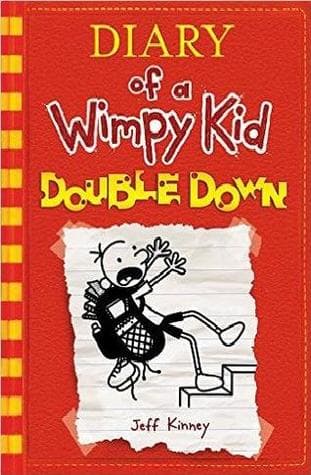
Jeff Kinney (2016)
Genre
Children's / Young Adult
Reading Time
90 min
Key Themes
See below
Sign in to track this book
Greg Heffley, pushed by his mom to be creative and avoid video games, plans to make a monster movie with gummy worms to gain fame and escape his troubles, especially with Halloween looming.
The story begins with Greg Heffley feeling pressure from his mom, Susan, who thinks he plays too many video games. She insists he find a creative hobby. Susan signs him up for the school's Fall Talent Show, hoping it will spark his artistic side. Greg has no interest in performing. His first tries at creative expression, like learning an instrument or joining a club, are half-hearted and quickly dropped. He mainly sees the talent show as a chance to impress Holly Hills, but his lack of real talent or interest makes this hard from the start.
While trying to avoid the talent show, Greg finds a bag of gummy worms. This small discovery gives him an idea: he could make a horror movie using the worms as monster props. He thinks this will be a quick way to meet his mom's creative demands, avoid the talent show, and perhaps even gain fame. His friend Rowley Jefferson is excited and agrees to help. Greg sees himself as a visionary director, even though he knows little about filmmaking, and his main goal is to escape his current problem, not to create art.
Greg and Rowley start working on their gummy worm horror movie, which Greg calls 'The Gummy Worms 2: The Revenge of the Gummy Worms.' Greg takes on the roles of director, writer, and lead actor, while Rowley is the cameraman and supporting actor. Their creative process is full of arguments. Greg's ideas are often impractical or too big for their limited resources, and he often ignores Rowley's suggestions. Rowley, despite his first excitement, becomes more frustrated by Greg's bossiness and lack of teamwork. This early stage shows their different personalities and sets the tone for their difficult partnership.
As filming continues, Greg realizes he needs more actors for his ambitious horror movie. He tries to recruit other kids from school, but his reputation and the low budget make it hard. He tries to get his younger brother, Manny, to play a part, but Manny is uncooperative. Greg's older brother, Rodrick, is not interested at first but eventually helps with special effects, though his methods are often crude and unhelpful. The lack of a proper crew and the constant arguing among the Heffley brothers make filmmaking chaotic and slow, further showing Greg's struggles as a director.
Making 'The Gummy Worms 2' is a series of mistakes. They struggle with lighting, sound, and getting the gummy worms to act like scary monsters. Rowley's camera work is often shaky, and Greg's acting is not convincing. One bad scene involves them trying to film in the backyard at night, leading to a confrontation with their neighbor, Mr. Henderson, who thinks they are causing trouble. The boys face constant interruptions, technical problems, and their own incompetence, making it clear their dream of a hit movie is far from reality. The film becomes less about telling a story and more about overcoming one problem after another.
Amidst their filmmaking, Halloween arrives, bringing its own worries for Greg. He and Rowley plan their trick-or-treating route, hoping to get a lot of candy. However, their night has small scares and annoyances, including meeting older kids who try to steal their candy and various pranks. Greg's costume is uncomfortable, and he is constantly nervous. The Halloween events provide a background to their movie project, reminding Greg of the pressures he faces from his mom and the general chaos of his life. The night ends with a small incident that further lowers their spirits.
Susan Heffley remains firm in her decision for Greg to be in the Fall Talent Show. With the deadline close, Greg realizes he cannot avoid it. He sees his unfinished gummy worm movie as his only possible escape. He starts to quickly edit the footage they have, hoping to present it as his creative contribution. The pressure from his mom grows, and Greg feels stuck between her expectations and his own wish to avoid public performance. He starts to see the movie not as a path to fame, but as a desperate way to please his mother and avoid embarrassment.
Greg finally finishes a rough cut of 'The Gummy Worms 2' and decides to show it to his family. He hopes for their approval, but the viewing is a disaster. The movie is disjointed, poorly filmed, and fails to impress. Susan, while acknowledging his effort, points out its flaws and repeats her desire for him to be in the talent show. This setback further discourages Greg. To make matters worse, Rodrick, always looking for a way to tease Greg, records the family's negative reactions, adding to Greg's humiliation. Greg is back to where he started, with the talent show very close.
The night of the Fall Talent Show arrives. Greg and Rowley are set to perform a magic act, a last-minute attempt to fulfill Susan's wishes. However, their performance quickly turns into chaos. Greg's stage fright and Rowley's clumsiness lead to several failed tricks. The audience is not impressed, and Greg feels completely humiliated. Just as they are about to leave the stage in defeat, something unexpected happens with the gummy worms they brought as props. This unforeseen event captures the audience's attention in a way their magic act never could, giving them a moment of unexpected, accidental success.
During their bad magic act, the gummy worms they were using as props somehow come to life (or seem to) in a way that truly surprises and entertains the audience. This accidental show, completely unplanned by Greg, becomes the best part of their performance. The crowd reacts with amusement and awe, giving Greg and Rowley an unexpected standing ovation. While it was not the fame Greg first imagined from his movie, this moment of accidental success brings relief and validation. It shows the unpredictable nature of creativity and how sometimes, the best moments are unplanned.
After the talent show, Greg thinks about his entire creative effort. He did not become a famous director, nor did he completely escape his mom's creative pressures. However, the accidental success at the talent show provides a brief break. He realizes that while his movie did not turn out as planned, he did engage in a creative process, even if he did it to avoid other things. The book ends with Greg still trying to handle the difficulties of middle school and his family, often finding himself in situations he would rather avoid, but with a slightly different view on what 'creativity' means for him.
The Protagonist
Greg's arc is less about profound change and more about a cyclical pattern of trying to avoid responsibility, failing, and finding accidental, often undeserved, success, leaving him largely unchanged but with a temporary reprieve.
The Supporting
Rowley remains consistently loyal and good-natured, serving as a foil to Greg's self-serving antics, with no significant personal arc, but rather a consistent presence that highlights Greg's character.
The Supporting
Susan remains a consistent force of parental guidance and expectation, her arc focused on her ongoing attempts to steer her children, particularly Greg, toward what she perceives as positive development.
The Supporting
Rodrick's character remains static, consistently acting as Greg's tormentor and a source of teenage apathy, without significant personal growth.
The Supporting
Frank's arc is largely static, serving as a consistent figure of paternal exasperation and a desire for order amidst family chaos.
The Supporting
Manny remains a static character, a source of innocent mischief and parental favoritism, without a significant arc.
The Mentioned
Mr. Henderson's role is purely functional, serving as an external obstacle or source of minor conflict, without a personal arc.
This theme looks at the expectation for children to be creative, often without real interest. Susan Heffley's insistence that Greg find a 'creative side' drives much of the story. Greg's attempts to make a movie do not come from passion, but from a wish to please his mother and avoid other, less appealing, creative activities like the talent show. The story shows how forced creativity can lead to half-hearted efforts and resentment, rather than real artistic expression. It questions whether all children must be 'creative' in a standard way.
“My mom thinks video games are turning my brain to mush, so she wants her son to put down the controller and explore his 'creative side.'”
Greg Heffley consistently tries to escape uncomfortable situations and avoid responsibility. His entire movie-making effort is mainly a big plan to get his mom to stop bothering him about finding a hobby and to avoid the dreaded Fall Talent Show. He uses the movie as a shield, hoping it will get him out of other duties. This theme is clear in his half-hearted tries at other creative activities before he thought of the gummy worm idea. Even his approach to the movie itself is about finding the easiest, quickest way to seem successful, rather than truly putting effort into the craft.
“I figured if I could make a movie, Mom would get off my back about finding a creative hobby. Plus, I could become rich and famous.”
The relationship between Greg and Rowley is central to this theme. Rowley's strong loyalty and good nature are constantly tested by Greg's self-centeredness and manipulative ways. Greg often takes advantage of Rowley, bossing him around, ignoring his ideas, and using him as a scapegoat. Despite this, Rowley remains Greg's friend, showing the complexities of childhood friendships where one person often has more power. The story subtly questions the true nature of their friendship, showing Rowley as a consistently supportive, though often overlooked, friend.
“Rowley was always enthusiastic about my ideas, even the bad ones.”
Throughout the book, Greg seeks fame and money through his movie, but his efforts are mostly poor and lead to failure. However, at the very end, he and Rowley find unexpected success at the talent show through a completely unplanned, accidental event involving the gummy worms. This theme explores the irony that sometimes, real 'success' or recognition comes not from careful planning and ambition, but from lucky moments. It contrasts Greg's big, often badly done, plans with the spontaneous, unforced moment that ultimately gets the audience's attention.
“It just goes to show you that sometimes the best things happen when you're not even trying.”
The story is told through Greg Heffley's perspective in a diary/journal style.
This device allows readers direct access to Greg's thoughts, biases, and often flawed logic. It establishes his voice as self-centered and humorous, shaping the reader's perception of events. The diary format, complete with hand-drawn illustrations, reinforces the idea that this is Greg's unfiltered account, making his exaggerations and rationalizations more believable and comedic. It also creates an intimate connection with the protagonist, despite his often unlikable traits, as readers experience his struggles directly from his point of view.
Events unfold in a way that is contrary to what is expected, often with humorous results.
Situational irony is prevalent throughout the story, particularly in Greg's attempts to achieve his goals. He tries to make a grand horror movie but produces a shambolic mess. He attempts to avoid the talent show, only to find himself performing in it. Most notably, his planned creative endeavor (the movie) fails, while an accidental, unplanned moment at the talent show brings him unexpected success. This irony highlights the unpredictability of life and the often-comical gap between Greg's aspirations and his reality.
An object that serves as a plot device to drive the story forward, though its specific nature is less important than its role.
The bag of gummy worms acts as a MacGuffin. It is the catalyst that sparks Greg's idea for a horror movie, thereby driving the central plot of his creative endeavor. While the worms themselves are props in his film, their significance lies in their ability to inspire Greg's scheme to avoid his mom's creative pressures. Their ultimate role in the accidental talent show success further underscores their function as a plot device, rather than an object of inherent importance.
Characters who contrast with another character, usually the protagonist, to highlight particular qualities.
Rowley Jefferson serves as a primary foil to Greg Heffley. Rowley's innocence, loyalty, and genuine enthusiasm contrast sharply with Greg's cynicism, self-centeredness, and manipulative tendencies. This contrast highlights Greg's flaws and motivations, making them more apparent to the reader. Similarly, Susan Heffley's persistent, well-meaning but overbearing nature foils Greg's desire for freedom and avoidance of responsibility, creating much of the story's central conflict.
“I’ve always wondered why they make kids learn cursive. I mean, I’ve never seen an adult use it.”
— Greg reflects on the usefulness of cursive writing in school.
“The only reason I ever wanted to play an instrument was so I could smash it on stage like rock stars do.”
— Greg considers joining the school band for unconventional reasons.
“Sometimes I think the whole point of school is just to make you tired so you don't have enough energy to cause trouble.”
— Greg's cynical view on the purpose of the education system.
“Being popular is a lot of work. You have to constantly be trying to impress people.”
— Greg observes the efforts required to maintain popularity.
“I don't know why adults always say 'money doesn't grow on trees.' Because it kinda does, if you think about paper.”
— Greg's literal interpretation of a common adult saying.
“The worst thing about having a younger brother is that he always wants to do whatever you're doing.”
— Greg's frustration with Manny's constant imitation.
“I think the best way to get out of doing chores is to do them really badly the first time.”
— Greg devises a strategy to avoid future chores.
“It's not fair that grown-ups get to do whatever they want and kids have to follow all the rules.”
— Greg laments the double standards between adults and children.
“If there's one thing I've learned, it's that you can't trust anyone with your secrets, especially your family.”
— Greg reflects on the difficulty of keeping secrets within his family.
“I just don't understand why people like scary movies. All they do is make you scared.”
— Greg's simple take on the appeal of horror films.
“My mom always says 'practice makes perfect,' but I think 'practice makes bored.'”
— Greg expresses his disinterest in practicing instruments or skills.
“I think the only reason adults like to read is because they don't have video games.”
— Greg's perspective on adult hobbies.
“Sometimes I wish I could just fast-forward through the boring parts of life.”
— Greg's desire to skip mundane moments.
“The problem with having a good idea is that everyone else thinks it's a good idea, too.”
— Greg's experience with his ideas being adopted or stolen.
Ready to see how well you understood this book? Take our interactive quiz with 10 questions.

Jeffrey Patrick Kinney is an American author and cartoonist, best known as the creator of the children's book series Diary of a Wimpy Kid. He also created the child-oriented website Poptropica.
Dan Gemeinhart
4.5
Kate O'Hearn
4.4

Jeanne Birdsall
4.4

Jen Wang
4.4
Wendelin Van Draanen
4.3

John Marsden
4.3

Chris Van Allsburg
4.3
Jennifer A. Nielsen
4.2