“We were twins, but we weren't identical, not really. We looked a bit alike, I suppose, but our personalities were miles apart.”
— Ruby reflecting on her and Garnet's differences despite being twins.

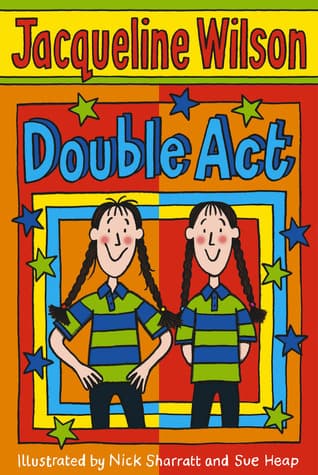
Jacqueline Wilson (1995)
Genre
Children's / Young Adult
Reading Time
240 min
Key Themes
See below
Sign in to track this book
After their mother's death, identical twins Ruby, an aspiring actress, and Garnet, a quiet reader, navigate growing up and growing apart, wondering if their close bond can survive their different dreams.
Ten-year-old identical twins, Ruby and Garnet, live with their father and Gran after their mother's death three years ago. Ruby is outgoing, theatrical, and dreams of becoming a famous actress, often pulling Garnet into her elaborate role-playing games. Garnet, in contrast, is quiet, bookish, and content to live in Ruby's shadow, though she secretly wants her own identity. Their father, consumed by grief and money problems, often leaves the twins alone, relying on Gran for support. The girls' world centers on their shared bedroom and their imaginative play, which helps them escape and cope with their loss. Their close bond, though, starts to show cracks as Ruby's assertiveness increasingly overshadows Garnet's quiet wishes.
The twins' father, dealing with debt and memories of their mother, suddenly decides to move the family from their familiar city home to an old house in the countryside. This news upsets both girls, especially Garnet, who finds comfort in routine and her books. Ruby, at first against it, soon sees the move as a new stage for her acting goals. Gran, though supportive, has doubts about the big change. The move greatly disrupts the twins' established life, making them leave their school, friends, and the last parts of their life with their mother, further isolating them as a pair.
At their new country school, Ruby quickly makes friends, charming her classmates with her personality and acting skill. She gets the lead role in the school play, 'The Princess and the Pea,' which she loves. Garnet, however, struggles to fit in. She finds the other children loud and scary, and her quiet nature makes her an easy target for a bully named Rosie. Garnet retreats further into her books, feeling more and more alone and overshadowed by Ruby's success. The school environment shows the growing differences in their personalities and how each twin handles new social situations, straining their previously inseparable bond.
Ruby's acting goals grow when she sees an ad for auditions for a children's TV show, 'The Kids' Club.' Convinced this is her big chance, she practices her lines and prepares for the audition. She gets Garnet to help, making her act as her scene partner, which Garnet does reluctantly. Their father, seeing Ruby's passion, supports her and arranges for them to travel to London for the audition. This chance fuels Ruby's dreams but also creates new tension between the twins, as Garnet feels increasingly used and ignored in Ruby's chase for fame.
The twins, with their father, travel to London for Ruby's audition. Ruby performs with her usual flair and confidence, believing she has the role. However, a few weeks later, a letter arrives, saying she wasn't chosen. Ruby is completely crushed, her dreams of stardom broken for a moment. Garnet tries to comfort her, but Ruby's disappointment is deep. This setback tests Ruby's strength and makes her face the hard parts of her ambition, while Garnet watches her sister's pain, feeling both sympathy and a quiet relief that the pressure of Ruby's acting career might lessen.
Feeling more and more stifled by Ruby's strong personality and the constant pressure to join her games, Garnet starts to show her independence. She spends more time alone with her books, actively resisting Ruby's attempts to get her to act. She also finds comfort in drawing and writing, discovering her own creative interests. This new assertiveness, though gentle, causes friction with Ruby, who is used to Garnet's easy compliance. Garnet's growing desire for her own identity marks a big change in their relationship, challenging the very idea of their 'double act.'
After the audition disappointment, Ruby finds comfort and new friends at school. She becomes close with two other girls, Angela and Rose, who share her outgoing personality and interest in fashion and pop music. They form a 'friendship pact,' purposely leaving Garnet out. This exclusion deeply hurts Garnet, who feels abandoned and even more alone. She watches their activities from a distance, reinforcing her feeling of being an outsider. Ruby, caught up in her new friendships, doesn't fully understand Garnet's deep pain, further widening the emotional gap between the twins.
Looking for a break from Ruby and her new friends, Garnet finds a hidden, overgrown greenhouse in the garden, which she turns into her secret place. Here, she can read, draw, and be herself without interruption. One day, she meets a boy named Lewis, who is also an outsider at school and shares her love for books and quiet activities. They form a tentative friendship, spending time together in the greenhouse, discussing books and their feelings. This new connection gives Garnet her first truly independent friendship, a place where she is valued for who she is, not as part of a 'double act.'
The growing tensions between the twins finally turn into a fierce argument. Ruby accuses Garnet of being boring and unsupportive, while Garnet responds by saying she resents always being forced into Ruby's plans and feeling invisible. Harsh words are exchanged, showing the deep frustrations and hurt each twin had been holding. The argument is a peak in their relationship, forcing them to face the fact that their 'double act' can no longer continue as it is. Their father and Gran are upset by the conflict, realizing how far apart the once inseparable sisters have grown.
After the big argument, Ruby and Garnet go to their separate spaces. Ruby spends more time with her new friends, exploring her interests alone. Garnet finds comfort in her greenhouse with Lewis, continuing to build her own identity. This time apart, though painful, allows both twins to think about what they need and want individually. Ruby begins to understand that Garnet has a right to her own life, while Garnet realizes she can thrive alone. Their father and Gran encourage them to find their own paths, gently guiding them toward a more balanced relationship.
The time for the school play, 'The Princess and the Pea,' arrives. Ruby, as the lead, performs wonderfully, captivating the audience with her talent and stage presence. Garnet, despite their recent tensions, attends the play and genuinely claps for her sister's success. Seeing Ruby shine on stage without feeling the need to be part of the spotlight herself is a big moment for Garnet. It shows her ability to support Ruby while keeping her own distinct identity, and for Ruby, it's a confirmation of her talent, separate from her twin.
After the play and their time apart, Ruby and Garnet slowly begin to make up. They acknowledge their differences and the need for individual space. Ruby, having experienced both the good times with her friends and the disappointment of her audition, starts to appreciate Garnet's quiet strength. Garnet, having gained confidence through her friendship with Lewis and her own pursuits, no longer feels the need to hide. They have an honest conversation, realizing that while they will always be twins, they can also be two distinct individuals. Their 'double act' becomes a relationship based on mutual respect and understanding, rather than codependency.
Throughout their struggles, Gran acts as a steady and wise presence. She offers both twins comfort and gentle advice, reminding them that while they are identical, they are also unique individuals. Gran shares stories of her own life and the importance of finding one's own path, while also stressing the lasting bond of family. Her wisdom helps Ruby and Garnet understand that growing apart doesn't mean growing less close, but rather growing into their true selves. Gran's insights help the twins manage their changing relationship and accept their individual futures.
By the end of the book, Ruby and Garnet have found a new balance. Ruby continues to pursue her acting dreams, now with a clearer understanding of the effort involved and a greater appreciation for her sister's support. Garnet continues to find joy in her books, writing, and friendship with Lewis, confident in her own identity. They still share a room and a deep love for each other, but they no longer feel the need to do everything together. Their 'double act' has changed into a more mature and strong sisterly bond, where their individuality strengthens, rather than weakens, their connection.
The Protagonist
Ruby learns to temper her ambition with empathy, recognizing Garnet's need for individuality and understanding that her own success doesn't require her sister's constant involvement.
The Protagonist
Garnet gradually finds her voice and asserts her independence, learning to value her unique qualities and forming friendships that affirm her own identity, separate from Ruby.
The Supporting
He gradually becomes more aware of his daughters' individual needs and the growing tension between them, taking steps to support their separate paths.
The Supporting
Gran remains a consistent source of wisdom and support, helping the twins and their father adapt to their new lives and understand their evolving family dynamics.
The Supporting
Lewis serves as a catalyst for Garnet's independent growth, remaining a steady and understanding friend.
The Supporting
They facilitate Ruby's social development and her exploration of identity separate from Garnet.
The Mentioned
Rosie's bullying adds to Garnet's challenges at the new school, indirectly prompting her to seek solace elsewhere.
The main theme explores how identical twins try to create separate identities while keeping their deep bond. Ruby's desire for fame and Garnet's quiet love for books show their different personalities. The book shows how their mother's death first made their 'double act' a way to cope, but as they grow, the need for individual expression becomes most important. Garnet's retreat to her secret greenhouse and her friendship with Lewis are key steps in her journey to self-discovery, while Ruby's audition and new friendships also mark her independent path. The story suggests that true sisterhood can only thrive when individuality is respected.
“We were identical twins. We were so alike that even our own dad got us muddled up sometimes. But inside, we were different.”
The story is deeply tied to the twins' experience of losing their mother three years ago. Their father's ongoing grief shows in his detachment and quick decisions, like moving to the countryside. For Ruby and Garnet, their 'double act' first helps them cope and cling to their past. However, the move and the challenges of a new school make them face their grief more individually. Their mother's absence leaves a void that affects their behaviors – Ruby's drive for attention, Garnet's retreat into books – and shapes their changing relationship, as they both look for comfort and stability in different ways.
“Three years ago, when our Mum died, we wore black dresses and black shoes and black tights. We looked like two little ravens.”
The complex and changing relationship between Ruby and Garnet is central to the novel. It explores the unique bond of identical twins, marked by intense closeness, shared experiences, and also inevitable conflict as they grow. At first, their relationship is codependent, with Ruby often leading and Garnet following. The challenges of a new environment, new friends, and individual goals strain this dynamic, leading to arguments and temporary separation. Ultimately, the theme emphasizes that a healthy sibling relationship can adapt and grow by recognizing and celebrating individual differences, moving from an inseparable 'double act' to a bond of mutual respect.
“We were a double act. Always had been, always would be. Or so I thought.”
Both twins use imagination to cope and express their personalities. Ruby channels her imagination into her acting, constantly creating elaborate scenes and dreaming of stardom. This creativity drives her, allowing her to escape the everyday and the pain of her loss. Garnet, though quieter, finds her own creative outlet in reading, writing, and drawing. Her secret greenhouse becomes a sanctuary for her imagination, where she can build her own world. The book shows how different forms of creativity allow children to express themselves, process emotions, and build their own sense of self.
“I used to make up stories in my head all the time, but Ruby was the one who acted them out.”
The story is told entirely from Garnet's perspective.
The novel is narrated in the first person by Garnet. This device allows readers deep insight into Garnet's inner world, her quiet observations, her struggles with self-identity, and her feelings of being overshadowed by Ruby. It frames Ruby's actions and personality through Garnet's eyes, emphasizing the impact Ruby has on her sister. This perspective makes Garnet's journey of self-discovery particularly poignant and allows the reader to intimately understand the emotional nuances of their twin bond and its eventual evolution. The reader experiences Garnet's vulnerability and her growing strength directly.
The twins' relationship is frequently referred to as a 'double act'.
The recurring metaphor of the 'double act' highlights the inseparable nature of Ruby and Garnet's relationship, particularly after their mother's death. It signifies their shared identity and their mutual reliance. As the story progresses and the twins begin to assert their individuality, the 'double act' comes to symbolize the stifling aspects of their codependency. The eventual dismantling and redefinition of this 'double act' represent their growth into independent individuals who can still maintain a strong, albeit different, sisterly bond. It's a central symbol of their journey to find individual identities within their twinship.
Garnet's personal sanctuary and symbol of her independence.
The dilapidated greenhouse in the garden, which Garnet discovers and transforms, serves as a powerful symbol and plot device. It becomes Garnet's secret sanctuary, a physical space where she can escape Ruby's dominance, read her books, draw, and develop her own interests without interruption. It represents her growing need for privacy and her burgeoning individuality. The greenhouse is also where she forms her first independent friendship with Lewis, further solidifying her separate identity. Its existence visually marks Garnet's separation from the 'double act' and her creation of her own world.
A significant setting change that acts as a catalyst for conflict and growth.
The family's unexpected move from their familiar urban home to a rundown house in the countryside serves as a major catalyst for the plot. This drastic change disrupts the twins' established routines and social circles, forcing them to adapt to a new environment. For Ruby, it presents new opportunities for her theatrical ambitions, while for Garnet, it intensifies her feelings of displacement and isolation, pushing her further into herself. The move strips away their comfortable old life, forcing the twins to confront their individual needs and the growing differences between them, ultimately accelerating their journey towards separate identities.
“We were twins, but we weren't identical, not really. We looked a bit alike, I suppose, but our personalities were miles apart.”
— Ruby reflecting on her and Garnet's differences despite being twins.
“Sometimes I wished I was Garnet. She always knew what to say, what to do. She was the one who was good at everything.”
— Ruby's internal thoughts, expressing her feelings of inadequacy compared to Garnet.
“It was like she was shining a light on me, and I was just a shadow.”
— Ruby describing how she felt overshadowed by Garnet's brighter personality.
“Mum always said we were two halves of a whole. But sometimes I felt like I was the smaller, less important half.”
— Ruby thinking about her mother's words and her own feelings about her place in the twin dynamic.
“I tried to be brave, like Garnet. I really did. But it was hard when you felt like you were going to burst into tears at any moment.”
— Ruby struggling to cope with a difficult situation, trying to emulate her sister's strength.
“It's funny how you can live with someone your whole life and still not really know them, not completely.”
— Ruby reflecting on her relationship with Garnet as they grow and change.
“Sometimes I just wanted to be me, Ruby, not 'Ruby-and-Garnet' or 'Garnet's sister'. Just me.”
— Ruby expressing her desire for individual identity separate from her twin.
“I knew Garnet loved me, even when she was being bossy or annoying. And I loved her, even when I wanted to punch her.”
— Ruby acknowledging the complex nature of her sisterly bond with Garnet.
“Being twins was like having a built-in best friend, but sometimes it felt like having a built-in rival too.”
— Ruby's nuanced perspective on the advantages and disadvantages of being a twin.
“I wished I could tell her everything, but some things were just too private, even for your twin.”
— Ruby grappling with personal secrets and the limits of even a close sisterly bond.
“It's not fair that some people get a mum and a dad and a happy family, and some people just get bits and pieces.”
— Ruby's lament about her family situation after her mother's death.
“Maybe being different wasn't so bad after all. Maybe it was actually quite good.”
— Ruby's evolving perspective on her individuality as the story progresses.
“I didn't want to be a double act anymore. I just wanted to be me.”
— Ruby's ultimate desire to forge her own identity, separate from her twin.
Ready to see how well you understood this book? Take our interactive quiz with 10 questions.

Biography coming soon.

Dan Gemeinhart
4.5

Kate O'Hearn
4.4

Jeanne Birdsall
4.4

Jen Wang
4.4
Wendelin Van Draanen
4.3

John Marsden
4.3

Chris Van Allsburg
4.3
Jennifer A. Nielsen
4.2