BookBrief
Dombey and Son cover
Archivist's Choice

Dombey and Son

Charles Dickens (2016)

Genre

Historical Fiction

Reading Time

25-30 hours (based on 880 pages)

Key Themes

See below

Track Your Reading

Sign in to track this book

Mr. Dombey's rigid pride and commercial ambition lead to his personal and professional ruin as he neglects his children, especially his daughter Florence, in this Victorian story of family and downfall.

Synopsis

Paul Dombey, a wealthy London merchant, runs the shipping firm Dombey and Son. He wants a male heir to continue his business and is disappointed when his wife dies giving birth to a daughter, Florence. When his son, Paul Jr., is born, Dombey focuses all his hopes on the delicate boy, mostly ignoring Florence. Young Paul, a bright but weak child, dies young, destroying Dombey's plans. In his grief, Dombey marries Edith Granger, hoping for a new heir. Their marriage is unhappy, made worse by James Carker, Dombey's manager. Carker plans to ruin Dombey and run off with Edith. Feeling trapped, Edith leaves, but not with Carker. Dombey, blinded by pride, disowns Florence when she tries to comfort him, thinking she is disloyal. Florence finds comfort and marries Walter Gay, a kind sailor who once worked for Dombey. Carker's betrayal is exposed, leading to his death as he tries to escape. Dombey's business fails, leaving him alone and ruined. Florence, now a wife and mother, returns to her father, offering forgiveness. Her love redeems Dombey, and he finds peace in his later years, surrounded by his daughter and her family, understanding that human connection matters more than wealth.
Reading time
25-30 hours (based on 880 pages)
Difficulty
Medium
Pacing
Moderate
Mood
Melancholy, Dramatic, Thought-provoking, Redemptive
✓ Read this if...
You enjoy sprawling Victorian narratives with strong social commentary, complex character arcs, and a focus on family dynamics and redemption.
✗ Skip this if...
You prefer fast-paced plots, lighthearted themes, or dislike extensive descriptions and moralizing.

Plot Summary

The House of Dombey

The novel begins with the birth of Paul Dombey's son, also named Paul, and the death of his wife, Fanny. Mr. Dombey, who runs the successful shipping firm Dombey and Son, is proud of his new male heir, seeing him as the future of his company. He mostly ignores his older daughter, Florence, seeing her as just a girl and unimportant to his legacy. The infant Paul is weak and sickly. He is cared for by a wet-nurse, Polly Toodle, and later by Mrs. Pipchin, who runs a boarding school. Dombey's coldness towards Florence is clear from the start, setting the tone for their difficult relationship.

Florence's Lonely Childhood

Florence Dombey grows up in a large, rich house, but her childhood is marked by loneliness and a strong desire for her father's love. Mr. Dombey's emotional distance and focus on young Paul make her feel isolated. However, she finds affection in her brother's wet-nurse, Polly Toodle, and later in Walter Gay, an employee at Dombey and Son. Florence's attempts to connect with her father are always rejected, making her feel unwanted. Her only true comfort comes from her younger brother, Paul, who, despite his poor health, shares a close bond with her.

Young Paul's Education and Early Death

Young Paul Dombey is sent to Dr. Blimber's academy, a respected but overly academic school. He struggles to keep up because of his delicate health. Despite being smart for his age, Paul's health quickly declines. He becomes close friends with Florence and often thinks about deep subjects beyond his years. His health eventually fails, and he dies very young, leaving Mr. Dombey devastated and his plans for the firm's future shattered. This loss is a severe blow to Dombey's pride and his entire view of the world, though it does not soften his heart towards Florence.

Dombey's Second Marriage

After Paul's death, Mr. Dombey, still wanting a male heir and a suitable mistress for his large house, proposes to Edith Granger. Edith, a widow from a good family but now poor, accepts the marriage for social and financial reasons, even though she does not love Dombey. Their marriage is cold and unhappy, marked by mutual dislike and a struggle for control. Edith resents Dombey's controlling nature and lack of real affection, while Dombey is frustrated by her defiance. She brings her manipulative mother, Mrs. Skewton, and her cousin, James Carker, into their circle.

The Rise of James Carker

James Carker, the smooth and ambitious manager at Dombey and Son, slowly gains Mr. Dombey's trust and influence. He is a master of deceit, hiding his true malicious nature behind a constant smile. Carker, seeing the growing conflict between Dombey and Edith, starts to subtly worsen their tensions. He poisons Dombey's mind against his wife and encourages Edith's defiance. He secretly desires Edith and works to isolate her from Dombey, setting the stage for a scandalous confrontation that will affect everyone involved. His actions are driven by a desire for power and revenge.

Edith's Escape and Carker's Betrayal

Driven to despair by Mr. Dombey's coldness, controlling behavior, and Carker's subtle provocations, Edith Granger eventually runs away. Carker, having planned this outcome, goes with her, leading Dombey and society to believe they have eloped. In reality, Carker's goal is not a real elopement but a calculated act of revenge against Dombey and a desire to humiliate Edith. He plans to abandon her once he achieves his goal, leaving her reputation ruined. Edith, though initially thinking Carker offers an escape, quickly realizes his true betrayal and the depth of her despair.

Florence's Disownment and Flight

After Edith leaves, Mr. Dombey's rage and pride peak. He blames Florence for the scandal, believing she encouraged Edith or failed to stop her. In a fit of uncontrolled anger, he strikes Florence, shattering her last hope for his affection. Devastated and feeling completely abandoned, Florence flees her father's house. She is taken in by Captain Cuttle and later by her childhood friend, Walter Gay's uncle, Solomon Gills. She eventually finds refuge and love with Walter himself, who has returned from a long sea voyage.

Carker's Demise and Dombey's Downfall

After betraying Edith, James Carker tries to escape to France. However, Mr. Dombey pursues him, driven by revenge. In a dramatic turn of events, Carker is hit and killed by a train while trying to avoid Dombey. Meanwhile, the financial stability of Dombey and Son, already weakened by Dombey's personal troubles and Carker's mismanagement, begins to crumble. Without Carker's clever (though corrupt) hand, and with Dombey's increasing mental instability, the firm faces great debt and eventually collapses, leaving Dombey financially ruined and alone.

Florence and Walter's Marriage

After leaving her father's house, Florence is reunited with Walter Gay, who has unexpectedly returned from his dangerous sea journey, during which he was thought to be lost. Their long-standing affection turns into love, and they marry. Walter, now successful and respected, gives Florence the love, stability, and security she always wanted. Their marriage contrasts sharply with the cold, loveless unions elsewhere in the novel, showing real affection and mutual respect. They create a happy home, eventually having children, and Florence finally experiences the family warmth she was denied in her youth.

Dombey's Isolation and Redemption

Completely ruined financially and emotionally, Mr. Dombey withdraws into a solitary life in his now empty house. He is a broken man, stripped of his pride, his company, and his family. The experience forces him to face the results of his lifelong coldness and neglect, especially towards Florence. He goes through a period of great suffering and despair, reflecting on his past mistakes. This isolation and reflection mark the start of his slow journey towards redemption, as he finally understands the value of human connection and affection over material wealth and family pride.

Reconciliation and New Beginnings

In his deepest despair, Mr. Dombey is unexpectedly visited by Florence, who, despite his past cruelty, returns to him with her children. Her steady love and compassion finally break through his hardened heart. Overcome with regret and gratitude, Dombey embraces his daughter, feeling a deep emotional release and real affection for the first time. He finds comfort and a sense of belonging in Florence's new family. The novel ends with Dombey living out his final years in peace, surrounded by the love of Florence and his grandchildren, having learned that true wealth is in human connection, not business success or a male heir.


Principal Figures

Paul Dombey Sr.

The Protagonist/Antagonist

Dombey undergoes a profound transformation from a proud, cold patriarch to a humbled, repentant old man who finally learns the value of love and family.

Florence Dombey

The Protagonist

Florence endures a childhood of neglect and suffering, finds love and happiness with Walter, and ultimately brings redemption to her father through her unwavering compassion.

Paul Dombey Jr.

The Supporting

His brief life and early death serve as a tragic turning point, shattering his father's ambitions and setting the stage for the novel's major conflicts.

Edith Granger

The Supporting

Edith is entrapped in a loveless marriage, manipulated into a scandalous flight, and ultimately finds a solitary, dignified existence after her ordeal.

James Carker

The Antagonist

Carker rises through manipulation, orchestrates the downfall of Dombey and Edith, and ultimately meets a violent, deserved end.

Walter Gay

The Supporting

Walter endures hardship and separation, but his unwavering character leads to success and a loving marriage with Florence.

Solomon Gills

The Supporting

Solomon worries for Walter, provides refuge for Florence, and ultimately finds happiness in the new family formed by Walter and Florence.

Captain Edward Cuttle

The Supporting

Captain Cuttle remains a steadfast, loyal friend and protector to Walter, Solomon, and Florence throughout their trials.

Polly Toodle (Mrs. Richards)

The Supporting

Polly provides early maternal comfort to Florence, is dismissed, but remains a symbol of genuine affection throughout.

Miss Lucretia Tox

The Supporting

Miss Tox's unrequited affection for Dombey turns into genuine kindness and support for Florence and her humble friends.

Themes & Insights

The Destructive Nature of Pride and Coldness

The novel shows how Mr. Dombey's extreme pride and emotional coldness lead to his personal and professional downfall. His focus on keeping the 'Dombey and Son' legacy alive through a male heir blinds him to the love offered by his daughter, Florence. This emotional distance harms his relationships, causing his first wife's death from neglect, his son's early death, his terrible second marriage to Edith, and Florence's suffering. His eventual ruin is a direct result of his inability to value human connection over his own rigid ideals. The collapse of his company mirrors the collapse of his personal life, both caused by his lack of warmth.

Dombey was a merchant, and a great one; but he was a man first, and a father afterwards. And as a father, he was a failure.

Narrator

The Power of Love and Compassion

In contrast to Dombey's coldness, the steady love and compassion of characters like Florence, Walter Gay, and Captain Cuttle act as strong forces for redemption. Florence's endless capacity for forgiveness and her selfless love are what ultimately save her father from despair. The genuine warmth and support found among ordinary people — Polly Toodle, Solomon Gills, and Captain Cuttle — highlight the true value of human connection over wealth and social status. This theme suggests that love, even when rejected, has a lasting power to heal and transform, bringing peace and happiness.

There is no wealth but life.

Young Paul Dombey

The Role of Women in Victorian Society

Dickens explores the limited and often sad roles available to women in Victorian England through characters like Florence and Edith. Florence, despite her goodness, is powerless and ignored by her father's patriarchal view. Edith, an intelligent woman, is forced into a loveless marriage because of her poverty. Her pride is a fragile defense against societal expectations and male dominance. Her eventual rebellion, though misled by Carker, shows the desperation and lack of control women experienced. The novel subtly criticizes a society that values women mainly for their looks or their ability to produce male heirs, rather than their inherent worth.

She was a woman of that proud and passionate nature, that it was not easy for her to make her way through life.

Narrator, describing Edith

The Contrast Between Appearance and Reality

The novel often contrasts outward appearances with inner realities, most clearly with James Carker. His constant, 'shining' smile hides a malicious and manipulative nature, deceiving Dombey and society. Similarly, Dombey's grand house and prosperous company project an image of success, but beneath this surface is a family broken by neglect and a business vulnerable to corruption. This theme highlights the hypocrisy that Dickens often criticizes in Victorian society, suggesting that true character and happiness are rarely found in displays of wealth or status.

His smile was a work of art. It was a smile that always meant to be agreeable, but never quite succeeded.

Narrator, describing Carker

Social Class and Mobility

Dombey and Son examines the strict class structures of Victorian society and the possibilities of social mobility. Mr. Dombey, representing the established merchant class, believes his class is superior and unchangeable. Characters like Walter Gay, however, show that hard work, honesty, and good character can lead to upward mobility, contrasting with the downfall of the 'great' Dombey. The novel also shows the resilience and moral strength often found in the working classes, such as Polly Toodle and Captain Cuttle, suggesting that goodness is not exclusive to wealth or status. It criticizes the snobbery that often comes with class distinctions.

Money, Paul, can do anything.

Paul Dombey Sr.

Plot Devices & Literary Techniques

Symbolism of the Sea

The sea represents both danger and opportunity, mirroring life's uncertainties.

The sea is a recurring and powerful symbol in 'Dombey and Son.' For Mr. Dombey, it represents his commercial empire, a source of wealth and the foundation of his pride. However, it also brings danger, as seen in Walter Gay's perilous voyages and presumed death. For Walter, the sea is a path to adventure and eventual success, a means of escaping the confines of London and returning a changed man. The unpredictable nature of the sea mirrors the unpredictable turns of fate in the characters' lives, capable of both elevating and destroying. The 'Wooden Midshipman' shop further grounds this symbolism, a constant reminder of the maritime world's pervasive influence.

Foil Characters

Characters whose contrasting qualities highlight each other's traits.

Dickens extensively uses foil characters to emphasize key traits. Mr. Dombey's cold, calculating nature is starkly contrasted by the warmth and compassion of Florence, highlighting his emotional deficiencies. James Carker's insidious charm and hypocrisy are made more apparent by the genuine honesty of Walter Gay. The simple goodness of Captain Cuttle and Solomon Gills serves as a foil to the moral corruption of characters like Carker and the social climbing of Mrs. Skewton. These contrasts not only provide narrative depth but also reinforce the novel's central themes about the value of human connection versus material wealth.

Pathetic Fallacy

The attribution of human feelings and responses to inanimate things or animals.

Dickens frequently employs pathetic fallacy to reflect the emotional state of his characters or to foreshadow events. The weather, particularly rain and fog, often mirrors the gloom and despair within Dombey's household or the characters' internal struggles. For example, the oppressive atmosphere of Dombey's house often seems to 'weep' or 'sigh' with Florence's sorrow. The harsh, biting wind might accompany a scene of Dombey's cruelty, while a brief moment of sunshine could coincide with a glimmer of hope or kindness. This device immerses the reader in the emotional landscape of the story, making the environment an active participant in the narrative.

The Motif of the Smile

A recurring visual detail, particularly Carker's 'shark-like' smile.

The motif of the smile is particularly significant through James Carker. His 'shining,' 'ever-present' smile is repeatedly described as a fixed, almost predatory grin, revealing his teeth. This seemingly pleasant expression is a deceptive facade, concealing his true, malicious intentions and manipulative nature. It becomes a symbol of hypocrisy and moral corruption, a visual representation of how outward appearance can betray inner depravity. The unsettling nature of Carker's smile effectively communicates his villainy without explicit declaration, allowing the reader to perceive the danger he poses before others in the narrative do.

Critical analysis

Notable Quotes

The earth was made for Dombey and Son to trade in, and the sun and moon were made to give them light. The sea was made to be a highway for Dombey and Son's ships, and all the great rivers to float their merchandise.

Introducing the arrogant worldview of Mr. Dombey regarding his business.

He knew that what was festering in his heart was the old, old canker, that had been eating at it for so many years; and that it was not a new creation of the moment, but the growth of a lifetime.

Mr. Dombey's internal realization about his deep-seated emotional issues.

There is a wisdom of the head, and there is a wisdom of the heart.

Florence Dombey's perspective, emphasizing emotional intelligence over pure intellect.

Oh, what a world of never-ending woe, is that which has its being in the human heart!

A reflection on the internal suffering and emotional pain within people.

The world is so full of people, that it is impossible you should know what a precious thing you are to me.

Florence expresses her deep affection and value for someone, likely Walter Gay.

He was a man who, in his own person, had a great respect for money.

Describing Mr. Dombey's primary reverence for wealth and financial standing.

But the air was not so calm, nor the sea so smooth, but that the wreck of the old ship, Dombey, was still full in view.

Metaphorical description of Mr. Dombey's fallen fortunes and emotional ruin.

It is not because I am a child that I am to be treated like one.

Paul Dombey's assertion of his own understanding and agency, despite his youth.

There are some things that are not to be bought for money.

A counterpoint to Mr. Dombey's materialistic view, highlighting the pricelessness of certain values.

The waves were rolling in, and every one of them was a perpetual motion of memory.

Paul Dombey's profound and melancholic observation about the sea and memory.

The greatest wrong you can do to a man is to make him feel that he is not loved.

A profound statement on the impact of emotional neglect and lack of affection.

Change and decay in all around I see.

A reflection on the transient nature of life and the inevitability of decline, often associated with Mr. Dombey's later reflections.

What are the wild waves saying?

Paul Dombey's famous and poignant question, symbolizing his deep, almost spiritual connection to the sea and its mysteries.

There are not many people who would not be the better for a little more heart.

A general observation on the human condition, advocating for greater empathy and compassion.

Quiz

Test Your Knowledge

Ready to see how well you understood this book? Take our interactive quiz with 10 questions.

10
Questions
~5
Minutes
?
Best Score

Key Questions (FAQ)

'Dombey and Son' centers on Paul Dombey Sr., a cold and proud shipping merchant who values his business and a male heir above all else. His emotional neglect of his daughter Florence, his second wife Edith, and even his ailing son Paul Jr. ultimately leads to the collapse of his family and his business empire.

About the author

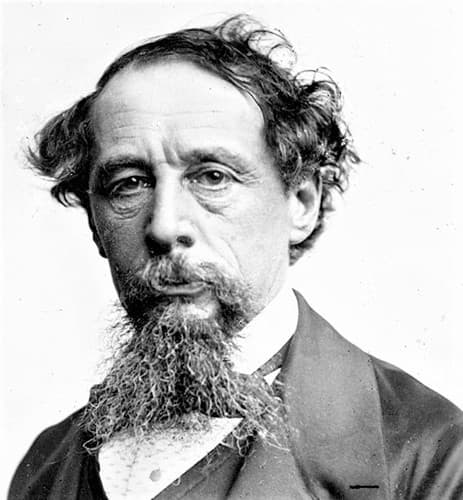
Charles Dickens

Charles John Huffam Dickens was an English writer and social critic who created some of the world's best-known fictional characters and is regarded by many as the greatest novelist of the Victorian era. His works enjoyed unprecedented popularity during his lifetime and, by the 20th century, critics and scholars had recognised him as a literary genius. His novels and short stories are widely read today.