“The wind was a living thing, screaming its fury across the land, tearing at the trees, whipping the sea into a frenzy of white horses.”
— Describing the immediate aftermath of the nuclear strike.

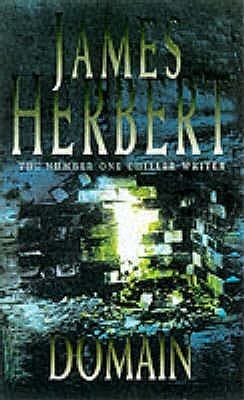
James Herbert (1983)
Genre
Thriller / Fantasy / Science Fiction
Reading Time
10-12 hours
Key Themes
See below
Sign in to track this book
After nuclear war scorches the surface, the last humans must outrun both radiation and mutated rats in a terrifying underground struggle.
The story begins with a sudden, devastating nuclear attack on London. Protagonist David Ash, a former SAS officer, is home when the bombs fall, witnessing instant destruction. His wife, Sarah, and son, Ben, are caught in a supermarket blast. Despite injuries, David searches for them in the ruins but realizes it is hopeless. He joins a small group of survivors, including journalist Kate and engineer Mark, heading for deep shelters and tunnels beneath the city. The immediate aftermath is horrific, with widespread death, radiation sickness, and radioactive ash making the surface uninhabitable.
David's group and others descend into the dark, winding tunnels of the London Underground and old sewers. The initial relief of finding shelter is brief as new threats emerge. Radiation levels remain high in many areas, and the air is thick with dust and death. Supplies are scarce, leading to immediate rationing and disputes. The psychological toll of the catastrophe begins, with despair and paranoia growing. David uses his military training to maintain order and lead, but the disaster's scale and unknown underground dangers test his resolve.
As the survivors go deeper, they find signs of an unnatural presence. Whispers circulate about massive rats, far larger and more aggressive than any known. These are not ordinary vermin; they are mutated, intelligent, and organized, led by a fearsome 'Rat King.' The rats launch coordinated attacks, picking off stragglers and overwhelming small groups. David and his companions see the brutal efficiency of these creatures, realizing they are predators, not just scavengers. The rats use darkness and tunnel knowledge to ambush human prey, turning the underground sanctuary into a deadly trap.
After harrowing encounters, David's dwindling group finds a well-stocked, fortified government bunker, seemingly untouched by the initial blasts. This offers temporary respite and a chance to regroup. However, the bunker is not empty. It holds a small, armed military contingent led by the ruthless Colonel Hinchcliffe, who cares more about his authority and hoarding resources than other survivors. Hinchcliffe sees David's group as intruders and threats, leading to immediate tension. David must navigate this new human threat while still facing the rats.
The bunker's safety is brief. The mutated rats, showing uncanny intelligence, find a way to breach its defenses, perhaps drawn by the concentration of human life. A massive, horrifying battle erupts inside the bunker. Colonel Hinchcliffe's soldiers, though armed, are overwhelmed by the rats' numbers and ferocity. Many fall to their claws and teeth. David, Kate, and Mark fight alongside the remaining soldiers, using whatever they can to repel the attack. The bunker, once a symbol of hope, becomes another death trap, showing the futility of human defenses against this new enemy.
After the devastating bunker attack, David believes the only way to survive is to confront the Rat King directly. He, Kate, and a few other determined survivors decide to track the creatures to their main lair, deep within London's forgotten catacombs and ancient tunnels. This journey is perilous, taking them through dark, suffocating passages filled with decay and constant threat of ambush. They find evidence of the rats' gruesome feeding habits and disturbing intelligence, strengthening David's resolve to eliminate their leader before humanity is consumed.
As David goes deeper into the rats' domain, psychological pressure grows. He experiences vivid, disturbing hallucinations and nightmares, often involving his lost wife and son, Sarah and Ben, and the nuclear blast. These visions are amplified by the darkness and the rats' psychic influence in their lair. David struggles with grief, guilt, and profound loss, questioning his sanity and survival. Kate provides emotional support, trying to keep him grounded, but the apocalypse's trauma weighs heavily on them all.
David, Kate, and the remaining survivors finally reach the heart of the rats' domain — a vast, cavernous chamber filled with countless rats, all serving the colossal Rat King. The Rat King is a grotesque, mutated monstrosity, far larger and more terrifying than other rats, with unnerving intelligence and an almost hypnotic presence. A brutal, climactic battle ensues. David, armed with a makeshift flamethrower and determination, fights the Rat King in a desperate struggle, while Kate and the others fight off swarming hordes. The air is thick with blood, fur, and burning flesh as humanity makes its last stand.
In a grueling confrontation, David kills the Rat King, unleashing psychic agony that disorients the remaining rats. Their leader's death causes the rat army to descend into chaos, turning on each other and scattering. However, victory comes at a terrible price. Many of David's companions, including some of the most resilient, are lost in the final battle. Kate, though wounded, survives, offering a small glimmer of hope. The immediate threat of the organized rat intelligence is neutralized, but the world above remains a radioactive wasteland, and humanity's future is uncertain.
With the Rat King defeated and the organized rat hordes diminished, David and Kate, the sole remaining survivors of their original group, slowly return to the surface. The journey is somber, marked by the silent tunnels, now without the constant scuttling and chittering of rats. When they emerge, the world above is completely transformed. London is a silent, skeletal ruin, shrouded in a perpetual twilight of dust and ash. The sky is a sickly orange, and the air is still tainted with radiation. There are no signs of other human life, only desolation and the chilling realization of what has been lost forever.
David and Kate, isolated in a world without civilization, must confront their daunting reality. They are two of the last humans in a landscape utterly devoid of life as they knew it. Their immediate concerns shift to finding uncontaminated food and water, securing shelter, and dealing with radiation exposure. Despite the horrors and profound grief they carry, a faint spark of resilience remains. They cling to each other, finding solace and strength in their shared survival, embarking on an uncertain future in a world reborn from nuclear fire and rat-infested darkness.
The Protagonist
David transforms from a grieving, shell-shocked survivor into a hardened leader who confronts and defeats the ultimate threat, though deeply scarred by his experiences.
The Supporting
Kate evolves from a professional observer to an active participant in survival, forging a deep bond with David and becoming a symbol of enduring human spirit.
The Supporting
Mark maintains his pragmatic nature throughout the ordeal, proving his value through practical skills before ultimately succumbing to the dangers.
The Antagonist
Hinchcliffe's rigid adherence to military protocol and self-preservation leads to his downfall as his defenses prove insufficient against the true threat.
The Antagonist
The Rat King rises as the dominant predator in the post-apocalyptic underground, challenging humanity's right to survive, before being ultimately defeated by David.
The Mentioned
Her memory serves as a catalyst for David's journey, representing the world and family he lost.
The Mentioned
His memory fuels David's desperate fight for survival, representing the innocent lives lost.
The Antagonist
They emerge as the dominant species in the post-apocalyptic underworld, evolving into a highly organized and deadly threat before their leadership is shattered.
The novel shows the immediate, devastating effects of nuclear conflict. It includes horrific details of the blast's aftermath: widespread death, radiation sickness, civilization's collapse, and environmental destruction. This theme starts on the first pages, with David witnessing London's annihilation, and continues through the constant threat of radiation poisoning and the struggle for basic resources. It serves as a stark warning about the ultimate cost of such a conflict.
“The city had been a living, breathing entity, a vibrant monster. Now it was a dead beast, its bones picked clean by the fire, its flesh turned to dust.”
Beyond physical destruction, the book explores how civilization and morality crumble under extreme pressure. Survivors make impossible choices, and many succumb to their baser instincts. Colonel Hinchcliffe embodies this, prioritizing control and his own survival over compassion. Constant threat and scarcity lead to paranoia, violence, and a loss of empathy among humans, showing how easily society's veneer can strip away, reducing people to desperate animals.
“It wasn't just the bombs that had killed the world. It was what they'd done to the people who survived.”
The mutated rats are a main example of this theme. Nuclear fallout does not just destroy; it transforms, creating new, monstrous life forms that prey on humanity. The rats are not just animals; they are intelligent, organized, and adaptive, representing nature's horrific response to humanity's self-destruction. Their evolution into the dominant underground species signifies a reversal of the natural order, where humans are now the hunted.
“They were no longer just rats. They were the inheritors, the new masters of the dark.”
David's personal journey is rooted in his grief for his lost wife and son. This profound loss is a constant companion, driving his actions but also threatening to overwhelm him. The theme explores how individuals cope with immense personal tragedy while also fighting for physical survival. It highlights the psychological toll of apocalypse, where emotional wounds are as debilitating as physical ones, yet the will to live often persists even in utter despair.
“Every breath was a betrayal of the dead, every beat of his heart a reminder of what he had lost.”
Despite the overwhelming bleakness and constant threat, the novel also touches on the enduring human spirit and a faint glimmer of hope. David and Kate's growing bond, their shared determination to fight, and their eventual emergence into the ravaged world, signify a resilient, though fragile, hope for the future. Even in total annihilation, the act of survival itself, and the forging of new connections, suggests that humanity, in some form, might endure. Their final journey together represents a small, defiant act of moving forward.
“There was nothing left, and yet… there was us. And that was something.”
The extensive network of tunnels and sewers beneath London.
The underground infrastructure of London (Underground, sewers, forgotten catacombs) serves as both a refuge and a trap for the survivors. It is a symbol of humanity's past achievements now repurposed for desperate survival. Its darkness and complexity create a claustrophobic, disorienting atmosphere, amplifying the fear of the unknown and providing the perfect hunting ground for the mutated rats. The labyrinthine nature of the tunnels constantly challenges the characters' navigation skills and psychological endurance.
The lingering, invisible threat of nuclear fallout.
Radiation sickness is a constant, insidious threat that underscores the long-term consequences of nuclear war. It's an invisible enemy that slowly weakens and kills survivors, adding a layer of dread even when immediate dangers are overcome. It represents the inescapable, pervasive damage caused by the bombs, making even 'safe' areas potentially deadly. Its effects are depicted in the deteriorating health of survivors, highlighting the slow, agonizing death that awaits many.
The Rat King's ability to exert mental control and induce visions.
Beyond its physical prowess, the Rat King possesses a psychic influence that affects humans, particularly David. This device adds a psychological horror element, blurring the lines between reality and hallucination. It allows the Rat King to manipulate, disorient, and instill deeper fear in its prey, making it a more formidable and supernatural antagonist than a mere animal. David's visions of his family are often amplified or twisted by this influence, adding to his internal torment.
The dwindling supply of food, water, and essential items.
The extreme scarcity of resources is a critical plot device that drives much of the human conflict and decision-making. It forces rationing, creates tension between survivors, and highlights the breakdown of societal norms. The constant struggle for food and water underscores the primitive nature of their existence and the sheer difficulty of survival, making every discovery a moment of temporary relief and every loss a major setback.
“The wind was a living thing, screaming its fury across the land, tearing at the trees, whipping the sea into a frenzy of white horses.”
— Describing the immediate aftermath of the nuclear strike.
“It wasn't the bombs that killed you, not directly. It was the slow, agonizing crawl of the world dying around you.”
— A character reflecting on the true horror of nuclear war.
“Fear was a constant companion, a cold knot in the gut that never truly went away.”
— The pervasive emotion experienced by the survivors.
“The city was a tomb, a monument to the folly of man.”
— Describing the devastated London landscape.
“There was no good, no evil, only the stark reality of existence.”
— A philosophical observation on the moral landscape post-apocalypse.
“The rats were the new masters, scuttling through the ruins, claiming what was left.”
— Illustrating the breakdown of human dominance and the rise of vermin.
“He knew then that humanity's greatest enemy wasn't the bomb, but itself.”
— A realization about the inherent destructive nature of mankind.
“The silence was worse than any scream, a vast, echoing void where life had once thrummed.”
— The eerie quiet after the initial chaos.
“Hope was a dangerous thing, a fragile spark that could be extinguished in an instant.”
— A character's jaded view on maintaining optimism.
“The world had ended, not with a bang, but with a whimper of radiation sickness and starvation.”
— A bleak summary of the post-nuclear reality.
“He looked at the sky, no longer blue, but a bruised, sickly grey, and knew it mirrored the colour of his soul.”
— A character's internal state reflected in the environment.
“Survival was a dirty business, stripping away all pretence, leaving only the raw, desperate animal.”
— Describing the brutal realities of living in the wasteland.
“The past was a ghost, haunting their every step, a reminder of what they had lost.”
— The constant burden of memory for the survivors.
Ready to see how well you understood this book? Take our interactive quiz with 10 questions.
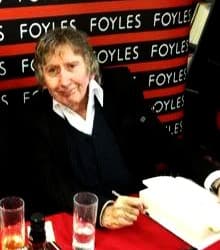
Biography coming soon.







