“The sea is like a great storyteller, always whispering new tales to those who listen.”
— Sophie reflecting on the ocean's mysteries.

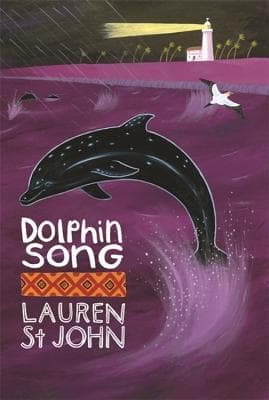
Lauren St. John (2007)
Genre
Fantasy / Children's / Mystery
Reading Time
240 min
Key Themes
See below
Sign in to track this book
When a school trip to witness the Sardine Run turns into a shipwreck, Martine finds herself marooned on a deserted island with her classmates, battling the elements and a mysterious threat to the dolphins who saved them.
Martine Allen lives at Sawubona wildlife reserve in South Africa with her grandmother, Gwyn Thomas. She is unhappy to learn she must attend a two-week school trip, meaning she has to leave her best friend, the rare white giraffe Jemmy, and her other animal companions. The trip is an ocean voyage to see the annual Sardine Run off the Wild Coast. Before leaving, Martine has a vivid dream: she is underwater, surrounded by dolphins, and hears a voice calling for help. The dream makes her feel uneasy and gives her a sense of danger, making her even more reluctant to leave Sawubona.
Martine, along with her classmates Ben, Jake, and the new, somewhat arrogant girl, Chloe, board the boat, the 'Sea Serpent,' for their adventure. At first, the trip is exciting as they see the Sardine Run, a large migration of sardines that attracts predators like sharks, dolphins, and gannets. Martine is especially interested in the dolphins. However, the weather quickly worsens. A storm, much stronger than predicted, suddenly appears. The 'Sea Serpent' is tossed by large waves, and the crew struggles to control the boat as the tempest hits it.
As the storm continues, a large wave crashes over the 'Sea Serpent,' causing it to capsize. Martine, Ben, Jake, Chloe, and their teacher, Mr. Harrison, are thrown into the rough, shark-infested waters. They panic as they try to stay afloat amid the debris and strong currents. Just as a shark approaches Martine, dolphins appear, circling the children and driving the sharks away. The dolphins then guide the survivors through the waves towards what looks like land, showing an unusual intelligence and protective instinct.
The dolphins lead Martine and her group to a small, uninhabited island. Tired and confused, they pull themselves onto the sandy beach. Mr. Harrison, though injured, tries to take charge. However, supplies are scarce, and the reality of their situation quickly sets in. Early attempts to find food and fresh water have little success. Tensions rise among the students, especially between the practical Martine and the demanding Chloe, as they deal with survival on the isolated island.
As days pass, Martine's wilderness training from Sawubona becomes very useful. She takes the lead in finding edible plants and setting up a basic shelter. While exploring the island, she finds a hidden, freshwater pool among old trees. This pool has a special quality, and Martine senses it has deep spiritual meaning. She is surprised to find that the dolphins from the sea can reach this pool through an underwater cave system. She realizes this is a special, sacred place for the dolphins, connecting the island to the ocean.
Martine notices that some of the dolphins visiting the sacred pool appear distressed and injured. She uses her healing gift, which allows her to connect with animals, to understand their pain. She finds that many of them have internal injuries and a strange sickness. Through her connection, she senses great fear and urgency from the dolphins. She realizes they are not just injured, but are being hunted or harmed by something unseen in the ocean. This changes her focus from human survival to helping her dolphin saviors.
Because of the dolphins' problems, Martine and Ben explore more of the island. They find a hidden cove with signs of human activity: discarded fishing nets, harpoon parts, and a crude camp. It becomes clear that illegal whalers or poachers are operating in the area, using sonar to confuse and trap marine life, which causes the dolphins' injuries and sickness. This discovery explains the dolphins' distress and the uneasy feeling Martine had since her dream. The poachers threaten not only the dolphins but also the castaways if they are found.
Martine, realizing how serious the situation is, suggests a plan: they must find a way to signal for help and expose the poachers. Mr. Harrison is hesitant, fearing confrontation, while Chloe cares more about her own rescue. However, Ben and Jake agree to help Martine. They decide to try and create a large signal fire on the highest point of the island. At the same time, Martine continues to work with the dolphins, using her healing touch and trying to communicate the need for them to stay away from the poachers' dangerous equipment. She feels a deep responsibility to protect them.
As Martine and the others work on their signal, the poachers, alerted by their activities or perhaps by the absence of easy prey, find the castaways' camp. A tense confrontation happens, with the poachers threatening the children. Just as the situation looks bad, a naval patrol boat, having seen the signal fire, arrives. The poachers try to escape, but the patrol boat quickly catches them. The children are rescued, and the poachers' illegal operations end, ensuring the safety of both humans and marine life.
After being rescued, Martine and her classmates return home safely. Martine reunites with her grandmother and Jemmy at Sawubona, happy to be back. The experience has left her with a sense of accomplishment and a deeper understanding of her healing gift. She knows her connection to the dolphins is stronger than ever, and she remembers their bravery and her role in their salvation. The experience confirms her dedication to protecting wildlife and has created new bonds with her classmates, especially Ben.
The Protagonist
Martine grows from a somewhat reluctant participant in a school trip to a confident leader who embraces her unique gift to save both humans and animals.
The Supporting
Ben's initial quiet support for Martine strengthens into a deep and trusting friendship, showcasing his loyalty and courage.
The Supporting
Chloe's initial self-centeredness gives way to a grudging respect for Martine and a greater appreciation for cooperation, though she remains largely focused on her own comfort.
The Supporting
Jake learns to trust Martine's leadership and contributes to the group's survival, growing in resourcefulness.
The Supporting
Mr. Harrison learns to delegate and trust the unconventional leadership of Martine, recognizing her unique abilities are crucial for their survival.
The Supporting
Gwyn continues to be a source of wisdom and support for Martine, affirming her gift and helping her process her experiences.
The Supporting
Jemmy remains a constant, comforting presence in Martine's mind, a symbol of her home and her unique abilities.
The Supporting
The dolphins transition from being the saviors of the humans to being the ones in need of human help, highlighting the reciprocal nature of compassion.
The Antagonist
The poachers are a constant, looming threat that is eventually neutralized by the authorities, thanks to Martine's efforts.
The main theme is Martine's ability to connect with and understand animals. Her gift lets her communicate with dolphins, sense their distress, and heal them. This theme shows through her bond with Jemmy and her intuitive understanding of nature, which works better than traditional methods in a crisis. The sacred pool on the island highlights the spiritual connection between humans and the environment, showing that nature holds ancient wisdom.
“She felt the dolphin's pain, a deep ache in its side, and a profound sadness, like a song of loss.”
The novel explores survival as Martine and her classmates are stranded on an island. It shows the importance of practical skills, teamwork, and adapting to difficult situations. Martine's wilderness training from Sawubona becomes very useful, helping her find food, water, and shelter. The island's challenges make the children overcome their differences and work together, showing human strength when facing hardship. This theme compares the comforts of civilization with the harshness of the wild.
“The wild had taught her to read the land, to listen to its whispers, and now, more than ever, she needed those lessons.”
Martine's journey is one of self-discovery and becoming a leader. Initially shy among her peers, the crisis forces her to step up and use her talents. She takes charge when adults are unable or overwhelmed, showing courage, initiative, and a strong moral compass. This theme explores how difficult situations can reveal hidden strengths and how true leadership comes from empathy, competence, and a willingness to act for the greater good, even when others are doubtful.
“She wasn't just Martine anymore; she was the one who could understand, the one who could heal, the one who had to lead.”
The threat from illegal poachers to the dolphins directly addresses environmental protection. The novel shows how vulnerable marine ecosystems are to human greed and harmful practices. Martine's decision to save the dolphins and expose the poachers highlights the importance of conservation and speaking up for creatures without a voice. It reminds readers of nature's delicate balance and humanity's role in protecting it.
“These creatures, so full of life, were being hunted for nothing more than greed. It was a crime against the ocean.”
The relationships between Martine, Ben, Jake, and Chloe show friendship and cooperation. Despite initial disagreements, the shared experience makes the children rely on each other. Ben and Jake become loyal companions to Martine, giving support and help. Even Chloe, initially self-centered, begins to understand the need to work together. This theme emphasizes that working together and supporting each other are necessary for overcoming difficult obstacles, building unexpected bonds.
“They were a team now, bound not by choice, but by the wild, unforgiving sea and the island that held them captive.”
Martine's inherited ability to communicate with and heal animals.
Martine's unique healing gift is a central magical realism element. It allows her to feel the pain of animals, understand their intentions, and even mend their injuries. This gift is a direct plot driver, enabling her to comprehend the dolphins' plight and motivating her actions. It also serves as a metaphor for deep empathy and humanity's potential to connect with and protect the natural world. The gift is both a source of power and a responsibility for Martine, making her the only one capable of truly understanding the dolphins' crisis.
A premonitory dream that foreshadows the events of the shipwreck and dolphin encounter.
Martine's vivid dream before the trip, featuring her underwater with dolphins and a plea for help, acts as a classic foreshadowing device. It creates a sense of unease and anticipation for the reader, hinting at the dangers to come. When the actual events unfold, the dream validates Martine's intuitive connection to the natural world and reinforces the idea that her destiny is intertwined with the dolphins, giving her journey a sense of purpose beyond mere survival.
An isolated, uninhabited island that serves as the crucible for survival and discovery.
The deserted island is a classic plot device that creates a confined and challenging environment for the characters. It strips them of modern conveniences, forcing them to rely on their wits and each other for survival. The isolation intensifies character interactions, highlights individual strengths and weaknesses, and allows for the discovery of hidden elements like the sacred pool and the poachers' camp, driving the plot forward and fostering personal growth in the face of adversity.
A hidden, mystical freshwater pool on the island, connected to the ocean and the dolphins.
The sacred pool serves as a symbolic and functional plot device. It's a place of refuge and healing for the dolphins, emphasizing their spiritual connection to the island. For Martine, it's a sanctuary where she can deepen her bond with the dolphins and understand their suffering. The pool's mystical qualities reinforce the novel's themes of nature's magic and the deep, ancient connections within the ecosystem, providing a focal point for Martine's healing efforts and insights.
“The sea is like a great storyteller, always whispering new tales to those who listen.”
— Sophie reflecting on the ocean's mysteries.
“Sometimes, the bravest thing you can do is admit you're scared.”
— Sophie grappling with her fears about the journey.
“Every wave that breaks on the shore carries a secret from the deep.”
— An old fisherman's wisdom shared with Sophie.
“Family isn't always about who you're born to, but who you find along the way.”
— Sophie realizing the bond she forms with her new companions.
“The greatest treasures are not always gold or jewels, but the stories they tell.”
— Sophie pondering the value of the ancient legends.
“Even the smallest creature can make the biggest difference.”
— Sophie observing the interconnectedness of marine life.
“To truly see, you must look with your heart, not just your eyes.”
— A mystical character guiding Sophie's perception.
“Hope is the anchor that holds us in the storm.”
— Sophie maintaining her resolve during difficult times.
“The past is never truly gone; it just waits for someone to remember it.”
— Uncovering ancient mysteries and their connection to the present.
“A true friend is someone who believes in you even when you doubt yourself.”
— Sophie reflecting on the loyalty of her companions.
“Sometimes the answers you seek are not in distant lands, but within yourself.”
— Sophie's journey of self-discovery.
“The ocean doesn't just hold water; it holds memories, dreams, and forgotten songs.”
— Describing the profound depth and magic of the sea.
“To protect what you love, sometimes you have to be willing to lose everything.”
— Sophie's ultimate sacrifice and dedication.
Ready to see how well you understood this book? Take our interactive quiz with 10 questions.







