“I did not kill my husband. I just stopped him from killing me, and what's the difference?”
— Dolores's initial confession and defense of her actions regarding Joe St. George.

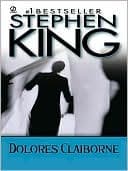
Stephen King (1992)
Genre
Thriller / Mystery
Reading Time
450 min
Key Themes
See below
Sign in to track this book
Accused of murdering her employer, a sharp-tongued island woman reveals a lifetime of secrets, including the truth behind her abusive husband's death and her complex bond with the manipulative heiress she served.
The novel opens with Dolores Claiborne, a sixty-five-year-old island woman, being questioned at the police station on Little Tall Island, Maine. She is suspected of murdering her wealthy, invalid employer, Vera Donovan, who died after falling down stairs. Dolores claims Vera's death was an accident, but the police are suspicious because of Vera's large fortune and Dolores's long history with her. Dolores, a strong and outspoken woman, wants to tell her story her own way, believing it will reveal the truth about both Vera's death and the death of her abusive husband, Joe St. George, thirty years earlier—a death never fully investigated.
Dolores's story shifts to her early life and marriage to Joe St. George. She describes Joe as charming but cruel and abusive, an alcoholic who wasted their money, beat her, and sexually molested their eldest daughter, Selena. Dolores worked hard as a housekeeper for Vera Donovan to support her children, often enduring Joe's rages and financial irresponsibility. The constant fear and desperation during these years made her strong but also pushed her to her limit, creating a deep need to protect her children, especially from Joe's behavior toward Selena.
The summer of 1963 brings a total solar eclipse, an event Dolores uses to cover her planned murder of Joe. She explains how she bought a new well rope, knowing Joe would be fixing the old, rotten one. On the day of the eclipse, as the island grew dark, Dolores, pretending concern for Joe working near the old well, lures him to its edge. She reveals her full knowledge of his molestation of Selena, confronting him before pushing him down the well. The darkness of the eclipse hides her crime, and the event's chaos helps obscure the details of his 'accidental' death.
After Joe's death, Dolores calmly retrieves his body from the well, making it seem like he fell accidentally while drunk. Local authorities, including Sheriff Andy Bissette, are suspicious but rule it an accident, mainly because of Joe's reputation as a heavy drinker and the unusual circumstances of the eclipse. Dolores feels a deep sense of relief and freedom, though also lasting guilt and the weight of her secret. Her children, especially Selena, also seem to find peace, though the unspoken trauma of their father's abuse and death remains. Dolores continues her work for Vera, now with a renewed sense of purpose.
Dolores talks more about her long employment with Vera Donovan, a wealthy, aristocratic, and difficult woman. At first, Vera is a demanding but fair employer, a respected figure on the island, though sharp-tongued. Dolores details Vera's meticulous household, strict routines, and expectation of loyalty. Despite their class differences and Vera's condescending attitude, a strange bond develops. Dolores sees hints of vulnerability and understanding in Vera, especially after Joe's death, when Vera subtly acknowledges Dolores's unspoken burdens without ever mentioning the murder.
As years pass, Vera Donovan's health declines, leading to increasing frailty and dementia. She becomes almost entirely dependent on Dolores for daily care, including bathing, feeding, and medicine. This period includes Vera's increasingly erratic behavior, her sharp, often cruel, remarks, and occasional moments of clarity where she expresses fear or regret. Dolores, despite the immense physical and emotional strain, stays loyal, driven by duty and a complex affection for the woman who, in her own way, had been a constant in her life and a silent witness to her past struggles.
Dolores explains the events of the night Vera died. Vera, suffering from advanced dementia, had become increasingly agitated and prone to falls. On this particular night, Vera tried to get out of bed to use the bathroom, despite Dolores's warnings and attempts to help. Dolores was in the kitchen, preparing Vera's medicine, when she heard a thud. She rushed back to find Vera at the top of the stairs, having fallen and broken her neck. Dolores insists it was a tragic accident, a result of Vera's deteriorating health and stubborn independence, not an act of malice, despite the convenient timing for Dolores.
The police reveal that Vera Donovan recently changed her will, leaving a large portion of her estate to Dolores Claiborne, along with money for her legal defense. This discovery strengthens police suspicion that Dolores murdered Vera for financial gain, especially given the unresolved questions about Joe St. George's death. Dolores strongly denies this motive, explaining that Vera's bequest was an act of gratitude and recognition of Dolores's decades of loyal service. She dismisses killing for money, stating her main motive has always been survival and protecting her children, not greed.
During the interrogation, Dolores's daughter, Selena St. George, arrives at the police station. Selena, now a successful journalist, appears calm and distant, but a subtle, unspoken understanding passes between mother and daughter. Selena's presence quietly affirms her belief in her mother, and she offers a silent acknowledgment of Dolores's sacrifices. Dolores reflects on her difficult relationship with her children, especially Selena, after Joe's death, and the unspoken knowledge they all carried about their father's true nature and the circumstances of his death. Selena's return shows a family bond that goes beyond words and legal proceedings.
Driven by the need to clear her name regarding Vera's death and to unburden herself, Dolores finally confesses the complete truth about Joe St. George's murder. She recounts every detail of the eclipse, her careful planning, and the desperate reasons behind her actions: to protect Selena from further abuse and to free herself and her other children from Joe's destructive presence. She makes it clear that while she killed Joe, it was an act of survival and motherly love, not cold-blooded murder. She emphasizes that Vera's death, however, was truly an accident, and that she felt no ill will towards her employer.
Dolores ends her testimony by reflecting on Vera Donovan's complex character, acknowledging her cruelty but also her unexpected kindness and understanding. She reveals that Vera had known, or at least suspected, the truth about Joe's death all along, a silent agreement between the two women. Vera's final act of leaving Dolores the money is seen as respect and a final assertion of control, ensuring Dolores's financial security and her ability to defend herself. Dolores leaves the interrogation feeling free, having finally told her entire story and unburdened herself of decades of secrets.
The police, having heard Dolores's full confession about Joe's death, must now decide how to proceed. While the statute of limitations for Joe's murder has likely passed, and the evidence for Vera's murder remains circumstantial, Dolores has revealed everything. The novel ends with Dolores facing the legal consequences but also finding new freedom and peace. She has survived, protected her children, and finally claimed her own story. The story closes with Dolores, having told her truth, ready for whatever comes next, showing her lasting strength.
The Protagonist
Dolores transforms from a desperate, suffering wife into a self-possessed woman who takes control of her destiny, ultimately finding peace by fully owning her past actions and sacrifices.
The Supporting
Vera's arc is one of physical and mental decline, revealing glimpses of vulnerability and a subtle, unspoken bond with Dolores that transcends their class differences.
The Antagonist
Joe's arc is static, remaining a destructive force until his death, which serves as a turning point for Dolores.
The Supporting
Selena's arc is largely implied, showing her survival and success despite childhood trauma, and her quiet return to support her mother.
The Supporting
Andy's arc shows his progression from a suspicious lawman to someone who, while still bound by law, gains a deeper understanding and perhaps even empathy for Dolores's actions.
The Mentioned
Mr. Pease's arc is minimal, serving mainly to introduce key plot information.
The most powerful theme is Dolores's fierce, protective love for her children, especially Selena. This love leads her to commit murder to free them from Joe's abuse and neglect. Her willingness to endure hardship and sacrifice her own peace for their well-being is central to her character. This theme is clear in her careful planning of Joe's death, not for personal gain, but to ensure Selena's safety and the children's future, and her lifelong dedication to providing for them, even with Joe's irresponsibility.
“Sometimes being a bitch is all a woman has to hold onto.”
Dolores's life shows human strength in the face of extreme difficulty. She survives an abusive marriage, poverty, and the emotional cost of committing murder. Her ability to endure, adapt, and maintain her spirit, even when facing suspicion and judgment, is a core part of the story. Her plain-spoken, no-nonsense manner reflects a woman who has learned to rely only on herself and her inner strength to navigate a harsh world, especially on isolated Little Tall Island where resources are few.
“There are times in a woman's life when she's got to take matters into her own hands.”
The novel explores the heavy burden of keeping a dark secret and the freedom that comes with confession. Dolores carries the secret of Joe's murder for decades, shaping how she sees herself and her relationships. Her monologue to the police is not just a defense, but a deep act of unburdening, allowing her to finally confront her past and find some peace. The unspoken understanding between her and Vera, and later Selena, about Joe's death, shows how secrets can be shared without words.
“Sometimes I think there's no such thing as an accident, only God's will doing a little editing.”
The story raises questions about justice, especially when legal justice fails. Dolores takes justice into her own hands when the law cannot protect her or her children from Joe's abuse. This makes the reader consider whether her actions, though illegal, were morally right given the circumstances. The contrast between the 'accidental' deaths of Joe and Vera further complicates the moral situation, examining the fine line between intention and consequence, and the different forms justice can take.
“You can plan all you want, but you ain't gonna plan your way out of your own heart.”
The entire novel shows the power of one's own story. Dolores insists on telling her story her own way, without police procedures or outside judgment. Through her monologue, she reclaims her narrative, stating her truth and agency. This highlights how personal stories can challenge official accounts and reveal deeper, more complex realities. Her authentic voice is the main way to understand her character and the events of her life.
“A man who hurts a child is the lowest thing there is, and if there's a hell, that's where he'll go.”
The entire novel is told through Dolores's uninterrupted, stream-of-consciousness narrative.
The story is presented as a single, continuous monologue from Dolores Claiborne to the police, without chapter breaks or external narration. This device creates an intimate and immediate connection with Dolores, allowing the reader direct access to her thoughts, feelings, and unvarnished voice. It builds suspense as she gradually reveals key details, and it emphasizes her control over her own story, challenging official narratives and presenting a deeply personal perspective on justice and morality. The lack of interruption reinforces her strong, defiant character.
A celestial event used as a temporal and symbolic cover for Joe St. George's murder.
The total solar eclipse of 1963 serves as a pivotal plot device. Temporally, it provides a specific, chaotic window of time during which Dolores can commit Joe's murder with minimal suspicion. Symbolically, the eclipse represents the temporary darkness and moral ambiguity of her actions, a moment when the world is literally turned upside down, mirroring the upheaval in Dolores's life. It also emphasizes the primal nature of her act, shrouded in primeval darkness, and the 'darkness' that Joe brought into her family's life.
The site of Joe St. George's murder, symbolizing hidden depths and secrets.
The old well on Dolores's property is not just the murder weapon but also a potent symbol. Wells traditionally represent sources of life and sustenance, but here it becomes a grave, a place where darkness and secrets are buried. It symbolizes the hidden depths of Dolores's despair and her desperate solution. The act of pushing Joe into the well signifies her desire to bury the abuse and trauma he inflicted, sealing it away from her children and her life, though the secret still festers within her for decades.
A posthumous bequest that adds a layer of suspicion and reveals Vera's understanding.
Vera Donovan's decision to leave a significant portion of her estate to Dolores Claiborne acts as a crucial plot device. Initially, it provides the police with a strong motive for Dolores to have murdered Vera, fueling the central mystery. However, as Dolores's story unfolds, the inheritance transforms into a symbol of Vera's deep, unspoken understanding of Dolores's past sacrifices and struggles, and a final act of respect and care. It allows Dolores to afford a legal defense, ensuring her story can be fully told and her truth revealed.
“I did not kill my husband. I just stopped him from killing me, and what's the difference?”
— Dolores's initial confession and defense of her actions regarding Joe St. George.
“Sometimes being a bitch is all a woman has to hold on to.”
— Dolores reflecting on the perceived necessity of being strong and assertive in a patriarchal world.
“On an island, dead is dead, and there's no coming back.”
— Dolores explaining the finality and isolation of life and death on Little Tall Island.
“I saw what he was and I saw what he was doing, and I saw what he was going to do. And I decided, then and there, that he wasn't going to do it to my daughter.”
— Dolores's realization about Joe's abuse of Selena and her resolve to protect her.
“The world keeps turning, and sometimes it turns on you.”
— Dolores musing on the unpredictable and often cruel nature of life.
“You can cover up a lot of things with a good coat of paint, but you can't cover up a bad heart.”
— Dolores's metaphorical observation about appearances versus true character, often applied to Joe.
“A woman's place is in the home, but sometimes a woman's home is a cage.”
— Dolores reflecting on the societal expectations placed on women and the reality of domestic life.
“Sometimes you have to be a little bit bad to do a whole lot of good.”
— Dolores justifying her morally ambiguous actions as necessary for a greater positive outcome.
“It was a dark day, but it was also a day when I felt like I finally woke up.”
— Dolores describing the day she decided to take control of her life and confront Joe.
“There are no accidents, only things we don't understand.”
— Dolores's view on the interconnectedness of events and the hidden meanings behind them.
“The past ain't dead, it ain't even past. It's just waiting for you, like a spider in a web.”
— Dolores's ongoing struggle with her past actions and their lingering consequences.
“You can scream all you want, honey, but on this island, nobody's gonna hear you but the gulls.”
— Dolores's chilling internal monologue about the isolation and lack of help on Little Tall Island.
“I buried him, all right. I just didn't use a shovel.”
— Dolores's metaphorical statement about how she effectively ended Joe's presence in her life.
“Some things just don't bear thinking about, but you have to think about them anyway, because they're there.”
— Dolores on the unavoidable and often painful truths of life.
Ready to see how well you understood this book? Take our interactive quiz with 10 questions.

Stephen Edwin King is an American author of horror, supernatural fiction, suspense, crime, science-fiction, and fantasy novels. Described as the "King of Horror", his books have sold more than 350 million copies as of 2006, and many have been adapted into films, television series, miniseries, and comic books. King has published over 65 novels/novellas, including seven under the pen name Richard Bachman, and five non-fiction books. He has also written approximately 200 short stories, most of which have been published in book collections.







