BookBrief
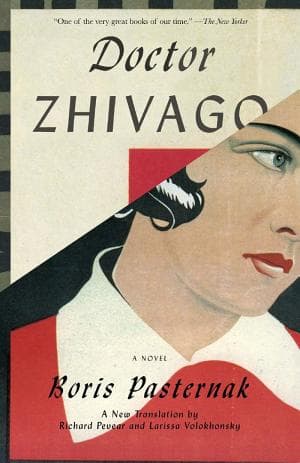
Doctor Zhivago cover
Archivist's Choice

Doctor Zhivago

Boris Pasternak (2011)

Genre

Historical Fiction / Romance

Reading Time

15-20 hours

Key Themes

See below

Track Your Reading

Sign in to track this book

During the Russian Revolution, a poet-physician navigates war, finding solace and sorrow in his love for the enigmatic Lara.

Synopsis

Yury Zhivago, an orphaned boy from a wealthy family, becomes a physician and poet in early 20th-century Russia. His life is shaped by relationships and the struggle for survival and artistic expression during World War I, the Russian Revolution, and the Civil War. He marries Tonya, a stable woman, and they have a family in Moscow. However, Yury repeatedly meets Lara Antipova, and their connection, built on shared experiences of loss, war, and revolution, grows into a deep love. This love becomes the central romance of his life, despite frequent separations and impossible circumstances. Zhivago struggles to keep his humanity and artistic integrity as society collapses. He is swept from Moscow to the Ural Mountains, where he finds brief peace and the harsh realities of war, including forced service with partisan groups. Eventually, he loses his family, his health, and his connection to Lara, dying a broken man in Moscow. His poetry is his lasting legacy.
Reading time
15-20 hours
Difficulty
Medium
Pacing
Slow
Mood
Epic, Melancholy, Romantic, Reflective, Historical
✓ Read this if...
You enjoy epic historical sagas with a strong romantic element set against a backdrop of profound political and social change.
✗ Skip this if...
You prefer fast-paced plots with clear resolutions and dislike complex narratives with many characters and a melancholic tone.

Plot Summary

The Orphaned Boy and Early Loves

The novel begins with Yury Zhivago's mother's funeral, a key event in his early life. Orphaned, young Yury is taken in by his wealthy uncle, Nikolai Vedeniapin, a philosopher and writer. Yury spends his childhood in Moscow, where he later studies medicine. During this time, he first meets Lara Guishar and Pasha Antipov, though their lives do not significantly connect until later. He also meets Tonya Gromeko, the intelligent daughter of the family he lives with, and they develop a strong affection that leads to their marriage.

Moscow Society and Budding Romance

Yury Zhivago, now a doctor, marries Tonya Gromeko and they start a family in Moscow. Their life includes intellectual pursuits, artistic discussions, and the comforts of their social status. Meanwhile, Lara Guishar has a difficult adolescence, marked by an affair with the older, manipulative lawyer Victor Komarovsky, who was also involved with her mother. Pasha Antipov, an idealistic young man in love with Lara, is troubled by the rumors and truth of her relationship with Komarovsky, which pushes him towards disillusionment and radicalism.

War and Intersecting Fates

When World War I breaks out, Dr. Yury Zhivago is drafted as a military physician, leaving his wife Tonya and their children in Moscow. Lara Guishar, now married to Pasha Antipov (who also volunteers for the front), becomes a nurse to find her missing husband. They meet in the field hospitals of the Eastern Front, working closely amid the war's horrors. A deep connection forms between Yury and Lara, based on shared suffering, compassion, and a mutual understanding that goes beyond their circumstances.

Revolution and Moscow's Transformation

After the war, Yury returns to a greatly changed Moscow. The October Revolution has ended the old order and brought intense political and social upheaval. The Zhivago family's comfortable life is destroyed by food shortages, political surveillance, and property nationalization. Yury struggles to continue his medical practice and poetry amid the poverty and ideological demands of the new Bolshevik regime. He sees firsthand the brutal realities of the civil war and the suppression of individual freedoms.

Flight to Varykino

Desperate to escape the famine and political oppression in Moscow, Yury decides to take his family – Tonya, their children, and Tonya's father, Alexander Gromeko – to Varykino, an estate in the Ural Mountains that once belonged to the Gromeko family. The journey is difficult and dangerous, taken by train across a war-torn landscape. Along the way, they encounter various factions and widespread suffering, highlighting the chaos and violence gripping the country. This move is a desperate attempt to find peace and keep their family together.

Life in Varykino and Lara's Return

At Varykino, Yury and his family try to build a new life, farming the land and seeking normalcy. Yury finds new inspiration for his poetry in nature's solitude. Unexpectedly, he meets Lara in the nearby town of Yuriatin, where she lives with her daughter, Katya, after her husband Pasha disappeared. Their deep connection from the war rekindles and strengthens. They begin a passionate affair, meeting secretly and finding solace and understanding in each other amid their harsh lives.

Capture by the Forest Brotherhood

On his way back from Yuriatin to Varykino after a secret meeting with Lara, Yury Zhivago is captured by the Red partisans of the Forest Brotherhood, led by Liverius. He is forced to serve as their doctor against his will. This brutal separation from his family and Lara is a major turning point, taking away his freedom and forcing him into a life of constant danger and moral compromise, witnessing atrocities from both sides of the civil war.

Escape and the Fate of His Family

After two years of forced service with the partisans, enduring immense hardships and moral dilemmas, Yury Zhivago finally escapes. He returns to Varykino, only to find that his family – Tonya, the children, and Alexander Gromeko – have been forced to leave Russia and are now exiled in Paris. Devastated but also freed from his family responsibilities, Yury returns to Yuriatin and reunites with Lara. Their love becomes a central anchor in their lives, a source of deep comfort and meaning in an unstable world.

Komarovsky's Intervention and Final Separation

The manipulative lawyer Victor Komarovsky reappears, now a high-ranking official in the Far Eastern Republic, a Soviet-backed state. He offers Lara and her daughter Katya safe passage to the Far East, claiming their lives are in danger due to Pasha Antipov's (now the formidable Red Army commander Strelnikov) disgraced status. Yury, realizing the great peril they face and believing it is the only way to save them, urges Lara to accept Komarovsky's offer, despite the pain of their separation. Their farewell is deeply painful, a final wrenching apart of two souls bound by love and circumstance.

Decline and Death in Moscow

After Lara leaves, Yury Zhivago returns to Moscow, where he lives a life of growing poverty, isolation, and illness. He tries to resume his medical practice and writing, but his health worsens, and he struggles to adapt to the new Soviet reality. He lives with Marina, a former servant, and has children with her, but his spirit is broken. He suffers several heart attacks and eventually collapses and dies on a Moscow tram, a lonely and anonymous end to a life marked by deep love, suffering, and artistic aspiration.

Lara's Last Appearance and the Aftermath

At Yury Zhivago's funeral, a mysterious woman appears, grieving deeply. It is Lara, who has returned to Moscow after her time in the Far East. She is devastated by Yury's death and helps his half-brother, Evgraf, organize Yury's papers and poems. However, Lara soon disappears, likely caught in the purges and repressions of the Stalinist era, her fate unknown. The novel ends with an epilogue set years later, during World War II, where Yury's old friends, Dudorov and Gordon, reflect on his life and legacy, finding comfort in his poems.

The Zhivago Notebook

The novel ends with a collection of poems attributed to Yury Zhivago, called 'The Zhivago Notebook.' These poems are not just an appendix but a part of the narrative, giving a lyrical and philosophical summary of Yury's experiences, his love for Lara, his thoughts on nature, life, death, and the turbulent history he lived through. They capture his artistic spirit, his personal reflections, and his lasting hope, providing a poignant and timeless commentary on the novel's themes.

Principal Figures

Yury Andreyevich Zhivago

The Protagonist

From an orphaned boy seeking meaning, Yury evolves into a man profoundly shaped by love and loss, ultimately finding his truest expression and legacy in his poetry.

Larissa Fyodorovna Antipova (Lara Guishar)

The Protagonist/Love Interest

From a young woman scarred by manipulation, Lara grows into a resilient and loving figure, ultimately becoming the muse and tragic love of Yury's life.

Pavel Pavlovich Antipov (Pasha, then Strelnikov)

The Antagonist/Supporting

From a sensitive idealist, Pasha transforms into the hardened, fanatical revolutionary Strelnikov, ultimately losing his way and his life to the cause he embraced.

Antonina Alexandrovna Zhivago (Tonya Gromeko)

The Supporting

Tonya remains a steadfast and loving wife and mother, enduring the hardships of the revolution with dignity, only to be forced into exile.

Victor Ippolitovich Komarovsky

The Antagonist

Komarovsky consistently manipulates situations for his own benefit, surviving various political regimes and ultimately playing a role in the final separation of Yury and Lara.

Evgraf Andreyevich Zhivago

The Supporting/Mentioned

Evgraf remains a consistent, if mysterious, presence, serving as Yury's protector and ultimately ensuring his poetic legacy.

Nikolai Vedeniapin

The Supporting

Vedeniapin establishes Yury's intellectual and spiritual foundations, his influence lingering throughout Yury's life as a moral and philosophical guide.

Themes & Insights

The Individual vs. The Collective/Ideology

This is the novel's main conflict, seen in Yury Zhivago's struggle to maintain his personal integrity, artistic freedom, and individual consciousness against the overwhelming, dehumanizing forces of the Russian Revolution and its rigid Bolshevik ideology. Yury, a poet and physician, values personal experience, love, and art, which often clash with the collective demands and brutal efficiency of the new regime. His refusal to fully embrace or denounce any political side makes him an outsider, showing how individual thought and feeling are suppressed in a society dominated by political dogma. This theme is clear in Yury's forced conscription by the partisans and his eventual breakdown in Moscow, where the state destroys his personal life.

''What is it that makes this age, this time, so special? It is the age of universal enthusiasm, the age of universal destruction. The age of the collective, the age of the herd. The age of the individual’s death.'

Yury Zhivago (paraphrased)

Love as a Redemptive Force

Amid the chaos, violence, and despair of the revolution, the love between Yury Zhivago and Lara Guishar is a symbol of hope, beauty, and resilience. Their relationship is not just romantic; it is a deep spiritual connection that offers solace, meaning, and an affirmation of life's lasting value. Their love overcomes physical separation, societal judgment, and political upheaval, becoming the main source of warmth and authenticity in their lives. It represents a private sanctuary where human connection and personal truth can thrive, even as the external world falls apart. This theme is especially strong during their time together in Varykino and Yuriatin.

''Oh, what a joy it is to live and to be alive! What a joy it is to love and to be loved!''

Yury Zhivago

The Cyclical Nature of History and Change

Pasternak explores history not as a straight line but as repeating patterns, where revolutionary fervor often leads to new forms of oppression, and individual lives are repeatedly caught in forces beyond their control. The novel suggests that while regimes change, human suffering, love, and the search for meaning continue. The revolution's initial idealism gives way to terror and disillusionment, mirroring historical cycles of utopian dreams becoming brutal realities. This is seen in Pasha Antipov's transformation from an idealist to the ruthless Strelnikov, and how the new Soviet state becomes as oppressive as, or more than, the old Tsarist regime. The epilogue, set during World War II, further emphasizes this idea of history's relentless, often tragic, unfolding.

''Man is born to live, not to prepare for life.''

Nikolai Vedeniapin

Nature and Art as Sources of Truth and Immortality

Throughout the novel, nature and art, especially Yury's poetry, serve as strong contrasts to the destructive forces of war and ideology. Nature offers solace, inspiration, and a sense of timelessness, giving Yury moments of peace and clarity amid the turmoil. His observations of the natural world often influence his poetry, which becomes his main way of expressing his inner self and preserving his individual spirit. Art, for Yury, is a form of immortality, a way to transcend death and leave a lasting legacy of truth and beauty. His 'Zhivago Notebook' at the novel's end symbolizes art's enduring power over political destruction, suggesting that true meaning lies in personal expression rather than collective dogma.

''Art is always, always, serving beauty, and beauty is the joy of possessing form, and form is the key to organic life, since no living thing can exist without it.''

Yury Zhivago

Loss and Exile

Loss is a constant theme in 'Doctor Zhivago,' appearing in many forms: the death of loved ones, the destruction of homes and livelihoods, the loss of personal freedom, and forced exile from one's homeland. Yury loses his parents, his wife Tonya and children are exiled, and he himself becomes a wanderer in his own country. Lara also experiences deep loss and is eventually consumed by historical purges. This pervasive sense of loss highlights the revolution's devastating human cost, showing how individuals are stripped of their past, stability, and futures, often without clear resolution or return.

''What is laid down, what is given, is not the right to live, but the right to die.''

Yury Zhivago

Plot Devices & Literary Techniques

Symbolism of Names

Character names often carry symbolic weight reflecting their essence or fate.

Pasternak frequently uses names to deepen characterization or foreshadow events. For instance, 'Zhivago' derives from the Russian 'zhivoy,' meaning 'alive' or 'living,' underscoring Yury's profound connection to life, nature, and the enduring human spirit, especially through his poetry. 'Lara' (Larissa) is associated with ancient Greek meaning 'cheerful' or 'citadel,' reflecting her resilience and her role as a spiritual sanctuary for Yury. 'Strelnikov,' Pasha Antipov's revolutionary pseudonym, means 'shooter' or 'executioner,' perfectly encapsulating his transformation into a ruthless and destructive force. This device subtly reinforces themes and character arcs.

Coincidence and Fateful Encounters

Seemingly random encounters repeatedly bring characters together, shaping their destinies.

The novel is replete with seemingly improbable coincidences that repeatedly bring Yury and Lara together, or intertwine their fates with other key characters like Komarovsky and Pasha. From their first fleeting encounters in childhood to their reunion on the war front and later in the Urals, these chance meetings feel less like random occurrences and more like the workings of an overarching destiny or fate. This device emphasizes the interconnectedness of human lives within a vast historical tapestry, suggesting that profound personal connections can persist and re-emerge despite monumental external forces, underscoring the novel's romantic and spiritual dimensions.

The Zhivago Notebook (Poetry as Epilogue)

Yury's collected poems conclude the novel, serving as his enduring legacy and a distillation of the story's themes.

The inclusion of Yury Zhivago's poetry at the very end of the novel is a powerful and unique plot device. It functions as Yury's final testament, his artistic legacy, and a lyrical summary of his experiences, loves, and philosophical reflections. Rather than merely describing Yury as a poet, Pasternak presents his actual poetry, allowing the reader direct access to his inner world. This device elevates Yury's artistic output to a central role, affirming the enduring power of art and individual expression over the destructive forces of history and politics, providing a poignant and timeless conclusion to the narrative.

The Narrator's Omniscience and Reflective Tone

An all-knowing narrator offers both intimate insight and broad historical perspective.

The novel employs an omniscient narrator who not only delves into the characters' innermost thoughts and feelings but also provides sweeping historical context and philosophical reflections. This perspective allows Pasternak to weave together the personal and the political, showing how individual lives are shaped by grand historical events. The narrator's tone is often reflective and lyrical, mirroring Yury's poetic sensibilities, and occasionally interjects with direct commentary or foreshadowing. This device helps to establish the epic scope of the narrative and imbues the story with a profound sense of destiny and historical inevitability.

Critical analysis

Notable Quotes

What is it that is not, and never will be, subject to the power of death? It is the good news, the good tidings, the kingdom of the spirit, of which, as the Scriptures tell us, there shall be no end.

Yury Zhivago's reflections on the nature of life and spirit.

Man is born to live, not to prepare for life.

Yury's belief about the purpose of existence.

Everything changed and nothing changed. There was a new master, a new government, but the same old life.

Observations on the aftermath of the Russian Revolution.

I think that if you are to be a great writer, you must understand that there is no such thing as a small role. Everyone plays a part, even if it is only to be a spectator.

Lara's perspective on the importance of individual lives.

Resurrection. In the crude form in which it is preached to console the ignorant, it is beyond my understanding. Resurrection, in the sense of ever-returning life, I accept and I understand.

Yury's nuanced view on the concept of resurrection.

Art is always about two things. It is about the human heart and the human spirit.

Yury's thoughts on the essence of art.

How many things in the world are not like what they seem!

A general observation on appearances versus reality.

Happy love is a rarity. It is a miracle.

Reflections on the nature of love and happiness.

The only thing that is truly ours is our soul.

A profound statement about individuality and inner self.

You and I, we are two different kinds of people. You are a man of action, and I am a man of thought.

A contrast between two characters' approaches to life.

When a great moment in history comes, it comes for everyone. It sweeps everyone along, whether they want it or not.

The inescapable influence of historical events.

We are like children who have lost their way in a forest. We think we are going somewhere, but we are only wandering.

A metaphor for the human condition and sense of direction.

It was only when the war started that people truly began to live. Before that, they were just existing.

A paradoxical observation on the impact of war on human experience.

The personal is political, and the political is personal.

A concise statement on the interconnectedness of individual lives and societal forces.

You are my one and only, my love, my life, my everything.

A declaration of profound love, likely from Yury to Lara.

Quiz

Test Your Knowledge

Ready to see how well you understood this book? Take our interactive quiz with 10 questions.

10
Questions
~5
Minutes
?
Best Score

Key Questions (FAQ)

The central conflict is the struggle of individuals, particularly Yuri Zhivago, to maintain their personal lives, artistic integrity, and moral compass amidst the overwhelming and destructive forces of the Russian Revolution and subsequent Civil War. This societal upheaval constantly disrupts his family life, medical career, and poetic aspirations.

About the author

Boris Pasternak

Boris Leonidovich Pasternak was a Russian poet, novelist, composer, and literary translator. Composed in 1917, Pasternak's first book of poems, My Sister, Life, was published in Berlin in 1922 and soon became an important collection in the Russian language. Pasternak's translations of stage plays by Goethe, Schiller, Calderón de la Barca and Shakespeare remain very popular with Russian audiences.






