“The wind was howling like a banshee, and the river was a black snake coiling through the town.”
— Describing the atmosphere of Galloway, Massachusetts.

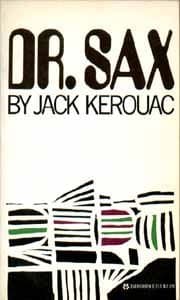
Jack Kerouac (2012)
Genre
Literary Fiction / Fantasy
Reading Time
240 min
Key Themes
See below
Sign in to track this book
In the working-class streets of Lowell, a young French-Canadian boy's imagination creates the mysterious Dr. Sax, a guide through adolescent fears and apocalyptic dreams.
The novel begins with young Jack Duluoz, who represents Kerouac, describing his childhood in Lowell, Massachusetts, focusing on his vivid dreams and nightmares. He is troubled by visions of Doctor Sax, a mysterious, cloaked figure with a menacing laugh and a black bag, who seems to embody both fear and a strange appeal. These night visits often come with other strange creatures and a constant feeling of dread, blurring the line between waking life and the subconscious. Jack's worries come from daily life in Lowell—its poverty, its Catholic rules, and the Merrimack River—but they grow into a fantastical realm where Doctor Sax is the mysterious leader.
Jack's imaginary world grows to include an old, gothic castle on a hill overlooking Lowell, which he believes is Doctor Sax's hideout. This castle becomes central to his fears and fantasies. At the same time, a rumor or vision of a giant black snake starts to spread, growing larger and more threatening, seeming to engulf the town. This snake, a symbol of primal fear and coming disaster, is tied to Doctor Sax's plans, suggesting a grand, apocalyptic event. Jack and his friends often play near the river, a constant reminder of the town's possible vulnerability to this monster.
Despite the constant supernatural threats, Jack's daily life is full of typical childhood experiences. He plays baseball with friends, explores the town, goes to church, and deals with the rules of his French-Canadian Catholic upbringing. These ordinary moments are always mixed with his vivid inner world. The fears of the giant snake and Doctor Sax are always present, even during innocent activities. His friends, though mostly unaware of his inner struggles, sometimes join his imaginative games, hinting at shared anxieties of growing up in a working-class town.
Doctor Sax starts to appear more often in Jack's waking life, or at least in his heightened sense of reality. He is often seen in shadows, on rooftops, or in the empty streets of Lowell at night. Sax speaks in riddles and dark warnings, hinting at a coming disaster for the town. His statements are chilling, strengthening Jack's belief in the real threat of the giant snake and the final confrontation ahead. These encounters deepen Jack's fascination and fear of the mysterious figure, making him question his reality.
In one disturbing scene, Jack sees what he thinks is a dark ritual performed by Doctor Sax and his shadowy followers inside the castle. The details are vague and dreamlike, but the impression is one of sacrilege and occult power. This event deeply affects Jack, confirming his suspicions about Doctor Sax's bad intentions and his connection to dark forces. It further solidifies the castle as a place of deep evil and the center of the supernatural threat to Lowell, raising the stakes of the story.
The long-feared giant black snake begins to awaken, its movements causing tremors and unsettling the people of Lowell. Reports of strange sounds, cracks in the earth, and a heavy atmosphere spread through the community. The town becomes anxious and panicked as the mythical creature seems to change from a childhood fear into a real, tangible threat. Jack feels a strange mix of validation and terror, as his deepest nightmare now appears for everyone to see, confirming Doctor Sax's dire predictions.
As the giant snake's emergence becomes clear, Doctor Sax finally reveals himself more openly to Jack. He explains his purpose, which is not purely evil but a complex, almost cosmic role in the natural cycle of creation and destruction. Sax is a figure of coming change, a catalyst for an apocalyptic event that will cleanse or transform Lowell. His explanations are still cryptic but clarify his motivations, showing him as a more ambiguous figure than first thought, a force of nature rather than simple evil.
Jack, now understanding Doctor Sax's complex role, feels drawn to the castle for the final encounter with the giant snake. Doctor Sax, with grim determination, prepares for a ritual battle or intervention. The atmosphere is tense and charged with an otherworldly energy. Jack, though terrified, is also a participant, a witness, and perhaps even an unwitting helper in the unfolding cosmic drama. The castle, once a symbol of fear, now becomes the stage for the climactic struggle that will decide Lowell's fate.
In a climactic, surreal sequence, the giant black snake does not destroy Lowell but rises from its underground lair, shedding its skin and undergoing a miraculous change. It ascends into the sky, transforming into a magnificent, luminous celestial dragon or serpent, a symbol of cosmic renewal rather than destruction. Jack and Doctor Sax witness this event, and perhaps the entire town, though their perception is filtered through Jack's hallucinatory vision. The apocalypse is avoided, replaced by a vision of transcendent beauty and rebirth.
After the celestial event, Lowell returns to its ordinary life, but for Jack, nothing is quite the same. The visions of Doctor Sax and the giant snake fade, replaced by a lasting sense of wonder and understanding. Jack reflects on his childhood, the power of imagination, and the thin line between reality and fantasy. The experience leaves him with a deep sense of how everything in the cosmos is connected, and a realization that fear and beauty, destruction and creation, are often two sides of the same coin. The novel ends with Jack, older now, looking back on these formative, dreamlike years with a mix of nostalgia and insight.
The Protagonist
Jack transforms from a fearful, impressionable boy into a young man with a deeper understanding of the cosmic interplay between good and evil, imagination and reality.
The Antagonist/Mystic Guide
Doctor Sax evolves from a purely terrifying figure into a more ambiguous, almost benevolent, cosmic catalyst.
The Symbolic Antagonist
The snake transforms from a symbol of earthly terror into a celestial emblem of cosmic rebirth.
The Supporting
Remains a consistent figure of stability and maternal love throughout Jack's tumultuous inner journey.
The Setting/Character
Lowell experiences a symbolic transformation through Jack's eyes, from a mundane town to a site of cosmic drama, eventually returning to its ordinary state with a new, profound meaning for Jack.
The novel shows how a child's imagination can turn ordinary reality into a world of terror and wonder. Jack Duluoz's vivid dreams and fantasies about Doctor Sax and the giant snake are not just distractions; they are real experiences that shape how he sees the world. Kerouac shows how childhood anxieties—the unknown, religious rules, the poverty around him—are amplified and personified through these fantasy figures, demonstrating the huge creative and destructive power of a child's mind. The ordinary streets of Lowell become a stage for cosmic battles, highlighting how subjective reality is for young people.
“And it was that I knew that everything was just a dream, a dream of Doctor Sax, a dream of the Castle, a dream of the black snake, a dream of Lowell.”
While first showing a clear battle between the terrifying Doctor Sax and the innocent Jack, the novel later explores good, evil, and the universe's cyclical nature in a more complex way. Doctor Sax is not purely evil but a complex figure linked to creation and destruction, suggesting that seemingly bad forces can be part of a larger, necessary cosmic process. The giant snake's change from a destructive monster to a celestial being supports this idea, implying that destruction can lead to renewal, and that the universe operates on a balance far beyond human ideas of morality. This ambiguity challenges common ideas of right and wrong.
“For the world is a dream and Doctor Sax is the dreamer, and the dream is a nightmare, but the nightmare is only a dream of love.”
The story is filled with a deep nostalgia for a lost childhood, even one full of terror. Kerouac, writing from a later time, looks back at Jack's early years in Lowell with longing and understanding. The detailed descriptions of the town, the games, and family life evoke a past era, while the fantasy elements highlight the unique way children experience the world before adult disillusionment. The novel suggests that while the fears were real, they were also part of an imaginative period that, once gone, can only be recaptured through memory and art.
“Oh, my childhood, oh, my Lowell, oh, my dreams, I will never forget you.”
A main theme is the constant mixing of Jack's subjective reality with the objective world. The lines between what is truly happening in Lowell and what Jack's imagination creates are always blurred. Events that seem supernatural to Jack are often based on his daily worries, and vice-versa. This blurring suggests that for a child, the inner world can be as real and powerful as the outer one. Kerouac uses this to explore how subjective perception is and how much the subconscious influences human experience, especially during childhood.
“And I saw him again, standing in the shadows of the factory, or was it just the smoke, or was it just a dream?”
A narrative style that mimics the free flow of thought, memory, and dreams.
Kerouac employs a stream of consciousness style, allowing the narrative to drift seamlessly between Jack Duluoz's waking observations, vivid dreams, and internal monologues. This device creates an immersive experience, placing the reader directly within Jack's highly subjective and imaginative mind. It blurs the lines between reality and fantasy, making the fantastical elements of Doctor Sax and the snake feel as immediate and real as the mundane details of Lowell. This technique reflects the uninhibited, non-linear thought processes of a child and aligns with Kerouac's spontaneous prose style.
The use of dark, mysterious, and often supernatural elements to create atmosphere and deeper meaning.
The novel is replete with gothic imagery: the dilapidated castle, the cloaked figure of Doctor Sax, the dark rituals, and the monstrous black snake. These elements are not just decorative; they are deeply symbolic. The castle represents a place of hidden fears and power, Doctor Sax embodies the unknown and the cosmic, and the snake symbolizes primal terror and transformation. This gothic framework amplifies the sense of dread and mystery, grounding Jack's internal struggles in a rich, evocative landscape that feels both ancient and deeply personal.
The creation of a personal mythology within the narrative.
Kerouac crafts a unique personal mythology around Jack Duluoz's childhood fears and fascinations. Doctor Sax and the giant black snake are not just characters but archetypal figures within Jack's self-created cosmic drama. This device allows Kerouac to explore universal themes of good vs. evil, creation, and destruction through a deeply personal lens. By elevating childhood anxieties into a full-fledged myth, the novel suggests that individual experience can tap into universal archetypes, giving profound meaning to seemingly ordinary events and fears.
A novel focusing on the psychological and moral growth of the protagonist from youth to adulthood.
While heavily infused with fantasy, 'Doctor Sax' functions as a bildungsroman, chronicling Jack Duluoz's journey through the anxieties and wonders of childhood towards a nascent understanding of the world. His encounters with Doctor Sax and the giant snake are not merely fantastical adventures but crucial experiences that shape his perception of reality, morality, and the cosmic order. The narrative follows Jack's psychological development as he grapples with fear, meaning, and the transition from innocent belief to a more complex, albeit still wondrous, view of existence.
“The wind was howling like a banshee, and the river was a black snake coiling through the town.”
— Describing the atmosphere of Galloway, Massachusetts.
“And the horror of it was that he loved the horror.”
— Referring to Jackie Duluoz's fascination with Doctor Sax.
“The world was a dream, and he was dreaming it.”
— Jackie's perception of reality and his imaginative mind.
“Doctor Sax was the secret heart of the world.”
— Jackie's belief in the mysterious figure of Doctor Sax.
“All of human life is a dream and a delusion and a brief moment of consciousness in the vast dark.”
— A philosophical reflection on existence.
“He saw the shadow of the great bat in the moon, and knew his doom was near.”
— A moment of impending dread and fantasy.
“The night was full of secrets and the wind was whispering them.”
— Evoking the mysterious and atmospheric setting.
“Childhood is a time of monsters and angels.”
— Reflecting on the dual nature of childhood experiences.
“And the river flowed on, carrying all the dreams and nightmares to the sea.”
— A recurring image of the Merrimack River.
“The dark was not empty, but full of all the things that had ever been.”
— A reflection on the past and memory within the darkness.
“Life is a great show, and we are all just actors in it.”
— A theatrical view of life.
“He felt the presence of something ancient and powerful, something that predated man.”
— A moment of supernatural awareness.
“The only truth is the imagination.”
— A core belief expressed through Jackie's perspective.
“And the great bat hovered, waiting for the end of the world.”
— A climactic image of the novel's fantasy elements.
Ready to see how well you understood this book? Take our interactive quiz with 10 questions.

Jean-Louis Lebris de Kérouac, known as Jack Kerouac, was an American novelist and poet who, alongside William S. Burroughs and Allen Ginsberg, was a pioneer of the Beat Generation.







