“In a country that has been broken for too long, a person can become a word, a sound, a silence.”
— Reflecting on the impact of political upheaval on individuals.

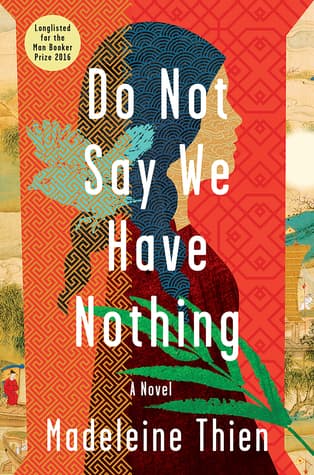
Madeleine Thien (2016)
Genre
Literary Fiction / Historical Fiction
Reading Time
10-12 hours (approx. 474 pages at 40 pages/hour)
Key Themes
See below
Sign in to track this book
A young woman in Vancouver uncovers her family's artistic sacrifices and political defiance across generations of China's 20th century, linking her father's past to the fates of musicians and revolutionaries.
In Vancouver, 1991, ten-year-old Marie, also known as Li-ling, lives with her mother, Jiang Li-hua. Her father, Kai, died by suicide the year before. Li-hua, a former dancer, takes in Ai-Ming, a young Chinese refugee who fled after the Tiananmen Square protests. Ai-Ming has a handwritten manuscript, 'The Book of Records,' which tells the stories of her family and friends during Mao's Cultural Revolution. Marie, drawn to Ai-Ming and the questions about her father's past, begins to learn Chinese from Ai-Ming. This manuscript becomes central to their shared experience, slowly showing the connections between their families and history's impact on their lives.
The story goes back in time, to the Shanghai Conservatory of Music in the 1960s, through 'The Book of Records.' It introduces Sparrow, a quiet composer, and Zhuli, a talented violinist. Both are students, focused on their art, but increasingly aware of growing political pressures. Kai, a charismatic and gifted pianist, is Zhuli's cousin and Sparrow's close friend. Their lives are linked by their love for music and their developing romantic relationships. Sparrow loves Zhuli, who is drawn to Kai. This creates a complex emotional triangle, set before the artistic community is broken by the Cultural Revolution.
As the Cultural Revolution grows stronger, the Shanghai Conservatory changes from a place for art to a site of political accusations. Musicians and composers are targeted as 'bourgeois intellectuals' and 'enemies of the people.' Sparrow, Zhuli, and Kai, along with their teachers and classmates, must take part in self-criticism and public denunciations. Their beloved Western classical music is banned, and instruments are destroyed. This time marks a big change, forcing them to face the harsh truth that their art, once a source of joy, is now dangerous. The friends try to deal with the increasing fear and violence, attempting to protect each other and their art.
The political purges scatter the friends. Sparrow is sent to a re-education camp in the countryside, where he does forced labor and faces ideological training, all while secretly trying to compose. Zhuli, considered 'unreliable,' is also sent away, her violin taken, her spirit tested by hard conditions and the loss of her music. Kai, because of family ties and some cleverness, avoids the worst punishments at first, but still faces close watch and must compromise his artistic honesty. Their separation makes them adapt to new, harsh realities. Communication becomes hard and risky, leaving them unsure of each other's fates.
While in the labor camp, Sparrow secretly works on his compositions, using any materials to write down his musical ideas, often inspired by nature and the suffering around him. His music becomes a way to resist and preserve his inner world. Zhuli, despite great hardship and losing her ability to play the violin, keeps a strong inner spirit. She sees much injustice and personal sadness but holds onto the memory of her music and the hope of seeing her friends again. Her strength shows how resilient people can be when facing systematic oppression.
Kai, driven to survive and protect himself, makes difficult choices during the Cultural Revolution. He uses his intelligence to navigate the dangerous political climate, often siding with those in power or making strategic alliances. These choices help him avoid the worst outcomes, but they cost his artistic integrity and personal relationships. He sees his friends and colleagues suffer, and his inability to openly resist or protect them leaves him with deep guilt. His actions highlight the moral challenges of survival under totalitarian rule.
As the Cultural Revolution ends, Sparrow, Zhuli, and Kai return to Shanghai, but the city and their lives are changed forever. They are no longer the hopeful young artists they once were. The experiences of persecution, loss, and survival have left deep psychological marks. They try to rebuild their lives and music careers, but the past lingers. Relationships are strained, and trust is fragile. Making art now carries the memory of its suppression, and how to create honestly in a world that tried to silence them becomes a main struggle. Sparrow and Zhuli eventually marry, trying to build a new life.
Decades later, the children of Sparrow, Zhuli, and Kai grow up. Ai-Ming, Sparrow and Zhuli's daughter, and Kai's son, Wen, become involved in the Tiananmen Square protests in 1989. They represent a new generation wanting freedom and change, but also carrying their parents' unspoken burdens. The protests show a clash between the desire for individual liberty and the state's enduring power. The students' hope is crushed by the violent government crackdown, leading to tragic results and forcing Ai-Ming to flee China, eventually finding refuge with Marie's family in Vancouver.
Kai, Marie's father, after moving to Canada with his wife, Jiang Li-hua, and young Marie, struggles to adjust. The trauma of his past in China, along with the pressures of immigration and the suppression of his artistic self, weigh heavily on him. He leaves his family for a time, unable to make peace with his past and present. Ultimately, unable to escape the psychological burdens of his experiences during the Cultural Revolution and his role in the lives of Sparrow and Zhuli, Kai dies by suicide. His death leaves Marie and Li-hua with deep grief and many questions about his hidden history.
In the present, Marie, guided by Ai-Ming and 'The Book of Records,' slowly puts together the complex and often painful history of her father, Kai, and his friends, Sparrow and Zhuli. The manuscript provides insights into the sacrifices, betrayals, and the power of music and love during political turmoil. Through this, Marie begins to understand the impact of the Cultural Revolution and Tiananmen Square on her family, and the reasons for her father's quiet nature and despair. Her journey is one of discovery, grief, and a deeper connection to her heritage.
As Marie reads 'The Book of Records,' she faces the weight of historical trauma and its effects on her family. She learns about her father's difficult choices, the suffering of Sparrow and Zhuli, and a generation's collective pain. This understanding makes her consider forgiveness, not just for her father, but for the circumstances that shaped his life. She realizes her identity is linked to this past, and understanding it helps her move forward. The story shows that memory, even if painful, is necessary for healing and understanding.
Music and storytelling are powerful forces throughout the novel. The classical music by Sparrow, Zhuli, and Kai resists ideological suppression, preserving humanity and beauty. 'The Book of Records' itself shows how storytelling preserves memory, connects generations, and witnesses history. Marie's act of translating these stories continues this legacy. The novel suggests that while political regimes may try to silence art and truth, they cannot erase the human need to create, remember, and communicate across time.
The Protagonist
Marie evolves from a bewildered child to a young woman who understands the complex, painful history of her family, finding a deeper connection to her heritage and a path to processing grief.
The Supporting
Ai-Ming moves from a traumatized refugee to a teller of her family's history, finding a measure of healing and purpose in sharing the stories.
The Supporting/Mentioned
Kai's arc is one of survival and compromise during intense political upheaval, culminating in his inability to escape the psychological burdens of his past, leading to self-destruction.
The Supporting
Sparrow endures immense suffering and suppression of his art, yet his spirit of composition remains unbroken, becoming a symbol of resistance and the enduring power of creation.
The Supporting
Zhuli's arc is one of enduring immense suffering and loss, yet maintaining her inner strength and love for music, ultimately finding a way to rebuild her life and family.
The Supporting
Li-hua moves from a grieving widow silently bearing the weight of the past to a mother who confronts and shares her family's history with her daughter, fostering deeper understanding.
The Supporting
Professor Ba endures the destruction of his life's work and personal dignity, yet his spirit of artistry and mentorship remains, influencing his students even through their shared ordeal.
The Mentioned
Wen's arc is brief but impactful, representing the idealism and tragic fate of the Tiananmen Square generation.
Music is central to the novel, both a source of beauty and a danger. For Sparrow, Zhuli, and Kai, classical music is their life, a universal language. During the Cultural Revolution, it becomes a target, called 'bourgeois' and 'counter-revolutionary.' Instruments are destroyed, and artists are persecuted. Yet, music also becomes a secret way to resist and preserve the human spirit, as Sparrow composes in secret. The novel shows how art can be suppressed, but its power to inspire, connect, and remember cannot be fully put out.
“What would a world sound like, if all the music was gone? What would a world look like, if all the books were burned?”
The novel explores how history, especially traumatic history, is remembered, forgotten, and passed down. 'The Book of Records' is a literal example of this, a manuscript that keeps the stories of those who lived through the Cultural Revolution. Marie's journey is about piecing together fragmented memories and stories, showing how subjective memory is and how hard it is to face painful truths. Storytelling, through music or words, becomes a vital act against erasure and a way to connect the past to the present, ensuring sacrifices and suffering are not forgotten.
“The past, after all, is not a story you can simply tell. It is a story you must live.”
A main theme is the moral challenges of survival under a totalitarian government. Characters like Kai make difficult choices, navigating dangerous political situations to protect themselves and their families, often at the cost of their artistic honesty or relationships. Sparrow and Zhuli suffer greatly but hold onto their art and love. The novel looks at the psychological cost of living under constant watch, fear, and persecution, where every choice has big consequences. It shows how people adapt, resist, or cooperate, and the lasting scars these choices leave, affecting future generations.
“He had learned to live in the space between what was said and what was true.”
The novel shows how historical trauma deeply affects families for generations. Marie's father, Kai, carries the unspoken burdens of the Cultural Revolution, which contribute to his quiet nature and eventual suicide. Ai-Ming, a survivor of Tiananmen Square and the daughter of those who suffered under Mao, also carries this inherited trauma. The story reveals how one generation's experiences—the repression, fear, and loss—are passed down, shaping the identities, relationships, and well-being of the next. Uncovering these hidden histories helps Marie heal and understand.
“The past was not a country he had left, but a country he carried within him.”
Despite the harsh political situation and personal betrayals, the novel shows the lasting power of love and loyalty. The deep affection between Sparrow and Zhuli, their support for each other through persecution and separation, shows the strength of their bond. The complex friendships between Sparrow, Zhuli, and Kai, though tested, reveal the human need for connection. Even when forced to denounce others, characters find ways to protect, support, and remember those they love, showing that these basic human emotions can last even in the most dehumanizing times.
“They had lost everything, but they still had each other, and that was something.”
A handwritten manuscript that serves as a primary source of historical information and a narrative device.
'The Book of Records' is a pivotal plot device. It's a handwritten manuscript brought to Canada by Ai-Ming, chronicling the lives of Sparrow, Zhuli, and Kai during the Cultural Revolution. It functions as a historical document, a personal memoir, and a narrative frame, allowing the story to shift between different time periods and perspectives. For Marie, it is the key to unlocking her father's mysterious past and understanding her family's history. It also symbolizes the power of storytelling to preserve memory and resist historical erasure, acting as a tangible link between generations and a testament to the human spirit.
The narrative shifts between present-day Vancouver (1990s) and China during the Cultural Revolution (1960s-70s) and Tiananmen Square (1989).
The novel employs alternating timelines, moving between Marie's present-day life in Vancouver in the early 1990s and the past events in China, primarily during the Cultural Revolution (1960s-70s) and the Tiananmen Square protests (1989). This structure allows for a gradual revelation of the complex historical narrative, mirroring Marie's own process of discovery. It highlights the intergenerational impact of historical events and creates suspense as the connections between characters and events are slowly unveiled. The past constantly informs and explains the present, showing how history shapes individual lives and national identity.
Classical music functions as a powerful symbol of beauty, resistance, and human connection.
Music, particularly Western classical music, is a pervasive motif and metaphor throughout the novel. It represents beauty, intellectual freedom, and a universal language that transcends political boundaries. During the Cultural Revolution, music is violently suppressed, making it a symbol of what is lost under totalitarianism. However, it also becomes a quiet form of resistance, as Sparrow secretly composes and the characters cling to their memories of melodies. Music connects the characters across time and space, embodying their deepest emotions, their suffering, and their enduring hope. It is both a source of profound joy and a dangerous truth.
The story is pieced together through various perspectives and incomplete memories, reflecting the difficulty of historical truth.
The narrative often relies on fragmented memories, whispered stories, and the subjective interpretations of characters, particularly through 'The Book of Records' and Marie's attempts to understand it. This creates a sense of an unreliable or incomplete narrative, reflecting the challenge of reconstructing historical truth, especially after periods of censorship and trauma. Characters like Kai carry secrets and unspoken burdens, making their true motivations and experiences difficult to fully grasp. This device emphasizes that history is not a monolithic truth but a collection of personal narratives, often contradictory and incomplete, which must be carefully pieced together.
“In a country that has been broken for too long, a person can become a word, a sound, a silence.”
— Reflecting on the impact of political upheaval on individuals.
“Music was the only thing that could not be taken away, not truly, not from the mind.”
— Exploring the enduring power of music in times of oppression.
“The past is not dead. It's not even past. It's woven into us, into our music, our stories, our silences.”
— A character's rumination on the inescapable nature of history.
“To forget was to betray, but to remember was to live with ghosts.”
— Describing the dilemma of survivors grappling with traumatic memories.
“What is a country but a collection of stories, some told, some hidden, some violently erased?”
— A philosophical question about national identity and historical narratives.
“The language of music, like mathematics, was universal, a way to connect across the vast, terrifying distances of human experience.”
— Highlighting music's ability to transcend cultural and political divides.
“We lived in a world where the future was always a question mark, and the past was a constantly rewritten novel.”
— A character's perception of life under an authoritarian regime.
“Every note was a breath, every silence a held breath, every phrase a story unfolding.”
— Describing the profound emotional depth and narrative power of music.
“Sometimes the greatest act of defiance was simply to exist, to remember, to create.”
— Reflecting on subtle forms of resistance in oppressive environments.
“The weight of what was unspoken could crush you more surely than any confession.”
— Exploring the psychological burden of secrets and silence.
“To be a musician in times like these was to carry a dangerous kind of truth.”
— Highlighting the risks and responsibilities of artists during political turmoil.
“Our lives were like a fugue, themes repeating, intertwining, sometimes clashing, sometimes resolving.”
— Using a musical metaphor to describe the complex, interconnected lives of the characters.
“The silence could be a weapon, or it could be a shield. It depended on who wielded it.”
— Considering the dual nature of silence in communication and power dynamics.
Ready to see how well you understood this book? Take our interactive quiz with 10 questions.

Biography coming soon.







