“The truth was a weapon, and like all weapons, it could be used for good or ill.”
— Reuben struggling with the implications of revealing certain truths.

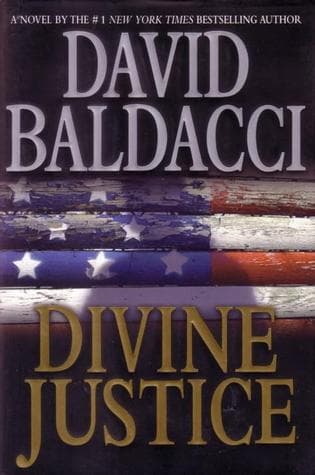
David Baldacci (2008)
Genre
Thriller / Mystery
Reading Time
360 min
Key Themes
See below
Sign in to track this book
Framed and hunted by the highest echelons of power, covert agent John Carr, aka Oliver Stone, must rely on the unwavering loyalty of his eccentric Camel Club friends to expose a conspiracy before his own secrets bury him.
Oliver Stone, real name John Carr, is a former CIA assassin and leader of the Camel Club. He is on the run, framed for the murder of the Director of National Intelligence, Carter Gray, and other high-ranking officials. He escapes a team of assassins led by Harry Finn, a former government operative, and flees Washington D.C. with help from his Camel Club associates. Stone uses his training and resources to create a new identity and disappear, but he knows his enemies, powerful government figures, will not rest until he is dead, as he has knowledge of their secrets and illicit activities.
The remaining members of the Camel Club – Reuben Rhodes, Caleb Faust, and Milton Farb – are devastated by Stone's apparent death and the charges against him. Convinced he is innocent, they begin their own investigation. They use their skills: Reuben's photographic memory, Caleb's network of contacts, and Milton's technological ability. Their initial inquiries lead them to believe that the official story is false and that a deeper conspiracy is at play, involving powerful government figures and a shadowy organization known as the 'Group'.
Under the new identity of 'Jonathan Smith,' Stone travels to rural Pennsylvania, seeking refuge in an isolated Amish community. He finds work as a carpenter and slowly integrates into their simple, peaceful way of life, finding a semblance of peace he hasn't known in decades. He befriends a young Amish woman named Annabelle Conroy, whose father, Ben Conroy, is a respected elder. Stone remains vigilant, knowing his past will catch up to him. He uses his time to observe and plan, understanding that his pursuers are relentless.
Stone discovers that Annabelle Conroy has a secret past; she was adopted and has ties to the outside world, specifically to a powerful and corrupt senator, Roger Harrison. Meanwhile, the Camel Club, through their efforts, manages to establish coded communication with Stone, confirming he is alive. They share their findings, revealing that the conspiracy involves a black ops program called 'Divine Justice' and a network of high-ranking officials who are eliminating anyone who threatens their power, including Stone and potentially Annabelle's biological family.
Harry Finn, a skilled and ruthless operative, continues his pursuit of Stone. Through intelligence gathering, Finn and his team narrow Stone's location down to the Amish community in Pennsylvania. Their arrival brings immediate danger to the peaceful inhabitants. Stone is forced to confront his past and protect the innocent people who have offered him sanctuary. The tranquility of the Amish community is shattered as Stone prepares for an inevitable confrontation, knowing his presence puts Annabelle and the others at grave risk.
Stone engages in a series of tense encounters with Finn and his men within the Amish farmlands. During a confrontation, Stone manages to capture one of Finn's operatives, extracting information about 'Divine Justice,' a clandestine program designed to eliminate perceived threats to national security and powerful individuals. He learns that the program is controlled by a shadowy group, and that his framing was a direct result of his knowledge of their activities. Stone realizes the scope of the conspiracy is greater than he initially imagined.
Back in Washington, the Camel Club intensifies their investigation, connecting the 'Divine Justice' program and Senator Roger Harrison, Annabelle's biological father. They discover Harrison's deep ties to corrupt government elements and his role in orchestrating Stone's framing. They also uncover evidence suggesting Harrison's involvement in the disappearance of Annabelle's biological mother and the cover-up of other illicit activities, all aimed at protecting his political career and the interests of the 'Group'.
Disturbed by the escalating violence and the revelations about her past, Annabelle decides to leave the Amish community. She seeks to understand her true parentage and confront Senator Harrison. Stone, recognizing the danger she faces, reluctantly allows her to go, knowing she holds a key to unraveling the conspiracy. Her departure is a painful moment for Stone, who has grown fond of her and the peaceful life she represents, but he understands her need for answers and her potential role in exposing the truth.
The Camel Club, with Stone's guidance, devises a plan to expose Senator Harrison and the 'Divine Justice' program. They leak incriminating information, drawing Harrison into a trap. The plan ends in a tense confrontation where Harrison's corruption and his involvement in the assassinations are revealed. Stone, with the help of the Camel Club, confronts Harrison directly, forcing him to admit his crimes and the existence of the shadowy 'Group' that controls the program. The showdown is fraught with danger, with Stone's life still in the balance.
Senator Harrison's crimes are exposed, leading to his downfall and the public revelation of the 'Divine Justice' program. While a victory for Stone and the Camel Club, they know that the shadowy 'Group' behind the program remains largely intact and continues to pose a significant threat. Stone's name is cleared, but his life as John Carr, the former assassin, cannot truly return to normal. He remains a target, and the Camel Club understands their fight for truth and justice is far from over, with powerful enemies still lurking in the shadows.
The Protagonist
From a hunted fugitive seeking anonymity, Stone is forced to re-engage with his past to protect others and ultimately expose a vast government conspiracy.
The Supporting
Reuben's unwavering loyalty and intellectual prowess are tested as he navigates the dangers of uncovering a conspiracy to save his friend.
The Supporting
Caleb utilizes his unique network and street smarts to actively pursue leads, becoming a vital investigator in the conspiracy.
The Supporting
Milton's technical skills prove crucial in unraveling the digital threads of the conspiracy, growing in confidence as he contributes to the cause.
The Supporting
From a sheltered Amish woman, Annabelle discovers her true parentage and bravely steps into the dangerous outside world to seek answers.
The Antagonist
Finn's unwavering pursuit of Stone leads him to question the true nature of his mission and the motives of his employers.
The Antagonist
Harrison's schemes to maintain power are slowly exposed, leading to his eventual downfall.
The Supporting
Ben's peaceful existence is disrupted by outside violence, forcing him to confront the dangers of the world beyond his community.
The novel explores the nature of justice, both legal and outside the law. Oliver Stone, a former assassin, operates outside the traditional legal system, yet he seeks to expose and punish those who abuse power within it. The 'Divine Justice' program itself is a perversion of justice, claiming to act for national security while serving corrupt interests. The Camel Club, through their unconventional methods, strives to bring true justice to light, showing the moral ambiguities of fighting fire with fire.
““Justice, true justice, was rarely found in the halls of power. It had to be fought for, clawed for, by those who dared to stand against the tide.””
Oliver Stone constantly struggles with his identity as John Carr, the assassin, versus his desire for a peaceful, anonymous life. His time in the Amish community as 'Jonathan Smith' offers him a glimpse of belonging and a simpler existence. Annabelle Conroy's journey to uncover her biological past also relates to this theme, as she grapples with her Amish identity versus her connection to the outside world. The characters are defined not just by who they are, but by where they belong and the choices they make about their past and future.
““He was John Carr, Oliver Stone, Jonathan Smith. And none of them, or all of them, truly defined the man he was.””
'Divine Justice' explores the widespread corruption within the highest levels of government. Powerful individuals, like Senator Harrison, manipulate the system and use clandestine programs for personal gain and to eliminate perceived threats. The novel shows how power can be used to subvert justice, frame innocents, and maintain a façade of national security while engaging in illegal activities. The Camel Club's mission is about exposing this systemic corruption.
““The higher you went, the more shadows there were. And in those shadows, men did things they could never do in the light.””
The unwavering loyalty of the Camel Club members to Oliver Stone is a central theme. Despite Stone being framed and presumed dead, Reuben, Caleb, and Milton risk their lives and freedom to clear his name and expose the conspiracy. Their bond transcends personal risk, showing the strength of true friendship in the face of overwhelming adversity. Stone, in turn, is protective of his friends and the innocent people he encounters, demonstrating that even a hardened operative values human connection.
““They were the Camel Club, a band of misfits who had found each other, and in that camaraderie, they had found their purpose. And for Oliver, that was everything.””
The core drive of the Camel Club is a relentless pursuit of truth, regardless of how uncomfortable or dangerous it may be. They gather evidence, connect facts, and challenge official narratives to uncover the reality behind Stone's framing and the 'Divine Justice' program. This theme shows the importance of critical inquiry and skepticism, especially when confronted with powerful forces trying to hide their actions. The truth, however elusive, is the ultimate weapon against corruption.
““The truth was a weapon, sharp and unforgiving. And they were going to wield it.””
Driving the plot through the protagonist's desperate escape and pursuit.
The entire plot of 'Divine Justice' is built around the classic fugitive narrative. Oliver Stone is framed for crimes he didn't commit and is relentlessly hunted by powerful forces. This device creates constant tension and propels the story forward, forcing Stone to use his skills to evade capture while simultaneously trying to clear his name. His journey through various disguises and hiding places, culminating in the Amish community, is central to this narrative structure, keeping the reader on edge.
A group of eccentric, loyal friends with unique skills aiding the protagonist.
The Camel Club serves as a crucial plot device, providing the means by which Stone's innocence can be proven. Each member (Reuben's memory, Caleb's contacts, Milton's tech skills) possesses a distinct and complementary ability that allows them to conduct a covert investigation parallel to Stone's flight. Their unconventional methods and unwavering loyalty create a strong counterpoint to the official, corrupt institutions, making them an effective and endearing force for good.
A peaceful, isolated setting providing temporary refuge and thematic contrast.
The Amish community serves multiple roles as a plot device. It provides a temporary sanctuary for Oliver Stone, allowing him a brief respite from his violent life and a chance to reflect. More importantly, it acts as a stark thematic contrast to the corrupt, violent world Stone usually inhabits. The simplicity and peace of the Amish highlight Stone's yearning for a normal life, while also creating heightened tension when the danger inevitably intrudes upon their innocent world, emphasizing the stakes of Stone's struggle.
A clandestine government program driving the antagonist's actions and the plot's mystery.
The 'Divine Justice' program functions as both a central conspiracy and a MacGuffin. It's the reason Stone is framed, the source of the antagonists' power, and the ultimate target of the Camel Club's investigation. While its exact nature and scope are gradually revealed, its existence drives much of the plot's mystery and the antagonists' motivations. It provides a tangible, dangerous entity for the heroes to fight against, symbolizing the pervasive corruption they seek to expose.
“The truth was a weapon, and like all weapons, it could be used for good or ill.”
— Reuben struggling with the implications of revealing certain truths.
“Justice wasn't about revenge. It was about balance. And sometimes, balance required a heavy hand.”
— Will Robie's internal monologue about the nature of justice and his role.
“The past had a way of reaching out, even across vast distances, to grab you by the throat.”
— Robie reflecting on how his past actions are catching up to him.
“Trust was a fragile thing, easily broken, almost impossible to fully repair.”
— Robie observing the strained relationship between characters.
“There were no clean kills in their world, only varying degrees of messy.”
— Robie's cynical view of his profession and its inherent violence.
“Every lie told was a thread in a web that eventually entangled the liar.”
— A character reflecting on the complexity of maintaining deceit.
“The line between right and wrong blurred when survival was on the table.”
— Characters making difficult ethical choices under duress.
“He lived in the shadows, but sometimes the shadows were the only place to find clarity.”
— Robie's introspection about his solitary and covert existence.
“Fear was a powerful motivator, capable of driving people to unthinkable acts.”
— Observing how fear influences various characters' decisions.
“The dead told no tales, but their silence often screamed the loudest.”
— Investigators piecing together clues from a crime scene.
“Power corrupted, but the lack of it could be just as destructive.”
— A character discussing the dynamics of power within a criminal organization.
“Sometimes the only way to save someone was to let them go.”
— A difficult decision made to protect a loved one.
“He was a ghost in a world that demanded tangible proof of existence.”
— Robie's sense of being invisible and untraceable.
“The most dangerous enemies were often the ones you never saw coming.”
— A character reflecting on the hidden threats they face.
Ready to see how well you understood this book? Take our interactive quiz with 10 questions.

David Baldacci is a globally best-selling author known for his gripping thrillers. His prolific career includes numerous New York Times bestsellers such as 'The Escape,' 'Memory Man,' and 'Wish You Well.' Baldacci masterfully blends suspense, intricate plots, and compelling characters, making him a prominent figure in the fiction genre.







