“The ocean has a way of calling to those who truly belong to it, no matter how far they stray.”
— Sarah's initial feelings about the sea and her connection to it.

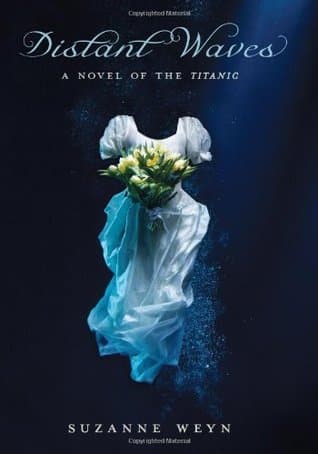
Suzanne Weyn (2009)
Genre
Fantasy / Historical Fiction / Young Adult / Romance
Reading Time
360 min
Key Themes
See below
Sign in to track this book
Five sisters, linked to Nikola Tesla's invention, face their destiny aboard the Titanic.
After their father's sudden death leaves them poor, the five sisters – Annie, Florrie, Molly, Kitty, and Mary – and their mother, Eleanor, move from New York to Lily Dale, a spiritualist town. Eleanor hopes to use her medium abilities to earn money. Annie, the oldest, discovers she has a unique gift: she can see and hear 'distant waves' – visions and sounds from the future, often linked to water. This ability first scares her, but she starts to understand its meaning, though she largely keeps it secret from her family.
In Lily Dale, Annie has a vivid and troubling vision of a grand ship sinking in icy waters, filled with screaming passengers. This vision deeply disturbs her. Soon after, the family receives an unexpected invitation from John Jacob Astor IV, a rich industrialist, to come to London. Astor is interested in Eleanor's medium talents and wants her to hold a séance for his society friends, hoping to contact his deceased first wife. This gives the family a chance to escape their money problems and start fresh, despite Annie's growing unease about her premonitions.
In London, the sisters meet the inventor Nikola Tesla, who is working on his 'world wireless system' – a device that can send energy and information wirelessly over long distances. Annie feels drawn to Tesla's brilliant, if somewhat distant, mind. They also meet journalist and spiritualist W.T. Stead, who is very interested in Eleanor's abilities and communicating with the spirit world. Stead is particularly fascinated by using Tesla's technology to connect the living and the dead, an idea that both excites and worries Annie.
Through Astor's connections and their own growing fame, the entire family – Eleanor and her five daughters – gets passage on the Titanic, the supposedly unsinkable ship, for their return trip to America. John Jacob Astor IV is also on board with his new, pregnant wife, Madeleine. W.T. Stead has booked passage to attend a peace conference in New York. Unknown to most, Nikola Tesla has also arranged a secret lab in the ship's cargo hold, where he plans to do experiments with his wireless technology, hoping for a breakthrough.
As the Titanic sails, Tesla secretly activates his 'world wireless' device in the ship's hold. He intends to send energy across the Atlantic, but the immense power he releases accidentally creates a strong electromagnetic field that interferes with the ship's navigation and communication systems. Annie experiences increasingly vivid and terrifying visions of the ship's coming doom, the screams of passengers, and the biting cold of the ocean. She tries to warn her family and others, but her warnings are dismissed as nervous thoughts or the result of her spiritualist upbringing, leaving her feeling alone and desperate.
On the night of April 14th, 1912, Annie's premonitions reach their peak. She feels an overwhelming dread and tries one last time to alert her mother and sisters, but they are caught up in the ship's parties. Suddenly, the Titanic hits an iceberg with a jarring impact. The collision, made worse by Tesla's device interfering with the ship's ability to react quickly, confirms Annie's worst fears. Chaos slowly begins as passengers and crew realize what is happening. Annie understands that her visions were not just premonitions, but actual warnings of the catastrophe.
As the Titanic begins to sink, the sisters and their mother struggle to find a lifeboat. The 'women and children first' rule is enforced, leading to painful separations. Molly, the most practical, fights for a place for her younger sisters. Annie, driven by her visions and a need to help, tries to guide people towards lifeboats, using her knowledge of the ship's layout and the coming disaster. She meets John Jacob Astor, who ensures his pregnant wife is safely in a lifeboat before facing his own fate. Annie also sees W.T. Stead, who remains calm, seeming to accept his destiny.
Nikola Tesla, seeing the tragedy unfold, realizes with horror that his wireless device, meant for progress, has accidentally helped sink the Titanic by disrupting its systems and making it more vulnerable to the iceberg. He rushes back to his secret lab in the hold, trying to disable or change the device, hoping to lessen the disaster or send a strong distress signal. In a moment of shared terror and understanding, Annie briefly connects with Tesla, seeing his genius and his despair, sensing his immense guilt.
Eleanor, Florrie, Kitty, and Mary manage to get onto a lifeboat, but Annie and Molly are separated from them in the chaos. Molly, resourceful, finds a way onto a partially submerged collapsible lifeboat. Annie, after helping many others, finds herself in the freezing water, clinging to debris. She uses her 'distant waves' ability to navigate the dark, icy expanse, searching for her family and any sign of rescue. The wait in the lifeboats and the water is agonizing, as survivors endure the cold and the sounds of the dying.
The RMS Carpathia arrives hours later, rescuing survivors from the lifeboats and the frigid water. Annie is pulled from the ocean, barely alive, suffering from hypothermia. She is eventually reunited with her mother, Florrie, Kitty, and Mary, and later, Molly, who was also rescued. The family is devastated by the loss of life and the trauma. They are forever changed by the Titanic disaster, but they are also bound closer by their shared experience. Annie's gift is now clear, and she begins to understand its future implications.
Afterward, the surviving sisters deal with their trauma and the meaning of their survival. Annie's 'distant waves' ability is no longer a secret, and she grapples with its responsibility. The experience strengthens their belief in the unseen and the connection of life and death. They reflect on the lives lost, including John Jacob Astor and W.T. Stead, and the role of human ambition and unforeseen forces in the tragedy. The family, though scarred, looks toward a future where their understanding of the world will shape their paths.
The Protagonist
Annie transforms from a hesitant, burdened young woman into a courageous individual who accepts and utilizes her unique gift to try and save lives, ultimately finding strength in her extraordinary abilities.
The Supporting
Eleanor starts as a professional medium seeking financial stability, and through the Titanic tragedy, comes to fully recognize and respect the unique and powerful nature of Annie's gift, deepening her understanding of the supernatural.
The Supporting
Molly, initially skeptical of the supernatural, is forced to confront the reality of the unimaginable during the Titanic sinking, finding inner strength and resourcefulness.
The Supporting
Tesla's arc moves from detached scientific ambition to profound guilt and a realization of the unintended consequences of his inventions.
The Supporting
Astor is a static character, representing the historical figure, whose actions demonstrate his noble character even in the face of disaster.
The Supporting
Stead remains consistent in his beliefs, serving as a philosophical voice exploring the intersection of science and spirituality, ultimately facing his demise with acceptance.
The Supporting
Florrie, initially focused on romance and superficial desires, is profoundly shaken by the Titanic disaster, forcing her to confront the fragility of life.
The Supporting
Kitty, initially quiet and artistic, becomes a silent witness to the tragedy, internalizing the trauma and perhaps finding new depths for her artistic expression.
The Supporting
Mary's arc is less about internal change and more about representing the vulnerability of innocence in the face of a cataclysmic event, experiencing trauma at a young age.
The novel explores the tension and overlap between scientific advancement and spiritual beliefs. Nikola Tesla's wireless technology, meant for progress, accidentally helps sink the Titanic, while Annie's 'spiritual' gift of premonition offers warnings science cannot explain. W.T. Stead embodies this theme, trying to bridge the two worlds. The story suggests that both realms hold powerful, sometimes dangerous, truths that humanity is only beginning to understand, and that one should not dismiss the other. For instance, Tesla's scientific pride leads to disaster, while Annie's intuitive, 'spiritual' warnings are ignored to their peril.
“Perhaps the future is not something we merely stumble into, but a tapestry woven with threads of both the seen and the unseen.”
Annie's 'distant waves' gift is both a help and a burden. It lets her foresee disaster, but her inability to convince others creates a huge psychological weight. This theme highlights the isolation that often comes with extraordinary perception and the frustration of knowing a terrible truth that others refuse to believe. Her visions of the Titanic sinking are clear to her, yet she is dismissed as 'nervous' or 'overly sensitive,' showing the difficulty of sharing subjective, supernatural knowledge in a rational world. This burden forces Annie to mature quickly and deal with her unique place in the world.
“To see the future, and yet be powerless to change it, is a torment I would wish on no one.”
The 'unsinkable' Titanic itself symbolizes human hubris – the belief that technology can conquer nature. The novel compares this overconfidence with the power of the natural world (the iceberg, the freezing ocean) and the unforeseen results of human invention (Tesla's device). The sinking is a stark reminder that even the grandest human efforts are fragile against nature, and that technological progress, while impressive, can have unintended and catastrophic side effects. The belief in the ship's invincibility blinds many to the danger, making Annie's warnings even more impactful.
“They called her unsinkable. A testament to man's triumph over the sea. But the sea always has the last word.”
At its core, the novel is about family strength, especially the bond between the five sisters and their mother, when facing hardship. Their journey from poverty in Lily Dale to the Titanic's luxury, and then to the fight for survival, tests their relationships. The tragedy forces them to rely on each other, showing individual strengths and weaknesses, and ultimately strengthening their connections. The painful separations during the sinking and the relief of reunion emphasize the value of these family ties and the instinct to protect loved ones above all else. Each sister contributes differently to their collective survival.
“No matter how far we traveled, or how great the storm, we were always, irrevocably, each other's anchor.”
Annie's psychic ability to see and hear future events, especially those involving water.
Annie's 'distant waves' ability serves as the primary supernatural plot device. It functions as both a foreboding element, building suspense and dread, and a catalyst for Annie's character development. It provides the audience with dramatic irony, as Annie's accurate visions are dismissed by other characters. This device also allows the narrative to explore themes of fate, free will, and the burden of knowledge, directly foreshadowing the Titanic disaster and guiding Annie's actions during the event.
A revolutionary but unstable invention that inadvertently affects the Titanic's fate.
Tesla's wireless system acts as a scientific plot device that introduces an element of technological danger. It serves to intertwine the historical event with a speculative scientific explanation, suggesting that human ambition and scientific experimentation can have unforeseen, catastrophic consequences. The device's interference with the ship's systems provides a unique, fictionalized reason for the Titanic's vulnerability and adds a layer of moral complexity to Tesla's character, highlighting the responsibility that comes with groundbreaking invention.
The iconic, 'unsinkable' ship that serves as the central setting and symbol.
The Titanic functions as more than just a setting; it is a powerful symbol of human hubris and technological overconfidence. Its maiden voyage, meant to be a triumph, becomes a stage for tragedy, highlighting the fragility of life and the unpredictable nature of fate. As a plot device, it creates inherent dramatic tension, given its historical outcome, and forces the characters into extreme situations that reveal their true nature and test their resilience. The ship itself becomes an antagonist in the story, a beautiful but doomed vessel.
A real-life spiritualist town that grounds the family's supernatural background.
Lily Dale serves as an important backdrop for the family's origins and establishes their connection to spiritualism. As a plot device, it legitimizes Eleanor's mediumistic abilities and provides context for Annie's emerging gift, making it seem less anomalous within their family's world. It introduces the theme of spiritualism versus skepticism early on and sets the stage for the family's interactions with figures like W.T. Stead, who share their beliefs, and provides a contrast to the more 'scientific' world they encounter in London and aboard the Titanic.
“The ocean has a way of calling to those who truly belong to it, no matter how far they stray.”
— Sarah's initial feelings about the sea and her connection to it.
“Sometimes, the greatest adventures begin with the most ordinary goodbyes.”
— Sarah leaving her home to embark on the Titanic journey.
“Love, like the sea, can be both a gentle current and a raging storm.”
— Sarah reflecting on her burgeoning feelings for William.
“The future is a tapestry woven with threads of choice and threads of fate.”
— A philosophical thought about free will versus destiny.
“Even in the grandest of ships, the human heart remains the most complex vessel.”
— Observation about the Titanic and the passengers' inner lives.
“Some moments are so vivid, they feel like they were painted with starlight.”
— Sarah describing a particularly romantic or significant moment.
“History isn't just dates and names; it's the echoes of lives lived, loves lost, and dreams pursued.”
— Sarah's realization about the personal impact of historical events.
“The greatest magic isn't in spells, but in the connections we forge with others.”
— A realization about the true power of relationships.
“There are some truths that the heart knows long before the mind can comprehend them.”
— Sarah's intuitive understanding of certain situations or feelings.
“To truly live is to embrace the uncertainty, to dance with the unknown.”
— A reflection on living life to the fullest despite fears.
“The past is a whisper, but it can shape the loudest of futures.”
— Sarah considering how past events influence present and future.
“Even in the darkest depths, there can be a glimmer of hope, a beacon to guide you home.”
— Sarah facing despair but finding a reason to persevere.
“Some goodbyes are not endings, but merely the turning of a page to a new chapter.”
— A comforting thought about separation and new beginnings.
“The most powerful journeys are not always across oceans, but within the landscape of the heart.”
— Sarah's internal growth and self-discovery.
Ready to see how well you understood this book? Take our interactive quiz with 10 questions.

Biography coming soon.







