BookBrief
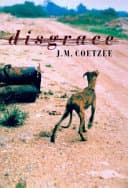
Disgrace cover
Archivist's Choice

Disgrace

J. M. Coetzee (1999)

Genre

Literary Fiction

Reading Time

12 Minutes

Key Themes

See below

Track Your Reading

Sign in to track this book

Synopsis

David Lurie, a middle-aged professor in post-apartheid South Africa, loses his position at the university after an ill-advised affair with a student and his subsequent refusal to publicly repent. He retreats to his daughter Lucy's remote farm, hoping for a quieter existence. However, their fragile peace is shattered by a brutal home invasion that exposes the raw complexities of their relationship and the harsh realities of the new South Africa, forcing David to confront his own moral decay and the shifting landscape of power and justice in a way he never anticipated.
Difficulty
Medium
Pacing
Moderate
Mood
Somber, reflective, unsettling, thought-provoking

Plot Summary

The Affair and its Unraveling

David Lurie, a 52-year-old professor at the Technical University of Cape Town, has a series of sexual encounters with Melanie Isaacs, one of his students. He sees these as consensual, though Melanie is uncomfortable. When Melanie's boyfriend reports the affair, David faces a university inquiry for sexual harassment. He refuses to apologize publicly, instead reading a statement defending his actions in a romanticized way. This defiance leads to his resignation.

Retreat to the Eastern Cape

After his resignation and public shame, David leaves Cape Town to stay with his daughter, Lucy. She lives on an isolated smallholding in the Eastern Cape, running a dog kennel and growing vegetables. David struggles to adjust to the rural life and Lucy's quiet routine. He feels useless and out of place, often watching Lucy's interactions with her neighbor and farmhand, Petrus. David's first days are marked by a sense of aimlessness and bitterness over his downfall.

Life on the Farm and Petrus's Influence

David tries to fit into Lucy's life, helping with small tasks and observing the farm's rhythms. He notices Lucy's respectful relationship with Petrus, who is gaining more land and influence. Petrus, once an employee, now acts as Lucy's protector and partner, though their exact arrangement is unclear to David. David also starts volunteering at a local animal welfare clinic run by Bev Shaw, helping to euthanize dogs. This work, though grim, gives him a small sense of purpose and connects him to life and death.

The Attack

One afternoon, three men arrive at the farm, pretending their car has broken down. The situation quickly turns violent. David is locked in the bathroom, doused with flammable liquid, and set on fire, though he is not fatally burned. Two of the men brutally rape Lucy while the third watches. The attackers steal David's car and shotgun, and Lucy's dogs are shot. The attack leaves both David and Lucy deeply traumatized, shattering their security and showing the racial tensions and lawlessness in post-apartheid South Africa. David has severe burns, and Lucy is physically and emotionally scarred.

Aftermath and Lucy's Decision

After the attack, David urges Lucy to report the rape to the police, but she refuses. She believes reporting it would only cause more trouble and humiliation. She feels that as a white woman living alone in rural South Africa, she must accept her vulnerability and find a way to survive within the new power structures. Lucy decides to stay on her farm, despite the trauma. She even considers a protective arrangement with Petrus, which would involve giving him a portion of her land and possibly becoming his 'third wife' informally. This decision greatly disturbs David.

David's Investigation and Despair

Wanting justice and understanding, David tries to investigate the attack himself. He suspects Petrus might know more or even be involved. He subtly confronts Petrus but gets no clear answers. David's attempts to understand what happened fail, and he faces his own powerlessness. He feels deep despair and realizes the old order, where he was privileged, has collapsed. He struggles to accept Lucy's calm acceptance, which contrasts with his own strong sense of injustice.

The Growing Influence of Petrus

Petrus's role in Lucy's life grows. He manages more of the farm, and Lucy relies on him more for protection and help. David watches this shift with unease, seeing it as a symbol of the country's broader power transfer. He struggles to accept Lucy's practical approach, which he sees as surrender. Petrus, meanwhile, appears to do well, building a new house and expanding his livestock, representing the rise of black entrepreneurship and land ownership in post-apartheid South Africa. This dynamic further highlights David's displaced status.

David's Work at the Animal Clinic

David continues volunteering at Bev Shaw's animal welfare clinic, where his main task is helping to euthanize unwanted dogs. What began as a grim duty slowly becomes a source of quiet thought and a form of atonement for David. He develops a ritualistic way of handling the deaths, ensuring the animals' dignity. This work, which involves facing death directly and providing a merciful end, becomes a strange kind of redemption for him. It contrasts sharply with the human cruelty he has seen and gives him a way to engage with the world without the complexities of human interaction.

The Birth of Lucy's Child

Lucy tells David she is pregnant. She does not name the father, but David suspects it is one of the attackers or possibly Petrus. Lucy accepts the pregnancy with quiet determination, seeing it as part of her commitment to her new life on the farm and her integration into the local community. This news further confirms her decision to stay on the farm and accept the consequences of the attack, rather than flee or seek traditional justice. David struggles to accept this, seeing it as another layer of her sacrifice and a break from his own ideas of justice and family.

David's Reconciliation with Petrus

In an attempt to secure Lucy's safety and future, David puts aside his pride and approaches Petrus. He offers to sign over a portion of Lucy's land to Petrus in exchange for his formal protection of her and her unborn child. This act is a significant humbling for David, a white man negotiating his daughter's well-being with a black man who was once his subordinate. Petrus quietly accepts, signaling a new, practical alliance. This transaction shows the complete reversal of power dynamics and David's acceptance of his reduced status in the new South Africa.

The Play and the Opera

During his time in the Eastern Cape, David continues to work on an opera about Lord Byron, focusing on Byron's affair with a married woman and his later life in Italy. This project reflects David's own experiences, allowing him to think about desire, shame, and artistic creation. The opera, though unfinished, becomes a metaphor for his attempts to understand his own life and the societal changes around him. He sees Byron's exile and death in Greece as a noble defeat, perhaps mirroring his own perceived downfall and a search for a meaningful end.

Acceptance and Euthanasia

In the final scenes, David seems to have found a grim acceptance. He continues his work at the animal clinic, now fully involved in euthanizing dogs, especially those most hopeless. He takes a dog, a 'no-hoper,' into his arms and carries it to its death. This shows a deep sense of responsibility and a willingness to face suffering and mortality. This act symbolizes his surrender to forces beyond his control and his finding a humble, if sad, purpose in giving dignity to the discarded. He has moved past anger and resentment to a quiet, almost spiritual, engagement with the harsh realities of life and death.

Principal Figures

David Lurie

The Protagonist

David transitions from an arrogant, self-absorbed intellectual to a humbled, pragmatic man who finds a quiet dignity in serving the discarded and accepting his diminished place in the world. He moves from defiance to a form of quiet, melancholic acceptance.

Lucy Lurie

The Supporting

Lucy transforms from an independent farmer to a woman who, despite immense trauma, chooses to adapt and survive within a new social order, making profound sacrifices for her land and future.

Petrus

The Supporting

Petrus's role evolves from a humble farmhand to a significant landowner and protector, symbolizing the rise of black economic and social power in the region.

Melanie Isaacs

The Supporting

Melanie serves as the initial catalyst for the plot; her role is primarily to initiate David's fall from grace.

Bev Shaw

The Supporting

Bev remains a consistent, compassionate figure, offering David a path to humble service and a focus beyond himself.

Desmond

The Minor

Desmond's role is static, serving to contextualize Lucy's past relationships.

Themes & Insights

Disgrace and Humiliation

The novel explores disgrace, both public and private. David Lurie faces professional and social humiliation after his affair, forcing him to retreat. This personal disgrace mirrors South Africa's perceived 'disgrace' after apartheid, as it deals with violence, land redistribution, and the dismantling of old power structures. The theme examines how people cope with losing status, public shaming, and their former identities, and whether true redemption comes from humility and acceptance rather than defiance or revenge.

He has entered a new state of being, a state of disgrace. It is not just that his good name has been taken away. What has been taken away is his good name in the eyes of the world, and that is a loss that cannot be made good.

Narrator, regarding David Lurie

Power and Vulnerability

Power shifts are central to the novel. Initially, David holds power as a white male professor, which he abuses. After his disgrace, he becomes vulnerable, especially in the Eastern Cape, where racial and social hierarchies have inverted. Lucy's vulnerability as a white woman on an isolated farm is brutally exposed during the attack, forcing her to make practical choices to survive. The theme examines who holds power in the new South Africa, how it is used, and how individuals, both white and black, navigate their places within this changed society. It often shows the fragility of security and the struggle for agency.

He has been a man of power. Now he is a man of no power. He has nothing to lose. That is his freedom.

Narrator, regarding David Lurie

Justice and Forgiveness (or Lack Thereof)

The novel questions traditional ideas of justice and the possibility of forgiveness in a society dealing with past wrongs. David's refusal to offer a 'politically correct' apology highlights his defiance of institutional justice. Lucy's refusal to report her rape and her decision to adapt to her circumstances, rather than seek revenge, challenges the concept of individual justice. The theme suggests that in a post-colonial context, traditional Western legal systems may be inadequate or irrelevant, and that survival often requires a different kind of 'justice' – one based on practical acceptance, sacrifice, and recognizing larger, uncontrollable forces.

Perhaps that is the only way to heal: not to seek justice, but to yield to the forces that are stronger than you.

Narrator, interpreting Lucy's actions

Human-Animal Connection and Empathy

The relationship between humans and animals is a key theme. David's work at the animal clinic, especially euthanizing unwanted dogs, becomes a central part of his moral reflection. This work, initially a routine task, becomes a ritualistic act of mercy and a source of unexpected empathy. The unconditional nature of animal suffering and death contrasts sharply with the complexities of human cruelty and pride. Through his interactions with animals, David develops compassion and humility that he largely lacked in his human relationships, suggesting that a truer form of grace might be found in caring for the most vulnerable creatures.

He is learning to live with the animals. Learning to live like an animal. Learning to accept his place in the great chain of being.

Narrator, regarding David Lurie

Post-Apartheid South Africa and Identity

The novel explores post-apartheid South Africa's social, political, and psychological state. It shows a society changing, dealing with the legacy of colonialism, racial tensions, land redistribution, and widespread violence. White characters like David and Lucy struggle to define their identity and find their place in a country where their former privilege has eroded. Black characters like Petrus emerge as quietly powerful figures, representing the new order. The story shows the raw, often brutal, realities of this transition, questioning whether true reconciliation is possible or if a new, equally complex, form of co-existence is simply emerging.

A new order is coming. It is already here. And we are part of it, whether we like it or not.

Narrator

Plot Devices & Literary Techniques

Symbolism of the Dogs

Dogs represent vulnerability, sacrifice, and the cycle of life and death.

Dogs are a pervasive symbol throughout the novel. Lucy's dog kennel represents her connection to the land and a simpler existence, but her beloved dogs are violently killed during the attack, symbolizing the loss of innocence and security. David's work at Bev Shaw's animal clinic, where he assists in the euthanasia of unwanted dogs, becomes a central ritual. These 'no-hopers' represent the discarded, the vulnerable, and the forgotten. His act of carrying the last dog to its death is a profound gesture of empathy and a symbolic acceptance of his own diminished, humble place in the world, finding dignity in serving the most helpless creatures.

The Opera about Byron

David's unfinished opera parallels his own life and search for meaning.

David's ongoing project to compose an opera about Lord Byron serves as an internal plot device and a thematic mirror. Byron, a Romantic poet known for his scandalous affairs and eventual exile, reflects David's own experiences of desire, disgrace, and displacement. The opera allows David to intellectualize and distance himself from his own suffering, yet it also provides a framework for him to grapple with themes of passion, guilt, and the pursuit of beauty in a fallen world. The opera's unfinished state might symbolize David's own unresolved journey and the difficulty of finding a coherent narrative for his fragmented life.

The Eastern Cape Landscape

The setting reflects the harsh realities and changing power dynamics of South Africa.

The isolated, rural landscape of the Eastern Cape is more than just a backdrop; it is a character in itself. It is a place of both harsh beauty and brutal realities, symbolizing the raw, untamed nature of post-apartheid South Africa. The remoteness of Lucy's farm highlights her vulnerability and the breakdown of state protection. The land itself becomes a contested space, central to the power struggle between white landowners and emerging black communities like Petrus's. The landscape forces David and Lucy to confront their own insignificance and adapt to a world where nature and human violence are inextricably linked.

First-Person Limited Perspective (David Lurie)

The narrative is primarily filtered through David's subjective and often biased viewpoint.

The novel is told primarily from David Lurie's limited third-person perspective, but it is deeply entrenched in his thoughts, observations, and biases. This narrative choice allows readers to experience David's intellectual arrogance, his initial detachment, and his gradual, painful process of self-reckoning. However, it also means that other characters, particularly Lucy and Petrus, are largely seen through his often-misguided interpretations. This device underscores David's struggle to understand the world around him, especially the motivations and choices of others, and highlights the subjective nature of truth and justice in the post-apartheid context.

Critical analysis

Notable Quotes

Quiz

Test Your Knowledge

Ready to see how well you understood this book? Take our interactive quiz with 10 questions.

10
Questions
~5
Minutes
?
Best Score

Key Questions (FAQ)

'Disgrace' is a literary fiction novel by J.M. Coetzee. It tells the story of David Lurie, a professor who has an affair with a student, leading to his resignation and retreat to his daughter's farm. The novel explores themes of guilt, power, and redemption in post-apartheid South Africa.

About the author

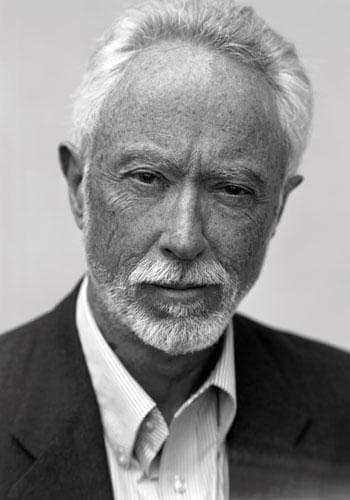
J. M. Coetzee

John Maxwell Coetzee OMG is a South African and Australian novelist, essayist, linguist, translator and recipient of the 2003 Nobel Prize in Literature. He is one of the most critically acclaimed and decorated authors in the English language. He has won the Booker Prize (twice), the CNA Prize (thrice), the Jerusalem Prize, the Prix Femina étranger, and The Irish Times International Fiction Prize, and holds a number of other awards and honorary doctorates.