“I may not have gone where I intended to go, but I think I have ended up where I needed to be.”
— Dirk reflecting on the seemingly random events that lead him to the solution.

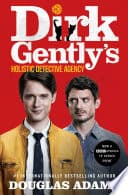
Douglas Adams (2014)
Genre
Fantasy / Mystery / Science Fiction
Reading Time
360 min
Key Themes
See below
Sign in to track this book
A disarmingly holistic detective, a couch, and an ancient ghost's time-traveling suicide attempt collide in a hilariously convoluted plot to save humanity from its own past.
Richard MacDuff, a software engineer, wakes up to find an unexplained horse in his bathroom. His attempts to remove it fail. Later, he finds a large, chesterfield sofa inexplicably jammed halfway up the communal staircase of his apartment building, blocking his way out. He also receives a cryptic phone call from his former university friend, Gordon Way, who sounds distressed. Richard's day becomes absurd as he tries to understand these strange occurrences, which seem to defy all logic. He feels a growing sense of unease and a feeling that something strange is happening, connected to his past and Gordon.
Dirk Gently (formerly Svlad Cjelli) visits Richard MacDuff, claiming to be a holistic detective. Dirk explains his belief that all things are fundamentally connected, stating that he follows leads based on cosmic coincidence. He reveals he is investigating the disappearance of Gordon Way, and that Richard is a primary suspect. Dirk also introduces the concept of an 'Electric Monk,' a machine designed to believe things so you don't have to, and reveals that Way owned one. This initial interaction establishes Dirk's eccentric personality and his unconventional approach to solving mysteries, which often involves waiting for the universe to present clues.
Inspector Gilks and Sergeant Wilson investigate the murder of Gordon Way, whose body is found shot in his locked study. The circumstances are highly suspicious, with no apparent forced entry. Richard MacDuff becomes the prime suspect due to his past association with Way and a series of seemingly damning coincidences. The police find Way's house in disarray, with peculiar items and a general sense of unease. Gilks, a by-the-book officer, struggles to reconcile the physical evidence with the increasingly strange nature of the case, while Richard's explanations only deepen the mystery and his culpability in their eyes.
Richard visits Professor Urban 'Reg' Chronotis, his old college tutor at St. Cedd's College, Cambridge. Chronotis is a seemingly absent-minded elderly man who often loses his keys and misplaces entire rooms. Richard discovers that Chronotis has a working time machine, though it's disguised as a normal living space. Chronotis hints at a deep secret and an ancient responsibility, implying that he has been alive for an impossibly long time and is guarding something important. This revelation introduces time travel and its potential effects on the unfolding mystery.
Dirk's holistic methods lead him to the poetry of Samuel Taylor Coleridge, specifically 'Kubla Khan' and 'The Rime of the Ancient Mariner.' He focuses on the date October 27, 1803, believing it to be important to his investigation. He also connects the dots between Way's Electric Monk, the strange happenings, and his own past. Dirk believes that the universe is trying to communicate something to him through these seemingly unrelated events, and that the key to Way's murder and the other anomalies lies within this historical context and the work of Coleridge.
The ghost, a survivor from the planet Xerxes, tells its story. It was a space alien, part of a mission that crash-landed on primordial Earth millions of years ago. Its spaceship's energy drive exploded, scattering the alien's consciousness across the planet. This dispersed consciousness became the 'ghost,' which inadvertently jump-started the evolution of life on Earth by influencing early organisms. The ghost now seeks to return to its original form and prevent its past accident, believing it can fix its mistake and perhaps even prevent the eventual extinction of its own species. It uses Way's Electric Monk as a conduit for its consciousness.
The Electric Monk, initially programmed to believe that everything blue is a figment of its imagination, becomes corrupted by the ghost's influence. It starts to believe increasingly complex and dangerous things, fueled by the ghost's desire to change the past. The Monk's programmed belief system, designed to simplify reality, ironically becomes a powerful tool for the ghost to manipulate events and consciousness. Its ability to 'believe' things into existence, or at least influence their perception, highlights the book's exploration of reality and perception.
Dirk realizes that the sofa and the horse are not random anomalies but objects displaced in time. The sofa, he deduces, was transported from Chronotis's college room, while the horse was a gift from the ghost to Gordon Way, sent back in time. These objects, along with Way's murder, are all connected through a complex time loop orchestrated by the ghost's attempts to alter its own past. The horse, specifically, is an attempt by the ghost to influence Way and prevent its own original accident, demonstrating the intricate and often absurd consequences of meddling with time.
The ghost plans to use a specific concert, with its amplified sound frequencies, to re-coalesce its dispersed consciousness and regain physical form. It intends to use Way's Electric Monk and the unique properties of Chronotis's time machine to achieve this. Meanwhile, a cat, which has been mysteriously disappearing and reappearing throughout the story, is a key element in the ghost's plan, acting as a vessel or conduit. The concert becomes the focal point for the climax, where all the disparate elements of the plot converge.
Dirk, Richard, and Chronotis converge at the concert hall. They understand the grave danger: if the ghost succeeds in altering its past, it could erase human history as we know it, effectively preventing the evolution of mankind. They confront the ghost, now fully manifested through the Electric Monk and the cat, attempting to disrupt its plan to send its consciousness back in time. The scene is chaotic, with the group trying to reason with the ghost and prevent it from using the concert's energy to activate the time machine and rewrite history.
Through quick thinking and accidental intervention, the ghost's plan to send itself back in time is thwarted. The energy surge from the concert, intended for time travel, instead causes the ghost's consciousness to merge with the cat. Instead of erasing human history, the ghost finds a new, unexpected purpose, becoming a sentient, time-traveling cat. This resolution prevents a catastrophic paradox and allows the timeline to remain intact, albeit with a new, peculiar addition to the universe. Richard is cleared of suspicion, and the bizarre events begin to unravel.
With the immediate crisis averted, the characters attempt to return to some semblance of normalcy. Richard MacDuff is cleared of Way's murder, though the official explanation remains convoluted. Dirk Gently, having successfully solved the case, continues his holistic detective work, always seeing the interconnectedness of all things. Chronotis continues his duties at the college, guarding the time machine and its secrets. The ending suggests that while the extraordinary events have passed, their subtle influence and the lessons learned will continue to shape the characters' understanding of the universe.
The Protagonist
Dirk's arc involves proving the validity of his holistic approach, not just to others, but to himself, by successfully solving a case that defies conventional logic.
The Co-protagonist
Richard's arc is about being forced to confront the limits of his rational worldview and accept the possibility of the absurd and interconnected nature of reality.
The Supporting
Chronotis's arc involves revealing his true nature and ancient responsibility, culminating in his role in preventing a catastrophic temporal paradox.
The Supporting/Victim
Way's arc is largely posthumous, with his past actions and possessions (like the Electric Monk) driving the plot and revealing his tragic entanglement with the alien ghost.
The Antagonist
The ghost's arc is from a desperate, destructive force to a re-purposed, albeit peculiar, entity, merging with a cat and finding a new existence.
The Supporting/Plot Device
The Electric Monk's arc is from a quirky, satirical object to a central tool for the antagonist, ultimately becoming a vessel for the ghost's consciousness.
The Supporting
Gilks's arc involves his increasing bewilderment as the case defies all logical explanation, forcing him to confront the limits of his own understanding.
The Supporting
Wilson's arc is subtle, showing a gradual, unspoken acceptance of the bizarre nature of the universe as he witnesses the unfolding events.
The Supporting/Plot Device
The cat's arc is from an enigmatic background presence to the ultimate vessel for the alien ghost, becoming a new, unique entity in the universe.
This is the central philosophical idea of the book, shown by Dirk Gently's detective agency. Adams suggests that seemingly random events are, in fact, deeply linked, forming a larger, coherent pattern. This is demonstrated by how the horse, the sofa, the murder, the poetry of Coleridge, and the alien ghost all come together to a single, unified explanation. Dirk's method of following a cat up a tree or observing a specific date in history, rather than traditional police work, ultimately succeeds because the universe is a holistic system, where no event is truly isolated. The climax, where all disparate elements meet at the concert, exemplifies this theme.
“I mean, if you look at the universe at all, it's pretty clear that there's a lot of stuff going on that's not just random. It's got to be connected. It's got to be. Otherwise, what's the point?”
The book explores how reality is perceived and influenced by belief. The Electric Monk, a machine designed to believe things on behalf of its owner, is a literal example of this theme. Its programmed beliefs, initially trivial, become dangerously powerful when subverted by the alien ghost. The ghost itself tries to alter reality by changing its past, showing the fragile and malleable nature of the timeline. Richard MacDuff's struggle to reconcile the absurd events with his rational mind further highlights the tension between objective reality and subjective belief, suggesting that what we 'believe' to be true can profoundly shape our world.
“I think the point is, you see, that all the things that happen are connected. You may not see them, but they are. And if you start believing that, then you start seeing them.”
Time travel is not just a plot device but a thematic exploration of causality, destiny, and the potential for paradox. Professor Chronotis's ancient time machine and the alien ghost's attempts to alter its past drive much of the narrative. The book explores the philosophical implications of changing history, especially the potential to erase humanity's existence by preventing the ghost's original accident, which inadvertently jump-started life on Earth. It humorously and cleverly navigates the complexities of time loops and the idea that certain events, once set in motion, might be impossible to truly undo without catastrophic consequences, ultimately suggesting that the universe finds ways to preserve its own integrity.
“The past, you see, is a very strange country. They do things differently there. And if you try to change it, it changes you.”
The book offers a unique, satirical take on the origins of life and evolution. The alien ghost, through its accidental crash-landing and dispersed consciousness, is the unwitting catalyst for the development of life on Earth. This re-imagining of creation as a cosmic accident, rather than a divine act or purely natural process, challenges conventional narratives. The ghost's desire to undo its 'mistake' highlights the profound and unforeseen consequences of even accidental interventions on a planetary scale, suggesting that the very existence of humanity stems from a strange, extraterrestrial mishap.
“It was just an accident. A completely random, meaningless accident. And then... everything started.”
Adams' signature humor is rooted in the inherent absurdity of life, and this theme is throughout the novel. From a horse in a bathroom and a sofa on a staircase to an Electric Monk that believes things for you, the narrative constantly embraces the illogical and the nonsensical. This absurdity is not just for comedic effect; it shows the limitations of purely rational thought in understanding a universe that often defies easy categorization. The characters' reactions, especially Richard's, to these preposterous events show the human struggle to make sense of a world that frequently makes no sense at all, ultimately suggesting that sometimes, the most ridiculous explanation is the correct one.
“The world is a thing of utter madness, and all the more wonderful for it.”
A satirical machine that believes things so its owner doesn't have to.
The Electric Monk serves as a critical plot device, initially introduced as a humorous commentary on blind faith and the outsourcing of complex thought. However, its function evolves dramatically as it becomes a conduit for the alien ghost's consciousness. Its programmed ability to 'believe' things into a form of reality is exploited by the ghost to manipulate events and influence the perception of the timeline. This device is central to the mystery of Gordon Way's death and the ghost's plan, acting as a direct link between the physical world and the intangible alien consciousness, driving the narrative towards its climax.
A sentient college room capable of time travel, disguised as an ordinary space.
Chronotis's time machine, disguised as his college rooms, is a pivotal plot device enabling the temporal aspects of the story. It allows for the displacement of objects (like the sofa), facilitates the alien ghost's attempts to alter the past, and provides the means for the characters to intervene in the climax. Its sentient nature adds another layer of complexity, hinting at a deeper, conscious universe. The machine is not just a mode of transport through time, but a key element in the unfolding paradoxes and a constant reminder of the fragility of the timeline.
A seemingly absurd, inexplicable object that is actually a displaced element from the past.
The horse in Richard MacDuff's bathroom is a classic Adamsian red herring and a powerful symbol of the story's initial absurdity. It functions as a device to immediately throw Richard's (and the reader's) perception of reality into disarray. Later, it is revealed to be a key element in the time-travel paradox, a gift from the alien ghost to Gordon Way, sent back in time to influence him. This device perfectly exemplifies the holistic nature of the plot, where seemingly random, nonsensical events are ultimately revealed to be deeply interconnected and crucial to the larger mystery.
Literary works that provide cryptic clues and establish a crucial historical link.
The poetry of Samuel Taylor Coleridge, particularly 'Kubla Khan' and 'The Rime of the Ancient Mariner,' serves as a literary plot device. Dirk Gently's holistic investigation leads him to these poems, which contain seemingly random phrases and a specific date (October 27, 1803) that prove to be crucial clues. The poems act as a metaphorical bridge between the past and the present, and between human creativity and cosmic events. They provide the historical context and the 'missing link' that helps Dirk connect the dots between the alien ghost, the time travel, and the origins of life on Earth, guiding his investigation through seemingly non-linear means.
“I may not have gone where I intended to go, but I think I have ended up where I needed to be.”
— Dirk reflecting on the seemingly random events that lead him to the solution.
“A good detective doesn't just look for clues, he looks for the whole picture. And the whole picture, in this case, is a very strange one indeed.”
— Dirk explaining his holistic approach to detection.
“The history of the world is a history of ideas. And the history of ideas is a history of mistakes.”
— One of the academic characters pondering the nature of progress.
“He felt that the only way to be really honest with himself was to be dishonest with everyone else.”
— Richard MacDuff's internal struggle with integrity.
“The human race, according to the best information available, is a funny old bunch. They're always trying to make things simpler, and they always make them more complicated.”
— A general observation about human nature.
“You can't have a universe without the stuff to make it out of. And if the universe is made out of stuff, then the stuff must be somewhere.”
— A philosophical musing on the nature of existence and matter.
“The entire universe is a single, interconnected entity. Everything affects everything else.”
— The core tenet of Dirk Gently's holistic detective agency.
“There are some things in life which are so complicated that they can only be explained by a very simple theory.”
— A paradoxical statement about understanding complex systems.
“The past is a foreign country; they do things differently there.”
— While not original to Adams, this quote is used to frame a discussion about time travel and its implications.
“He had a theory that you could tell a lot about a person from the way they looked at a piece of toast.”
— Dirk Gently's idiosyncratic methods of observation.
“It is a well-known fact that those people who must want to rule people are, ipso facto, those least suited to do it.”
— A political observation, characteristic of Adams's wit.
“The only way to make sense out of change is to plunge into it, move with it, and join the dance.”
— A commentary on adapting to the unexpected and chaotic nature of life.
“If it looks like a duck, and quacks like a duck, we have at least to consider the possibility that we have a small aquatic bird of the family Anatidae on our hands.”
— A humorous take on logical deduction, often subverted by Adams.
“The problem with the future is that it keeps turning into the present.”
— A common complaint about the relentless march of time.
Ready to see how well you understood this book? Take our interactive quiz with 10 questions.
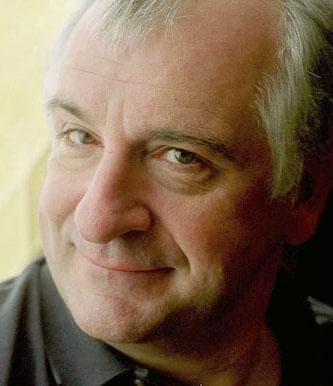
Douglas Noël Adams was an English author, humorist, and screenwriter, best known for The Hitchhiker's Guide to the Galaxy. Originally a 1978 BBC radio comedy, The Hitchhiker's Guide to the Galaxy developed into a "trilogy" of five books that sold more than 15 million copies in his lifetime. It was further developed into a television series, several stage plays, comics, a video game, and a 2005 feature film. Adams's contribution to UK radio is commemorated in The Radio Academy's Hall of Fame.







