“The one you love and the one who loves you are never, ever the same person.”
— Misty's internal thought about the nature of love and relationships.

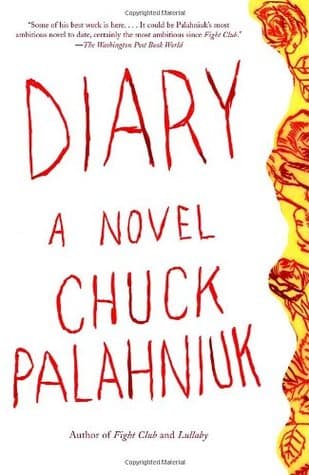
Chuck Palahniuk (2003)
Genre
Thriller / Mystery
Reading Time
350 min
Key Themes
See below
Sign in to track this book
A jaded artist on a tourist-trap island finds her creative spark reignited by a mysterious compulsion to paint, only to discover she's a pawn in a sinister conspiracy tied to her comatose husband's dark secrets and threatening hundreds of lives.
Misty Wilmot, once an art student at the Rhode Island School of Design, is now a waitress on Waytansea Island, a former artists' colony now a tourist trap. Her husband, Peter Wilmot, a local contractor, is in a coma after a suspected suicide attempt. Misty herself has not painted in years. The novel opens with Misty writing in a diary, a gift from Peter, as she sits by his hospital bed. She thinks about the island's lost artistic past and her own fading dreams, feeling trapped and uninspired by her life and growing medical bills.
After Peter's coma, his former clients begin harassing Misty. They accuse her of writing disturbing, prophetic messages on the walls of their newly renovated homes. These messages, written artistically, warn of coming danger and reveal private, often embarrassing, secrets about the homeowners. The clients, led by Margaret Astor, threaten Misty with lawsuits and public exposure. They believe she is responsible for the vandalism as revenge or a cry for help. Misty denies any involvement, but the evidence, including her art background, makes her a suspect to the island community and the police.
Amidst the accusations and her husband's worsening condition, Misty feels a sudden, strong return of her artistic drive. She begins to paint compulsively, creating large, unsettling canvases with disturbing images: drowning figures, burning houses, and scenes of mass destruction. These paintings are unlike anything she has made before, with a dark, prophetic quality. She feels an irresistible urge to paint, often working all night, neglecting her job and personal life. This new creativity is both exciting and frightening. She struggles to understand where her inspiration comes from and what her disturbing art means.
As Misty continues to paint, she begins to find parts of a shocking conspiracy. She learns that Peter, his father, Dr. Wilmot, and other prominent islanders have been part of a generations-old plot. Its purpose is to lure talented artists to Waytansea Island, drive them to despair, and then use their art. The messages scrawled in the renovated homes were not random vandalism. They were part of a plan to make Misty paint. The islanders believe that artists, through their suffering, can create works with inherent power, a 'soul,' which they plan to use for a sinister ritual.
Misty discovers that Dr. Wilmot, Peter's father, is the ruthless architect of the island's unusual tradition. He has been arranging the psychological torment of artists for decades, using his medical knowledge and influence to control them. Dr. Wilmot believes that artists' suffering fills their work with a unique spiritual energy, which he intends to use in a grand, macabre ritual. He has subtly guided Peter and other islanders, including Margaret Astor, to ensure this tradition continues. He sees himself as a guardian of the island's 'heritage' and a manipulator of artistic destiny.
Misty's frantic painting leads to a terrible realization: her art is not just personal expression, but a tool in the islanders' conspiracy. The disturbing images she creates, especially those showing burning houses and collapsing structures, are being interpreted as blueprints or targets by the islanders. They believe her art fulfills an ancient prophecy, marking specific buildings for demolition. The islanders plan to burn down a large part of the island, including the hotel where Misty works, during a major tourist event. They believe this act will cleanse the island and unleash powerful, mystical energy from the artists' suffering. Her paintings are not just art; they are a death warrant.
Peter wakes from his coma. Weak and confused, he eventually tells Misty about his reluctant involvement in the island's conspiracy. He reveals that his 'suicide attempt' was a desperate, failed effort to escape his father, Dr. Wilmot, and the islanders' control. Peter explains the history of artistic exploitation, the rituals, and the plan to burn the island. He admits to writing some initial messages in the houses but says he was forced and tried to stop the plan. His confession confirms Misty's worst fears and the true danger she faces.
On the night of the annual Summer Solstice Festival, the islanders, led by Dr. Wilmot and Margaret Astor, begin their plan. They start fires across the island, targeting the marked buildings and intending to trap unsuspecting tourists and residents. Misty, now fully aware of the plot, tries desperately to warn people, but her pleas are ignored or dismissed as the ramblings of a mad artist. The island descends into chaos, with flames engulfing structures and panic spreading through the crowds. The ritual, meant to cleanse and empower the island, becomes a horrifying spectacle of destruction and death.
In a desperate act of defiance and a final embrace of her artistic power, Misty decides to use her art against the conspirators. Instead of creating works that mark targets, she begins to paint images that expose the islanders' plot. She depicts their faces and their malicious intentions. She scrawls warnings and truths on any available surface, trying to tell those who will listen about the danger. Her art changes from a tool of destruction into a weapon of truth, though it may be too late to save everyone. She understands her art holds power, and she chooses to use it for revelation rather than destruction.
After the devastating fires, Misty's diary is found. It becomes the main account of the horrors on Waytansea Island. Through these pages, the full truth of the conspiracy, the artistic exploitation, and the islanders' ritual is revealed to the outside world. The diary is a record of Misty's ordeal and a chilling account of human depravity disguised as cultural tradition. The ending implies that the diary, initially for Misty's self-expression, ultimately helps bring justice, or at least understanding, for the victims of the island's dark secrets.
The Protagonist
Misty transforms from a passive victim of circumstances into an active participant, using her art and intellect to fight back against the island's sinister traditions.
The Supporting
Peter shifts from an unconscious pawn to a conscious, if still conflicted, ally to Misty, confessing his role and attempting to help her.
The Antagonist
Dr. Wilmot remains a consistent, unyielding force of evil, never wavering from his conspiratorial goals.
The Supporting
Margaret remains a steadfast antagonist, embodying the collective will of the conspirators.
The Supporting
His role is largely static, serving as an ever-present, watchful eye on Misty.
The novel examines how art and artists can be used, manipulated, and even destroyed for other purposes. On Waytansea Island, artists are not valued for their creativity. They are systematically driven to despair. Their suffering is believed to give their work a powerful 'soul' that the islanders plan to use. Misty's own art, at first a personal expression, becomes a tool for marking targets in a horrific ritual. This theme shows the dark side of artistic patronage and how creative energy can be misused.
“''Artists, Misty, are just the midwives of something greater. We don't create the soul; we merely channel it, and suffering is the best conduit.''”
Misty's journey shows a loss of innocence, both for her personally and in her view of art and community. Waytansea Island, once an artists' haven, has become a tourist trap. This mirrors Misty's own lack of artistic progress. As she uncovers the island's dark secrets, her romantic idea of art as pure expression is shattered. It is replaced by the horrifying reality of its exploitation. This theme explores the disillusionment that comes from facing harsh truths and how cherished ideals can be corrupted by sinister forces.
“''This island was supposed to be a sanctuary, a place where art could thrive. Instead, it's just a stage for a slow, agonizing death.''”
The novel is presented as Misty's diary, which blurs the lines between objective reality and subjective perception. The events described are filtered through her increasingly unstable mind. This makes the reader question what is real and what is a result of her trauma or the islanders' manipulation. The diary itself is a key plot device. Initially a record of her deteriorating mental state, it ultimately becomes the only reliable account of the conspiracy. This theme explores how stories shape our understanding of truth and how personal accounts can be powerful tools for revelation or manipulation.
“''They say the victors write history. But what about the victims? Who writes their story?''”
Waytansea Island is a small world where the islanders' collective will, driven by old traditions, actively suppresses and uses individual artistic expression. Misty struggles not just against the conspirators, but against the suffocating conformity that demands she fulfill a set role. The islanders' need to keep their 'heritage' at any cost shows the dangers of blindly following tradition, even when it involves horrific acts. This theme questions the cost of individuality when faced with strong societal pressure and the struggle to remain true to oneself.
“''On this island, you're either part of the masterpiece, or you're just another brushstroke they'll paint over.''”
Misty's diary serves as the primary narrative, filtered through her increasingly unstable perspective.
The entire novel is presented as Misty Wilmot's diary entries, making her an unreliable narrator. Her mental state is precarious due to trauma, grief, and the psychological manipulation she endures. This device creates suspense and ambiguity, forcing the reader to constantly question the veracity of events, the intentions of other characters, and even Misty's own sanity. It heightens the sense of mystery and paranoia, as the reader experiences the unfolding conspiracy through a deeply subjective and potentially distorted lens, only gradually piecing together the true nature of the plot.
The islanders' belief that suffering imbues art with a powerful, exploitable 'soul'.
The central MacGuffin in 'Diary' is the islanders' belief in the 'soul' or spiritual energy contained within art created by suffering artists. This abstract concept drives the entire conspiracy, motivating Dr. Wilmot and his followers to systematically torment and exploit artists like Misty. While the existence of this 'soul' is never definitively proven in a tangible way, it serves as the ultimate goal and justification for the islanders' horrific actions. It provides a powerful, if twisted, motivation for the antagonists and a focal point for the plot's dark mythology.
The reader often understands the sinister implications before Misty fully does.
Dramatic irony is frequently employed, particularly in the early and middle sections of the novel. The reader, having been clued into the genre and Palahniuk's style, often perceives the ominous undertones in seemingly innocuous events or dialogue long before Misty connects the dots. For example, the 'artistic' messages in the houses or Dr. Wilmot's seemingly benign advice carry a sinister weight that Misty initially dismisses. This creates a sense of dread and anticipation, as the reader watches Misty unknowingly walk further into the trap, amplifying the tension and the horror of her eventual realization.
The novel is entirely composed of Misty's diary entries.
The use of the epistolary format, specifically Misty's diary, is integral to the novel's structure and themes. It allows for an intimate, first-person perspective, immersing the reader directly into Misty's thoughts, fears, and observations. This format reinforces the unreliable narrator device and emphasizes the theme of narrative power, as the diary itself becomes an artifact of the truth. It provides a direct, unfiltered glimpse into Misty's psychological state and the gradual unraveling of the mystery, making the reader a direct confidante in her desperate struggle.
“The one you love and the one who loves you are never, ever the same person.”
— Misty's internal thought about the nature of love and relationships.
“We all die. The goal isn't to live forever, the goal is to create something that will.”
— Misty's reflection on art, legacy, and mortality, particularly concerning her husband's work.
“You can't spell 'DREAM' without 'RAM'.”
— A cryptic phrase Misty encounters, hinting at the manipulation of her reality and memories.
“The greatest trick the devil ever pulled was convincing the world he didn't exist.”
— Mentioned as a famous quote, reflecting the hidden, insidious nature of the conspiracy.
“The problem with living a lie is that it's just as much work as living the truth, sometimes more.”
— Misty's growing realization about the effort involved in maintaining the illusions around her.
“Every beautiful thing is a snare.”
— A recurring idea that what appears appealing or perfect often hides danger or a trap.
“You never know what you've got until it's gone. And then you never get it back.”
— Misty's lament over lost memories and her husband's deteriorating state.
“Art isn't about pretty pictures. It's about what you do with the space between the lines.”
— A discussion about the deeper meaning and subversive potential of art.
“There are no accidents. Only things we don't understand.”
— A fatalistic view that everything is predetermined or part of a larger plan.
“A good artist can make you feel something. A great artist can make you do something.”
— Exploring the manipulative power of art and its ability to incite action.
“Sometimes the only way to save someone is to let them go.”
— Misty's agonizing decision regarding her husband's fate and the larger conspiracy.
“The truth will set you free, but first it will piss you off.”
— A cynical take on the often painful and anger-inducing process of discovering reality.
“Your whole life is a diary. Every choice you make, every word you say, every breath you take.”
— A broader metaphorical understanding of life as a record of one's existence.
“You can never really know a person until you've walked a mile in their shoes. Or, in this case, worn their skin.”
— A grim and literal twist on a common idiom, reflecting the extreme identity shifts and manipulations in the story.
Ready to see how well you understood this book? Take our interactive quiz with 10 questions.
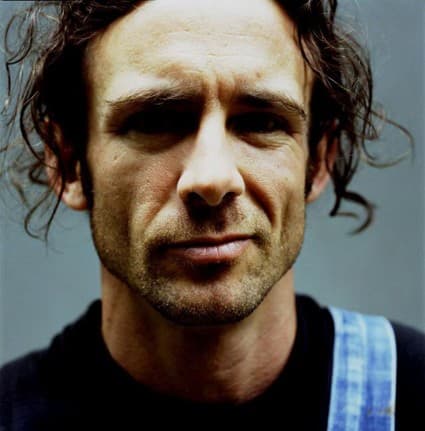
Chuck Palahniuk is a highly influential contemporary author, best known for his debut novel "Fight Club." His works, including "Haunted" and "Guts," are characterized by their transgressive themes, dark humor, and often shocking narratives. Palahniuk's distinctive style has earned him a significant cult following and cemented his reputation as a master of postmodern fiction.







