“There are some things that are not for sale.”
— Bond's internal reflection on the nature of certain values.


Ian Fleming (2022)
Genre
Thriller / Mystery
Reading Time
240 min
Key Themes
See below
Sign in to track this book
James Bond goes undercover to expose a diamond-smuggling operation, uncovering a criminal network and a plot that threatens more than just precious gems.
James Bond, agent 007, is assigned to investigate a major diamond smuggling operation from Sierra Leone to the United States. The British Secret Service, with the CIA, suspects the Spang brothers, Jack and Seraffimo, lead the operation. Bond's mission is to infiltrate the network by posing as diamond courier Peter Franks, whose identity he has taken after the real Franks was caught. This setup establishes the high stakes and global reach of the criminal enterprise Bond enters.
Bond, as Peter Franks, travels to New York to meet Tiffany Case, a cynical American woman who works for the Spang group. He delivers the smuggled diamonds to her. They immediately clash, with Tiffany showing a tough exterior. Bond quickly sees that Tiffany is involved but also possibly vulnerable. Their first interactions are tense as Bond tries to learn her loyalty to the Spangs while keeping his cover. This meeting is important for Bond to gain access to the criminal organization.
Bond and Tiffany travel to Saratoga, where Seraffimo Spang runs a casino and a spa that hides illegal activities. Bond observes the group's network, including the 'House of Diamonds,' a front for their illegal business. During their stay, Bond and Tiffany attend the Saratoga race track. There, they see the Spang organization's enforcers, Wint and Kidd. Bond also experiences the oppressive atmosphere of Spang's world, confirming the danger he is in and his adversaries' ruthless nature.
Bond discovers the group's secret: diamonds are smuggled inside coffins of deceased people transported across state lines by Slumber Inc., a funeral home chain owned by the Spangs. Bond makes this discovery after investigating the Spangs' funeral parlor operations. This reveals the Spangs' depravity and their willingness to use even death for profit. This plot point is a turning point, giving Bond crucial evidence of the group's operations and their lack of morality.
Bond is captured at the Saratoga spa by the Spang brothers' henchmen. He is tortured for information but escapes through his resilience and quick thinking. This shows Bond's physical skill and ability to be resourceful under pressure. His escape allows him to continue his mission and avoid the immediate threat from the Spangs and their enforcers, Wint and Kidd.
Bond follows the diamond trail to Las Vegas. There, he learns about the millionaire Willard Whyte, rumored to be the mastermind behind the operation. Whyte, an eccentric and powerful figure, owns many businesses used by the Spang brothers, including the Tropicana Hotel. Bond realizes that Whyte's involvement, whether he knows it or not, is key to dismantling the entire group. His arrival in Las Vegas shifts the investigation to the higher levels of the criminal enterprise.
Bond enters Willard Whyte's guarded desert compound, the 'Whyte House.' He confronts Whyte, who is at first skeptical. Bond's evidence eventually convinces Whyte that the Spang brothers have been using his businesses for smuggling without his knowledge. Whyte, a man with a strong sense of justice despite his reclusiveness, agrees to help Bond. This confrontation turns a powerful figure into an ally against the Spangs.
With Whyte's help, Bond sets a trap for the Spang brothers. He confronts Seraffimo Spang aboard his private train, 'The Cannonball,' leading to a brutal fight where Bond kills Seraffimo. Later, Bond tracks Jack Spang to his hideout in a ghost town. In a shootout, Bond eliminates Jack Spang, effectively ending the diamond smuggling group. The deaths of the Spang brothers mean the dismantling of the main criminal enterprise and a major victory for Bond.
After the Spang brothers are dealt with, Bond and Tiffany Case are targeted by the Spangs' hitmen, Mr. Wint and Mr. Kidd. The pair, known for their efficiency and sadism, pursue Bond and Tiffany to avenge their employers and eliminate witnesses. This chase adds immediate danger, changing the mission from dismantling a network to a desperate fight for survival against two skilled and ruthless killers.
Bond and Tiffany board the ocean liner 'Queen Elizabeth' for their return to London, believing they are safe. However, Wint and Kidd, disguised as passengers, ambush them. A tense confrontation leads to a violent struggle where Bond, with Tiffany's help, overcomes and kills both assassins. This final showdown at sea ends the immediate threat, allowing Bond and Tiffany to escape the Spang group's lingering dangers.
After the intense events, Tiffany Case, affected by her experiences and Bond's actions, decides to leave her criminal past. She expresses a desire for a new, honest life, showing a change from her initial cynical self. Bond, sensing her sincerity, supports her decision. Her change from a reluctant accomplice to someone seeking redemption is a key character arc, showing the impact of her encounter with Bond and the moral choices she faces.
With the diamond pipeline broken and the Spang brothers eliminated, Bond reflects on the mission's success. While the immediate threat is gone, he understands that such criminal enterprises persist. The story ends with Bond and Tiffany's journey back to London, with a debriefing ahead and the lasting effects of their shared ordeal. The mission, though successful, leaves Bond with a sense of the constant need to fight crime.
The Protagonist
Bond successfully dismantles a major criminal enterprise, demonstrating his unwavering dedication and resilience in the face of extreme danger.
The Supporting
Tiffany evolves from a cynical, self-serving criminal accomplice to a woman seeking redemption and a new, honest life, aided by Bond's influence.
The Antagonist
Seraffimo Spang maintains his cruel and dominant persona until his demise at the hands of James Bond, failing to protect his empire.
The Antagonist
Jack Spang remains a shadowy, violent figure committed to his criminal enterprise until he is killed by Bond, failing to protect the syndicate.
The Antagonist
Wint remains a loyal, sadistic assassin until his demise, showcasing his unwavering commitment to his employers' violent ends.
The Antagonist
Kidd remains a loyal, sadistic assassin until his demise, showcasing his unwavering commitment to his employers' violent ends.
The Supporting
Whyte transitions from an unwitting enabler of the Spang syndicate to a powerful ally for Bond, helping to dismantle the criminal enterprise.
The Supporting
M remains a steadfast and authoritative figure, successfully initiating and guiding Bond's mission to dismantle the diamond smuggling ring.
The novel shows how the desire for wealth, especially through illegal diamond smuggling, corrupts people and systems. The Spang brothers are examples of this, building a criminal empire through deception, violence, and even using coffins for smuggling. Their greed goes beyond profit, showing a desire for power and control. This influences legitimate businesses like Willard Whyte's and creates a network of compromised individuals like Tiffany Case. This theme highlights how unchecked greed can destroy morality and lead to extreme cruelty at every level of society.
“Diamonds are forever. They are the ultimate symbol of wealth and status, and people will kill for them.”
Identity and deception are central to Bond's mission and the criminal world he enters. Bond takes on Peter Franks' identity, needing to maintain his cover while navigating dangerous situations. The Spang group itself relies on deception, using legitimate businesses as fronts for illegal activities and elaborate schemes, like the funeral home operation, to hide their tracks. Tiffany Case also presents a facade of hardened cynicism, hiding her vulnerabilities and true desires. This theme explores the constant balance between true selves and invented identities in a world where trust is rare.
“Bond knew that in his profession, identity was a fluid thing, a mask to be worn and discarded at will.”
The novel explores the many forms of evil through its villains. The Spang brothers represent overt, organized evil driven by greed and a disregard for human life. Their enforcers, Wint and Kidd, show a more psychopathic and sadistic evil, finding pleasure in cruelty and violence. This theme looks at the commonness of evil in some cases (the cold efficiency of the smuggling operation) and its more theatrical, disturbing forms in others (Wint and Kidd's methods). It makes Bond, and the reader, confront the various shapes malevolence can take and the depths of human depravity.
“They were specialists in pain, artists of the grotesque.”
While many characters are set in their moral positions, Tiffany Case's story introduces the theme of redemption and individual choice. Initially a cynical participant in the diamond group, her interactions with Bond and the Spangs' increasing violence force her to confront her own morality. Her eventual decision to leave her criminal past and seek an honest life shows that change is possible, even for those deeply involved in illegal activities. This theme suggests that even in the darkest situations, people can choose a different path, often with great personal risk.
“Perhaps there was a way out, a chance to be clean.”
Bond assumes the identity of Peter Franks to infiltrate the diamond smuggling ring.
This device is crucial for initiating the plot and allowing Bond direct access to the criminal underworld. By taking on Franks' identity, Bond can interact with key figures like Tiffany Case and observe the syndicate's operations from within. It creates immediate tension as Bond must constantly maintain his disguise, avoiding detection by ruthless criminals who would not hesitate to kill. This allows for exposition about the syndicate's workings and facilitates Bond's gathering of intelligence, driving the narrative forward.
The smuggled diamonds serve as the central object of desire and conflict.
The diamonds themselves function as a classic MacGuffin, a plot device that drives the story forward without necessarily holding intrinsic value beyond motivating the characters. Their smuggling is the central conflict, prompting Bond's mission and the Spang brothers' elaborate criminal enterprise. The diamonds are the reason for the violence, the deception, and the global chase, providing a tangible objective that both heroes and villains are relentlessly pursuing, thereby creating the narrative's thrust.
Tiffany Case is a seductive and dangerous woman who initially works against Bond.
Tiffany Case embodies the femme fatale archetype, a beautiful and alluring woman who is initially an adversary or morally ambiguous figure. Her initial cynicism and involvement with the Spang syndicate pose a challenge to Bond, both professionally and personally. She is a source of both danger and potential information. Over the course of the story, she gradually shifts allegiance, becoming an ally and romantic interest, adding complexity to Bond's mission and emotional depth to the narrative.
The Spang brothers' sadistic assassins who relentlessly pursue Bond.
Wint and Kidd serve as quintessential evil henchmen, providing a constant, chilling threat to Bond and Tiffany. Their sadistic personalities and methodical approach to killing elevate the stakes and create intense suspense. They are not merely obstacles but embody the pure, unadulterated evil of the Spang organization, making their eventual defeat highly satisfying. Their relentless pursuit drives the latter part of the plot, turning the mission into a desperate fight for survival.
“There are some things that are not for sale.”
— Bond's internal reflection on the nature of certain values.
“A woman can be beautiful and still be deadly.”
— Bond's observation about Tiffany Case.
“The world is full of people who are trying to get something for nothing.”
— A general cynical observation about human nature.
“He liked his women to be women, and his men to be men.”
— Bond's traditional views on gender roles.
“Never say 'no' to an adventure. Always say 'yes,' otherwise you'll lead a very dull life.”
— A philosophical statement about living life to the fullest.
“Diamonds are a girl's best friend, but a man's worst enemy.”
— A twist on the classic saying, reflecting the dangerous allure of diamonds.
“The smell of fear is a very distinctive one.”
— Bond's keen senses at play in a tense situation.
“There's nothing so bad that it couldn't be worse.”
— A darkly optimistic or realistic outlook during a difficult moment.
“He always mistrusted people who were too enthusiastic.”
— Bond's cautious nature and skepticism.
“The great thing about the English is that they have no sense of humour.”
— An ironic comment made by a character about national stereotypes.
“It's a strange thing, but the human race seems to prefer to be led by the nose.”
— A cynical observation on human manipulability.
“He had a cold, hard core of professionalism.”
— A description of Bond's dedication to his work.
“Money is a useful servant but a bad master.”
— A reflection on the corrupting influence of wealth.
“The silence was so profound that it hummed.”
— A vivid description of an intensely quiet atmosphere.
Ready to see how well you understood this book? Take our interactive quiz with 10 questions.
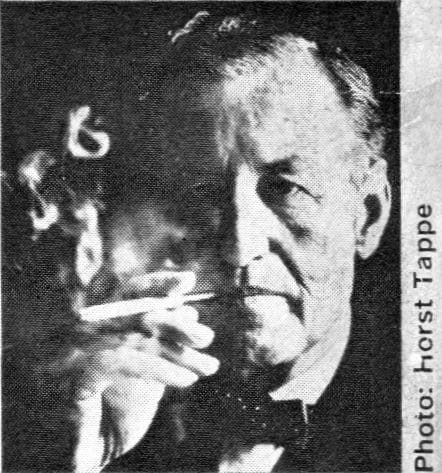
Ian Lancaster Fleming was a British writer, best known for his postwar James Bond series of spy novels. Fleming came from a wealthy family connected to the merchant bank Robert Fleming & Co., and his father was the Member of Parliament (MP) for Henley from 1910 until his death on the Western Front in 1917. Educated at Eton, Sandhurst, and, briefly, the universities of Munich and Geneva, Fleming moved through several jobs before he started writing.







