“The law was a living, breathing thing, constantly changing, constantly challenging.”
— Reflecting on the nature of legal work and its dynamic challenges.

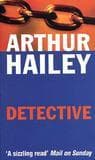
Arthur Hailey (1997)
Genre
Thriller / Mystery
Reading Time
12-14 hours
Key Themes
See below
Sign in to track this book
On the eve of his long-awaited vacation, a detective is pulled into a final, high-stakes confession from a serial killer that unravels a conspiracy reaching the highest echelons of his own department and city government.
Detective Sergeant Malcolm Ainslie is moments away from embarking on a much-anticipated vacation to the Caribbean with his wife, Helen, and son, Doug. His bags are packed, and the family is ready to leave when the phone rings. It's Father Vincent, the chaplain at Florida State Prison, with an urgent request. Elroy Doil, a notorious serial killer whom Ainslie helped convict for a double murder, is scheduled to be executed at dawn. Doil has requested a final confession, but only to Ainslie in person. Despite the disruption to his personal plans and Helen's disappointment, Ainslie, driven by the possibility of closing ten unsolved murder cases linked to Doil, reluctantly agrees to go, postponing his family's departure.
Ainslie arrives at Florida State Prison and is led to Elroy Doil's cell. Doil, a chilling and manipulative figure, admits to the two murders for which he was convicted but then makes a bombshell confession regarding the death of Sally Anne Kincaid, one of the ten other victims attributed to him. Doil vehemently denies killing Kincaid, stating that she was already dead when he found her. He describes the scene, providing details that suggest Kincaid's death was not part of his modus operandi. This revelation immediately throws a wrench into the established police narrative and raises serious questions about the integrity of the original investigation, specifically the work of Captain Jefferson, Ainslie's former mentor.
Doil provides specific, unsettling details about Sally Anne Kincaid's death, including her unusual attire and the state of her body. He insists he only desecrated the body, a detail that was never released to the public. Ainslie, an ex-priest with a strong moral compass, is deeply disturbed by Doil's account, which contradicts the official police report and the evidence presented at trial. He realizes that if Doil is telling the truth about Kincaid, it means an innocent person might have been falsely linked to the crime, or worse, the real killer is still at large. The confession compels Ainslie to begin a discreet, immediate re-investigation, despite the pressure of the impending execution.
Upon returning to Miami, Ainslie attempts to open a new inquiry into Sally Anne Kincaid's death, facing immediate pushback from his superiors, particularly Captain Jefferson, who oversaw the original investigation. Jefferson dismisses Doil's confession as a desperate last-minute ploy from a condemned man seeking attention. Other colleagues are also reluctant to revisit a closed case, especially one that could tarnish the department's reputation. Ainslie finds himself increasingly isolated, but his commitment to justice and his suspicion that something is deeply wrong compel him to proceed, using his connections and resources to discreetly gather information.
Ainslie enlists the help of Dr. Arnie Ziff, a careful forensic pathologist, to re-examine the original autopsy reports and evidence related to Sally Anne Kincaid. Ziff's independent review uncovers subtle but significant discrepancies that align with Doil's confession. It becomes clear that certain evidence, particularly details about the time and manner of Kincaid's death, was either overlooked or intentionally suppressed in the original investigation. This new forensic evidence strengthens Ainslie's conviction that Kincaid's death was not a Doil murder, pointing towards a cover-up within the police department or a powerful figure's involvement.
As Ainslie investigates further, he discovers that Sally Anne Kincaid was involved in a complex web of relationships, including with powerful figures in Miami's city government and business community. He learns that Kincaid had been working as an escort and had potentially blackmailed some of her high-profile clients. The investigation begins to point towards Mayor Harry S. Golding and other prominent individuals, suggesting a conspiracy to cover up Kincaid's true killer and protect their reputations. Ainslie realizes the stakes are much higher than he initially imagined, potentially jeopardizing his career and even his life.
Malcolm Ainslie confronts Captain Jefferson with the growing evidence, including the new forensic findings and the connections to prominent city figures. Jefferson, initially defensive and dismissive, eventually cracks under pressure. He confesses that he knew about the inconsistencies in the Kincaid case but was pressured by higher-ups, including Mayor Golding, to close the case quickly and attribute it to Doil to avoid scandal. Jefferson admits to deliberately suppressing evidence and manipulating the investigation, revealing the depth of corruption and the betrayal of justice within the department. This confession deeply wounds Ainslie, who had once admired Jefferson.
Through painstaking investigation, Ainslie uncovers that Sally Anne Kincaid was murdered by Dennis Golding, Mayor Golding's son. Dennis, a disturbed and violent individual, had killed Kincaid in a fit of rage after she threatened to expose their relationship and his father's involvement. Mayor Golding, desperate to protect his son and his political career, orchestrated the cover-up, using his influence within the police department to pin the crime on Elroy Doil. Ainslie carefully pieces together the evidence, connecting Dennis to the crime scene and the specific details Doil had provided, confirming Doil's innocence in that particular murder.
Ainslie presents his irrefutable evidence to the District Attorney, exposing Mayor Golding's complicity and his son's culpability. The revelation sends shockwaves through Miami's political and law enforcement circles. Dennis Golding is arrested, and Mayor Golding faces public disgrace and potential legal repercussions. While Ainslie achieves justice for Sally Anne Kincaid and vindicates Elroy Doil's death row confession, his actions come at a significant personal and professional cost. He faces ostracism from some colleagues and the strain on his family, but he emerges with his integrity intact, reaffirming his commitment to truth and justice.
In the aftermath of the Kincaid case, Malcolm Ainslie reflects on the moral compromises and ethical dilemmas he encountered. The experience deeply impacts him, reinforcing his belief in the importance of justice, even when it means challenging the very institutions he serves. He acknowledges the personal sacrifices, including the delayed vacation and the strain on his relationship with Helen, but finds a renewed sense of purpose. The case is a stark reminder of the dark side of power and the constant vigilance required to uphold the law and protect the innocent, solidifying his resolve as a detective and as a man of principle.
The Protagonist
Ainslie's journey is one of reaffirming his moral integrity against systemic corruption, solidifying his identity as a detective who prioritizes truth above all else.
The Antagonist/Catalyst
Doil's arc is limited to his final hours, but his confession acts as the primary catalyst for the entire narrative, posthumously influencing the pursuit of justice.
The Supporting
Helen's arc primarily involves her coming to terms with Malcolm's unwavering dedication to his work, ultimately accepting and supporting his moral imperative.
The Antagonist/Supporting
Jefferson's arc is one of exposure and downfall, as his complicity in the cover-up is revealed, leading to the destruction of his reputation and career.
The Victim/Catalyst
Kincaid's arc is posthumous; her true story is uncovered, leading to the posthumous clearing of her name and the exposure of her real killer.
The Antagonist
Golding's arc is one of exposure and downfall, as his carefully constructed facade of respectability crumbles under Ainslie's relentless investigation.
The Antagonist
Dennis's arc culminates in his arrest and the exposure of his crimes, bringing a measure of justice to the Kincaid case.
The Supporting
Dr. Ziff's arc is primarily functional, serving to provide the scientific backing for Ainslie's investigation, reinforcing the pursuit of objective truth.
The central theme is Ainslie's relentless pursuit of justice against deep corruption within law enforcement and city government. The novel explores how powerful individuals, like Mayor Golding, can manipulate the system to protect themselves, leading to wrongful convictions and the suppression of truth. Ainslie's struggle to expose the real killer of Sally Anne Kincaid, despite immense pressure and betrayal, highlights the moral need to uphold justice, even at a significant personal cost. The contrast between Elroy Doil's twisted 'justice' and Ainslie's principled stand is stark.
““Justice is not a commodity. It’s a sacred trust. When we betray it, we betray everything.””
Malcolm Ainslie's past as a priest deeply informs his strong moral compass and conscience. This theme explores the internal struggle of an individual committed to ethical principles in a world often without them. Ainslie's decision to investigate Doil's confession, even when it threatens his career and family, is driven by a deep sense of right and wrong. His character embodies the idea that true integrity means standing up for the truth, regardless of the consequences, and that one's conscience is a powerful guide. The betrayal by his former mentor, Captain Jefferson, further tests his resolve but ultimately strengthens his commitment.
““A lie could be buried, but the truth, like a persistent weed, always found a way to the surface.””
The novel examines the heavy burden that comes with uncovering and revealing difficult truths, especially when those truths challenge established narratives and powerful institutions. Ainslie experiences immense pressure, isolation, and personal sacrifice as he unearths the conspiracy surrounding Sally Anne Kincaid's murder. The truth not only exposes criminals but also shatters reputations and trust, forcing individuals to confront uncomfortable realities. This theme highlights that while truth is essential for justice, its revelation often comes with significant personal and professional repercussions for those brave enough to pursue it.
““Some truths were like poison, once swallowed, they changed everything.””
The book explores different facets of evil, from the obvious psychopathy of a serial killer like Elroy Doil to the more subtle, systemic corruption represented by Mayor Golding and Captain Jefferson. Doil's calculated manipulation and violence are contrasted with the 'respectable' evil of those who abuse their power for personal gain and reputation. This theme explores how evil can appear in various forms, challenging the simple idea of good versus bad and revealing the complex moral landscape of society. It forces Ainslie, and the reader, to confront the uncomfortable truth that evil often wears a disguise of power and authority.
““Evil wasn't always a monster in the shadows. Sometimes, it wore a suit and tie, and sat in the mayor's office.””
A condemned serial killer's last-minute confession that unravels a conspiracy.
Elroy Doil's death row confession serves as the primary inciting incident and a crucial plot device. By confessing only to Ainslie and denying one of the murders attributed to him, Doil acts as a catalyst, forcing Ainslie to re-open a seemingly closed case. This device creates immediate urgency due to the impending execution and establishes the central mystery. It subverts expectations by having the 'villain' provide a piece of truth that exposes a larger, more insidious evil within the system, driving the entire narrative forward.
The official police narrative of the Kincaid murder is revealed to be false, creating dramatic irony.
This device is used to establish a false premise early in the story – that Elroy Doil killed Sally Anne Kincaid. The 'unreliable narrator' here isn't a character, but the established, official police narrative that Ainslie initially accepts. Doil's confession directly challenges this, forcing Ainslie (and the reader) to question everything. The dramatic irony comes from the audience knowing the official story is likely false, watching Ainslie painstakingly uncover the 'true' version of events, building suspense and highlighting the themes of truth and corruption.
Ainslie's respected former mentor is revealed to be complicit in the cover-up.
The betrayal by Captain Jefferson, Malcolm Ainslie's former mentor, is a powerful plot device that deepens the emotional stakes for the protagonist. It not only provides a personal challenge for Ainslie, forcing him to confront a trusted figure, but also vividly illustrates the pervasive nature of the corruption he is fighting. This betrayal highlights the theme of moral compromise within institutions and underscores the personal cost of Ainslie's unwavering commitment to justice, making his victory more poignant.
New scientific examination of old evidence reveals critical discrepancies.
The re-examination of Sally Anne Kincaid's autopsy and crime scene evidence by Dr. Arnie Ziff is a key plot device. It provides the objective, scientific proof needed to validate Doil's confession and dismantle the official narrative. This device grounds the mystery in realistic police procedure, adding authenticity and credibility to Ainslie's investigation. It serves to systematically chip away at the cover-up, moving the plot forward with concrete, undeniable facts that eventually force the truth to light.
“The law was a living, breathing thing, constantly changing, constantly challenging.”
— Reflecting on the nature of legal work and its dynamic challenges.
“Every crime, no matter how perfect, left a thread. The trick was to find it.”
— Detective Sergeant Malcolm Ainslie's philosophy on crime investigation.
“Bureaucracy was the enemy of efficiency, a monster that fed on paper and devoured time.”
— A character's frustration with the administrative hurdles in police work.
“In police work, the truth was rarely simple, and often profoundly disturbing.”
— A reflection on the complex and often grim realities faced by detectives.
“A good detective didn't just look for clues; he looked for patterns, for the story behind the facts.”
— Describing the deeper analytical skills required for effective detective work.
“Fear was a powerful motivator, capable of making ordinary people do extraordinary things, both good and bad.”
— Exploring the psychological impact of fear on human behavior.
“The city never slept, and neither did its criminals. Or its police.”
— Emphasizing the relentless nature of urban crime and law enforcement.
“Justice wasn't a perfect machine; it was a human endeavor, flawed and fallible.”
— A cynical but realistic view on the imperfections of the justice system.
“Every person carried secrets, and sometimes those secrets were deadly.”
— Hinting at the hidden complexities and dangers within individuals.
“The past was never truly dead; it always found a way to catch up.”
— A theme of how past events inevitably influence the present.
“In the labyrinth of the human mind, motives were often the most elusive prey.”
— Discussing the difficulty of understanding the true reasons behind actions.
“The weight of responsibility was a heavy cloak, especially when lives hung in the balance.”
— Describing the pressure felt by those in positions of authority, like detectives.
“Sometimes, the most obvious answer was the one you should trust the least.”
— A warning against complacency and the importance of critical thinking in investigations.
“The silence in a murder victim's home was louder than any scream.”
— Conveying the chilling atmosphere and profound impact of a crime scene.
Ready to see how well you understood this book? Take our interactive quiz with 10 questions.
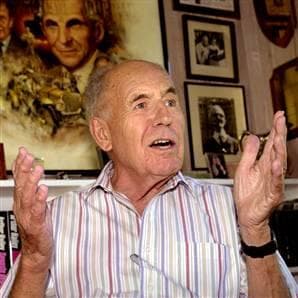
Arthur Hailey was a British-Canadian novelist renowned for his meticulously researched, fast-paced thrillers often set in specific industries. His major works, including 'Airport,' 'Hotel,' and 'Strong Medicine,' became international bestsellers, captivating readers with their detailed portrayals of complex professional environments and gripping narratives.







