“No matter what you do it's bound to be a waste of time in the end so you might as well go mad.”
— Jack Duluoz reflecting on life's futility and embracing madness.

Jack Kerouac (1965)
Genre
Literary Fiction / Lifestyle
Reading Time
10-12 hours
Key Themes
See below
Sign in to track this book
A raw, stream-of-consciousness journey through a Beat Generation poet's spiritual and carnal wanderings, as he grapples with fame, faith, and enlightenment from San Francisco to a solitary fire tower.
The novel opens with Jack Duluoz, Kerouac's character, taking a job as a fire lookout on Desolation Peak in the North Cascade Mountains of Washington State. He seeks isolation and spiritual insight, hoping to escape the pressures of his growing fame and the chaotic Beat lifestyle. Duluoz spends weeks alone, observing nature, meditating, and writing, fighting inner demons and the deep loneliness of the wilderness. He carries a copy of the Diamond Sutra and tries to practice Buddhism, but his mind constantly goes back to memories of his past life, his friends, and his worries. This time is marked by deep thought and a struggle to balance his spiritual goals with his earthly desires and the pull of the world he left behind.
After his time alone on Desolation Peak, Duluoz descends and hitchhikes back to civilization, eventually reaching San Francisco. The change from deep quiet to the city's busy, bohemian energy is jarring. He reunites with his friends, including Ray Smith (Gary Snyder), who had encouraged his mountain retreat, and other Beat figures. Duluoz finds himself again in the intellectual and social activity of the North Beach scene, going to bars, coffeehouses, and apartments where discussions on poetry, philosophy, and jazz are constant. Despite the friendship, Duluoz feels a continued sense of not belonging and struggles to find the spiritual peace he sought on the mountain amidst the urban chaos.
In San Francisco, Jack Duluoz goes deeper into the Beat subculture, living among poets, artists, and hustlers. He spends his days and nights in a whirlwind of parties, discussions, and wandering, often fueled by alcohol and drugs. He interacts with many colorful characters, many of whom are representations of real Beat figures like Allen Ginsberg and Neal Cassady. Duluoz observes his friends' lives—their artistic work, their relationships, their struggles with poverty and addiction—all while trying to keep up his own writing. This period has a mix of strong friendship and underlying tension, as Duluoz deals with the superficiality he sees in the scene and his own desire for authenticity.
Seeking a change of scenery and a break from San Francisco's intensity, Jack Duluoz travels to Mexico City. This journey is marked by his usual aimless wandering and immersion in new cultures. He experiences Mexico's vibrant, often overwhelming, atmosphere, meeting various locals and fellow travelers. The heat, poverty, and sensory overload of the city contrast sharply with both the mountain solitude and the San Francisco scene. While in Mexico, Duluoz continues his spiritual quest and writing, but also enjoys the city's hedonistic aspects, often finding himself confused and disappointed, further showing his internal conflicts.
After his adventures, Duluoz eventually returns to New York City, where he lives with his mother. This return to a more conventional, home setting is a sharp contrast to his bohemian lifestyle. He deals with his family's expectations, particularly his mother's wish for him to settle down, and the increasing recognition (and misunderstanding) of his work after the success of 'On the Road'. Duluoz feels trapped between his desire for freedom and his family duties, experiencing periods of depression and anxiety. He continues to write a lot, documenting his observations and inner turmoil, but finds it harder to balance his public image with his private self.
As Duluoz navigates New York, he sees the changing state of the Beat Generation. The initial friendship and shared artistic vision begin to weaken under the pressure of fame, internal conflicts, and outside criticism. Some friends drift away, others struggle with addiction, and the movement itself starts to be taken over and commercialized. Duluoz feels a growing sense of separation from the movement he helped create, seeing a loss of innocence and authenticity. He thinks about the idealism of their early days versus the often harsh realities of their present, leading to a deep sadness and questioning of their shared purpose.
Duluoz travels to Paris, hoping to find new inspiration and a sense of belonging in the city of artists and intellectuals. He meets various expatriates, writers, and European bohemians, engaging in long discussions about literature, politics, and life. He continues his constant writing, filling notebooks with observations and thoughts. However, even in Paris, Duluoz cannot escape his internal struggles. He fights loneliness, self-doubt, and the feeling of being an outsider, despite his attempts to connect with others. The European experience, while culturally rich, ultimately reinforces his feeling of rootlessness and the commonality of his existential worries.
From Paris, Duluoz goes to Tangier, Morocco, to visit his friend, the writer William S. Burroughs. This meeting is important, showing Duluoz a different, more experimental side of the Beat world. Burroughs's lifestyle and artistic philosophy, focused on drug use, cut-up techniques, and a detached, cynical view of society, challenge Duluoz's own spiritual and literary feelings. The atmosphere in Tangier is often surreal and unsettling, marked by drug use, sexual ambiguity, and a sense of decay. Duluoz observes Burroughs's creative process and lifestyle, which both fascinate and repel him, pushing him further into thinking about his own path.
After his European and North African travels, Duluoz returns to America, but coming home does not bring the peace he seeks. He feels increasingly disconnected from society, his friends, and even his past self. The early idealism of the Beat movement seems to have faded, replaced by disappointment and life's harsh realities. He continues to write, but his entries are often filled with deep sadness, reflecting on life's temporary nature and the elusive nature of happiness and spiritual fulfillment. Duluoz experiences moments of clarity and beauty, but they are often overshadowed by a general sense of loss and the weight of existence.
The novel ends with Jack Duluoz still dealing with his existential questions, his spiritual quest unfinished. He thinks about his experiences on Desolation Peak, in San Francisco, Mexico, Europe, and Tangier, trying to understand his life and purpose. Despite the disappointment, there is a persistent, though tired, hope for enlightenment and understanding. Duluoz continues to write, seeing it as his main way to make sense of the world and his place within it. The ending is not a solution but a continuation, emphasizing the ongoing nature of his search for truth, beauty, and lasting peace in a chaotic world.
The Protagonist
Duluoz begins seeking isolated spiritual enlightenment, but ultimately realizes that true understanding comes from navigating the complexities of human connection and the world, not escaping it, though he remains in search of peace.
The Supporting
Ray remains a consistent, stable influence, serving as a philosophical touchstone for Duluoz throughout his tumultuous journey.
The Supporting
Irwin remains a central figure in Duluoz's social and artistic life, evolving as a poet and mirroring the broader changes within the Beat movement.
The Supporting
Cody remains a consistent symbol of chaotic freedom, representing the unbridled energy Duluoz both admires and fears.
The Supporting
The Mother consistently represents the pull of domesticity and traditional life, serving as a grounding force against Duluoz's wanderlust.
The Supporting
Burroughs remains a consistent representation of the avant-garde and the darker, more cynical aspects of the counterculture, challenging Duluoz's idealism.
The Supporting
Georges serves as a dynamic, youthful presence, embodying the ongoing energy of the Beat movement.
The Mentioned
These women represent Duluoz's recurring pattern of seeking fleeting connections rather than lasting commitment, highlighting his emotional restlessness.
A main theme is Jack Duluoz's constant search for spiritual understanding, mostly through Buddhism. From his isolated time on Desolation Peak, where he tries to meditate and read the Diamond Sutra, to his later travels, Duluoz constantly seeks a deeper meaning beyond the material world. However, this quest is always challenged by his earthly desires, the temptations of the Beat lifestyle (alcohol, drugs, sex), and his own restless nature. He deals with the paradox of seeking solitude while wanting human connection, and the difficulty of keeping spiritual discipline amidst chaos. This struggle is clear when he comes down from the mountain, finding it hard to balance the peace he sought with society's demands.
“No matter what you do it's bound to be a waste of time in the end so you might as well go mad.”
The novel explores the tension between wanting deep solitude and needing human connection. Duluoz actively seeks isolation on Desolation Peak, believing it important for spiritual growth and creative work. This time is marked by intense thought but also by deep loneliness and a longing for his friends. Upon returning to San Francisco, he enters the Beat community, finding friendship and intellectual stimulation, but also superficiality and chaos. This back and forth between extreme isolation and intense social immersion shows Duluoz's inability to find lasting peace in either state, suggesting that true understanding might come from balancing these two basic human needs, or perhaps accepting their inherent conflict.
“I was a man and I had my problems, and I had my solutions, and I had my own way of doing it.”
While initially a part of and writer about the Beat Generation, Duluoz experiences growing disappointment with the movement he helped define. He sees the commercialization of the counterculture, the internal arguments among his friends, and the destructive paths some take through addiction and aimlessness. The early idealism and shared artistic vision begin to fade, replaced by a sense of loss and the realization that the 'revolution' may have been unsustainable or misunderstood. His travels to Europe and Tangier, especially his meeting with Burroughs, further show him the darker, more cynical parts of their shared world, leading him to question the authenticity and ultimate purpose of their lifestyle.
“All of them, all of the heroes, all of the madmen, all of the beautiful ones, all of them had to die.”
Writing itself is a constant theme and a core activity for Duluoz. The novel is structured as a series of journal entries, letters, and stream-of-consciousness thoughts, making the act of writing central to its form and content. Duluoz uses writing to process his experiences, understand his spiritual quest, and document the lives of his friends and the era. It is his main tool for making sense of the chaos around and within him, a continuous attempt to capture fleeting moments and find truth through language. The constant, often raw, nature of his writing highlights its therapeutic and existential importance to him.
“My work is to write, and if I write, then I'm doing my work.”
Duluoz constantly searches for an authentic way of living, both personally and artistically. This quest drives his spiritual pursuits, his travels, and his relationships. He is wary of fakery and superficiality, whether in the commercial world, the growing Beat scene, or even within himself. His disappointment with the Beat Generation comes partly from his belief that it has lost its original authenticity. He tries to live a life true to his own spiritual and creative impulses, even when those impulses lead him to contradictory paths, showing how hard it is to maintain genuine selfhood in a complex world.
“I had nothing to offer anybody except my own confusion.”
The narrative flows as Duluoz's unfiltered thoughts, observations, and memories.
The novel is primarily told through a stream-of-consciousness style, mimicking the spontaneous and unedited flow of Jack Duluoz's thoughts. This device allows the reader direct access to Duluoz's inner world, his spiritual musings, anxieties, and sensory experiences. It creates an intimate, immediate, and often chaotic narrative, reflecting the restless mind of the protagonist and the improvisational nature of the Beat aesthetic. The lack of traditional plot structure emphasizes the journey of the mind over external events, making the reader a direct participant in Duluoz's existential quest.
Real-life events and people are thinly veiled as fictionalized accounts.
Kerouac uses his own life experiences and real individuals from the Beat Generation, thinly disguising them as fictional characters (e.g., Jack Duluoz for Jack Kerouac, Ray Smith for Gary Snyder, Irwin Garden for Allen Ginsberg). This device blurs the lines between fiction and autobiography, lending a sense of authenticity and immediacy to the narrative. It allows Kerouac to explore the personal and collective experiences of his generation while maintaining a degree of artistic freedom, creating a historical document that is simultaneously a deeply personal reflection.
The mountain represents spiritual retreat, isolation, and a starting point for Duluoz's journey.
Desolation Peak serves as a powerful symbol in the novel. It represents the ultimate retreat from society, a place for spiritual introspection, purification, and an attempt at monastic discipline. Its harsh, isolated environment mirrors Duluoz's internal struggles and his desire for transcendence. The descent from the mountain symbolizes his return to the complexities of the human world and the challenges of integrating spiritual aspirations with mundane existence. It acts as a foundational experience, a 'desolation' that paradoxically initiates a deeper, albeit more chaotic, search for meaning.
Physical journeys across continents reflect Duluoz's internal quest and restlessness.
The constant movement of Jack Duluoz across various geographic locations—from the Pacific Northwest to San Francisco, Mexico City, New York, Paris, and Tangier—is a crucial plot device. These physical journeys are not merely changes of scenery but directly reflect Duluoz's internal restlessness, his search for meaning, and his attempts to escape his anxieties. Each new location offers a different cultural backdrop and set of experiences that challenge or reinforce his philosophical and spiritual inquiries, highlighting his perpetual state of seeking and his inability to find a permanent home or peace.
“No matter what you do it's bound to be a waste of time in the end so you might as well go mad.”
— Jack Duluoz reflecting on life's futility and embracing madness.
“The only truth is music.”
— Duluoz's epiphany about the purity and honesty of music.
“I was a good man, a real good man, until I was about twenty-seven, when I fell into this terrible despair.”
— Duluoz reminiscing about his past innocence before his descent into disillusionment.
“There are some things you can’t get with money. You can’t get youth. You can’t get love. You can’t get peace of mind.”
— Duluoz pondering the limitations of material wealth.
“I realized that I had to start all over again, that I had to go back to the beginning and find out what was real.”
— A moment of self-reflection and the desire for authenticity after disillusionment.
“Everything is holy! everybody's holy! everywhere is holy! everyday is in eternity! Everyman's an Angel!”
— Duluoz's ecstatic vision of universal holiness and interconnectedness.
“The only people for me are the mad ones, the ones who are mad to live, mad to talk, mad to be saved, desirous of everything at the same time, the ones who never yawn or say a commonplace thing, but burn, burn, burn like fabulous yellow roman candles exploding like spiders across the stars and in the middle you see the blue centerlight pop and everybody goes 'Awww!'”
— A famous quote, often misattributed to 'On the Road', but a core sentiment of Kerouac's characters, reflecting a yearning for intense experience.
“I went to the woods because I wished to live deliberately, to front only the essential facts of life, and see if I could not learn what it had to teach, and not, when I came to die, discover that I had not lived.”
— Duluoz reflecting on his desire for a meaningful existence, echoing Thoreau.
“My mind is a confused heap of images and impressions, a veritable junkshop of the soul.”
— Duluoz describing his internal mental state, a mix of vivid and chaotic thoughts.
“And the only thing I had to offer was my own confusion.”
— Duluoz's humble and honest self-assessment of his contributions.
“The tears of things, lacrimae rerum, the sadness of the world.”
— Duluoz contemplating the inherent sorrow and melancholy in existence.
“It was like a great silent dream. The past, the present, the future, all mixed up in one big ball.”
— Duluoz's perception of time and memory as a fluid, non-linear experience.
“I realized that the only way to be free was to give up everything.”
— Duluoz's insight into detachment as a path to liberation.
“Every time I ever got anywhere, it was because I was completely lost.”
— Duluoz reflecting on the unexpected paths and discoveries that come from being disoriented.
“I was suddenly aware of the fact that everything was alive and everything was dying.”
— Duluoz's observation of the cycle of life and death in nature and existence.
Ready to see how well you understood this book? Take our interactive quiz with 10 questions.
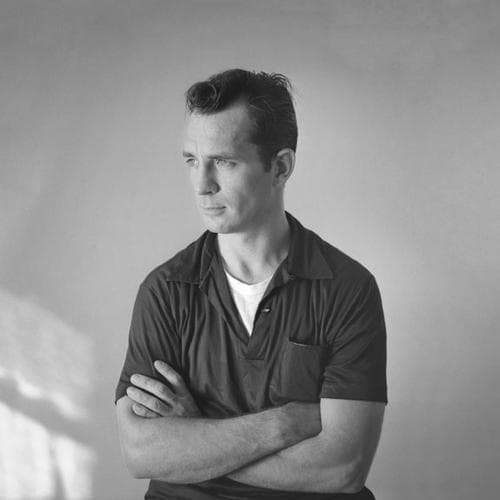
Jean-Louis Lebris de Kérouac, known as Jack Kerouac, was an American novelist and poet who, alongside William S. Burroughs and Allen Ginsberg, was a pioneer of the Beat Generation.







