“Hell is the will to be oneself, and nothing else.”
— General philosophical statement about the nature of hell.

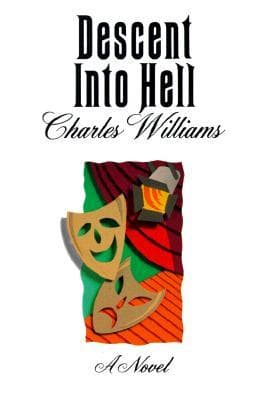
Charles Williams (1936)
Genre
Fantasy / Spirituality
Reading Time
450 min
Key Themes
See below
Sign in to track this book
In a town where ghosts and doppelgängers blur the line between reality and spiritual decay, people grapple with self-obsession, finding their personal hells through an inability to connect or love.
Pauline Anstruther lives in Battle Hill and prepares for her role as Beatrice in Lawrence Wentworth's play, 'The House of the Soul.' She feels a historical ghost, a woman burned centuries ago, in her garden. Pauline feels a deep fear and loneliness, made worse by the ghost. She often meets Peter Stanhope, a poet and playwright, who advises her to 'bear' the fear of others. Her grandmother, Madame Anstruther, a practical and somewhat distant figure, tries to manage Pauline's worries, though she does not see the ghost in the same way.
Lawrence Wentworth, the play's author, is consumed by an intense, self-serving obsession with Adela Hunt, a young actress. His 'love' for Adela is not real affection but a projection of his own desires and an attempt to possess an idealized image of her. He constantly fantasizes about her, creating an elaborate internal world where she returns his feelings, even though Adela is polite but distant in reality. This internal world becomes more real to him than the actual Adela, leading to distorted perceptions and actions. His inability to see Adela for who she is, and his focus on his own emotions, isolates him from real human connection.
Hugh Prescot, a scholar and distant relative of the Anstruthers, arrives in Battle Hill to research local history. He is intellectual but struggles with lust. He is visited nightly by a succubus, a beautiful, seductive woman who is a manifestation of his unacknowledged desires. The succubus offers him pleasure and intellectual stimulation, but at a cost: she drains his energy and draws him into a self-focused world. Hugh knows these encounters are unreal but cannot resist, slowly losing his connection to the waking world and his academic work.
Peter Stanhope, observing Pauline's encounters with the historical ghost and her deep fear, offers her spiritual guidance. He introduces her to 'substituted love' or 'co-inherence,' explaining that she can choose to 'bear' the fear of others, specifically the ghost of the burned woman. This act is not about taking on the ghost's suffering as her own, but about acknowledging and sharing its burden out of love. He emphasizes that this is a voluntary act of will, a way of participating in the universal communion of souls, and that doing so can offer release and solace to the troubled spirit.
Rehearsals for 'The House of the Soul' continue, showing the unfolding personal dramas. Lawrence Wentworth's possessive behavior towards Adela Hunt makes the cast uncomfortable. His attempts to control Adela's performance and his public displays of affection, which Adela finds unnerving, show his growing detachment from reality. Pauline, despite her anxieties, tries to focus on her role, but the ghost and her talks with Peter Stanhope weigh on her. Hugh Prescot, distracted by his nightly visits, struggles to concentrate, his mind dulled by self-indulgence. The play, meant to explore spiritual themes, ironically shows the spiritual failings of its participants.
Following Peter Stanhope's guidance, Pauline decides to 'bear' the fear of the historical ghost. She actively wills herself to accept and share the burden of the burned woman's terror, not to internalize it but to offer a compassionate presence. This act is a spiritual effort, requiring empathy and selflessness. As she does so, her encounters with the ghost change. The fear, though still present, is transformed by her loving acceptance, and the ghost's torment seems to lessen, showing a shift in its spiritual state. This is a key moment for Pauline, marking her embrace of co-inherence.
Lawrence Wentworth's self-centered obsession with Adela Hunt reaches its climax. His internal image of Adela, fueled by his lust and possessiveness, separates from reality and becomes a monstrous, succubus-like creature that consumes his thoughts. This entity, a direct manifestation of his distorted desires, becomes his constant companion, flattering him and reinforcing his delusions. He can no longer tell the real Adela from this demonic projection. The creature demands his complete attention, drawing him further into a hell of his own making, where his will is bound by his corrupted fantasies. He becomes isolated, unable to connect with anyone in the real world.
Hugh Prescot's nightly encounters with the succubus become debilitating. He recognizes that he is losing his grip on reality and that his intellect is diminishing. With the help of his friends, especially Peter Stanhope and Pauline, he finds the strength to confront his self-indulgence. In a moment of intense struggle, he rejects the succubus, recognizing it as a lie and a manifestation of his own weakness. This act of repentance and self-overcoming is painful but frees him from its grasp, allowing him to begin his spiritual recovery and reintegration into humanity.
The play, 'The House of the Soul,' is performed. Pauline, through her act of bearing the ghost's fear, finds a new inner strength and gives a powerful performance. Lawrence Wentworth is present but mostly unaware, his mind consumed by the demonic projection of Adela. His spiritual fall is almost complete, leaving him trapped in his own hell. Hugh Prescot, though still recovering, attends with a renewed sense of purpose and a clearer mind, having overcome his succubus. The play reflects the spiritual states of its participants and the audience, revealing the choices made by each character regarding love, self-will, and co-inherence.
In a climactic moment, Pauline, having consistently borne the fear of the burned woman, experiences a spiritual breakthrough. The ghost, now purged of its terror through Pauline's selfless love, finally finds peace and moves on. Pauline's act of co-inherence is complete, showing the power of substituted love. This experience fully integrates Pauline into the 'Communion of Saints,' a spiritual network of intercessory prayer and mutual aid. She is no longer burdened by fear but filled with peace and belonging, embodying the principles of Christian love and sacrifice that Peter Stanhope taught her. She has truly descended into hell to bring forth peace.
Lawrence Wentworth's descent into hell is complete and irreversible. His demonic projection of Adela has entirely replaced the real world for him. He is isolated, incapable of genuine connection or love, trapped in a self-focused existence where his own desires are the only reality. He lives in self-worship, surrounded by the flattering, yet destructive, echoes of his own ego. His 'hell' is not one of fire and brimstone, but of spiritual emptiness and a complete absence of others, a terrifying result of his absolute self-love and refusal to 'co-inhere' or love anything outside himself. He remains alive but spiritually dead, a warning about narcissism.
The Protagonist
Pauline transforms from a fearful and burdened individual into a powerful agent of spiritual healing by consciously embracing the principle of substituted love, finding peace and integration into the communion of saints.
The Antagonist (to himself)
Lawrence descends from a self-absorbed artist into a self-created hell of complete spiritual isolation, trapped by his own demonic projections and unable to connect with reality or others.
The Supporting
Hugh, initially succumbing to his desires, recognizes his spiritual enslavement and, with help, actively rejects the succubus, beginning a path toward repentance and recovery.
The Supporting
Peter Stanhope serves as a consistent beacon of spiritual truth, guiding others towards co-inherence and demonstrating the power of selfless love.
The Supporting
Adela remains largely static, serving primarily as the catalyst and object for Lawrence Wentworth's spiritual descent.
The Supporting
Madame Anstruther remains largely unchanged, serving as a foil to Pauline's spiritual journey, representing the limitations of a purely rational worldview.
The Mentioned
The ghost is transformed from a restless, fear-filled spirit to one finding peace and release through Pauline's act of bearing its fear.
The Antagonist (to Hugh)
The succubus is a constant temptation for Hugh, ultimately rejected by him in an act of will, symbolizing his triumph over self-indulgence.
This is the novel's central theological concept. Co-inherence states that all beings are interconnected in a spiritual communion, allowing for the sharing of burdens and joys. Substituted love is the conscious choice to 'bear' the fear, pain, or sin of another, not to erase it, but to participate in it out of compassion, transforming it. Pauline's act of bearing the fear of the burned woman is the main example, leading to the ghost's release and Pauline's spiritual growth. Peter Stanhope teaches this to Pauline, guiding her towards this act of selflessness, showing how individual acts of love contribute to a larger spiritual economy.
““There is a way of being alive to others which is a kind of death to oneself, but it is not death but life to the soul.””
The novel shows hell not as an external punishment, but as an internal state of isolation and spiritual emptiness, created by an individual's absolute self-love and refusal to acknowledge or love others. Lawrence Wentworth's descent is the clearest example: his obsession with Adela is entirely self-serving, leading him to create a monstrous, demonic projection that consumes his reality. He becomes trapped in a self-focused world of his own desires, unable to connect with reality or other souls. This 'hell' is a terrifying absence of others, a result of his complete spiritual narcissism and his rejection of co-inherence.
““He had built his own hell, and had found it to be no more than the complete expression of himself.””
Narcissism, or self-love, is a destructive force that distorts perception and leads to spiritual decay. Lawrence Wentworth shows this, as his 'love' for Adela Hunt is just a projection of his own desires, creating a demonic entity that isolates him. Hugh Prescot's succubus is another example of self-indulgence and unacknowledged lust, draining his energy. The novel argues that when the self becomes the only object of devotion, it leads to an inability to truly see or love others, resulting in spiritual emptiness and separation. The characters' journeys show the need to turn outward in love and compassion.
““He had preferred his own imagination of her to her actual self; and now he was condemned to it.””
While some characters fall into self-created hells, others find redemption through acts of will and spiritual truth. Hugh Prescot's struggle with the succubus is a key example. His eventual, conscious rejection of the demonic entity, helped by his friends, signifies his repentance and his choice to turn away from self-indulgence. This act, though painful, begins his spiritual recovery and reintegration into humanity. This theme emphasizes that even when individuals stray, the possibility of returning to love and connection remains open through conscious effort and divine grace.
““The way down is the way up, and the way up is the way down.””
Williams blurs the lines between the physical and spiritual realms, suggesting they are not separate but constantly interact. The historical ghost of the burned woman is a literal manifestation of unresolved spiritual trauma affecting the physical world and Pauline's mind. Similarly, Lawrence Wentworth's internal, demonic projection of Adela eventually takes on a terrifying, almost physical reality for him. The succubus that visits Hugh Prescot is another example, a spiritual manifestation of his inner desires. This theme highlights Williams's belief that the spiritual realm is not abstract but real and active within and around human experience, influencing events and personal destinies.
““The city of God and the city of man were interlocked, and the gates of hell were within them both.””
A spectral presence symbolizing unresolved suffering and the need for co-inherence.
The ghost of the burnt woman serves as a catalyst for Pauline's spiritual journey. Her persistent fear and torment, tied to the physical location of Battle Hill, represent the lingering impact of past suffering on the present. The ghost is not merely a supernatural element but a symbolic embodiment of spiritual distress that requires an act of love and intercession to find peace. Her presence provides a concrete opportunity for Pauline to practice the principle of substituted love, demonstrating its efficacy in releasing tormented souls.
A meta-narrative device mirroring the characters' spiritual journeys.
The play written by Lawrence Wentworth, 'The House of the Soul,' functions as a powerful meta-narrative device. Its themes, centered on spiritual struggle and the nature of the soul, directly parallel the internal and external conflicts experienced by the characters involved in its production. It provides a stage where their true spiritual states are revealed: Lawrence's self-absorption, Pauline's burgeoning capacity for love, and Hugh's struggles with temptation. The play acts as a symbolic mirror, reflecting and amplifying the novel's central themes of co-inherence, individual will, and spiritual descent or ascent.
Externalizations of characters' internal desires and self-love.
The succubus that visits Hugh Prescot and the monstrous, demonic projection of Adela that consumes Lawrence Wentworth are crucial plot devices. They are not external demons but rather solidified, externalized manifestations of the characters' own unacknowledged lust, pride, and self-serving desires. These entities represent the destructive power of narcissism and self-indulgence, showing how internal spiritual corruption can take on a terrifying, almost physical reality for the individual. They serve as tangible representations of the 'hell' that characters create for themselves through their choices.
A setting imbued with historical and spiritual significance.
The town of Battle Hill is more than just a backdrop; it functions as a character in itself, imbued with a deep sense of history and spiritual resonance. The historical events of the burnt woman's execution are intrinsically linked to the place, making it a site of lingering spiritual trauma. The town's name, 'Battle Hill,' subtly foreshadows the spiritual battles fought by its inhabitants. It acts as a crucible where the characters' spiritual choices play out, a place where the past actively impinges on the present, highlighting the interconnectedness of time and spirit.
“Hell is the will to be oneself, and nothing else.”
— General philosophical statement about the nature of hell.
“The greatest joy of the saved is not their own salvation, but the salvation of others.”
— Reflecting on the nature of divine love and communal joy.
“Every man bears his own hell within him.”
— Exploring the internal, psychological aspect of damnation.
“The only way out of the pit is to carry it.”
— Relating to the concept of vicarious suffering and redemption.
“There are no private sins; every sin is a blow against the whole creation.”
— Emphasizing the interconnectedness of all beings and the impact of actions.
“The past is not dead; it is not even past.”
— Highlighting the enduring influence of past actions and decisions.
“The greatest act of love is to let go of what you most desire for the sake of another.”
— Exploring the theme of selfless love and sacrifice.
“To imagine evil is to participate in it.”
— Discussing the power of thought and its moral implications.
“The world is full of echoes, and every man is his own echo.”
— Reflecting on the repetitive nature of human experience and self-reflection.
“It is better to be broken by love than whole without it.”
— A statement on the transformative and sometimes painful nature of true love.
“The way down is the way up.”
— A paradoxical statement referring to the spiritual journey through humility and suffering.
“Every moment contains eternity.”
— Emphasizing the profound significance and potential of each present moment.
“The self, when it refuses the other, becomes a prison.”
— Illustrating the isolating and destructive nature of extreme individualism.
“Fear is the beginning of all evils.”
— Highlighting fear as a fundamental cause of negative actions and states.
Ready to see how well you understood this book? Take our interactive quiz with 10 questions.
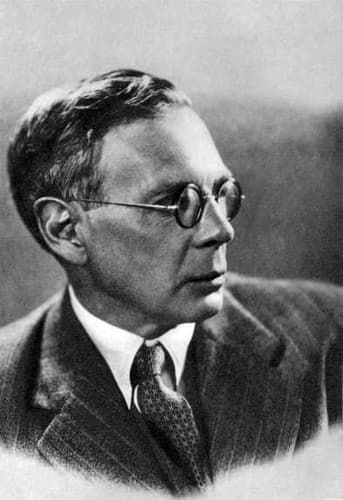
Charles Williams was a British poet, novelist, and theologian, often associated with the Inklings literary group. His most notable works, "The Place of the Lion" and "Descent into Hell," explore profound theological and mystical themes within a compelling fictional narrative. Williams's writing is characterized by its intricate symbolism and exploration of spiritual warfare and divine love.







