“The past is a funny thing. It’s written in stone, yet it changes all the time.”
— Desmond Tiny reflecting on the nature of time and memory.

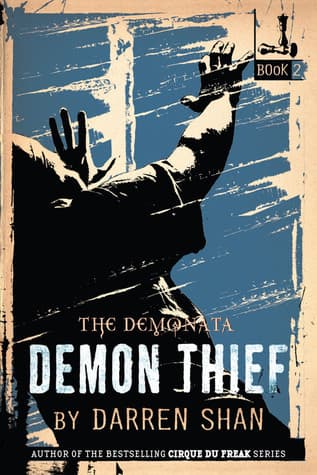
Darren Shan (2005)
Genre
Fantasy / Children's / Young Adult
Reading Time
241 min
Key Themes
See below
Sign in to track this book
When a peculiar boy who sees swirling lights discovers a terrifying demon world, he's thrust into a brutal mission as a Disciple, hunting monstrous entities to the death.
Kernel Fleck, a young boy living a normal life, sees 'lights' – swirling, multi-colored patterns in the air no one else perceives. One day, at home, these lights intensify. He sees a horrific event: a shimmering window opens in his living room, revealing a monstrous demon. This creature murders his parents and younger sister, Sari, before disappearing. Kernel, paralyzed by fear and confusion, is the sole survivor. He is traumatized, questioning if what he saw was real or a nightmare.
After the incident, Kernel is adopted by his Aunt Laura and Uncle Teddy. They live in a secluded, rundown house filled with strange objects. They are kind but unusual. Kernel finds some comfort with them, but the memory of his family's murder haunts him. He tries to suppress the vision, convincing himself it was imagination or a nightmare. Yet, the 'lights' he sees continue, subtly reminding him of the event that shattered his life.
Years pass. Kernel, now a teenager, still suffers from trauma and sees the 'lights.' At school, the same demon that murdered his family reappears, attacking his classmates and teachers. This time, Kernel fights back. Driven by adrenaline and a new, inexplicable power, he instinctively uses strange energy that repels the creature. The demon is defeated, but the event reveals Kernel's extraordinary abilities to the world, and to himself.
After the school attack, Kernel is approached by a group called the Disciples. Led by Lord Loss, they reveal Kernel is a 'Disciple' – a human born with the ability to see and fight demons from the Demonata dimension. They explain the 'lights' are the creatures' residual energy. Kernel learns his family's murder was a targeted act by the Kah-Gash, a powerful entity. He is told he must join them to hone his powers and fight the Demonata.
Kernel begins training with the Disciples, a harsh and demanding program to awaken and control his abilities. He learns about different demons, their weaknesses, and combat methods. He struggles with the brutal training and the moral questions of killing sentient beings, even if they are demonic. During this time, he forms a bond with fellow trainees, especially Grubbs Grady, who shares a similar tragic past, and Bec, a powerful but stoic mage.
His training leads to his first demon hunt. Kernel and his group must track and eliminate a particularly vicious demon. The experience is brutal and terrifying, pushing Kernel to his limits. He sees the horrific nature of the Demonata firsthand and confronts his fears. Despite the danger, he helps defeat the demon, solidifying his place among the Disciples and accepting his role in the war against demons. He realizes the stakes are higher than he imagined.
The Disciples learn about a powerful demon ritual in the Demonata realm. Kernel, Grubbs, and Bec are chosen for a mission to infiltrate this dimension and disrupt the ritual. Entering the Demonata realm is a horrifying experience, a world of torment and monstrous creatures. Kernel is overwhelmed by the demonic forces and the bizarre reality of their world. This confirms the immense threat they pose to humanity.
Within the Demonata realm, the team confronts Lord Loss, a demon of immense power and cunning. Lord Loss is a manipulative entity, playing a complex game with humans and demons. The battle is fierce and brutal, testing the Disciples' training and resolve. Kernel uses his abilities to hold his own against some of Lord Loss's minions, but the demon master's power is overwhelming. The confrontation reveals the true depth of the demonic threat and the precarious position of the human world.
During the confrontation with Lord Loss, Kernel starts to understand the Kah-Gash – the powerful energy that flows through him and lets him fight demons. He learns the Kah-Gash is not just a weapon but a fundamental force connecting him to the Demonata, and that his family's murder was part of a larger, ancient prophecy involving this power. He realizes his role is more significant than just a demon hunter; he is a piece in a cosmic struggle.
With the mission partly done, the Disciples must make a desperate escape from the Demonata realm, pursued by Lord Loss and his hordes. The escape is dangerous and requires sacrifice. One of the Disciples makes the ultimate sacrifice to ensure Kernel, Grubbs, and Bec can return to their world. Kernel is deeply affected by this loss, strengthening his resolve to fight the demons, but also reminding him of the terrible price of their war.
Back in his world, safe but shaken, Kernel reflects on his experiences. He now understands the constant threat of the Demonata and his responsibility to fight them. The 'lights' he sees are no longer just a strange quirk but a constant reminder of the unseen war. He knows Lord Loss is still out there, and he must master the Kah-Gash within him. The struggle is far from over, and his journey as a Disciple has just begun.
The Protagonist
Kernel transforms from a traumatized, confused boy into a burgeoning demon hunter, accepting his powers and his destiny.
The Antagonist
Lord Loss remains a formidable and mysterious antagonist, his true motives slowly unraveling to reveal a deeper, more insidious plan.
The Supporting
Grubbs develops from a cynical survivor to a committed warrior, finding purpose in fighting alongside Kernel.
The Supporting
Bec remains a steadfast and powerful figure, her ancient wisdom and power proving crucial to the Disciples' survival.
The Supporting
They provide a brief period of normalcy and stability for Kernel before he is drawn into the supernatural world.
The Mentioned
Sari's death serves as a catalyst for Kernel's journey, her memory a driving force for his actions.
The novel explores the psychological impact of loss and trauma. Kernel's family is murdered, an event that reshapes his world. He struggles with the memories, disbelief, and isolation. This theme echoes in Grubbs Grady's similar experience, creating a bond between them. Descriptions of the attack and Kernel's nightmares emphasize the lasting scars of such events, showing how trauma can both disable and motivate change and revenge.
“The memory was a barbed hook, tearing at his insides, refusing to let go.”
The book explores the nature of evil through the Demonata. These are not just monsters but intelligent, sadistic beings who enjoy pain and chaos. Lord Loss embodies a sophisticated evil, seeing suffering as art and life as a game. The story challenges simple ideas of good versus evil by showing demons with their own complex hierarchy and motivations, even if those motivations are destructive to humanity. This makes characters and readers grapple with the truly alien and horrifying aspects of pure malevolence.
“They don't just kill for food. They kill for fun. For the sheer, exquisite joy of it.”
Kernel's journey is shaped by prophecy and his connection to the Kah-Gash, suggesting a predetermined destiny. However, he constantly makes choices – to fight, to join the Disciples, to protect others – that highlight his agency. The story explores whether he is a pawn in a larger game or if his actions truly shape his path and humanity's fate. This tension is clear in his interactions with Lord Loss, who often speaks of fate and inevitable outcomes, challenging Kernel to defy them.
“Some things are written in blood, boy. But you can always choose how you bleed.”
A central theme is the existence of a horrifying, unseen world coexisting with our own. Kernel's ability to see the 'lights' unlocks this hidden reality. The book portrays the mundane world suddenly ripped open to reveal the grotesque Demonata realm. This theme is a metaphor for hidden dangers and darker truths beneath everyday life, showing how fragile our perceived reality can be and the constant vigilance needed to protect it from encroaching darkness.
“There are more things in heaven and earth, Horatio, than are dreamt of in your philosophy.”
A mystical, powerful energy flowing through certain individuals, allowing them to fight demons.
The Kah-Gash is a unique and powerful energy that manifests in individuals like Kernel Fleck, enabling them to perceive and combat demons. It's not merely a magical ability but an intrinsic part of their being, connecting them to the Demonata in a profound way. The Kah-Gash functions as both a weapon and a source of insight, granting visions and enhancing physical capabilities. Its true nature and origin are gradually revealed to be central to an ancient prophecy and the overarching conflict between humanity and the Demonata, making it a crucial element of the plot's progression and Kernel's character development.
Kernel's unique visual perception of residual demonic energy.
The 'lights' are multi-colored, swirling patterns that only Kernel Fleck can see. Initially, they are a source of confusion and isolation for him, marking him as different. As the story progresses, these lights are revealed to be residual energy traces left by demons, serving as an early warning system and a guide for Kernel. This device allows the author to hint at the supernatural world's presence before its full reveal, building suspense and establishing Kernel's unique connection to the Demonata. They symbolize his inherent talent and his early, unconscious awareness of the hidden dangers.
Portals and the horrifying dimension where demons reside.
The Demonata realm is the terrifying, extra-dimensional home of the demons, a place of unimaginable torment and grotesque landscapes. 'Windows' are temporary portals that allow demons to cross into the human world, often appearing abruptly and causing widespread destruction. This plot device establishes the primary threat and the source of the conflict. It emphasizes the alien nature of the demons and the sheer scale of the danger, creating a sense of urgency and dread whenever a window opens. The descriptions of the Demonata realm are crucial for world-building and showcasing the horrifying stakes of the narrative.
An ancient prediction foretelling the coming of certain individuals and events in the war against demons.
An ancient prophecy underpins much of the narrative, hinting at the predetermined roles of characters like Kernel and the significance of the Kah-Gash. This device creates a sense of grand scale and destiny, suggesting that the conflict with the Demonata is part of a much older, larger struggle. It provides a framework for the characters' actions and motivations, even as they grapple with their own free will. The prophecy serves to elevate the stakes, making the characters' individual battles part of a cosmic war, and slowly reveals the true importance of the protagonists.
“The past is a funny thing. It’s written in stone, yet it changes all the time.”
— Desmond Tiny reflecting on the nature of time and memory.
“There are always choices. Even when it feels like there aren't.”
— Mr. Crepsley advising Darren on his difficult decisions.
“Sometimes the greatest good comes from the greatest evil.”
— Desmond Tiny explaining the balance of good and evil in the universe.
“Fear is a powerful weapon. But so is courage.”
— Darren reflecting on his own bravery in dangerous situations.
“You can't save everyone. But you can try.”
— Mr. Crepsley's pragmatic view on heroic efforts.
“Every action has a reaction. Every choice has a consequence.”
— A recurring theme highlighting the interconnectedness of events.
“The world is full of wonders, if you only know where to look.”
— Desmond Tiny's perspective on the hidden magic in the world.
“It's not about being immortal, it's about making your life count.”
— Darren's thoughts on the meaning of life, even with vampiric longevity.
“Even the strongest chains can be broken, given enough will.”
— Evanna offering encouragement to Darren.
“Sometimes you have to do things you don't want to do, for the greater good.”
— Mr. Crepsley explaining the sacrifices required for their mission.
“Never underestimate the power of a small, determined individual.”
— A reflection on Darren's impact despite his youth and size.
“The future is always uncertain. That's what makes it exciting.”
— Desmond Tiny's playful view on the unpredictability of fate.
“True friendship is a bond that transcends even death.”
— Darren's feelings about his enduring connection with Steve.
“To truly live, you must first accept the possibility of death.”
— A profound thought on the nature of existence and bravery.
Ready to see how well you understood this book? Take our interactive quiz with 10 questions.

Darren Shan is a New York Times bestselling author known for his dark and imaginative young adult fiction. His most famous series, The Saga of Darren Shan (also known as Cirque Du Freak), has been translated into over 30 languages and adapted into a film. Shan's other notable works include the Demonata series and the City of Darkness trilogy, showcasing his talent for crafting thrilling and often gruesome tales.







