“The soul's journey is a solitary one, and no human hand can ultimately guide it but its own.”
— Reflecting on individual spiritual development and self-reliance.

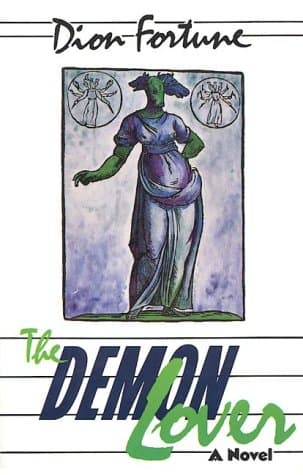
Sign in to track this book
In the shadowy world of London's occult societies, a power-hungry mystic plots to exploit an unwitting psychic medium, bending her to his will to spy on his rivals and seize control of ancient, forbidden knowledge.
The story begins with a secret meeting of a powerful occult society in London, where members communicate telepathically with international mystics. The council discusses their influence and potential for political intervention. A prominent member, Lucas, argues for using their magical abilities to manipulate world events and seize political power, believing it their right. However, many within the society, including the wise Dr. Taverner, oppose Lucas's aggressive plans, fearing the misuse of their knowledge and karmic repercussions. The tension shows the ideological split within the group regarding their role in the world. After the meeting, Lucas, undeterred, decides to pursue his ambitions alone. He resolves to find an unwitting but psychically gifted person to be his medium. He intends to use this entranced medium to spy on his fellow society members, hoping to uncover their secrets, exploit their weaknesses, and gain control within the organization, circumventing the rules he just encountered.
Veronica, a sensitive and somewhat naive young woman, begins to experience strange psychic phenomena. She has vivid dreams, inexplicable sensations, and a growing awareness of an unseen world she struggles to understand. Unbeknownst to her, Lucas, having identified her latent psychic potential, subtly influences her from afar. He uses his occult powers to amplify her natural gifts, making her more susceptible to his control. Veronica feels an inexplicable pull towards a mysterious force, which she first sees as a spiritual awakening. This makes her an ideal, unsuspecting target for Lucas's plans, as he seeks to mold her into an instrument for his espionage, without her knowing his true intentions.
Lucas, having established a subtle psychic link with Veronica, performs a direct ritual to enthrall her as his medium. He uses incantations, symbols, and energies to bypass her conscious mind and access her subconscious and astral body. During this ritual, Veronica, though physically distant, experiences a profound shift in consciousness. She feels herself drawn into a trance, her senses heightened, and her spirit pulled from her body. Lucas successfully creates a psychic conduit, enabling him to project his will through her. This act deepens Veronica's connection to the astral plane, making her a potent, unwilling tool for Lucas's surveillance and manipulation of the occult society, solidifying his control over her abilities.
With Veronica as his medium, Lucas begins to exploit her abilities for espionage. He uses her entranced state to project his consciousness through her, allowing him to 'see' and 'hear' the private thoughts and discussions of other occult society members. Through Veronica, Lucas gains access to sensitive information, uncovering their strategies, vulnerabilities, and hidden magical practices. While Lucas enjoys his advantage, Veronica, though often unaware of her astral journeys' targets, begins to feel disquiet. The constant intrusions into her mind, the vivid and disturbing visions, and the feeling of being used leave her drained, confused, and fragmented. She senses a malevolent presence guiding her, even if she cannot identify it as Lucas, leading to a persistent feeling of dread and a loss of personal autonomy.
Dr. Taverner, an ethically minded member of the occult society, begins to detect disturbances in the psychic fabric around their group. He notices unusual energy signatures, faint echoes of intrusive consciousness, and unease among members, which he attributes to an external, unauthorized magical influence. Drawing upon his knowledge of occult defense and psychic ethics, Taverner deduces that someone within their ranks is violating the society's privacy. His suspicions fall upon Lucas, whose ambition and disregard for ethics were evident earlier. Taverner initiates a discreet investigation, using his psychic abilities and knowledge of magical detection to pinpoint the source of the intrusions, determined to uncover Lucas's scheme and protect the society's integrity.
The constant psychic intrusions and the feeling of being a puppet take a severe toll on Veronica's mental and emotional well-being. She experiences nightmares, hallucinations, and a profound sense of exhaustion and detachment from her life. Desperate for relief, Veronica instinctively reaches out for help. Her cry for assistance, though not directed at anyone specific, resonates on the astral plane due to her heightened sensitivity. This unconscious plea for aid, powered by her distress, inadvertently draws the attention of benevolent spiritual entities and, more importantly, the watchful Dr. Taverner. Her suffering becomes a beacon for those who oppose the misuse of magic, signaling that an innocent party is being exploited. This act marks a turning point, as her plight becomes known to those who might intervene and protect her from Lucas's influence.
Through his investigation and attunement to the astral plane, Dr. Taverner identifies Veronica as the medium Lucas exploits. He perceives the psychic cord linking her to Lucas and the immense drain on her energy. Recognizing the ethical violation and Veronica's danger, Taverner acts decisively. He projects his protective magic, creating a psychic shield around Veronica. This shield severs or weakens Lucas's control over her, preventing further intrusions and allowing Veronica peace. Taverner understands that direct confrontation with Lucas must be planned, but his immediate priority is to safeguard Veronica and restore her autonomy, showing his commitment to ethical occult practice and protecting the innocent.
Lucas quickly detects the interference with his control over Veronica. He realizes his psychic link has been compromised and a powerful force is protecting his medium. Enraged by this, and identifying Dr. Taverner as the culprit, Lucas escalates his magical offensive. He attempts to penetrate Taverner's shield around Veronica, using aggressive, darker magical energies. This starts an intense magical battle on the astral plane, as Taverner works to maintain his defenses and Lucas tries to reassert his dominance. The conflict is a clash of wills and magical power, with Veronica's well-being at stake. Lucas's desperation grows, pushing him towards unethical practices in his pursuit of power.
Having secured Veronica and gathered evidence of Lucas's activities, Dr. Taverner orchestrates a confrontation within the occult society. He presents his findings, revealing Lucas's unethical use of a medium for espionage and his ambition to seize power. The revelation shocks many members, confirming their earlier suspicions. Lucas, defiant, tries to deny the accusations and discredit Taverner, but the evidence, including psychic traces of his actions and Taverner's protective intervention, is irrefutable. The confrontation exposes Lucas's true nature and his disregard for the society's principles, leading to a crisis of trust and a re-evaluation of the society's governance and ethical guidelines.
Following Dr. Taverner's revelations, the occult society convenes to judge Lucas. The council, now aware of his tactics and disregard for their ethical code, condemns his actions. Lucas is stripped of his rank and privileges within the society. A powerful magical rite of expulsion severs his connections to the society's collective magical energy and knowledge. This isolates him mystically, making him weaker and unable to draw upon the communal power he once exploited. His ambition is thwarted, and his reputation is ruined. Lucas is cast out, socially and magically, from the organization he sought to control, marking a victory for ethical occultism and the protection of individuals like Veronica.
With Lucas's influence removed and under Dr. Taverner's guidance, Veronica begins to recover. The psychic shield Taverner established allows her mind and spirit to mend from the trauma. Taverner also provides instruction and support, helping her understand her psychic gifts, which were previously exploited. Instead of being a passive medium, Veronica learns to recognize and control her abilities, developing techniques for psychic self-defense and conscious exploration of the astral plane. She transforms from an unwitting victim into an empowered individual, gaining agency over her magical potential. This recovery marks not just the end of her ordeal, but the beginning of her journey as a conscious and responsible psychic, capable of wielding her gifts ethically.
The ordeal with Lucas prompts the occult society to re-evaluate its core ethical principles. Shaken by how easily one of their own could exploit an innocent and attempt to seize power, the society strengthens its internal protocols and protective measures. They reinforce their commitment to using magic responsibly, for the good of humanity, and in strict adherence to ethical guidelines, rather than for personal gain. New safeguards are put in place to detect and prevent similar abuses of power. Dr. Taverner's actions and commitment to justice become a guiding example. The society emerges from the crisis stronger and more unified in its dedication to the responsible practice of the arcane arts, ensuring such a breach of trust does not happen again.
The Protagonist
Veronica transforms from an exploited victim into an empowered individual who learns to understand and control her own psychic gifts, reclaiming her autonomy.
The Antagonist
Lucas's unchecked ambition leads to his exposure, magical defeat, and expulsion from the society he sought to control.
The Supporting
Dr. Taverner upholds the ethical standards of the society, successfully thwarting Lucas and protecting Veronica, solidifying his role as a guardian of occult integrity.
The Supporting
The society collectively re-evaluates its ethical guidelines and strengthens its resolve against misuse of power after Lucas's actions.
This theme explores the moral responsibilities that come with great power, especially magical or psychic abilities. Lucas's character embodies the corrupting influence of unchecked ambition, as he uses his occult knowledge for personal gain, disregarding others like Veronica. In contrast, Dr. Taverner represents the ethical use of power, employing his abilities for protection and justice. The conflict between these two characters, and the society's judgment, shows the importance of integrity and self-restraint when wielding potent forces, demonstrating that true power is responsible stewardship.
“Great power demands even greater responsibility, for its misuse can unravel the very fabric of existence.”
The novel examines the vulnerability of individuals with latent psychic gifts, especially when they are unaware of their abilities or lack defense. Veronica's journey is an example, as her sensitivity makes her an easy target for Lucas's schemes. Her initial confusion, distress, and feeling of being used show the danger of being psychically open without proper guidance. This theme is a cautionary tale about the dark side of occult practice, where the innocent can be exploited for malevolent ends, emphasizing the need for both self-awareness and ethical guardianship in the psychic realm.
“The sensitive soul, untrained, is but an open door for any who would enter, be they friend or foe.”
This theme contrasts an individual's right to their own spiritual and psychic sovereignty against the desire of others to control those abilities. Lucas's forceful enthrallment of Veronica as his medium is a violation of her autonomy, reducing her to a tool for his ambition. His actions show a disregard for her personal will and spiritual integrity. Dr. Taverner's intervention, which aims to sever Lucas's control and empower Veronica to understand and manage her own gifts, champions individual spiritual freedom. The narrative advocates for the development of personal spiritual agency, where individuals master their own inner world rather than being subjected to the will of others.
“To truly wield power, one must first master the self, not subjugate another's spirit.”
The book explores the internal dynamics and ethical challenges faced by secret occult organizations. It portrays the occult society not as a single entity, but as a group with diverse members holding differing views on their role in the world and the application of their powers. The initial debate over political intervention, and the crisis caused by Lucas's betrayal, reveal the internal struggles between ambition and principle. The society's decision to condemn Lucas and reaffirm its ethical code reflects an idealized vision of such groups as guardians of ancient wisdom, committed to responsible practice and self-governance, rather than mere instruments of power.
“Our strength lies not in worldly dominion, but in the purity of our purpose and the integrity of our shared knowledge.”
The ability of a person to act as a conduit for spirits or astral projections.
Psychic mediumship is the central plot device, as Lucas uses Veronica's untapped abilities to spy on the occult society. It allows for astral espionage, providing Lucas with secret knowledge and advancing his nefarious plans. The device highlights both the power and the vulnerability associated with such a gift, especially when the medium is untrained or unwilling. It creates a direct conflict between Lucas's exploitation and Dr. Taverner's ethical protection, driving much of the narrative's tension and moral questioning.
The magical ability to separate one's consciousness from the physical body to travel and observe unseen.
Astral projection is the mechanism through which Lucas, using Veronica as his medium, conducts his surveillance. It allows him to 'see' and 'hear' the private thoughts and discussions of other society members without physical presence. This device facilitates the core conflict by revealing Lucas's unethical methods and creating the need for Dr. Taverner's intervention. It illustrates the invasive potential of magic and the violation of privacy in the occult world, setting up the dramatic confrontation.
A conflict where characters must choose between morally challenging options, often with significant consequences.
The ethical dilemma is foundational to the story, primarily revolving around the use of occult power. The initial debate within the society about political intervention sets the stage, but Lucas's exploitation of Veronica presents a more acute moral crisis. Dr. Taverner faces the dilemma of how to intervene without violating his own ethical code, while the entire society must decide how to address Lucas's transgression. This device underscores the theme of responsible power and drives the narrative towards a resolution that reaffirms the story's moral framework.
A magical defense mechanism used to deflect or block psychic or magical attacks and intrusions.
The magical shield is a crucial defensive plot device employed by Dr. Taverner. Once he identifies Veronica as Lucas's victim, he constructs a powerful psychic barrier around her. This shield serves to sever or significantly weaken Lucas's control, protecting Veronica from further exploitation and allowing her to heal. It represents the benevolent application of magic in contrast to Lucas's malevolent use, and its deployment marks a turning point in the conflict, enabling Veronica's recovery and Taverner's subsequent confrontation with Lucas.
“The soul's journey is a solitary one, and no human hand can ultimately guide it but its own.”
— Reflecting on individual spiritual development and self-reliance.
“Magic is the art of causing changes in consciousness in conformity with will.”
— A foundational definition of magic within the occult framework.
“The true initiate does not seek power for its own sake, but for the sake of service.”
— Discussing the ethical responsibilities of those pursuing occult knowledge.
“Fear is the greatest enemy of the spiritual seeker, for it binds the soul and obscures the vision.”
— Emphasizing the importance of overcoming fear in spiritual work.
“Every human being is a potential god, and the purpose of initiation is to awaken that divinity.”
— Highlighting the inherent divine potential within humanity.
“The subconscious mind is a powerful ally or a formidable foe, depending on how it is directed.”
— Exploring the dual nature and influence of the subconscious.
“To truly know oneself is to know the universe, for the microcosm reflects the macrocosm.”
— Connecting self-knowledge with understanding the greater cosmos.
“Love is the great magical agent, for it harmonizes all things and opens the doors to higher planes.”
— Identifying love as a key force in magical and spiritual work.
“The path to illumination is not always smooth; it often leads through the shadowlands of the soul.”
— Acknowledging the difficult and challenging aspects of spiritual growth.
“As above, so below; as within, so without.”
— A classic hermetic principle, often referenced in occult philosophy.
“The power of thought is immense; it shapes our reality and determines our destiny.”
— Underscoring the creative and transformative power of the mind.
“The greatest initiation is the realization that you are already initiated.”
— Suggesting that true initiation is an internal recognition rather than an external event.
“To serve the light, one must first understand the darkness.”
— Implying that a comprehensive understanding of good and evil is necessary for true spiritual work.
“The veil between the worlds is thin for those with the eyes to see.”
— Referring to the accessibility of other dimensions or spiritual realms for the perceptive.
Ready to see how well you understood this book? Take our interactive quiz with 10 questions.
Biography coming soon.







