“There is no city like Delhi. It has been the capital of India for centuries, and has seen more history than any other city in the world.”
— The narrator's overarching sentiment about Delhi's historical significance.

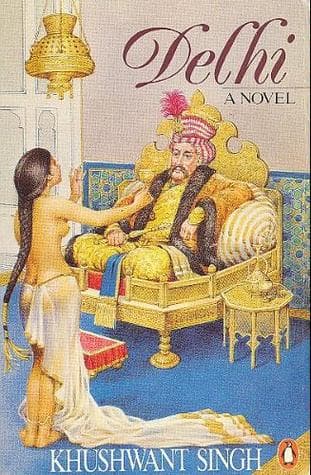
Khushwant Singh (1983)
Genre
Historical Fiction
Reading Time
10-12 hours
Key Themes
See below
Sign in to track this book
Through the eyes of an aging man and his hijra lover, Khushwant Singh's "Delhi" shows centuries of a city's history, filled with sultans, saints, and seduction.
The novel begins with the unnamed narrator, an aging, cynical writer, returning to Delhi after traveling. He compares his return to the city to rejoining his longtime lover, Bhagmati. Bhagmati is a hijra (eunuch) who runs a brothel and shows both masculine and feminine traits. She is a constant in the narrator's life and his link to the city's underworld. Their first interactions have crude humor, sexual frankness, and an unconventional affection. The narrator expresses his deep love for Delhi, saying he will tell its history through personal thoughts and historical scenes, often mixing his present with Bhagmati with the city's past. This introduction sets the novel's tone, blending history with a personal, often irreverent, view.
The narrator takes the reader to the late 12th century, focusing on Prithviraj Chauhan, Delhi's last great Hindu king. He details Prithviraj's valor, his elopement with Samyukta, his rival's daughter, and the weakening of Hindu alliances. The narrative describes the Battle of Tarain, where Prithviraj first defeats Muhammad of Ghor, only to be tricked and defeated later. The capture and blinding of Prithviraj are told with a sense of tragedy. This historical part highlights the brutal power shift, the start of Islamic rule in Delhi, and the lasting effects of these early conflicts, often showing historical figures with a mix of admiration and criticism, typical of the narrator.
Moving into the Delhi Sultanate, the narrator introduces Raziya Sultan, Delhi's only female ruler. He shows her as a strong, intelligent, and unconventional monarch who defied gender norms. She earned both admiration and resentment from her male courtiers, which led to her overthrow and death. Then, the focus shifts to Alauddin Khalji, shown as a ruthless, ambitious, and effective ruler known for his military skill, economic changes, and defense against Mongol invasions. The narrator describes Alauddin's internal conflicts, his relationship with his eunuch general Malik Kafur, and the paranoia that affected his later years. These episodes show the unstable nature of power during the Sultanate, marked by intrigue, violence, and the constant struggle for control.
The story moves to the Tughlaq dynasty, with a focus on Muhammad bin Tughlaq, often called the 'mad king.' The narrator details his ambitious but ruinous policies, such as moving the capital from Delhi to Daulatabad, which caused great suffering during the forced march. His introduction of token currency, widely faked, and his disastrous military campaigns are also told. The narrator portrays Muhammad bin Tughlaq as a brilliant but flawed intellectual, a visionary whose ideas were ahead of his time but had catastrophic results. This section shows how fragile power was and how a ruler's whims could devastate his subjects.
The narrative shifts to the late 14th century, detailing the invasion of Delhi by Timur, the Central Asian conqueror. The narrator recounts the terror and devastation brought upon the city, describing widespread massacres, looting, and destruction that left Delhi in ruins and its population decimated. This event was a turning point, shattering the Delhi Sultanate's power and starting a period of instability. The narrator emphasizes the brutality of Timur's campaign and its lasting psychological scars on the city. This section serves as a reminder of Delhi's vulnerability to outside forces and the cycle of destruction and rebuilding.
The story moves to the early 16th century with Babur's arrival, the founder of the Mughal Empire. The narrator describes Babur's early struggles, his victory at Panipat, and his establishment of a new dynasty that would shape India. After Babur, the narrative focuses on his son Humayun, showing him as a more thoughtful but less decisive ruler who faced challenges, including defeat by Sher Shah Suri and exile. Humayun's eventual return and re-establishment of Mughal rule, shortly before his accidental death, are also detailed. This section highlights the early struggles and consolidation of Mughal power, focusing on the personal traits and fortunes of its first emperors.
The narrative celebrates Emperor Akbar's reign, often seen as the greatest Mughal. The narrator details Akbar's military conquests, his administrative changes, and his policy of religious tolerance, shown by his 'Din-i Ilahi,' an attempt to combine faiths. The building of Fatehpur Sikri and the flourishing of art and culture during his time are also highlighted. The narrator portrays Akbar as a visionary leader who aimed to unite a diverse empire, bringing an era of peace and prosperity. This section contrasts with earlier conflicts, showing a period of cultural blending and enlightened rule that left a mark on Delhi.
The narrative shifts to Shah Jahan, the great builder of the Mughal Empire. The narrator describes the building of Shahjahanabad, Delhi's seventh city, now known as Old Delhi. He details the creation of structures like the Red Fort, the Jama Masjid, and the Chandni Chowk, emphasizing their grandeur and planning. The narrator also mentions Shah Jahan's personal life, including his love for Mumtaz Mahal, for whom he built the Taj Mahal (though in Agra, its spirit is linked to Mughal Delhi). This section celebrates the artistic and architectural peak of the Mughal Empire, showing Delhi as a center of beauty and sophistication.
The narrative moves to Aurangzeb, Shah Jahan's son, whose reign differed from his predecessors. The narrator portrays Aurangzeb as a devout but rigid and intolerant ruler who reversed Akbar's policies of religious harmony. He imposed jizya (poll tax) on non-Muslims and persecuted Sikhs and Marathas. His long military campaigns, especially in the Deccan, drained the empire's resources and created rebellion. The narrator details the Mughal Empire's decline under Aurangzeb, attributing it to his divisive policies and his inability to maintain the vast empire. This section highlights the internal conflict and religious tensions that contributed to the empire's downfall, contrasting with earlier Mughal splendor.
The narrative goes into the mid-18th century, recounting Nadir Shah of Persia's invasion of Delhi. The narrator describes the brutal sack of the city, widespread massacres, looting of wealth (including the Peacock Throne and Koh-i-Noor diamond), and the Mughal emperor's humiliation. This event crippled the Mughal Empire, making it a shadow of its former self. After this devastation, the narrative touches on the Marathas' growing influence, who filled the power vacuum, becoming important players in Delhi's fragmented political landscape. This section shows the cycle of invasion and the constant struggle for dominance over the city.
The narrative moves to the 19th century, showing the British East India Company's rise and control over Delhi. The narrator describes the last parts of Mughal rule, with Bahadur Shah Zafar, the last emperor, reduced to a figurehead. The focus then shifts to the 1857 Sepoy Mutiny (or First War of Indian Independence), where Indian sepoys rebelled against British rule, briefly reclaiming Delhi. The narrator recounts the brutal British recapture of the city, the massacres, and Bahadur Shah Zafar's trial and exile. This marked the end of the Mughal Empire and the start of direct British Raj. This section highlights the clash of empires and colonial rule's impact.
After the Mutiny, the narrative details direct British rule and the decision to move the capital from Calcutta to Delhi. The narrator describes the project of building New Delhi, designed by Edwin Lutyens and Herbert Baker, as an imperial capital. He contrasts New Delhi's planned elegance with Old Delhi's chaotic growth, reflecting the colonial power's desire to impose order and project authority. This section explores New Delhi's architectural and political symbolism, representing the height of British power in India and its attempt to create a new, modern identity for the city, while acknowledging tensions with the existing historical fabric.
The narrative recounts the traumatic 1947 Partition of India, a period of communal violence and displacement. The narrator describes the massacres, riots, and forced migrations that swept through Delhi, as Muslims fled to Pakistan and Hindu and Sikh refugees poured into the city. He details personal stories of loss, suffering, and the upheaval of social structures. Delhi, once a symbol of grandeur, became a city of refugees, camps, and communal hatred. This section is moving, highlighting the deep scars left by the Partition and its lasting impact on the city's demographic and cultural landscape, changing it forever.
In the final sections, the narrator brings the historical journey to the present day (his present, the late 20th century). He reflects on modern Delhi—its growing population, chaos, and blend of ancient ruins and modernity. He continues his interactions with Bhagmati, whose aging body mirrors his own and whose resilience reflects the city's. The narrator thinks about history's cyclical nature, Delhi's constant destruction and rebirth, and its enduring spirit despite centuries of conquest. He repeats his deep, often contradictory, love for the city, seeing it as a living entity, a mistress who has seen countless human dramas and continues to thrive, carrying its past while facing an uncertain future. His personal thoughts on mortality mix with the city's timelessness.
The Protagonist
The narrator undergoes a subtle arc, moving from a detached, almost voyeuristic observer of history to someone deeply integrated with Delhi's spirit, acknowledging his own mortality alongside the city's enduring life.
The Supporting
Bhagmati remains a steadfast and resilient figure, her aging mirroring the narrator's, but her spirit unchanging, serving as an anchor for the narrator's journey.
The Historical Figure
His arc is tragic, from a powerful king to a defeated and blinded prisoner, symbolizing the end of an era.
The Historical Figure
His arc is one of conquest and the establishment of a new empire, irrevocably changing Delhi's political landscape.
The Historical Figure
Her arc is one of groundbreaking ascent to power, followed by a tragic downfall due to gender and political intrigue.
The Historical Figure
His arc is one of ruthless consolidation of power and empire building, eventually succumbing to paranoia and illness.
The Historical Figure
His arc is one of brilliant but misguided ambition, leading to the suffering of his people and the weakening of his empire.
The Historical Figure
His arc is purely destructive, a brief but catastrophic intervention in Delhi's history that left it in ruins.
The Historical Figure
His arc is one of persistent struggle culminating in the successful founding of a powerful empire.
The Historical Figure
His arc is one of consolidating and expanding a vast empire through both military might and enlightened, inclusive policies.
The Historical Figure
His arc is one of immense artistic patronage and the creation of iconic architectural wonders, despite a later period of imprisonment.
The Historical Figure
His arc is one of an austere and expansionist rule that, despite its initial successes, ultimately sowed the seeds of the empire's decline through divisive policies.
Delhi is constantly destroyed and rebuilt, conquered and reconquered. The narrative emphasizes this cycle, where each new ruler or invader brings both devastation and a new layer to the city's identity. From Timur's sack to the Partition riots, Delhi suffers greatly, yet always rises again, incorporating its wounds into its fabric. The narrator often marvels at this resilience, seeing the city as an eternal entity that goes beyond individual reigns. This theme shows Delhi's ability to absorb and transform its past.
“Delhi has been a graveyard of empires, and a cradle of civilizations. It has been built and destroyed, rebuilt and destroyed, seven times over. And each time it rises from its ashes, stronger and more beautiful.”
The narrator's relationship with Delhi is central, described as a passionate obsession. He personifies the city as his 'mistress,' flawed but irresistible. This love is not blind; it acknowledges Delhi's chaos, violence, and contradictions, yet embraces them. This theme appears in the narrator's detailed history, his emotional investment in its past glories and tragedies, and his physical interactions with its present spaces, often mixed with his sexual encounters with Bhagmati. It is a love that goes beyond rational explanation, rooted in personal and historical connection.
“I return to Delhi as I return to my mistress Bhagmati when I have had my fill of whoring in foreign lands.”
Sexuality, often explicit, is a theme used by the narrator to explore the basic aspects of human nature across different eras. From the narrator's own sexual experiences with Bhagmati to historical stories of royal harems and eunuchs, sex is shown as a driving force, a source of pleasure, power, and vulnerability. It connects grand historical narratives to the intimate experiences of individuals. Bhagmati, a hijra, further broadens the exploration of gender and sexual identity, challenging norms and highlighting the diversity of human desire.
“What is history, after all, but a record of man's desires, his conquests, his lusts, and his follies?”
The novel shows how different religions—Hinduism, Islam, Sikhism, and Christianity—shaped Delhi's identity. It presents periods of blending, especially under Akbar, where cultures and faiths mixed. However, it also shows brutal religious conflicts, from early Muslim conquests of Hindu kingdoms to Aurangzeb's orthodoxy and the communal violence during the Partition. This theme explores how religion has been both a unifying and dividing force, adding to Delhi's culture while also causing great suffering and historical turning points.
“Delhi has been a crucible where faiths have met, melted, and often clashed, leaving behind a residue of both beauty and bitterness.”
Across centuries, the novel highlights the temporary and often corrupting nature of power. Rulers, whether Hindu, Muslim, or British, are shown to be driven by ambition, lust, paranoia, and personal flaws, leading to both achievements and mistakes. From Prithviraj's pride to Muhammad bin Tughlaq's misguided brilliance and Aurangzeb's rigidity, human error is constant. This theme suggests that despite grand narratives of empires, history is often driven by the human strengths and weaknesses of individuals, showing the universal and unchanging aspects of human nature.
“Empires rise and fall, but the folly of man remains eternal.”
The entire history is filtered through the personal, often biased, and sexually explicit lens of an unnamed, aging writer.
The novel employs a first-person, often unreliable, narrator who is highly subjective and opinionated. His personal experiences, sexual encounters with Bhagmati, and cynical worldview constantly interrupt and color the historical accounts. This device blurs the line between historical fact and personal interpretation, making the reader question the objectivity of history itself. It allows the author to infuse the historical narrative with a unique, irreverent, and deeply personal voice, making the vast sweep of Delhi's past more intimate and engaging, while also reflecting on the nature of storytelling and memory.
The narrator's contemporary life with Bhagmati serves as a frame for the historical vignettes, grounding the past in the present.
The narrator's present-day interactions with Bhagmati and his daily life in modern Delhi act as a framing device for the historical chapters. These contemporary interludes provide a sense of continuity and allow the narrator to reflect on the parallels between past and present. The juxtaposition of the narrator's aging body and sexual escapades with the grand historical narratives creates a dynamic contrast, emphasizing the timelessness of human desires and the enduring spirit of Delhi. This device prevents the historical sections from becoming dry, constantly returning the reader to the narrator's immediate, visceral experience of the city.
The history of Delhi is presented as a series of distinct, self-contained stories focusing on key figures and events.
Instead of a continuous chronological narrative, the novel is structured as a series of episodic historical vignettes. Each chapter or section focuses on a specific ruler, event, or period in Delhi's history, from Prithviraj Chauhan to the British Raj and Partition. This allows the narrator to jump across centuries, highlighting significant turning points and personalities without getting bogged down in exhaustive detail. This episodic structure mirrors the fragmented and layered nature of Delhi's history itself, where distinct eras leave their marks, often overlapping and coexisting in the city's memory and physical landscape.
The city of Delhi is treated as a living entity, a 'mistress' with her own personality, desires, and resilience.
The narrator consistently personifies Delhi, referring to it as his 'mistress' – beautiful, demanding, resilient, and complex. This device infuses the historical narrative with emotional depth, transforming the city from a mere setting into a central character. It allows the narrator to express his profound, almost carnal, love and obsession for Delhi, making the city's triumphs and tragedies feel deeply personal. The personification underscores the idea that Delhi has a spirit and a memory that transcends its physical structures and the people who inhabit it, enduring through centuries of change.
“There is no city like Delhi. It has been the capital of India for centuries, and has seen more history than any other city in the world.”
— The narrator's overarching sentiment about Delhi's historical significance.
“Delhi is a city of ghosts, of jinns and djinns, of emperors and poets, of whores and saints.”
— A poetic description of Delhi's diverse and layered past.
“The past is not dead. It is not even past. It is all around us, in the ruins, in the dust, in the very air we breathe.”
— The narrator reflecting on the omnipresence of history in Delhi.
“Every stone in Delhi has a story to tell, if only you have the patience to listen.”
— Encouraging a deeper engagement with Delhi's historical architecture.
“Love, like death, is a great leveller. It strikes without regard for caste or creed, wealth or poverty.”
— A philosophical observation on the universal nature of love, often discussed in the context of various historical figures' relationships.
“The British came as traders and stayed as rulers. They built their own Delhi, but they could never truly conquer the spirit of the old city.”
— Reflecting on the impact of British colonialism on Delhi.
“Power is a fickle mistress. It can elevate you to the heavens and cast you down to the dust.”
— A recurring theme in the book, seen through the rise and fall of various emperors and dynasties.
“In Delhi, one learns to live with ghosts. They walk alongside you, whisper in your ear, and remind you that you are but a fleeting moment in an eternal story.”
— The narrator's personal experience of Delhi's historical atmosphere.
“The smell of jasmine and cow dung, of spices and exhaust fumes, of ancient dust and fresh rain - that is the true perfume of Delhi.”
— A sensory description of Delhi's unique and complex atmosphere.
“History is not just about kings and battles; it is also about the lives of ordinary people, their joys and sorrows, their struggles and triumphs.”
— Emphasizing the importance of common people's narratives within the grand historical tapestry.
“Delhi is a courtesan, forever alluring, forever betraying, forever reinventing herself.”
— A metaphorical description of Delhi's captivating and often treacherous nature.
“Every age thinks it's the most important. But Delhi has seen them all come and go, and she remains.”
— Highlighting Delhi's enduring nature despite the passage of time and changing rulers.
“To understand Delhi, you must walk its streets, get lost in its alleys, and breathe its dust.”
— A practical guide to experiencing and truly comprehending Delhi.
“The greatest tragedy is not death, but to live without ever having truly lived.”
— A broader philosophical reflection on life and meaning, often emerging from the stories of historical figures.
“Delhi is not just a city; it is a state of mind, a feeling, a destiny.”
— The narrator's ultimate and profound connection to the city.
Ready to see how well you understood this book? Take our interactive quiz with 10 questions.

Biography coming soon.







