“There are things you can't outrun, no matter how fast you are.”
— Jacob's internal struggle with the accusations.

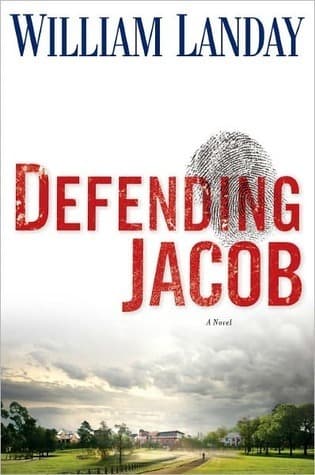
William Landay (2012)
Genre
Thriller / Mystery
Reading Time
421 min
Key Themes
See below
Sign in to track this book
A respected ADA's world shatters when his son is accused of murder, forcing him to confront the terrifying possibility that the boy he loves is a killer.
The story begins with Andy Barber, an Assistant District Attorney in Newton, Massachusetts, being questioned by Neal Logiudice, a colleague, about the murder of fourteen-year-old Ben Rifkin. Ben's body was discovered in a park, stabbed multiple times. Andy initially helps in the investigation, but his professional distance ends when Detective Duffy reveals that Ben's classmate, Andy's own son Jacob, is a suspect. Jacob admits to having a knife, a gift from his grandfather, but claims he lost it. The community is afraid and suspicious, and Andy and his wife, Laurie, consider the possibility that their son could be involved.
Suspicion around Jacob increases when a classmate, Sarah Grohl, reports seeing Jacob in the park near the crime scene shortly before Ben's body was found. An anonymous online post on a memorial page for Ben implicates Jacob, claiming he had a violent history and a knife. This post leads to a search of the Barber's home, where a knife matching the description of Jacob's missing weapon is found in his room. Despite Jacob's continued denials and the family's disbelief, the evidence leads to his formal arrest and charge for Ben Rifkin's murder. The family's stable life descends into chaos.
Following Jacob's arrest, a grand jury is convened, and after hearing testimony, including from Andy, Jacob is indicted for first-degree murder. The media frenzy grows, and the Barbers become outcasts in their community. Laurie struggles to see her son as a murderer, recalling past instances of Jacob's coldness or lack of empathy. Andy, using his legal connections, enlists the help of Joanna Klein, a sharp defense attorney, and Patz, a private investigator, to build Jacob's defense. The family's every move is scrutinized, and their personal lives are public.
As the defense team prepares for trial, they discover a critical piece of information: Andy's father, Billy Barber, is a convicted murderer serving a life sentence. This revelation, which Andy had kept from Laurie for their entire marriage, becomes a potential vulnerability for the prosecution, as it introduces the 'murder gene' defense. Andy reluctantly visits his father in prison, seeking his cooperation. Billy, a hardened criminal, agrees to help, mainly to connect with his grandson. This secret breaks the trust between Andy and Laurie, adding strain to their fragile relationship.
The trial begins, with Neal Logiudice leading the prosecution. He presents a compelling case, including the anonymous online post, the discovery of the knife in Jacob's room, and testimonies from classmates about Jacob's reclusive nature and past conflicts with Ben. The defense, led by Joanna Klein, tries to find flaws in the prosecution's timeline and motive, noting the lack of direct eyewitnesses to the murder itself. The pressure on the Barbers is immense, as every piece of evidence and testimony is dissected in open court, further isolating them from their community.
During the trial, the defense team focuses on the anonymous online post that implicated Jacob. They trace the IP address of the post to Leonard Patz, a registered sex offender who lived near the park where Ben was murdered. This revelation shifts suspicion onto Patz, presenting an alternative suspect to the jury. The defense argues that the knife found in Jacob's room could have been planted or that the evidence was circumstantial. The introduction of Patz weakens the prosecution's case, creating reasonable doubt about Jacob's sole culpability.
In a dramatic turn, Andy's father, Billy Barber, testifies for Jacob. While his testimony is carefully managed to avoid direct admissions of guilt regarding his own past, his presence and the implicit suggestion of a genetic predisposition to violence create a complex narrative for the jury. Ultimately, the jury returns a verdict of 'not guilty,' acquitting Jacob of Ben Rifkin's murder. The Barbers are relieved, but the emotional scars of the trial, particularly for Laurie, run deep. The family tries to resume a semblance of normalcy, though their lives are irrevocably changed.
After the trial, the Barber family tries to move on. However, their fragile peace is shattered when news breaks that Leonard Patz, the sex offender implicated by the defense, has been found dead in his apartment. He apparently committed suicide and left a confession note for Ben's murder. This seemingly definitive conclusion to the case brings a temporary sense of closure and vindication for Jacob and the Barbers. The public perception of Jacob shifts, and the family can begin to rebuild their lives, believing the true killer has been identified.
To escape the lingering stigma in their hometown, the Barbers take a trip to Italy. During their vacation, they encounter Sarah Grohl, Jacob's former classmate who had testified against him. Sarah tells Laurie she believes Jacob is guilty and recounts a disturbing incident where Jacob seemingly confessed to her, or at least implied his involvement, after Ben's death. This encounter reignites Laurie's deep-seated doubts about Jacob's innocence, causing her to revisit his past behaviors and the unsettling aspects of his personality she had tried to ignore. Renewed suspicion is firmly planted.
Laurie's suspicion of Jacob intensifies after the encounter with Sarah Grohl. She obsessively re-examines Jacob's past actions and words, finding unsettling patterns. The revelation that Patz's 'confession' might have been coerced or faked, possibly by Andy's father, further fuels her paranoia. During a drive, Laurie confronts Jacob, pressing him about his involvement in Ben's death. In a chilling moment, Jacob, tired of his mother's questioning, implies his guilt in Ben's murder and reveals he also murdered Patz, stating that Patz was 'getting in the way' of his life. He confesses both murders to Laurie.
Overwhelmed by Jacob's shocking confession and convinced of his sociopathic nature, Laurie makes a desperate decision. While driving with Jacob, she intentionally crashes their car into a concrete barrier. Her intention is not explicitly stated as suicide, but rather to stop Jacob, to prevent him from harming anyone else. Laurie sustains severe injuries, including a traumatic brain injury, and Jacob is also critically wounded, left in a coma. The story then shifts back to the grand jury testimony, where Andy is being questioned about the car crash, and the full weight of the family's tragedy unfolds.
The Protagonist
Andy transforms from a confident legal professional into a desperate father, grappling with the moral ambiguities of his son's potential guilt and the lengths he will go to protect him.
The Supporting
Laurie's initial denial of Jacob's guilt evolves into a terrifying certainty, forcing her to confront the darkest aspects of her son and make an impossible choice.
The Antagonist/Central Figure
Jacob's character arc is less about development and more about the gradual revelation of his true, chilling nature.
The Supporting
Neal remains consistent as a dedicated prosecutor, fulfilling his professional duty regardless of personal connections.
The Supporting
Joanna's arc is largely professional, demonstrating her expertise in defending a high-profile client.
The Supporting
Billy's character remains largely static, a representation of inherited darkness and the inescapable past.
The Supporting
Duffy consistently performs his duties as a law enforcement officer, following evidence wherever it leads.
The Mentioned
Ben's character is static, serving as the central mystery and tragic catalyst for the plot.
The Supporting
Patz's role shifts from a potential killer to a convenient scapegoat, then to a second victim of Jacob.
The Supporting
Sarah's role is to provide key testimony and later, to plant crucial seeds of doubt in Laurie's mind.
This theme is central to the novel, explored through the 'murder gene' concept and the Barber family's history. Andy struggles with the idea that Jacob might have inherited a genetic predisposition to violence from his father, Billy. Laurie considers whether Jacob's environment and upbringing shaped him, or if his true nature is inherently dark. The book constantly questions whether Jacob's actions are a result of his lineage or his experiences, leaving the reader to ponder the origins of evil. This is evident when Andy confronts his father, Billy, about the possibility of a genetic link to violence, and when Laurie reviews Jacob's childhood for signs of abnormality.
“"He was a good kid. A smart kid. He was just born with something… off. Something that couldn’t be fixed."”
The fierce, often blinding, love of parents for their child is a dominant theme. Andy's unwavering belief in Jacob's innocence, even with mounting evidence, exemplifies this. He goes to extreme lengths, including revealing his own painful family history and manipulating legal outcomes, to protect Jacob. Laurie also initially denies Jacob's guilt, but her maternal instinct eventually turns into a terrifying realization, leading her to question the nature of her son. The novel explores the immense pressure and moral compromises parents make when their child is accused of an unspeakable crime, showing the fine line between loyalty and self-deception. This is evident in Andy's constant justifications for Jacob's behavior and Laurie's agonizing internal debates.
“"You don't stop loving them because they do something bad. You just... you just can't."”
The novel dissects the complexities of the legal system and its pursuit of 'justice,' which doesn't always align with the 'truth.' Andy, as an Assistant District Attorney, understands the nuances of the law, where reasonable doubt can lead to an acquittal even if a defendant is guilty. The trial of Jacob shows how evidence, testimony, and legal maneuvering can create a narrative of innocence or guilt, regardless of the actual facts. Jacob's acquittal, despite lingering suspicions, and the subsequent 'confession' of Leonard Patz (later revealed to be false), show how legal outcomes can mask or distort the truth. The story forces the reader to question whether the system is truly designed to find the truth or simply to render a verdict based on presented evidence.
“"The legal system isn't about truth. It's about who tells the most convincing story."”
Secrets, both personal and familial, play a destructive role in the Barber family's lives. Andy's lifelong secret about his father, Billy Barber, being a convicted murderer, damages his relationship with Laurie when it's revealed. This hidden past not only strains their marriage but also becomes a ethically dubious part of Jacob's defense. The secrets Jacob himself keeps about his true nature and his actions ultimately shatter his family. The novel demonstrates how buried truths, when unearthed, can dismantle trust, destroy relationships, and have far-reaching, devastating consequences. This is most clear when Andy's secret about his father comes out, and later when Jacob's true nature is revealed.
“"Some secrets are too big to keep. They just… fester."”
The Barber family's reputation is instantly shattered by Jacob's accusation. They become outcasts in their suburban community, facing ostracism, judgment, and hostility. The novel shows how quickly public opinion can turn, and how a family's social standing can crumble under the weight of scandal. The community, once supportive, becomes a source of fear and isolation for the Barbers. This theme shows the superficiality of social acceptance and the devastating impact of suspicion on individual and family identity, showing how trust and belonging can be lost. This is seen in the way neighbors avoid them and the relentless media scrutiny.
“"We were living in a small town. Everyone knew everyone. And now everyone knew us for all the wrong reasons."”
Andy Barber narrates the story, told retrospectively through his grand jury testimony.
The entire novel is framed as Andy Barber's testimony to a grand jury, which is investigating an event that occurs after Jacob's trial and acquittal – specifically, the car accident involving Laurie and Jacob. This device allows Andy to recount the events of Ben Rifkin's murder, Jacob's trial, and the subsequent developments from his biased, emotionally charged perspective. It creates dramatic irony, as the reader knows from the outset that something terrible has happened, but the details are slowly unveiled. This unreliable narration forces the reader to constantly question Andy's interpretations and the true nature of events, adding layers of suspense and moral ambiguity.
Andy Barber's perspective is colored by his intense paternal love and self-preservation.
Andy Barber serves as an unreliable narrator due to his deep emotional investment in Jacob's innocence and his own need to protect his family's reputation and his past secrets. He often rationalizes Jacob's behavior, downplays suspicious incidents, and filters events through his own desire for a particular outcome. This unreliability forces the reader to piece together the truth from between the lines of Andy's narrative, comparing his account with the objective facts presented in court or through other characters' perspectives. It heightens the mystery and leaves the ultimate judgment of Jacob's guilt or innocence to the reader.
The controversial idea that a propensity for violence can be inherited.
The concept of a 'murder gene' or genetic predisposition to violence is a significant plot device. It is introduced when Andy's father, Billy Barber, a convicted murderer, becomes relevant to Jacob's defense. This idea is used by the defense to create reasonable doubt, suggesting that Jacob might have an inherent, uncontrollable tendency towards violence, rather than being a cold-blooded killer. It serves as a philosophical and scientific question within the narrative, forcing characters and readers to confront the 'nature vs. nurture' debate and the unsettling possibility that evil can be inherited, rather than purely learned or chosen. It also adds a layer of fear and self-doubt for Andy, who questions his own genetic makeup.
A physical object that serves as a central piece of evidence and a symbol of violence.
The knife is a crucial physical plot device. Jacob's possession of a knife, its disappearance, and its eventual discovery in his room are central to his arrest and the prosecution's case. It serves as tangible evidence linking Jacob to the crime. Symbolically, the knife represents the violence that shatters the Barber family's peace and the instrument of Ben Rifkin's death. Its presence (or absence) at key moments drives the plot forward, and the questions surrounding its ownership and use fuel much of the mystery and legal drama in the first half of the book, constantly reminding the characters and readers of the brutal act committed.
A digital clue that both implicates Jacob and later provides an alternative suspect.
The anonymous online post on Ben Rifkin's memorial page is a critical digital plot device. It initially implicates Jacob by mentioning his past violent tendencies and the knife, leading to the search of his room and his subsequent arrest. However, the defense later uses the IP address of the post to trace it to Leonard Patz, thereby creating an alternative suspect and introducing reasonable doubt that contributes to Jacob's acquittal. This device highlights the power of digital communication to influence investigations and public perception, and how such evidence can be both incriminating and misleading, ultimately serving different purposes for the prosecution and defense.
“There are things you can't outrun, no matter how fast you are.”
— Jacob's internal struggle with the accusations.
“Every parent's worst nightmare is that their child is capable of something truly evil.”
— Andy Barber reflecting on the possibility of Jacob's guilt.
“You never really know anyone, not even your own child.”
— A recurring theme for Andy as he questions Jacob.
“Sometimes the truth isn't enough. Sometimes you need to make it more palatable.”
— Andy considering how to present evidence or testimony.
“The law is a blunt instrument. It doesn't always find justice.”
— Andy's professional disillusionment with the legal system.
“Love makes you do crazy things. Things you never thought you were capable of.”
— Andy's motivation to protect Jacob at all costs.
“The past isn't dead. It isn't even past.”
— Andy's family history and its influence on Jacob's situation.
“There's a difference between knowing something and believing it.”
— Andy's struggle with intellectual knowledge versus emotional conviction about Jacob's innocence.
“Monsters are real, and ghosts are real too. They live inside us, and sometimes, they win.”
— Reflecting on the darkness within people and generational traits.
“We build our lives on assumptions, and when those assumptions crumble, so does everything else.”
— The collapse of the Barber family's normal life.
“Sometimes, the only way to protect what you love is to become what you hate.”
— Andy's moral compromises in defending Jacob.
“The hardest part of being a parent is realizing you can't always save your child.”
— Andy's ultimate helplessness in controlling Jacob's destiny.
“Innocence is a fragile thing. Once broken, it can never truly be mended.”
— The impact of the trial and accusations on Jacob's life.
“The truth is a dangerous thing, especially when it's inconvenient.”
— The various characters' attempts to manipulate or hide the truth.
Ready to see how well you understood this book? Take our interactive quiz with 10 questions.

Biography coming soon.







