“He had a happy childhood, which is to say that he was never struck by a motor car, or had his teeth knocked out by a cricket ball, or was ravished by a scoutmaster.”
— Describing Paul Pennyfeather's early life.


Evelyn Waugh (2022)
Genre
Literary Fiction
Reading Time
240 min
Key Themes
See below
Sign in to track this book
Unjustly expelled from Oxford, the naive Paul Pennyfeather enters a morally corrupt world as a schoolmaster at Llanabba Castle, where eccentric staff and the captivating Margot Beste-Chetwynde lead him on an absurd journey through society's farcical underbelly.
Paul Pennyfeather, a quiet divinity student at Scone College, Oxford, finds his life changed when he gets mixed up with the Bollinger Club. One evening, drunk club members destroy his trousers during their annual party. As a result, the Dean, Dr. Fagan, wrongly identifies Paul as a culprit and expels him from the university. This expulsion leaves him jobless and forces him to find work, starting his entry into the absurd world outside academia, a world his sheltered life had not prepared him for.
After his expulsion, Paul Pennyfeather gets a job as a schoolmaster at Llanabba Castle, a rundown and shady boys' school in Wales, thanks to Dr. Fagan's questionable agency. Here, he meets strange colleagues: Captain Grimes, a one-legged, always-drunk ex-military man who marries for money; Mr. Prendergast (Prendy), a former clergyman with doubts about his faith; and Mr. Best, an effeminate and artistic master. The school itself is disorganized, poorly run by Dr. Fagan, who cares more about appearances than education, often making up events and achievements to impress parents and inspectors.
Dr. Fagan wants to impress local rich people and attract more students, so he decides to host a big Sports Day at Llanabba Castle. Despite the school's lack of athletic talent and proper equipment, Fagan plans a grand event, even hiring a brass band and inventing a guest list. The day, however, quickly turns into a joke. The band plays out of tune, races are fixed or canceled, and students are unruly. During this chaotic event, Paul Pennyfeather first sees the glamorous and wealthy Margot Beste-Chetwynde, who arrives in her expensive car, captivating Paul with her elegance amid the rural chaos.
After Sports Day, Paul Pennyfeather feels increasingly drawn to Margot Beste-Chetwynde. She is a very wealthy, charming woman with a mysterious past, living a life of luxury. Paul, naive and easily impressed, quickly falls in love with her, despite her unusual life and hints of her shady business. Margot, amused by Paul's innocence and attracted by his unassuming nature, returns his affections somewhat. She invites him into her rich world, introduces him to her friends, and eventually proposes marriage, offering him a life of comfort and extravagance, a sharp contrast to his humble beginnings and the squalor of Llanabba.
While Paul is courting Margot, Llanabba Castle continues to decline. A key inspection by the Board of Education is coming, and Dr. Fagan, despite his usual bragging, is unprepared. The inspectors, unimpressed by the school's poor condition, unqualified staff, and lack of education, give a harsh report. The school is judged unfit and ordered to close. This event ends Paul's brief and confusing career as a schoolmaster, freeing him to pursue his relationship with Margot but also showing the widespread incompetence and moral decay in much of the society he now inhabits.
After Llanabba closes, Paul Pennyfeather moves to London and fully joins Margot Beste-Chetwynde's extravagant life. He attends lavish parties, meets many eccentric and morally flexible people, and sees the superficiality of high society. Despite the wealth and luxury, Paul remains somewhat detached and confused by the constant activity and the underlying lack of morals in Margot's world. He observes her questionable business associates and her casual disregard for normal morality, but his love for her, combined with his passive nature, stops him from questioning her too much. He is swept along, a willing participant in a life he barely understands.
Paul and Margot become officially engaged, and Paul, still somewhat dazed, prepares for a life of married happiness and wealth. Margot, however, has an urgent business trip to Marseilles, which she describes as property sales. Paul goes with her, eager to please and unaware of her activities' true nature. In Marseilles, Paul is mostly left alone while Margot conducts her 'business.' He remains unaware of her illicit dealings, believing her explanations, even as subtle clues and suspicious characters hint at a darker truth. This trip leads to the unraveling of Paul's innocent world.
While in Marseilles, Paul Pennyfeather is asked by Margot to sign some papers, which she vaguely says are for her property ventures. Paul does not know these documents are linked to her international prostitution ring, which involves trafficking young women. He signs them without question, trusting Margot completely. Soon after their return to England, authorities act. Paul is arrested and charged with managing an international prostitution organization, mainly because his signature is on the incriminating documents. Margot, with her vast resources and connections, avoids capture, leaving Paul to face the law alone, a confused scapegoat.
Paul Pennyfeather's trial is a joke, marked by sensationalism and the legal system's complete failure to understand his true innocence. Despite his sincere pleas, the evidence, especially his signature on Margot's documents, is damning. He is quickly convicted and sentenced to seven years in prison. During his time in various prisons, Paul meets familiar faces from his past, including Captain Grimes, who has repeatedly escaped and been caught, and Mr. Prendergast, who also ended up in prison after several unfortunate events, having found a new, if grim, form of 'faith' among the inmates.
During his imprisonment, Paul Pennyfeather sees Captain Grimes's usual resilience and cleverness. Grimes, always an opportunist, manages to stage another seemingly easy escape from prison, disappearing again into the world, likely to resume his life of questionable marriages and financial schemes. Meanwhile, Mr. Prendergast, who had found a cynical religious conviction in prison, meets a tragic and absurd end. He is accidentally decapitated by a golf ball during a game played by a prison official, a bizarre and darkly humorous comment on the arbitrary nature of fate in this chaotic world.
Through a clever plan by Dr. Fagan, now the prison chaplain, Paul Pennyfeather is declared dead. A body, conveniently similar in appearance, is used to fake his death, letting him be released from prison without suspicion. With a new identity – Mr. Sniggs – and a small inheritance, Paul returns to Scone College, Oxford, to resume his theology studies, as if his adventure had been a dream. He finds himself back in the same rooms, studying the same books, and meets the same Bollinger Club members, who know nothing of his past ordeal, having forgotten the incident that led to his expulsion.
Back at Scone College, Paul Pennyfeather, now 'Mr. Sniggs,' observes life's cyclical nature. The Bollinger Club continues its drunken antics, unaware of time passing or their actions' consequences. He overhears conversations like those from his past, realizing the world he left has barely changed. The novel ends with Paul thinking about his experiences, noting the big difference between the academic world and the 'real' world. He acknowledges the absurdity of both, yet finds some peace in the predictable, if sterile, university environment, having survived his wild journey through chaotic and morally corrupt society.
The Protagonist
Paul begins as an innocent, experiences a rapid and bewildering 'decline and fall' into the chaotic real world, and ultimately returns to his original state, albeit with a new perspective.
The Antagonist/Love Interest
Margot remains largely unchanged, a constant force of amoral sophistication, successfully evading consequences for her actions.
The Supporting
Grimes never truly changes, embodying a constant state of debauchery and improbable survival, always escaping and reappearing.
The Supporting
Prendy moves from religious doubt to cynical acceptance, only to meet an absurd and sudden end, never finding true peace.
The Supporting
Fagan consistently thrives through deception and manipulation, demonstrating the ease with which such characters succeed.
The Supporting
Peter remains a static character, a precocious observer who mirrors the cynicism of the adult world around him.
The Mentioned
Lord Tangent serves as a static symbol of misplaced prestige and social climbing.
The Supporting
The Bollinger Club members remain static, representing the unchanging nature of privileged debauchery.
Waugh's novel shows modern society as illogical and chaotic, where rational behavior is rare. From the farcical Llanabba Castle with its incompetent staff and made-up events (like Sports Day) to the legal system that convicts an innocent man like Paul Pennyfeather, the world appears as a series of nonsensical occurrences. Characters like Captain Grimes, who repeatedly escapes and reappears, and Dr. Fagan, who succeeds through deception, highlight the triumph of the absurd over reason. The novel suggests that trying to find order or justice in this world is pointless.
“''Oh, Paul, what a lot of trouble you've caused! It all comes of trying to be a gentleman.''”
The novel critiques the hypocrisy and moral decay in British society, especially among the upper classes and institutions. Margot Beste-Chetwynde, with her glamorous appearance and international prostitution ring, embodies the moral emptiness of the elite. Llanabba Castle, a school that values looks over education and is run by frauds, exposes corruption in educational institutions. The legal system is easily manipulated by wealth and influence, and public opinion is swayed by sensationalism rather than truth. Paul's journey through these circles shows a society where appearances matter most and true morality is scarce.
“''You can't expect to be a gentleman and an honest man.''”
Paul Pennyfeather's journey moves from naive innocence to a passive disillusionment. He starts as a sheltered divinity student, believing in order and justice, only to have these beliefs systematically shattered. His expulsion from Oxford, his experiences at chaotic Llanabba, his involvement in Margot's criminal activities, and his unjust imprisonment all teach him the harsh realities of the world. By the end, though he returns to his studies, he carries the weight of his experiences, now understanding the inherent meaninglessness and amorality that fill society, leading to a quiet, weary acceptance rather than active rebellion.
“''I've seen the world,'' thought Paul, ''and it's a far more fantastic place than any one has any idea of.''”
A key theme is that life is cyclical, with events and characters repeating, suggesting that human foolishness and societal absurdities are unavoidable. Paul's return to Scone College, Oxford, at the novel's end, only to find the Bollinger Club still engaged in their drunken antics and his old rooms unchanged, strongly emphasizes this. Characters like Captain Grimes, who repeatedly escapes and reappears in different forms, further reinforce the idea that individuals and their behavior patterns recur. This cyclical structure implies that true progress or escape from the absurd is impossible, and that life, despite its dramatic turns, ultimately returns to a familiar state of chaos.
“''I wonder if I am the same Paul Pennyfeather who went down from Scone College in disgrace? It seems a long time ago. And yet, somehow, nothing has changed.''”
Exaggerated situations and characters used to mock societal flaws.
Waugh employs satire and farce extensively to critique various aspects of British society, including the education system, the justice system, and the aristocracy. The events at Llanabba Castle, such as the disastrous Sports Day and the fabricated curriculum, are farcical exaggerations designed to mock the incompetence and dishonesty within schools. Paul's trial and unjust imprisonment, where logic is abandoned for sensationalism, serve as a satirical attack on the legal system. The exaggerated characters, like Captain Grimes and Dr. Fagan, contribute to the farcical tone, highlighting the absurdity of the world Waugh depicts.
A naive protagonist navigating a corrupt and bewildering world.
Paul Pennyfeather serves as the classic 'innocent abroad' figure, though his journey is often within England itself. His sheltered upbringing and inherent naivety make him an ideal lens through which Waugh can expose the corruption and absurdity of the world. Paul's lack of cynicism and his passive nature allow him to be swept along by events, making him a victim of circumstance rather than an active participant. His bewilderment and understated reactions to the outrageous events around him heighten the comic and critical impact of the narrative, as the reader experiences the madness through his untouched perspective.
Characters and situations that reappear, emphasizing the cyclical nature of life.
The novel frequently features recurring characters and motifs that underscore its themes. Captain Grimes, for instance, repeatedly escapes and reappears in different contexts, symbolizing the persistence of certain character types and the cyclical nature of trouble and evasion. Dr. Fagan, initially the headmaster, later reappears as a prison chaplain, demonstrating his adaptability and the pervasive nature of his unscrupulousness. Paul's eventual return to Oxford, encountering the same Bollinger Club, reinforces the idea that despite his dramatic experiences, the world continues its unchanging patterns of absurdity and privilege.
The audience knows more than the characters, particularly Paul.
Dramatic irony is a significant device, particularly in Paul Pennyfeather's interactions with Margot Beste-Chetwynde. The reader quickly understands the dubious nature of Margot's business and her morally questionable character, while Paul remains blissfully ignorant, blinded by his affection and naivety. This creates tension and humor, as the reader anticipates Paul's inevitable downfall. His unwitting involvement in the prostitution ring and subsequent arrest are prime examples of this, as the audience is aware of the danger long before Paul comprehends it, amplifying the tragicomic elements of his story.
“He had a happy childhood, which is to say that he was never struck by a motor car, or had his teeth knocked out by a cricket ball, or was ravished by a scoutmaster.”
— Describing Paul Pennyfeather's early life.
“Poverty is a great thing, but it is better to be rich.”
— Captain Grimes's cynical view on wealth.
“The only thing I ever really wanted to be was a gentleman.”
— Paul Pennyfeather reflecting on his aspirations.
“Everyone has a natural gift for something. Mine is for being a cad.”
— Captain Grimes's self-assessment.
“It was a dark and stormy night. The rain fell in torrents—except at occasional intervals, when it was checked by a violent gust of wind which swept up the streets (for it is in London that our scene lies), rattling along the housetops, and fiercely agitating the scanty flame of the lamps that struggled against the darkness.”
— The opening line of the novel, a parody of cliché openings.
“I can't imagine why anyone should want to be happy. It's so vulgar.”
— Margot Beste-Chetwynde expressing her aristocratic disdain for common emotions.
“The world is like a continually developing film, and we are merely spectators.”
— Paul's detached perspective on life's events.
“It's a mistake to try to make things too logical. Life isn't logical.”
— Dr. Fagan's pragmatic view of the world.
“There are some things that are better left unsaid. And some things that are better left undone.”
— A general observation on discretion.
“I'm a man of simple tastes, easily satisfied with the best.”
— Captain Grimes's ironic statement about his preferences.
“What do you do when you find a man with his head in a bucket of champagne? You leave him there, of course. It's the only humane thing to do.”
— A darkly humorous anecdote from the world of debauchery.
“It is a great mistake to try to be too original. The best things are always imitations.”
— Dr. Fagan's philosophy on art and creativity.
“One day I shall write a book about it all.”
— Paul Pennyfeather's recurring thought about documenting his experiences.
“The whole thing was a mistake from beginning to end.”
— Paul's overarching sentiment about his misadventures.
Ready to see how well you understood this book? Take our interactive quiz with 10 questions.
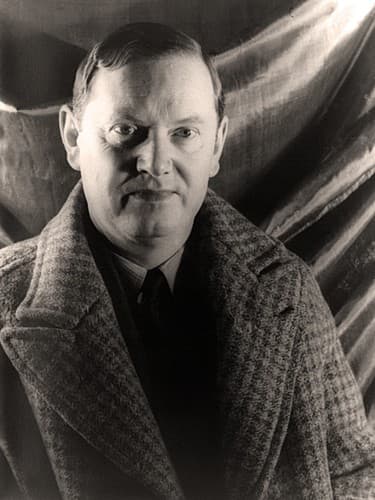
Arthur Evelyn St. John Waugh was an English writer of novels, biographies, and travel books; he was also a prolific journalist and book reviewer. His most famous works include the early satires Decline and Fall (1928) and A Handful of Dust (1934), the novel Brideshead Revisited (1945), and the Second World War trilogy Sword of Honour (1952–1961). He is recognised as one of the great prose stylists of the English language in the 20th century.







