“The dead don't stay dead in Oakhaven. They just... wait.”
— A recurring unsettling thought or local saying about the town.

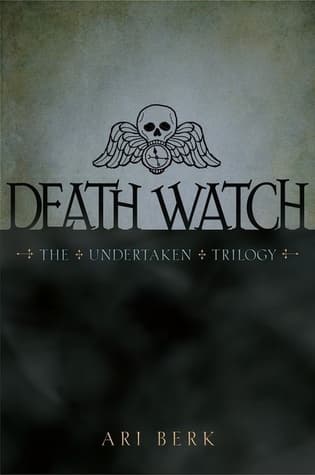
Ari Berk (2011)
Genre
Fantasy / Mystery / Young Adult
Reading Time
536 min
Key Themes
See below
Sign in to track this book
Armed with a spectral clock and a legacy of death, a young boy must brave a crumbling, ghost-haunted town to find his missing mortician father and embrace his own destiny as an Undertaker of the dead.
Silas Umber's ordinary life in the city shatters when his father, Amos, a seemingly normal mortician, does not come home. His mother, struggling, eventually reveals a shocking truth: Amos was not just a mortician, but an Undertaker, a guardian who guides restless spirits to The Peace. With Amos's unexplained disappearance, Silas and his mother must leave their home and return to Lichport, the decaying, fog-shrouded seaside town where Amos was born. This move starts Silas's reluctant entry into a world he never knew existed, a world of death and old duties.
Upon arriving in Lichport, Silas and his mother move in with Amos's brother, Charles Umber. Charles lives in a large, museum-like house filled with odd artifacts and an unsettling atmosphere. Silas is immediately cautious of his uncle, sensing a hidden agenda behind his seemingly kind manner. The town itself is a character, with its overgrown cemeteries, abandoned streets, and a strong sense of history and decay. Silas begins to explore Lichport, drawn to its mysteries, but always with a growing suspicion that his uncle's actions and the town's secrets are linked to his father's vanishing.
Driven by curiosity and a desire to understand his father's disappearance, Silas finds Amos's old office in Lichport. The office holds many of his father's secrets, filled with unusual tools and journals. Here, Silas uncovers the story's key item: the Death Watch. This ancient, four-hundred-year-old Hadean clock is not just a timepiece; it lets its wielder see and interact with the dead, giving Silas his first true look into the spectral world his father inhabited. The discovery marks a turning point, giving Silas the means to look deeper into Lichport's hidden truths.
Armed with the Death Watch, Silas's view of Lichport and its people changes. He starts seeing the restless spirits that linger in the town, trapped between worlds. Through these encounters, and by piecing together clues from his father's journals, Silas slowly begins to understand his father's profession and, more unsettlingly, his own inherited destiny. He realizes that he is not just a boy seeking answers, but the next in a long line of Undertakers, tasked with bringing The Peace to the dead. This realization weighs heavily on him, as he deals with the great responsibility and danger that comes with this inherited role.
Silas's journey as an Undertaker leads him into the spectral realm called the Shadowlands. This is a state of limbo where spirits remain tied to the living world by unresolved emotions, unfinished business, or strong attachments. Silas meets various ghosts, each with tragic stories and reasons for being trapped. He learns that guiding them to The Peace requires understanding their past and helping them find resolution. These early trips are dangerous, as some spirits are malevolent or consumed by their lingering pain, testing Silas's courage and his developing abilities as an Undertaker.
As Silas becomes more skilled at his Undertaker duties, he notices a disturbing problem: many of the spirits he meets have been lingering much longer than they should, and some seem to have vanished entirely, failing to reach The Peace after being guided. This suggests that something or someone is actively interfering with the natural order of death in Lichport. This mystery deepens his suspicion of Uncle Charles and the odd activities within his house. Silas realizes that his father's disappearance might be connected to this larger, more sinister plot affecting Lichport's dead, pushing him to investigate further.
Through investigation and dangerous encounters, Silas eventually uncovers the truth about Uncle Charles. Charles is not merely eccentric; he is actively manipulating and trapping spirits for his own bad purposes. He has been using forbidden practices to harness the power of the lingering dead, preventing them from finding The Peace. This revelation connects directly to the mystery of the missing spirits and strongly suggests Charles's involvement in Amos's disappearance. Silas realizes his uncle is a formidable and dangerous adversary, willing to sacrifice others, living or dead, to achieve his goals.
Silas finally confronts Uncle Charles, leading to a tense and perilous showdown. During this confrontation, Charles reveals his full dark plan and the truth behind Amos's disappearance. It is revealed that Charles, driven by ambition and a desire for ultimate control over life and death, had trapped Amos in a particularly strong part of the Shadowlands. Charles had hoped to force Amos to reveal the secrets of The Peace or to use his power for Charles's own ends. Silas is devastated by this betrayal but determined to save his father and stop his uncle.
To save Amos, Silas must venture into the deepest and most perilous parts of the Shadowlands, a place where spirits are most entangled and the boundaries between worlds are thinnest. This journey tests Silas's courage, his mastery of the Death Watch, and his growing Undertaker abilities to their limits. He faces not only malevolent spirits but also the psychological toll of confronting so much unresolved sorrow and anger. He understands that failure means not only his father's permanent loss but also the continued suffering of countless trapped souls in Lichport.
The climax shows Silas engaged in a desperate battle with Uncle Charles, not just physically, but spiritually. The fate of Amos and the very balance of life and death in Lichport hang in the balance. Silas must use everything he has learned, his innate abilities, and the power of the Death Watch to counter Charles's dark magic and manipulation of the dead. This confrontation is a struggle for the town's soul and for the proper order of the afterlife, with Silas fighting to restore The Peace and free the spirits Charles has enslaved.
Silas ultimately triumphs over Uncle Charles, breaking his hold over the trapped spirits and bringing The Peace back to Lichport. While the immediate aftermath is filled with grief and exhaustion, Silas successfully guides his father, Amos, to The Peace, fulfilling his duty as an Undertaker. The town begins to heal, and the lingering, restless spirits find their way to their rightful rest. Silas, though changed by his ordeal, fully embraces his inherited role as Lichport's Undertaker, understanding that his journey is far from over but that he is now equipped to protect the delicate balance between the living and the dead.
The Protagonist
Silas transforms from a naive boy into a brave and capable Undertaker, accepting his inherited powers and responsibilities.
The Supporting/Mentor (absent)
Amos serves as a spectral guide and the primary motivation for Silas's journey, his fate resolved by Silas's actions.
The Antagonist
Charles's ambition and malice are fully exposed, leading to his defeat and the undoing of his dark schemes.
The Supporting/Magical Item
The Death Watch is discovered by Silas, becoming his primary tool and symbol of his Undertaker role.
The Setting/Supporting
Lichport's secrets are slowly unveiled, and its fate is ultimately tied to Silas's success in restoring The Peace.
The Supporting
She serves as a catalyst for Silas's move to Lichport and a reminder of his ties to the living world.
The Supporting
Their individual stories are resolved as Silas helps them find The Peace, collectively representing the balance Silas strives to restore.
The novel explores Silas's journey from an ordinary boy to an Undertaker who embraces his family's ancient legacy. Initially, he resists the supernatural world and the responsibility thrust upon him by his father's disappearance. However, through his experiences with the Death Watch and the restless dead, he gradually understands and accepts his unique role. This theme is clear when Silas, after discovering his father's office and the Death Watch, begins to understand his lineage and the vital role he must play in maintaining the balance between life and death in Lichport, ultimately fulfilling his inherited duty by guiding his father to The Peace.
“He knew, with a certainty that chilled him to the bone, that he was the next in line. The mantle of Undertaker, once his father's, now rested upon his own unwilling shoulders.”
A central theme is the impact of grief and loss, not only for the living but also for the dead. The restless spirits Silas encounters are trapped in the Shadowlands because they cannot let go of earthly attachments, unresolved emotions, or unfinished tasks. Silas's own grief for his missing father mirrors the plight of these ghosts, creating an empathy that helps him in his Undertaker duties. This is powerfully shown when Silas recognizes that helping a ghost find resolution for their lingering sorrow is the only way to guide them to The Peace, reflecting his own journey to come to terms with his father's fate.
“The dead, he learned, were not so different from the living when it came to their sorrows. They simply had more time to dwell on them.”
The antagonist, Charles Umber, shows the corrupting influence of unchecked power and ambition. His desire to control the dead and subvert the natural order of The Peace comes from jealousy and a thirst for ultimate authority. His manipulation of spirits and his betrayal of his own brother, Amos, warn about the destructive consequences when one seeks to wield power beyond their rightful place. This is illustrated through Charles's elaborate schemes to trap and harness the energy of the dead, showing how his ambition leads to suffering for both the living and the departed.
“Some men, Charles among them, sought to master death, not to serve it. And in that mastery, they became monsters.”
The novel consistently blurs the lines between the living and the dead, suggesting they are connected. Lichport itself, with its decaying grandeur and pervasive spiritual presence, is a liminal space where the veil between worlds is thin. Silas's role as an Undertaker is to maintain the delicate balance between these realms, ensuring that death is a transition, not an eternal trap. The existence of the Shadowlands and the constant interaction between Silas and the spirits highlight that life and death are two sides of the same coin, influencing and affecting each other.
“Lichport was a town built on the bones of the past, where the living walked among the unquiet dead, often without knowing it.”
A magical artifact that reveals the spirit world.
The Death Watch is the primary magical artifact and a crucial plot device. It acts as Silas's key to the supernatural world, allowing him to perceive and interact with spirits, thus driving the plot forward. Without it, Silas would remain oblivious to his father's true profession and the mysteries of Lichport. It also serves as a symbol of his inherited legacy and the power he must learn to control, directly enabling his investigations into Amos's disappearance and Charles's schemes.
A supernatural limbo where spirits are trapped.
The Shadowlands is a crucial setting and plot device, representing the spiritual limbo where restless spirits are tethered to the living world. It provides the central conflict for Silas's Undertaker duties – guiding these spirits to The Peace. It also serves as the prison for Amos and the domain Charles seeks to exploit, making it the ultimate destination for Silas's quest. The dangers and mysteries within the Shadowlands propel much of the story's action and character development.
Clues left behind by Silas's father.
Amos's journals and his hidden office act as vital plot devices, providing Silas with crucial exposition and guidance. They contain the history of the Undertakers, explanations of the supernatural world, and clues about Amos's work and the nature of the threats in Lichport. These resources allow Silas to understand his inherited role, learn about the Death Watch, and ultimately piece together the truth behind his father's disappearance and Uncle Charles's nefarious activities, moving the narrative forward.
The town's setting reflects its supernatural secrets.
Lichport's pervasive atmosphere of decay, fog, and forgotten history is more than just a backdrop; it's a plot device that enhances the mystery and supernatural elements. The crumbling architecture, overgrown cemeteries, and general air of stagnation reflect the town's spiritual imbalance and the lingering presence of the dead. This oppressive atmosphere creates a sense of unease and foreboding, subtly guiding Silas and the reader toward the hidden truths and dangers that lie beneath the surface of the town.
“The dead don't stay dead in Oakhaven. They just... wait.”
— A recurring unsettling thought or local saying about the town.
“There are always two sides to a story, especially when one of them is whispering from the grave.”
— A philosophical musing related to the central mystery and the nature of the town's inhabitants.
“Some secrets are meant to stay buried, but Oakhaven has a way of digging them up.”
— Reflecting on the town's tendency to reveal hidden truths.
“Fear is a cold friend, but it can show you where the real dangers lie.”
— A character's internal reflection on the utility of fear.
“The past is never truly gone; it merely changes its form and waits for you to recognize it.”
— A deeper insight into the lingering influence of history and memory.
“Trust is a fragile thing, easily broken, and almost impossible to mend when dealing with the dead.”
— Considering the difficulty of forming alliances in a town where the deceased are active.
“Even shadows cast light, if you know how to look for it.”
— An optimistic or hopeful thought amidst dark circumstances.
“The line between the living and the dead is thinner than you think, and in Oakhaven, it's practically invisible.”
— Describing the unique supernatural boundary in the town.
“Every lock has a key, and sometimes, the key is just another question.”
— A detective-like thought about solving mysteries.
“Silence can be louder than any scream when you're waiting for the other shoe to drop.”
— Describing the tension and suspense of a moment.
“Some wounds heal, but the scars tell stories that never fade.”
— Reflecting on the lasting impact of trauma or significant events.
“The greatest monsters often wear the most charming faces.”
— A warning about deceptive appearances and hidden evil.
“You can't outrun your destiny, especially when it's already caught up to you.”
— A character's realization about the inevitability of certain events.
“There's a difference between being dead and being gone. In Oakhaven, it's a very important distinction.”
— Highlighting the unique state of the deceased in the town.
Ready to see how well you understood this book? Take our interactive quiz with 10 questions.







