“The dead walk.”
— A chilling realization as the prison barge encounters the derelict Star Destroyer.

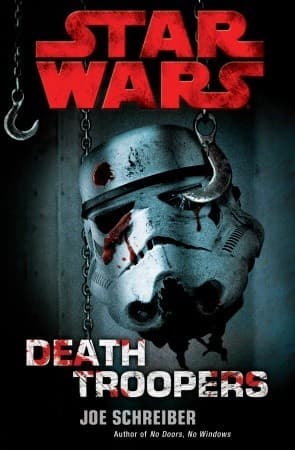
Joe Schreiber (2009)
Genre
Fantasy / Science Fiction
Reading Time
288 min
Key Themes
See below
Sign in to track this book
When a prison barge carrying dangerous criminals breaks down, they find refuge in an abandoned Star Destroyer, only to unleash a plague that turns the dead into an unstoppable, flesh-eating legion.
The Imperial prison barge, the 'Purge,' carrying over 500 dangerous prisoners including Caleb and his younger brother Jareth, suffers a critical engine malfunction in an uncharted sector of space. Its life support fails, and the crew, led by Commander Zahara, realizes their only hope is to scavenge parts from a derelict Star Destroyer, the 'Vector,' found drifting nearby. Zahara, along with her guard Valek and Chief Medical Officer, Dr. Aphra, oversees the preparations for a boarding party. Tensions are high among the prisoners and guards as the barge's condition worsens, creating a sense of impending doom before the true horror is revealed.
A boarding party from the 'Purge,' including several prisoners and guards, makes its way to the 'Vector.' The Star Destroyer is silent and appears abandoned, its interior dark and chillingly quiet. As they search for salvageable parts, they find grotesque, partially devoured remains of Imperial crew members. The boarding party quickly realizes something is wrong. They retrieve essential components but are ambushed. Only half the party returns to the 'Purge,' bringing not only the needed parts but also a terrifying, highly contagious pathogen.
Upon the boarding party's return, a disease rapidly spreads through the 'Purge.' Symptoms appear quickly: extreme fever, necrosis, and an insatiable hunger. Within hours, most prisoners and crew die. However, death is not the end. The infected corpses reanimate, becoming ravenous, undead monsters driven to consume the living. Caleb and Jareth witness the transformation firsthand, barely escaping the initial onslaught as the barge becomes a chaotic slaughterhouse. Dr. Aphra, horrified, tries to understand and contain the contagion, but it is too late.
Amidst the chaos, a small group of survivors emerges: the teenage brothers Caleb and Jareth, the guard captain Valek, Chief Medical Officer Dr. Aphra, and two smugglers, Trig and Kale. Commander Zahara is also among them, focused on maintaining control. Realizing the 'Purge' is a death trap, they form a tense alliance, aiming to escape the reanimated horrors. They understand their only hope lies in reaching the 'Vector,' which, despite its earlier terrors, now seems like a potential sanctuary or a way to a working ship.
The survivors plan to cross the vacuum of space from the 'Purge' to the 'Vector.' They use space suits and a modified tether system, facing dangers of space travel and the constant threat of the undead. The journey is perilous. The group's fragile alliance is tested by fear, mistrust, and despair. They successfully reach the 'Vector,' but the silence that greets them is unsettling, hinting at further horrors within the seemingly abandoned Star Destroyer.
Once aboard the 'Vector,' the survivors find it to be a vast, confusing vessel, its power flickering. They discover clues about the ship's fate: logs detailing a mysterious cargo, a strange infection, and the crew's descent into madness and violence before their reanimation. The 'Vector' itself seems to be a vessel of death, its every shadow potentially hiding an undead horror. Caleb and Jareth stay close, their bond strengthening. Dr. Aphra continues her scientific investigation into the pathogen, hoping for a weakness or a cure, while Valek and Zahara focus on powering the ship and escaping.
As they go deeper into the 'Vector,' the survivors find the source of the contagion: an ancient Sith artifact hidden in the ship's cargo hold. The artifact emanates a dark, corrupting energy, capable of reanimating the dead and twisting the living. The 'Vector' was transporting this artifact when the outbreak occurred. The undead are not merely mindless zombies; the artifact's dark power influences them, making them cunning and relentless. The group realizes that simply escaping the ship might not be enough; they need to neutralize or destroy the artifact.
Hordes of undead stormtroopers and Imperial crew members relentlessly pursue the survivors. The group makes difficult choices, leading to confrontations and sacrifices. Trig and Kale, the smugglers, attempt to escape alone but meet gruesome ends. Commander Zahara, driven by her desire for control and survival, makes desperate and often ruthless decisions. Valek proves resilient, fighting with brutal efficiency. Caleb, guided by a growing sense of responsibility for Jareth, finds an inner strength, protecting his brother at all costs against the relentless tide of the reanimated.
With the 'Purge' completely overrun and the 'Vector' swarming with undead, the remaining survivors – Caleb, Jareth, Dr. Aphra, and Valek – realize their only chance is to bring the 'Vector's' engines back online and escape the sector. This involves navigating dangerous, infested areas of the ship, including the engineering decks. They face numerous close calls and devastating losses as they work to restore power. The pressure is immense, as the undead are constantly at their heels, and the ominous influence of the Sith artifact seems to grow stronger, making their struggle for survival even more desperate.
Just as the survivors get the 'Vector' partially operational, an Imperial Star Destroyer, the 'Vanguard,' arrives in the sector, drawn by the 'Purge's' distress beacon. This presents a new complication: while it could be rescue, the survivors know the Empire would likely imprison them, or worse, if they discover the truth about the plague. They must now decide whether to risk contact with the Empire or attempt to flee without revealing the horrific secret of the undead. The 'Vanguard's' presence adds another layer of urgency and danger to their already desperate situation, turning a battle for survival against the undead into a race against the clock against the Empire.
The climax sees Caleb and Jareth separated from Dr. Aphra and Valek amidst a final, overwhelming assault by the undead. They confront the reanimated Commander Zahara, who has succumbed to the plague, and a horde of other horrors. Caleb, now fully embracing his protective role, uses his wits and whatever weapons he can find to defend Jareth. The brothers' bond is tested as they fight their way through the infested ship, desperately trying to reach a functional escape pod or bridge control before the 'Vanguard' can board the 'Vector' or destroy it. The artifact's dark influence is at its peak, amplifying the terror.
In a desperate, climactic struggle, Caleb and Jareth, along with Dr. Aphra, escape the 'Vector' in an emergency escape pod, leaving the 'Vanguard' to deal with the horrors they've unleashed. Valek's fate is unclear. They watch as the 'Vector' and the 'Purge' are either destroyed or left to drift, containing the terrifying plague. The survivors are adrift in space, their future uncertain, but alive. They carry the horrifying knowledge of the undead plague and the dark Sith artifact. The ending leaves a lingering question about the broader implications of the outbreak and whether this terrifying new threat will spread throughout the galaxy.
The Protagonist
Transforms from a scared, albeit street-smart, teenager into a hardened survivor and a true protector for his brother.
The Supporting
Remains somewhat sheltered by Caleb but witnesses and endures horrific events, maturing through sheer survival.
The Supporting
Moves from a detached medical professional to a desperate survivor, driven by both scientific curiosity and the will to live.
The Supporting
Remains largely a brutal individual, but his survival skills become crucial, highlighting that even villains can be pragmatic.
The Antagonist/Supporting
Begins as a tyrannical commander, becomes a desperate survivor, and ultimately succumbs to the plague, becoming an undead horror.
The Supporting
Remains a self-interested survivor, ultimately falling victim to his own opportunism.
The Supporting
Remains a self-interested survivor, ultimately falling victim to his own opportunism alongside Trig.
The Antagonist
A relentless, evolving threat that becomes more organized and cunning under the influence of the Sith artifact.
This theme explores how far individuals will go to survive against overwhelming odds. The characters, from Commander Zahara to Caleb, are stripped of their usual societal roles and forced to confront their primal instincts. Zahara's willingness to sacrifice others, Valek's brutal efficiency, and Caleb's desperate measures to protect Jareth all show this. The story often presents scenarios where moral boundaries blur in the desperate fight for life, especially when survivors must ally with those they despise.
““There was no law out here, no Empire, no Republic. Only the dead, and the living who would soon join them.””
The novel shows how the dark side of the Force, through the ancient Sith artifact, can corrupt and destroy. The plague is not just biological; it is infused with dark energy, twisting life into unnatural forms of death and reanimation. This influence extends beyond the undead, subtly affecting the living survivors, amplifying their fear, aggression, and desperation. The artifact is a physical manifestation of evil, radiating corruption and causing the horrors on both the 'Purge' and the 'Vector,' making the environment itself hostile.
““The darkness was not just in the shadows; it was in the very air, an ancient, malevolent will that sought to consume all.””
At the story's heart is the bond between Caleb and Jareth. Their brotherhood is a beacon of humanity amidst the horror. Caleb's dedication to protecting Jareth drives many of his actions and gives him strength when all seems lost. This theme contrasts sharply with the betrayal and self-interest of other characters, showing that even in the darkest circumstances, loyalty and familial love can endure and provide a reason to fight. Their relationship is a small example of hope against despair.
““He would not lose Jareth. Not to this. Not to anything.””
Fear is a constant force throughout the novel, driving both the characters and the narrative. It appears in various ways: the terror of being hunted by the undead, the psychological dread of isolation in deep space, and the horror of a fate worse than death. The story explores how fear can paralyze, but also how it can spur individuals into action. Characters constantly grapple with their fear, with some succumbing to it (like the panicked prisoners) while others, like Caleb, learn to channel it into a will to survive and protect, showing its dual nature.
““Every shadow held a monster, every creak of the hull was a whisper of death.””
A seemingly abandoned ship that holds the source of the plague and further horrors.
The 'Vector' functions as a classic haunted house setting in space. Its derelict nature creates immediate suspense and mystery, drawing the survivors in with the promise of salvage. However, it quickly becomes a labyrinthine death trap, filled with the undead and the dark secret of the Sith artifact. It serves as a contained environment for the escalating horror, forcing the characters to confront the plague's origin and fight for survival in increasingly confined and terrifying spaces, amplifying the claustrophobia and dread.
An ancient, dark object responsible for the undead plague.
The Sith artifact is the ultimate catalyst for the entire plot. It acts as a MacGuffin that must be understood or neutralized for the survivors to truly escape the threat. Its dark side energy not only creates the undead but also infuses the environment with a palpable sense of dread, influencing the living. It provides a supernatural explanation for the otherwise biological horror, elevating the stakes beyond a simple zombie outbreak to a cosmic threat linked to the Star Wars lore.
A highly contagious pathogen that reanimates the dead.
The plague is the central conflict engine of the story. It rapidly transforms the 'Purge' into a slaughterhouse and the 'Vector' into a tomb. Its rapid spread and grotesque effects immediately establish a high-stakes, desperate scenario. The nature of the undead – relentless, numerous, and influenced by dark powers – ensures constant tension and action. It's a classic horror trope adapted to the Star Wars universe, providing a tangible, terrifying enemy that forces characters to make desperate choices and confront their own mortality.
The scarcity of supplies, working equipment, and escape routes.
The constant struggle with limited resources – dwindling air, failing power, scarce medical supplies, and functional ships – intensifies the survival aspect of the narrative. This device heightens the tension, forces difficult decisions, and creates internal conflict among the survivors. It underscores their vulnerability and the desperate nature of their situation, making every scavenged item and every working piece of equipment critically important to their chances of escape.
“The dead walk.”
— A chilling realization as the prison barge encounters the derelict Star Destroyer.
“Hope was a luxury they couldn't afford, but a necessity they couldn't live without.”
— Reflecting on the dire situation of the survivors trapped with the infected.
“Some things, once broken, can never truly be fixed.”
— A character's somber thought about the irreversible changes wrought by the plague.
“The silence was worse than any scream.”
— Describing the eerie quiet after an encounter with the undead.
“Even in the darkest corners of the galaxy, greed finds a way to thrive.”
— Observing the actions of those attempting to exploit the situation for personal gain.
“They weren't just dead; they were hungry.”
— A terrifying distinction made by a survivor about the nature of the undead.
“The line between courage and foolishness was razor-thin, and constantly shifting.”
— A character contemplating a risky plan to escape.
“Sometimes, the only way to survive was to become something you despised.”
— A harsh internal conflict faced by a character forced to make difficult choices.
“The galaxy was vast, but there was no escaping the inevitable.”
— A sense of doom pervading the narrative as the infection spreads.
“Fear was a weapon, and sometimes, the only one you had left.”
— A character using their own fear to fuel their desperate actions.
“You can't kill what's already dead, but you can certainly make it deader.”
— A grim observation about fighting the reanimated corpses.
“The universe had a cruel sense of humor.”
— A sarcastic remark about the irony of their predicament.
“Even the most secure prison couldn't hold back the tide of the walking dead.”
— Highlighting the overwhelming power of the zombie plague.
“They were all just meat, waiting to be eaten.”
— A bleak and dehumanizing thought from a character facing overwhelming odds.
Ready to see how well you understood this book? Take our interactive quiz with 10 questions.

Biography coming soon.







