“The darkness was a living, breathing thing, and it was hungry.”
— Alex's initial perception of Furnace Penitentiary.

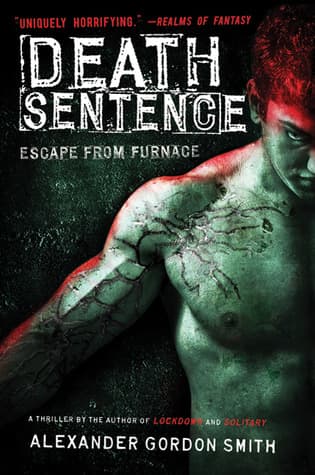
Alexander Gordon Smith (2011)
Genre
Thriller / Fantasy / Science Fiction / Young Adult
Reading Time
297 min
Key Themes
See below
Sign in to track this book
Imprisoned in the inescapable Furnace, Alex's second breakout attempt plunges him into a sinister transformation, as the warden's dark nectar courses through his veins, twisting him into the very monster he dreads and making the prison not just a place, but a part of him.
Following their desperate escape attempt through a collapsed tunnel, Alex, Zee, Donovan, and the other inmates are rounded up and returned to Furnace Penitentiary. The Warden, a figure of terrifying authority, declares that their repeated defiance warrants a 'Death Sentence' – a punishment far more insidious than simple execution. Instead of being killed, they are taken to a hidden, bloodstained laboratory deep beneath the prison. Here, they are subjected to a horrific experiment: injected with a sinister, dark liquid referred to as 'nectar.' This substance is designed to transform them into something monstrous, stripping them of their humanity and turning them into obedient, superhuman minions of Furnace.
The injection of the 'nectar' initiates a painful and terrifying transformation within Alex and his fellow prisoners. They experience agonizing physical changes, their bodies becoming stronger, faster, and imbued with an unnatural resilience, but at the cost of their minds and free will. They become the 'Blacksuits,' the terrifying, super-powered guards of Furnace, whose faces are hidden beneath gas masks and whose loyalty is absolute. Alex struggles internally, fighting against the creeping darkness that threatens to consume his identity and turn him into the very monster he fears. The process is designed to erase their pasts and make them instruments of the Warden's will.
As the transformation progresses, Alex finds himself losing fragments of his memory and his sense of self. He is forced into brutal training exercises alongside the other transformed inmates, learning to use his new superhuman abilities while his former life slips away. The training is overseen by the existing Blacksuits, who show no mercy and reinforce the new, violent order. Alex observes Zee and Donovan also succumbing to the transformation, their personalities dimming. He desperately clings to any remaining shred of his humanity, trying to remember his purpose and his friends, even as the 'nectar' continues its work, making him stronger but also more susceptible to the Warden's control.
The Warden gathers the newly transformed Blacksuits and reveals his ultimate, chilling vision. He explains that Furnace is not just a prison but a factory for creating a new breed of super-soldiers, designed to enforce his will and establish a new world order outside the prison walls. He speaks of the need for an 'Alpha' Blacksuit, a leader among them who will possess not only superior physical abilities but also a strategic mind to command the others. This revelation is a stark reminder to Alex of the immense power the Warden wields and the terrifying scope of his ambition. The idea of an Alpha sparks a desperate hope, however small, that this position might offer a chance for resistance.
Despite the pervasive influence of the 'nectar,' Alex discovers that a small faction of the transformed inmates has managed to retain fragments of their former selves and their memories. Led by a mysterious figure known only as 'The Doctor,' who appears to be a former scientist involved in the Blacksuit project, this resistance group secretly communicates their intent to fight back against the Warden. Alex learns that the 'nectar' has weaknesses, and that complete mental subjugation isn't always guaranteed. This discovery reignites a spark of hope within Alex, giving him a renewed purpose: to not only escape but to help others resist the Warden's control and reclaim their identities.
The Warden, ever watchful, suspects lingering defiance among his new Blacksuits. He devises a series of brutal loyalty tests, designed to expose any remaining humanity or disloyalty. Alex is put in an impossible situation where he must choose between obeying a direct, violent order against his former friends, or revealing his true intentions and risking immediate retribution. This test pushes Alex to his moral limits, forcing him to make a heartbreaking decision that appears to betray Zee and Donovan, even if it's a calculated move to maintain his cover within the Warden's ranks. The betrayal weighs heavily on him, but he understands it's a necessary evil for the greater plan.
Through a combination of his inherent strength, strategic thinking, and the Warden's manipulation, Alex is ultimately chosen as the 'Alpha' Blacksuit. This position grants him unprecedented access to the Warden's inner circle and more information about the Blacksuit project. He learns about the Warden's plans for global domination and the intricate network of control extending beyond Furnace. His Alpha status allows him to communicate more effectively with the resistance, particularly The Doctor. Together, they formulate a daring plan to not only escape Furnace but to dismantle the entire Blacksuit operation from within, using Alex's position as a Trojan horse.
As part of their training and the Warden's expanding influence, Alex and the other Blacksuits are deployed on a mission outside Furnace. This raid on an unsuspecting town or facility reveals the true, terrifying scale of the Warden's ambition and the destructive power of his Blacksuit army. Alex witnesses firsthand the devastation and terror they inflict, reinforcing his resolve to stop the Warden. During this mission, he also uncovers critical information about the 'nectar's' source or a key vulnerability, which he relays back to the resistance. The mission solidifies the stakes and the urgency of their fight.
With the plan in motion, Alex uses his position as Alpha to trigger the uprising within Furnace. He covertly rallies the resistance members, who have managed to retain enough of their minds to follow his lead. A fierce battle erupts within the prison, pitting the loyal Blacksuits against those fighting for their freedom and humanity. The chaos is immense, as the super-powered inmates clash, utilizing their enhanced abilities against each other. Alex faces off against high-ranking Blacksuits and loyalists, demonstrating his leadership and fighting prowess, all while trying to minimize casualties among those he hopes to save.
The uprising culminates in a direct confrontation between Alex and the Warden in the deepest levels of Furnace, likely within the very laboratory where the 'nectar' was created. The Warden, a formidable and ruthless adversary, reveals more about his motivations and the true, horrifying purpose of Furnace – not just a prison, but a breeding ground for his super-soldiers, and perhaps a place with even darker secrets. The fight is brutal and personal, as Alex battles not just for his own freedom but for the souls of all those transformed. He must use every ounce of his strength and cunning to overcome the Warden's power and psychological manipulation.
Alex ultimately defeats the Warden, bringing an end to his reign of terror over Furnace. However, the victory is hard-won and comes at a significant cost. Many inmates, both those who resisted and those who remained under the 'nectar's' control, perish in the conflict. Alex and the surviving resistance members are left to deal with the aftermath of the battle and the lingering effects of their transformation. The prison itself is in ruins, and the outside world remains a dangerous, uncertain place. The question of how to reverse the 'nectar's' effects or how to reintegrate into society as partially transformed individuals looms large, leaving Alex with a new set of challenges.
The Protagonist
Alex transforms from a desperate escapee into a leader of a rebellion, fighting not just for his own freedom but for the humanity of others, ultimately becoming the 'Alpha' of the resistance.
The Antagonist
The Warden's ambition grows exponentially, leading him to create a powerful Blacksuit army, only to have his plans thwarted by the very individuals he sought to control.
The Supporting
Zee endures the same horrific transformation as Alex, fighting to maintain his identity and support Alex in the resistance, showcasing his unwavering loyalty.
The Supporting
Donovan is transformed into a Blacksuit, struggling with the mental and physical changes, ultimately aligning with Alex's resistance.
The Supporting
The Doctor transforms from a complicit scientist into a crucial, knowledgeable leader of the resistance against the Warden.
The Antagonist/Mentioned
The Blacksuits are initially the unthinking enforcers of the Warden, but some are revealed to be capable of resistance and reclaim their humanity.
This theme is central to 'Death Sentence' as Alex and his friends are subjected to a transformation designed to strip them of their memories, personalities, and free will. The 'nectar' forces them to become the Blacksuits, faceless enforcers. Alex's internal struggle to remember who he is, his past, and his purpose is a constant battle against the encroaching darkness. This is vividly shown in his desperate attempts to recall specific memories or the faces of his friends, even as his body changes and his mind is clouded. The theme explores what it means to be human when one's identity is under direct assault.
“"The darkness was inside him, whispering, erasing, promising power in exchange for everything he was."”
The concept of freedom is twisted and redefined in this book. Initially, freedom means physical escape from Furnace. However, once transformed into Blacksuits, freedom takes on a new, deeper meaning: the freedom of mind and will. Alex and the resistance fight not just to break out of the prison, but to break free from the Warden's mental control. The irony is that they gain immense physical power, but lose their autonomy. The theme explores whether true freedom can exist without control over one's own thoughts and actions, and highlights the Warden's belief that he is offering a superior form of 'freedom' through absolute obedience.
“"He had wanted to escape Furnace, but now the prison was in his blood, in his bones, a cage built from within."”
The Warden embodies the corrupting nature of absolute power. His control over Furnace and his scientific prowess allow him to manipulate human lives on an unprecedented scale, turning people into weapons for his own ambitions. The 'nectar' itself is a symbol of this corruption, offering immense power (superhuman abilities) at the cost of one's soul. Alex, as the Alpha, experiences the allure of this power, but his struggle is to wield it without succumbing to the same corruption that consumed the Warden. The theme questions whether power can ever truly be used for good when its source is inherently evil.
“"The Warden didn't just rule Furnace; he was Furnace, a living embodiment of its dark, absolute power."”
Despite overwhelming odds and the Warden's seemingly unbreakable control, a spirit of resistance flickers and ultimately ignites within Furnace. This theme highlights the human (or formerly human) capacity to fight back against tyranny, even when transformed into the oppressor's tools. Alex's refusal to fully submit, and the formation of the secret resistance with figures like The Doctor, exemplify this. It shows that even when physically and mentally assaulted, the desire for self-determination can persist and lead to rebellion against an unjust system. The resistance is not just about escape, but about reclaiming dignity.
“"Even with the darkness in his veins, a part of him screamed defiance. He would not be broken."”
A mysterious, dark liquid injected into inmates to transform them into super-powered, obedient Blacksuits.
The 'nectar' is the central plot device, driving the entire narrative. It is a biological agent that physically enhances the inmates, granting them superhuman strength, speed, and resilience, but simultaneously erodes their memories, personalities, and free will. It serves as both the source of the protagonists' new powers and the primary antagonist's control mechanism. The struggle against its influence is the core conflict for Alex. Its properties and potential cure or counter-agent are crucial elements of the plot's resolution.
The gas-masked, super-powered enforcers of Furnace, who are revealed to be transformed inmates.
The Blacksuits are both a symbol and a key plot device. Initially presented as the terrifying, anonymous guards of Furnace, their true nature as transformed inmates adds a layer of horror and personal stakes. They represent the ultimate fate of those who succumb to the 'nectar.' Alex's transformation into a Blacksuit, and his subsequent role as 'Alpha,' allows him unique access and influence within the Warden's system, turning the oppressor's tool into a weapon of resistance. They are the physical manifestation of the Warden's power and the inmates' lost humanity.
A leadership position among the Blacksuits, granting increased power and access.
The 'Alpha' status is a critical plot device that elevates Alex's role from mere victim to a position of strategic importance. By being chosen as the Alpha, Alex gains greater physical abilities, a degree of autonomy (or perceived autonomy) within the Blacksuit hierarchy, and crucial access to the Warden's plans and inner workings. This position allows him to covertly communicate with the resistance, gather intelligence, and ultimately lead the uprising from within, turning the Warden's own system against him. It's a double-edged sword, offering power but also demanding a convincing façade of loyalty.
A secret, bloodstained facility beneath Furnace where the Blacksuit transformations occur.
The Hidden Laboratory serves as the physical setting for the 'Death Sentence' and a symbol of the Warden's dark scientific endeavors. It is where the 'nectar' is administered, and the horrific transformations take place. As a plot device, it is the nexus of the Warden's power and the source of the inmates' torment. Reaching and potentially destroying this lab becomes a key objective for Alex and the resistance, representing the dismantling of the Warden's entire operation and the hope for a cure or reversal of the 'nectar's' effects.
“The darkness was a living, breathing thing, and it was hungry.”
— Alex's initial perception of Furnace Penitentiary.
“In a place like this, you learned to hate, or you learned to die.”
— Alex reflecting on the brutal realities of Furnace.
“They took away everything that made me human. Now I'm just a weapon.”
— Alex's internal struggle with the transformation he's undergoing.
“Hope is a dangerous thing in Furnace. It'll get you killed faster than anything else.”
— Donny giving Alex advice about surviving in the prison.
“Some cages are invisible, but they're still there. And sometimes, they're the hardest to break free from.”
— Alex realizing the psychological traps of Furnace.
“The only way out is through. And sometimes, through means becoming something you never thought you could be.”
— Alex contemplating the extreme measures needed to escape.
“They want to turn us into monsters. But what if we're already monsters, just waiting for an excuse?”
— Alex questioning the nature of the inmates and himself.
“Fear can be a weapon, if you know how to wield it.”
— Alex learning to use his fear and the fear of others to his advantage.
“Every scar tells a story. And in Furnace, every story is a tragedy.”
— Observing the physical and emotional scars of the prisoners.
“The line between sanity and madness is a thin one in here. And it gets thinner every day.”
— Alex's internal struggle to maintain his mental state.
“When you have nothing left to lose, you have everything to gain.”
— Alex reaching a point of desperation and resolve.
“They can lock up your body, but they can't lock up your mind. Not if you fight back.”
— Alex's determination to resist the psychological control of Furnace.
“Some secrets are buried so deep, they claw their way out of the ground.”
— The uncovering of the dark truths behind Furnace.
“You don't escape Furnace. You just find a different kind of prison.”
— The lingering effects of Furnace on those who 'escape'.
Ready to see how well you understood this book? Take our interactive quiz with 10 questions.
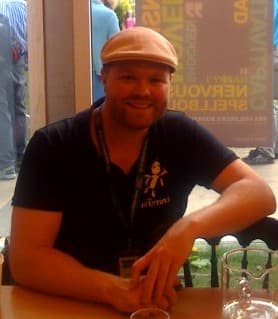
Alexander Gordon Smith is the author of the acclaimed "Lockdown" series, including "Lockdown," "Execution," and "Death Sentence." Known for his gripping young adult dystopian thrillers, Smith crafts fast-paced narratives with high stakes and compelling protagonists. His work often explores themes of survival, rebellion, and the fight for freedom in oppressive societies.







