“The secret of getting ahead is getting started.”
— Poirot advises a hesitant character on taking action in the investigation.

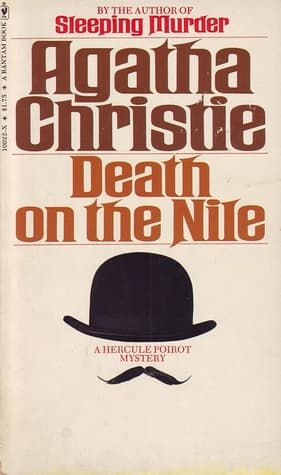
Agatha Christie (1937)
Genre
Thriller / Mystery
Reading Time
240 min
Key Themes
See below
Sign in to track this book
A luxurious Nile cruise turns deadly when the glamorous Linnet Ridgeway is murdered, leaving Hercule Poirot to untangle jealousy and hidden motives under the Egyptian sun.
The novel begins in a resort in Aswan, Egypt. The wealthy heiress, Linnet Ridgeway, arrives for her honeymoon. She unexpectedly meets Jacqueline de Bellefort, a former friend, who is upset. Jacqueline says her fiancé, Simon Doyle, left her to marry Linnet, a betrayal that has left her heartbroken and wanting revenge. Jacqueline, who introduced Simon to Linnet months earlier, is now following the new couple, making their honeymoon difficult. Linnet tells Hercule Poirot, also on holiday in Egypt, that she fears and is annoyed by Jacqueline's constant presence, and asks for his help to make her stop.
Poirot tries to talk to Jacqueline, but she still boards the same paddle steamer, the Karnak, as Linnet and Simon Doyle. The cruise becomes a place of growing anger and hidden plans among the many passengers. Besides the main three, other passengers include American socialite Marie van Schuyler, her cousin Cornelia Robson, and her nurse Miss Bowers; Mrs. Allerton and her son Tim; communist Mr. Ferguson; lawyer Andrew Pennington; doctor Bessner; romance novelist Salome Otterbourne and her daughter Rosalie; and the flirtatious Miss Robson. Jacqueline's presence and her threats against Linnet create a feeling of fear, especially when she openly states her hatred for Linnet.
One evening, while the Karnak is docked, Jacqueline confronts Simon Doyle in the saloon. She is drunk and angry. A heated argument happens, ending with Jacqueline pulling out a small pistol and shooting Simon in the leg. This causes immediate chaos. Simon is taken to Dr. Bessner for treatment. Jacqueline, in shock and regret, is sedated by Miss Bowers and confined to her cabin, where she is watched. Her pistol, a small .22 caliber, is found under a sofa cushion by Cornelia Robson and Miss Bowers. The immediate aftermath suggests a clear, if sad, end to Jacqueline's pursuit, but the real horror is yet to come.
The morning after Simon is shot, Linnet Ridgeway is found dead in her bed, shot in the head. Hercule Poirot immediately takes over the investigation, realizing the previous night's drama was only the beginning. The murder weapon is not found with the body. Poirot quickly determines that Linnet was killed between midnight and 2 AM. Jacqueline is an immediate suspect, given her public threats and the previous night's shooting, but her alibi of being sedated and watched makes her involvement seem impossible. The investigation shifts to other passengers, each with their own secrets and possible reasons to harm Linnet.
As Poirot investigates, two important pieces of evidence appear: Jacqueline's small .22 caliber pistol, found after she shot Simon, is now missing from Miss Bowers' care. It is later found in the Nile, wrapped in a velvet stole that belonged to Linnet. Also, Linnet's famous pearl necklace, a wedding gift, is found to have been stolen from her cabin. This theft points to a reason beyond personal revenge and makes the murder more complicated. The pearls are eventually found in Miss van Schuyler's cabin, hidden in a prayer book, leading to suspicion falling on her, though she strongly denies knowing about them.
Rosalie Otterbourne, while fishing, finds Linnet's velvet stole, which contains Jacqueline's missing pistol. She brings it to Poirot, who now has the possible murder weapon. However, the pistol has a handkerchief wrapped around it, and two shots have been fired from it, not just the one that hit Simon. Poirot interviews Mrs. Otterbourne, who says she saw the person who entered Linnet's cabin. Before she can name the person, she is shot dead through an open doorway. This second murder, seemingly to silence a witness, adds more complexity and danger to Poirot's investigation. It shows the killer is still on board and determined to hide their actions.
Through careful thought and observation, Poirot starts to put the truth together. He realizes that Jacqueline's shooting of Simon was a staged act. Simon was not actually shot in the leg by Jacqueline's pistol. He was grazed, and then, while others were distracted, he shot himself in the leg with Linnet's own pistol, making it look like Jacqueline's doing. This gave him an alibi for the time of Linnet's murder, as he was supposedly unable to move. Jacqueline, having fired her pistol into a table, then got it back and later threw it into the Nile. The two were lovers who planned to kill Linnet for her large fortune.
Poirot gathers all the suspects and carefully presents his findings. He explains that Simon, after being 'shot' by Jacqueline, used the distraction to get a small-caliber pistol (Linnet's own gun, hidden by Jacqueline) and shoot Linnet while she slept. He then went back to the saloon, pretending to be a helpless victim. Jacqueline, meanwhile, had fired her pistol into a table leg to explain a missing bullet and later got it back and threw it in the Nile, wrapped in Linnet's stole. The missing pearls were a distraction, stolen by Tim Allerton and his mother, who were also trying to frame Miss van Schuyler. Simon killed Mrs. Otterbourne to stop her from revealing his presence outside Linnet's cabin.
With their plan fully exposed by Poirot, Simon and Jacqueline realize they cannot escape. As the police prepare to arrest them, Jacqueline, pretending a last hug with Simon, pulls out a second, hidden pistol – a small one she had hidden – and shoots Simon in the heart, killing him instantly. She then turns the pistol on herself, dying by suicide. This dramatic end brings a tragic conclusion to their twisted love story and their murderous plan. Poirot thinks about how love and jealousy can destroy, and the tragedy of what happened on the Nile.
The Protagonist
Poirot remains largely consistent in his deductive brilliance, but the case challenges his understanding of human depravity and the destructive power of love.
The Victim
Linnet's arc is cut short by her murder, serving as the catalyst for the entire plot.
The Antagonist
Simon transitions from an apparently charming but weak man to a ruthless, calculating murderer, ultimately revealed and killed by his accomplice.
The Antagonist
Jacqueline's outward display of heartbroken vengeance masks a calculating and deadly resolve, culminating in her self-destruction.
The Supporting
Colonel Race remains a steadfast and capable investigator, aiding Poirot throughout the case.
The Supporting
Pennington's plot to defraud Linnet is uncovered, but he is not the murderer.
The Supporting
Her kleptomania is exposed, creating a diversion from the true murderers.
The Supporting
Rosalie starts as a supporting daughter and ends as a witness to tragedy, finding love amidst the chaos.
The Supporting
Salome Otterbourne is introduced as a nuisance and becomes a crucial, but ultimately silenced, witness.
The Supporting
Tim's involvement in a side-crime is uncovered, but he finds redemption and love with Rosalie.
A main theme of 'Death on the Nile' is the dark side of love. Passion and jealousy can lead to extreme violence. Jacqueline de Bellefort's intense, obsessive love for Simon Doyle, along with her jealousy of Linnet Ridgeway, drives her to plan and commit a double murder. Simon, also driven by his love for Jacqueline and a desire for Linnet's wealth, joins in. Their twisted romance causes tragedy, showing how all-consuming love can corrupt people and lead to terrible acts, ultimately destroying all three lives.
“'Love can be a very dreadful thing.'”
The novel shows how wealth and social status affect behavior and cause crime. Linnet Ridgeway's large fortune is the main reason for her murder, as Simon and Jacqueline plan to inherit it. Other characters, like Andrew Pennington, try to cheat Linnet, and Tim Allerton steals her pearls. All are driven by financial need or opportunity. The difference between Linnet's 'having everything' and the relative lack of money for characters like Simon and Jacqueline highlights the appeal and corrupting power of money. It suggests that money often brings more trouble than happiness.
“'Money is a very queer thing. It can be the root of evil, or it can be a blessing.'”
Deception is a key theme in Christie's work, and it is central to 'Death on the Nile.' The entire murder plot relies on a complex web of lies and carefully made illusions, especially Jacqueline's staged shooting of Simon and Simon's fake injury. Many characters, from the respectable Andrew Pennington to the seemingly harmless Miss van Schuyler, hide secrets and motives. Poirot's job is to uncover these layers of lies, revealing the true nature and intentions, showing that things are not always as they seem, especially on the Nile.
“'The most difficult thing in the world is to know a man.'”
Poirot's steady pursuit of truth and justice is a strong theme. Despite the exotic setting and the complex alibis, he is determined to make the murderers accountable. The novel explores the idea of punishment, both through the law and through the murderers' tragic, self-inflicted end. Jacqueline and Simon's deaths, by their own hands, can be seen as a form of justice for their terrible crimes. This emphasizes that even the cleverest plans cannot escape the consequences of actions. Poirot ensures that justice is served.
“'The truth, however ugly, is never as bad as the fear of it.'”
A murder committed in a seemingly impossible situation, despite alibis.
While not a literal locked room, Linnet's murder presents a similar challenge. Jacqueline, the most obvious suspect, has a seemingly airtight alibi, being sedated and watched in her cabin. Simon, the victim's husband, is also incapacitated with a gunshot wound. Poirot must unravel how the murder could have been committed despite these apparent impossibilities, leading him to expose the intricate conspiracy and the staged alibis. The 'impossible' nature of the crime is central to the mystery's appeal, forcing Poirot to look beyond the obvious and question every detail.
Misleading clues and characters designed to distract the reader.
Christie expertly employs numerous red herrings. The stolen pearl necklace, for instance, points suspicion towards Miss van Schuyler (due to her kleptomania) and Tim Allerton, distracting from the true motive and killer. Andrew Pennington's attempts to defraud Linnet also provide a strong financial motive for murder. These diversions are meticulously woven into the plot, making many characters appear suspicious and preventing the reader from easily identifying the real culprits until Poirot's final revelation. The false clues make the eventual solution more surprising and satisfying.
An object introduced early that becomes crucial later in the plot.
Jacqueline's small .22 caliber pistol is a prime example. Introduced early as the weapon used to 'shoot' Simon, it later becomes the key to understanding the murder. The fact that two shots were fired from it (one into the table, one into Linnet), and its eventual disposal in the Nile, are critical details Poirot must piece together. The seemingly innocuous act of Jacqueline shooting Simon, and the subsequent handling of the weapon, are all part of the elaborate setup, making the pistol far more significant than it initially appears and central to the unraveling of the conspiracy.
The carefully constructed defense of the murderers.
The entire murder plot hinges on the construction of two seemingly unbreakable alibis for Simon and Jacqueline. Simon's 'shot leg' and confinement to his cabin, and Jacqueline's sedated state under observation, are designed to make their involvement in Linnet's murder impossible. Poirot's genius lies in dissecting these alibis, revealing them to be meticulously staged performances rather than genuine circumstances. The breaking of these alibis is the core of Poirot's investigation and the ultimate proof of the killers' culpability, demonstrating how even the most perfect alibis can be flawed.
“The secret of getting ahead is getting started.”
— Poirot advises a hesitant character on taking action in the investigation.
“The impossible could not have happened, therefore the impossible must be possible in spite of appearances.”
— Poirot explains his reasoning when faced with a seemingly unsolvable murder.
“I do not approve of murder.”
— Poirot states his moral stance simply, often in contrast to the crimes he investigates.
“It is completely unimportant. That is why it is so interesting.”
— Poirot remarks on a seemingly trivial detail that becomes key to solving the case.
“The truth, however ugly in itself, is always curious and beautiful to seekers after it.”
— Poirot reflects on the pursuit of truth amidst the grim circumstances of the murder.
“One must see with the eyes of the mind, as well as with the eyes of the body.”
— Poirot emphasizes the importance of psychological insight over mere physical evidence.
“I have a little idea...”
— A recurring phrase Poirot uses when he begins to form a hypothesis about the crime.
“The psychology is everything.”
— Poirot stresses that understanding motives and personalities is crucial to solving the mystery.
“It is the brain, the little gray cells on which one must rely.”
— Poirot highlights his reliance on intellect and reasoning rather than brute force.
“Love can be a very frightening thing.”
— A character observes how intense emotions drive the actions leading to murder.
“The Nile has many secrets.”
— Reflecting on the setting, hinting at the hidden truths beneath the surface of events.
“There is too much hate in the world.”
— A character laments the destructive emotions that culminate in the crime.
“Everything must be taken into account. If the fact will not fit the theory—let the theory go.”
— Poirot advises on the importance of adapting theories to evidence, not vice versa.
“The past is the father of the present.”
— Poirot notes how historical events and relationships influence the current murder.
Ready to see how well you understood this book? Take our interactive quiz with 10 questions.
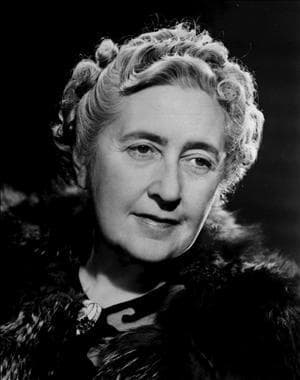
Dame Agatha Mary Clarissa Christie, Lady Mallowan, was an English writer known for her 66 detective novels and 14 short story collections, particularly those revolving around fictional detectives Hercule Poirot and Miss Marple. She also wrote the world's longest-running play, the murder mystery The Mousetrap, which has been performed in the West End since 1952. A writer during the "Golden Age of Detective Fiction", Christie has been called the "Queen of Crime". She also wrote six novels under the pseudonym Mary Westmacott. In 1971, she was made a Dame (DBE) by Queen Elizabeth II for her contributions to literature. Guinness World Records lists Christie as the best-selling fiction writer of all time, her novels having sold more than two billion copies.







