“Fate is all. It is what we are given, and what we must live with.”
— Uhtred reflecting on his life and the prophecies surrounding him.

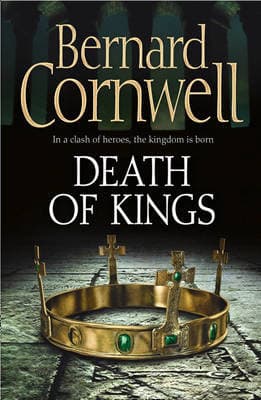
Bernard Cornwell (2011)
Genre
Fantasy / Historical Fiction
Reading Time
420 min
Key Themes
See below
Sign in to track this book
With King Alfred's health failing, the Viking-raised Uhtred must choose between his personal quest for vengeance and helping to forge a unified England, as the land faces renewed pagan chaos.
The novel begins with Uhtred of Bebbanburg, now a seasoned warrior and leader of Mercia's household troops, observing King Alfred's failing health in Winchester. Alfred, sick, wants to secure the throne for his son, Edward, despite Edward's perceived weakness and the ambitions of other claimants, especially Alfred's nephew, Æthelwold. Uhtred, bound by years of service and a vow to Alfred, feels loyal primarily to the king himself, not necessarily to the idea of a united Wessex under Edward. He struggles with his own wish to reclaim his ancestral lands of Bebbanburg in Northumbria, a dream that seems always out of reach while he serves the Saxon kings. Political tension in Winchester is clear, with rumors of rebellion and Viking attacks always nearby, setting a dangerous scene for Alfred's final days.
King Alfred's health continues to worsen, and he eventually dies in Winchester. His death immediately throws Wessex into uncertainty. Despite Alfred's clear wishes, the succession is not smooth. Edward, Alfred's chosen heir, becomes king, but his authority is immediately challenged. Æthelwold, Alfred's nephew, sees his chance to take the throne, believing he has a stronger claim as the son of Alfred's older brother. Uhtred, though he finds Edward less inspiring than his father, remains loyal to Alfred's dream and to his oath. He helps secure Edward's initial position, but the political situation remains unstable, with many lords unsure of their allegiance after Alfred's death.
After Edward's coronation, Æthelwold, Alfred's ambitious nephew, acts. He tries to take the throne by force, first by attempting to seize Alfred's treasury and then by trying to gather support among the Wessex nobility. However, his efforts largely fail, as many ealdormen, including Uhtred, remain loyal to Edward or hesitate to join a rebellion against the new king. With little support and Edward's loyalists acting quickly, Æthelwold is forced to flee Wessex. He escapes to the Danish lands in Northumbria, specifically to the Viking warlord Sigtryggr, seeking their help to press his claim and raise an army against Edward. This makes him a clear enemy to Alfred's vision of a united England.
With Æthelwold causing trouble in the north and the Danes ever-present, King Edward sends Uhtred to Mercia. His mission is twofold: to ensure Mercia's loyalty to Wessex under Edward and to prepare its defenses against possible Danish attacks. Mercia, ruled by Lady Æthelflæd (Edward's sister) and her husband, Æthelred, is a crucial buffer state. Uhtred finds Mercia's defenses weak and its leadership, especially Æthelred, more concerned with personal gain than with the kingdom's security. He works to strengthen Mercian forces, using his experience in war against the Danes, while also navigating the complex politics between Mercia and Wessex, and his own difficult relationship with Æthelflæd.
As expected, the Danes, led by Sigtryggr and with Æthelwold, invade Mercia. Their goal is not just to plunder but to destabilize Edward's new reign and install Æthelwold as a puppet king. Æthelred of Mercia proves to be an ineffective and fearful leader, more interested in retreating and protecting himself than in fighting the invaders. Uhtred, despite his lower rank, has to take command, organizing the Mercian forces and planning defenses. He leads skirmishes and fortifies positions, buying time and hurting the Danes, showing his military skill and leadership in contrast to Æthelred's failures. The invasion shows how fragile the Saxon kingdoms are without Alfred.
The Danish invasion ends in a major fight at a series of river fords. Uhtred, seeing the location's importance, takes charge of the Mercian defense. Despite Æthelred's initial reluctance and incompetence, Uhtred gathers the Mercian fyrd and places them skillfully. He plans a clever strategy, using the land and river to his advantage, to trap and ambush the advancing Danish forces. In a brutal battle, Uhtred personally leads the charge, inspiring his men and causing heavy losses for the Danes. The battle is a clear victory for the Saxons, mostly due to Uhtred's tactical skill and bravery, stopping the Danish advance and weakening Æthelwold's rebellion, though not ending it completely.
After the defeat at the fords, the remaining Danish forces, including Sigtryggr and Æthelwold, are forced to retreat, their invasion plans ruined. Uhtred and his Mercian forces pursue them, preventing them from regrouping effectively. Æthelwold, mostly abandoned by his Danish allies who see his cause as lost, is eventually cornered and captured by Saxon forces. His capture is a significant victory for King Edward, removing a major internal threat to his throne. While the Danish threat remains, the immediate crisis of Æthelwold's rebellion is quelled, allowing Edward to strengthen his power and giving Mercia a needed break. Uhtred, despite his key role, receives little official recognition; his status as a pagan outsider still makes many in the Christian court distrust him.
With Æthelwold imprisoned and the immediate Danish threat contained, Uhtred feels a renewed sense of disappointment. Despite his crucial role in securing Edward's throne and saving Mercia, he remains an outsider, his pagan beliefs a constant source of suspicion in the increasingly Christian Saxon kingdoms. He longs for Bebbanburg, his ancestral home, which seems no closer to being reclaimed. Meanwhile, King Edward, having faced his first major challenge, begins to grow into his role. He starts to assert his authority more confidently, making decisions that, while sometimes unappealing to Uhtred, show a developing understanding of kingship. The relationship between Uhtred and Edward, though still tense, begins to change, with Edward slowly earning some of Uhtred's respect.
King Edward faces a difficult choice about his cousin, Æthelwold. Despite family ties, Æthelwold's repeated attempts to take the throne and his alliance with the Danes make him a dangerous threat to the stability of the new English kingdom. After much thought, Edward, showing new resolve, orders Æthelwold's execution. This act, while harsh, sends a clear message to any other potential claimants or rebellious lords that Edward will not tolerate treason. It solidifies his position as king and marks a significant step in his change from an uncertain heir to a decisive ruler. Uhtred, though he understands why it is necessary, observes the ruthlessness needed for kingship.
With Æthelwold dead and the immediate threats handled, King Edward's position is much stronger. He has shown himself capable of making hard decisions and defending his realm. Uhtred, though still restless and wanting Bebbanburg, sees that Alfred's dream of a united England is slowly forming under Edward's reign, even if it is a more Christian England than Uhtred would prefer. He remains bound by his oath to the royal family, but his personal quest for his ancestral lands continues. The novel ends with Uhtred considering his future, knowing his sword will likely be needed again in the ongoing fight against the Danes and in building England, but always with his own destiny in mind.
The Protagonist
Uhtred continues to grapple with his oath to Alfred's bloodline versus his personal desire for Bebbanburg, ultimately choosing to uphold his duty despite his paganism and the perceived shortcomings of the new king. He slowly begins to see Edward as a worthy successor to Alfred.
The Supporting/Mentor (Posthumous)
Alfred's arc concludes with his death, but his legacy and vision continue to drive the plot, as his successors strive to fulfill his dream.
The Protagonist (Secondary)
Edward transforms from an uncertain heir into a more decisive and capable king, learning to make hard choices to secure his realm.
The Antagonist
Æthelwold's arc culminates in his failed rebellion and subsequent execution, solidifying Edward's rule.
The Supporting
Æthelflæd proves her leadership capabilities in Mercia, often stepping in where her husband fails, showing her potential as a future ruler.
The Supporting/Antagonist (Minor)
Æthelred's arc highlights his consistent incompetence and selfishness, serving as a foil to Uhtred's and Æthelflæd's leadership.
The Antagonist
Sigtryggr leads a significant Danish incursion but is ultimately defeated, though he remains a future threat.
The Supporting
Pyrlig remains a steadfast friend and moral compass for Uhtred throughout the tumultuous events.
The main theme is about the complex nature of loyalty. Uhtred, a Saxon raised by Danes, constantly struggles with his allegiances—to his oath to Alfred, to Alfred's family, to his pagan gods, and to his personal quest for Bebbanburg. His loyalty is often to people rather than to institutions or ideas, which causes inner conflict when those people, like Edward, do not fully inspire him. This theme is highlighted by Æthelwold's betrayal of his own family and people by allying with the Danes, which contrasts sharply with Uhtred's strong, though sometimes reluctant, commitment to Alfred's dream.
“My oath was to Alfred. It was not to his son, nor to his son's dream, only to the king. But a man’s word is his word, given to the living and the dead.”
The novel clearly shows the hard and often brutal process of creating a unified England from many warring kingdoms. Alfred's dying vision drives the story, and his successors, especially Edward, must continue the fight against both internal disagreements and external Viking threats. The struggles in Mercia, the challenges to Edward's throne, and the constant threat of Danish invasion all represent the huge obstacles to nation-building. Uhtred, despite his paganism, is a key part of this process; his fighting skill is essential in securing the Saxon lands and preparing for a future English identity.
“Alfred had dreamed of England, and now it was for his son, and for us, to make that dream real. It would be built with blood and iron.”
The conflict between Christian faith and pagan beliefs is a recurring idea. Uhtred, a devoted pagan, navigates a mostly Christian Saxon court, often feeling like an outsider. His practical, warrior's view of the gods contrasts sharply with the often strict and politically motivated Christianity of the Saxon clergy and nobles. This theme explores how faith can unite (for the Saxons) but also divide and create distrust. Uhtred's paganism is often seen negatively by the Saxons, despite his loyal service, showing the intolerance and suspicion between the two viewpoints.
“I was a pagan, and they were Christians, and though we fought side by side, there was always a gulf between us, as wide as the sea.”
The novel deeply explores what makes a good leader and the difficulties of succession. Alfred's death leaves a void, and Edward initially struggles to match his father, lacking his charm and decisiveness. The difference between Alfred's visionary leadership and Edward's initial uncertainty, as well as Æthelred's clear incompetence, is striking. Uhtred, a natural battle leader, often takes command when others fail. The story shows that true leadership needs not just strength but wisdom, resolve, and the ability to inspire loyalty, qualities that Edward slowly gains.
“A king must be a shepherd to his people, but sometimes the flock needs a wolf to protect it.”
A binding promise that dictates Uhtred's actions and loyalties.
Uhtred's oath to King Alfred is a primary driving force throughout the novel. It is a sacred vow that, despite his personal desires and pagan beliefs, compels him to serve Alfred's bloodline and, by extension, Alfred's dream of a united England. The oath creates a constant internal conflict for Uhtred, as he often finds himself serving a king (Edward) whom he initially does not fully respect, or fighting for a Christian cause that is not his own. It acts as a narrative tether, keeping Uhtred involved in the major political and military events of Wessex and Mercia, preventing him from pursuing his own goals of reclaiming Bebbanburg.
The immediate political instability following Alfred's death.
The succession crisis triggered by King Alfred's death is the central catalyst for the novel's plot. It immediately plunges Wessex into uncertainty, creating opportunities for ambitious figures like Æthelwold to challenge the rightful heir, Edward. This device allows for the exploration of political maneuvering, divided loyalties among the nobility, and the fragility of nascent kingdoms. It forces characters like Uhtred and Edward to make difficult choices, highlighting the precariousness of power and the constant threat of internal and external forces seeking to exploit weakness. The resolution of this crisis is crucial for the stability of Alfred's dream.
Uhtred's belief in his fated return to Bebbanburg.
Uhtred's deep-seated belief in his destiny to reclaim his ancestral home, Bebbanburg, serves as a long-term motivating factor for his character. Though not a formal prophecy, it functions similarly, providing Uhtred with a personal, overarching goal that exists independently of his service to the Saxon kings. This device creates a tension between his immediate duties and his ultimate ambition, often leading to moments of frustration and disillusionment. It reminds the reader of Uhtred's unique position as an outsider tied to the Saxons, and ensures his character arc extends beyond the immediate conflicts, suggesting a larger, unfinished journey.
“Fate is all. It is what we are given, and what we must live with.”
— Uhtred reflecting on his life and the prophecies surrounding him.
“A warrior's greatest weapon is not his sword, but his mind.”
— Uhtred considering tactics and strategy in battle.
“God will not help those who do not help themselves.”
— Uhtred's pragmatic view on divine intervention versus human action.
“Love is a dangerous thing, Uhtred. It makes men weak.”
— A character warning Uhtred about emotional attachments.
“Better to die on your feet than live on your knees.”
— Uhtred's defiant stance against submission to enemies.
“The gods do not care for justice, Uhtred. They care for power.”
— A pagan character's cynical view of the divine order.
“A king without an heir is a king without a future.”
— Discussing the political importance of royal succession.
“Revenge is a dish best served cold, and with a sharpened blade.”
— Uhtred's internal thoughts about seeking vengeance.
“Trust no one, Uhtred. Especially those who claim to be your friends.”
— A general piece of advice given to Uhtred in a treacherous world.
“The past is a burden, but it is also a teacher.”
— Uhtred reflecting on his history and lessons learned.
“There are no easy choices, only harder ones.”
— Uhtred facing difficult decisions with significant consequences.
“A man's word is his bond, or he is nothing.”
— Uhtred emphasizing the importance of honor and keeping promises.
“The world belongs to the strong, Uhtred, and the cunning.”
— A character's observation on the nature of power and survival.
“To be a leader, you must sometimes walk alone.”
— Uhtred understanding the isolation that comes with command.
Ready to see how well you understood this book? Take our interactive quiz with 10 questions.
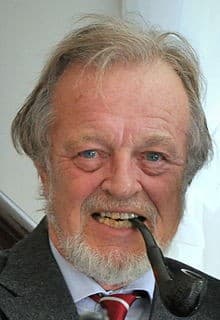
Bernard Cornwell is a prolific British author celebrated for his masterful historical fiction. He is best known for his Sharpe series, chronicling the Napoleonic Wars, and his Warlord Chronicles, which reimagines Arthurian legend. Cornwell's work is lauded for its meticulous research, gritty realism, and compelling narratives.







