“All stories are ghost stories.”
— Aljaz Cosini, the protagonist, reflecting on the nature of narrative and memory.

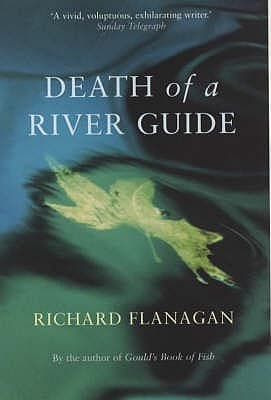
Richard Flanagan (1994)
Genre
Literary Fiction / Historical Fiction
Reading Time
540 min
Key Themes
See below
Sign in to track this book
A river guide drowns in the Franklin River, and his final vision of life, love, and Tasmania's history connects him to the land he died to protect.
Aljaz Cosini guides a raft trip down Tasmania's Franklin River when a tourist, Rex, falls out. Aljaz pushes Rex to safety, but the churning rapids pull him under. Trapped, Aljaz begins to drown. As he loses air, his mind fills with memories, visions, and feelings, blurring the line between life and death, past and present. This fall into the river starts his deep, dream-like journey through his own history and his ancestors', all tied to Tasmania's story.
As Aljaz drowns, Couta Ho, the mysterious woman he loved, appears strongly in his mind. He relives moments of their passionate and complex relationship, her wild beauty, and her connection to the land. These broken memories hold regret and longing, showing her deep impact on his life and the pain of their separation. Couta Ho represents a lost love and a bond to a wilder life, mirroring the Franklin River's untamed nature, keeping his dying thoughts focused on a strong emotional pull.
Among his drowning visions, Aljaz remembers a difficult moment with his Uncle Reg. He sees Reg, a man marked by early Tasmanian life's hardships, having his teeth brutally pulled and sold. This harsh act gets money, specifically for ripple-iron for a house. It shows the great sacrifices and desperate actions his ancestors took to build a life in Tasmania's tough wilderness. This vision highlights survival, poverty, and the physical cost the land demanded, linking Aljaz's suffering to his family's past struggles.
Aljaz's journey through time reaches the start of European settlement in Tasmania, especially the harsh convict era. He sees ships arrive with prisoners, the difficult conditions of their forced labor, and the unforgiving land they had to tame. These visions are raw and real, showing the suffering, despair, and violence of this time. He watches buildings go up, forests cut down, and a new, often cruel, society built on ancient land, connecting his own struggle to his country's founding trauma.
A large part of Aljaz's dying vision shows the sad history of Tasmania's Aboriginal people. He sees their old connection to the land, their complex culture, and their eventual removal and destruction by European settlers. These visions are full of deep loss and unfairness, as he watches them forced out, their way of life destroyed, and their voices silenced. This part of his journey shows the deep scars left on the land and its people, revealing the hidden histories and moral problems beneath modern Tasmania.
As Aljaz's mind expands, he sees the fast and often destructive change of Tasmania's wild nature into growing cities and towns. He watches ancient rainforests fall to logging, rivers dammed, and the land forever changed by human building. This vision contrasts the wild beauty of the Franklin River with the constant march of progress, showing the environmental cost of human ambition. It is a sad look at how quickly the natural world can be reshaped and sometimes ruined, connecting his own death to the island's wider environmental concerns.
In a beautiful and surreal moment, Aljaz sees a tree burst into bright flower in midwinter, growing right over his grandfather's forest grave. This vision is a strong symbol of life continuing despite death, of renewal and the natural cycle of existence. It suggests that even in loss and decay, there is a magic and strength in nature. This image brings a sense of peace and connection, implying that his ancestors remain part of the land, and his own death is part of a larger, ongoing natural process.
Aljaz's visions return to the more recent past, especially the famous Franklin Dam fight of the late 1900s. He relives the intense environmental effort to stop the Franklin River from being dammed, a key moment in Australian environmental history. He sees the activists, the protests, and the strong defense of the wilderness. This memory connects Aljaz's identity as a river guide to the larger fight to save the wild places he cares for, strengthening the river's symbolic role as a place of both natural beauty and human conflict.
As Aljaz dies, he has a powerful moment where all of Tasmanian life—the plants and animals, the old trees, the unique creatures—seems to sing to him, a group chorus welcoming him home. This spiritual experience suggests a deep connection between Aljaz and the land, blurring the lines between human thought and nature. It strongly confirms his belonging, a final hug from the island he loved and served, showing his joining with Tasmania's vast, ancient spirit.
Aljaz's dream-like journey ends with a deep change in how he sees things. Dreams, myths, and stories become more important than normal, logical thought. He reaches a world where his personal story and family history spread to include all human family stories, grounding him deeply in the land and showing his country's "soul history." This final state of mind is one of connection, where time and self disappear into a larger, shared memory, finding peace and understanding in the wide story of Tasmanian life.
The Protagonist
Aljaz begins as a man haunted by personal regrets and ends by transcending his individual identity, finding peace and belonging within the collective history and spirit of Tasmania.
The Supporting
Couta Ho remains a constant, idealized figure in Aljaz's memory, her presence reinforcing his deep emotional ties to the past and the land.
The Mentioned/Ancestral Figure
As an ancestral figure, Uncle Reg's story provides a historical anchor for Aljaz's personal journey, demonstrating the enduring legacy of his family's struggles.
The Antagonist/Setting
The river remains a constant, powerful force, consuming Aljaz physically but liberating him spiritually.
The Supporting
Rex's role is primarily functional, initiating the central conflict and Aljaz's internal journey.
The Collective/Supporting
Their collective stories guide Aljaz toward a holistic understanding of his heritage and the soul of Tasmania.
The novel explores how history, both personal and shared, shapes the present. Aljaz's drowning blurs time, letting him relive his own memories alongside his ancestors', the convict past, and Tasmania's ancient Aboriginal history. For example, his vision of Uncle Reg selling his teeth directly links the difficulty of settler life to the struggles Aljaz carries. This theme suggests that who a person is connects deeply to a place's 'soul history' and its people, making the past a living part of the present.
“He knew that the past was not gone, but merely waiting, a river of forgotten stories flowing beneath the surface of the present.”
Richard Flanagan looks at the complicated and often conflicting relationship between people and nature, especially Tasmania's wild areas. The Franklin River is shown as both a source of life and beauty, and a strong, uncaring force that can destroy. Aljaz, as a river guide, shows deep respect and closeness to nature, yet his death highlights nature's ultimate power. The novel compares this respect with the destructive effects of human development, like logging and damming (the Franklin Dam fight). It questions the cost of 'progress' and suggests a more balanced way to live with nature.
“The river was the oldest story, and he was merely a ripple upon its surface.”
Memory and storytelling are central to Aljaz's journey. They are how he understands his life and Tasmania's history. His drowning brings a rush of personal memories, ancestral visions, and historical stories, turning his last moments into a rich experience. The novel suggests that stories, whether personal or shared myths, are not just recollections but active forces that shape identity and give meaning. The 'singing' of Tasmania and the return of 'dreaming' at the novel's end stress that these stories hold a deeper truth than simple facts.
“To be without story was to be without soul.”
The theme of sacrifice supports Aljaz's first heroic act. He gives his life for a tourist's, a selfless act of courage that starts his deep inner journey. This personal sacrifice mirrors the sacrifices his ancestors made, like Uncle Reg, who faced great hardship for their families. While Aljaz's physical life ends, his spiritual journey is a kind of redemption. It allows him to face his regrets, make peace with his past, and find peace and belonging in his land's collective history. His death changes from a tragedy into a powerful experience.
“He traded one life for another, and in that exchange, found a world beyond living.”
Loss runs through the novel, both personally and historically. Aljaz grieves losing Couta Ho and his life's regrets, which appear strongly as he drowns. On a larger scale, the novel mourns the loss of Indigenous culture, the destruction of wild places, and the fading memories of a harsh past. This widespread sense of loss adds to the sad but beautiful mood of the story, showing how temporary life is and the lasting impact of historical wrongs. However, the novel also suggests that new understanding and connection can come from loss.
“The past was a wound that would not heal, but from its depths, stories still bloomed.”
The narrative technique mimicking Aljaz's dying thoughts and perceptions.
The novel predominantly employs a stream of consciousness narrative, allowing the reader to experience Aljaz Cosini's thoughts, memories, and hallucinations as he drowns. This technique blurs the lines of time and reality, presenting fragmented images, sensory details, and shifts between past and present without conventional transitions. It immerses the reader directly into Aljaz's subjective experience, making his internal journey the primary focus and conveying the chaotic yet profound nature of his dying mind.
The blending of realistic events with fantastical, dreamlike elements.
Magical realism is a key device, particularly evident in Aljaz's visions. While the initial premise is grounded in reality (a drowning), the subsequent events—such as a tree bursting into flower over a grave in midwinter, or the collective 'singing' of Tasmania's flora and fauna—transcend the ordinary. This blending of the mundane with the miraculous allows the novel to explore deeper truths about memory, history, and the spiritual connection to the land, suggesting that reality itself holds a mystical dimension beyond rational understanding.
Non-linear narrative jumps to past events and ancestral experiences.
Throughout Aljaz's drowning, the narrative frequently employs flashbacks and visions, taking him back to his personal past (with Couta Ho), his family's history (Uncle Reg), and the broader historical events of Tasmania (convict era, Aboriginal displacement, Franklin Dam protests). These are not linear recollections but rather vivid, immersive experiences that break the chronological flow of the story. This device allows the novel to construct a comprehensive 'soul history' of Tasmania, demonstrating how the past constantly informs and resonates within the present.
The Franklin River as a multifaceted symbol of life, death, memory, and the land's power.
The Franklin River functions as a powerful, multi-layered symbol. It represents life (Aljaz's profession, a source of natural beauty), death (his drowning), memory (a conduit for historical visions), and the untamed power of nature. It also symbolizes the contentious relationship between humans and the environment (the Franklin Dam controversy). The river's constant flow mirrors the flow of time and memory, making it a central metaphor for the narrative's exploration of interconnectedness and the enduring spirit of Tasmania.
“All stories are ghost stories.”
— Aljaz Cosini, the protagonist, reflecting on the nature of narrative and memory.
“There are things in the world that are not meant to be known.”
— A recurring thought as Aljaz grapples with the mysteries of the wilderness and his own past.
“The river was his life, and now it was his death.”
— Describing Aljaz Cosini's ultimate fate and his profound connection to the Franklin River.
“History is not what happened, but what we remember.”
— The novel's exploration of personal and collective memory shaping historical understanding.
“To truly know a place, you must know its dead.”
— Aljaz's understanding of the deep history and spiritual presence within the Tasmanian wilderness.
“Grief was a river, and he was drowning in it.”
— Aljaz's internal state as he confronts his past traumas and losses.
“The past is never dead. It's not even past.”
— A reflection on how historical events and personal histories continue to influence the present.
“Every man carries his own wilderness within him.”
— Exploring the internal struggles and untamed aspects of human nature.
“The silence of the forest was a language he understood.”
— Aljaz's deep connection and attunement to the natural world.
“We are all just echoes in the canyon of time.”
— A philosophical musing on the ephemeral nature of human existence.
“There are stories the river whispers, if you only listen.”
— The idea that the natural world holds its own narratives and secrets.
“Fear, he thought, was just another current to navigate.”
— Aljaz's pragmatic approach to danger and his resilience in the face of fear.
“The dead don't leave us; they just change their address.”
— A poignant reflection on the enduring presence of lost loved ones.
“What is a life but a series of moments, some shining, some dark?”
— Aljaz's contemplation of his own life as he faces its end.
Ready to see how well you understood this book? Take our interactive quiz with 10 questions.

Richard Miller Flanagan is an Australian writer, who has also worked as a film director and screenwriter. He won the 2014 Man Booker Prize for his novel The Narrow Road to the Deep North.







