“The world was a great and perilous place, and it was hard to be brave when you were so small.”
— A reflection on the protagonist's feelings of vulnerability in the face of danger.

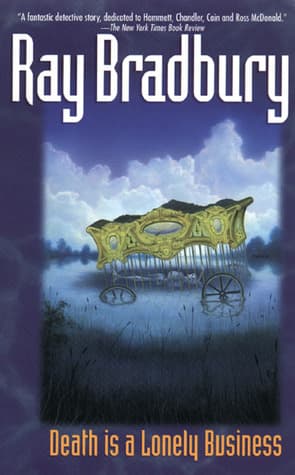
Ray Bradbury (1985)
Genre
Fantasy / Mystery / Science Fiction
Reading Time
240 min
Key Themes
See below
Sign in to track this book
In 1950s Venice, California, a writer's imagination blurs with reality as accidents plague his friends, forcing him to solve a series of events tied to his own creative power.
In 1950 Venice, California, a nameless young writer lives alone, typing stories. His girlfriend, Pip, is studying in Mexico. One foggy night, he finds an old man, Mr. Shurup, dead in a canal gondola, seemingly from a heart attack. The writer reports it to Detective Elmo Crumley, a cynical but sharp investigator. Later, the writer gets unsettling, silent phone calls and finds fresh seaweed on his doorstep, despite living far from the ocean. These strange events make him suspect Mr. Shurup's death was not natural, creating a mood of unease and mystery.
After Mr. Shurup's death, the writer becomes increasingly worried. He gets more silent phone calls, and the seaweed appears again, now inside his mailbox. He tells Crumley about his growing suspicions. Crumley, initially skeptical, listens with a detective's interest. The writer's friend, Cal, also experiences odd incidents, including his dog being found dead with seaweed around it. The writer's imagination, usually for fiction, now connects these events into a chilling pattern. He starts to believe a murderer is active in Venice and that he might be a target or an observer drawn into the killer's game.
The writer's fears are confirmed when his friend, Cal, is found dead in the canal, having seemingly drowned while drunk. Seaweed near Cal's body, like the earlier incidents, convinces the writer this is no accident. He tells Crumley his theory of a serial killer targeting Venice's lonely and forgotten residents. Crumley, now taking the writer's ideas seriously, begins to investigate the possibility of a murderer preying on the vulnerable. The writer feels guilt and urgency, realizing his observations are leading him down a dangerous path, placing him in the killer's sights as he uncovers more clues.
Seeking answers, the writer meets Constance Rattigan, a famous silent film star now living alone in a grand, decaying mansion by the canals. Constance, with her theatrical style and sharp mind, finds the writer's interest in the deaths intriguing. She has also noticed strange things in Venice and shares his feeling that something sinister is happening. Her knowledge of the town's hidden passages and forgotten residents, along with her dramatic view of life and death, makes her an important, though eccentric, ally. She supports the writer's detective work, seeing it as a way to add excitement to her later years, and offers him a different way to look at the mystery.
As more strange deaths occur—an old woman, a librarian—Crumley and the writer notice a disturbing pattern: all victims are lonely, isolated people, often forgotten by society, living in Venice's fading glory. The killer seems to target those with no one to mourn them or notice their absence right away. This deepens the mystery, suggesting a killer who is careful and preys on a specific kind of vulnerability. The writer, himself a solitary figure, feels a growing sense of dread and a personal connection to the victims, understanding that the killer might see him as another forgotten soul ready to be taken.
The writer's investigation becomes an obsession. He spends nights walking the foggy canals, looking for clues, interviewing eccentric residents, and putting together the puzzle pieces. His focus on the murders starts to consume his thoughts, overshadowing his own writing. Crumley, while admiring the writer's dedication, warns him about the dangers of getting too close to a killer. The writer, however, feels he must continue, driven by empathy for the victims and a desire to understand the darkness under Venice's picturesque surface. This intense focus puts him at greater risk, making him a more visible target for the murderer.
One foggy night, walking alone by the canals, the writer is nearly pushed into the murky water by an unseen attacker. He narrowly escapes, shaken but more determined. This direct attempt on his life confirms the killer knows about his investigation and sees him as a threat. The incident validates his theories and increases his resolve to unmask the murderer. Crumley, hearing of the attack, becomes more vigilant and starts to see the writer not just as an informant but as a potential victim needing protection, even as he relies on the writer's insights.
Through careful investigation and the writer's imaginative leaps, they finally connect the recurring seaweed to the killer's method. The killer uses seaweed to mark their presence or their victims, a macabre signature. They deduce the killer is not just drowning people but perhaps using a sedative or other means to incapacitate them first, making the drownings seem accidental. This understanding of the method narrows their search, allowing them to focus on individuals with access to the canals and a motive to target the lonely and forgotten. The seaweed, initially a bizarre detail, becomes an important piece of evidence.
The climax arrives when the writer, following deductions and hints from Constance, unmasks the killer. It is a seemingly harmless local figure, perhaps someone overlooked, much like the victims. The killer's motive reflects the loneliness and despair in Venice—a twisted form of 'mercy killing,' freeing the forgotten from their desolate lives, or a desire to control death in a world that has forgotten them. The confrontation is tense, by the canals, with the writer narrowly escaping death again, using his wits and the timely help of Crumley or Constance.
With the killer caught, a quiet calm returns to Venice, though the recent events linger. The writer, changed by his journey into darkness, sees life and death differently. He reflects on loneliness, human connection, and the thin line between reality and the macabre stories he once only wrote. His experience with the murders, and his part in solving them, has influenced his creative spirit, giving him new material and a deeper understanding of the human condition. He feels a renewed purpose, not just as a writer, but as an observer of life's mysteries.
The Protagonist
Transforms from a detached observer into an active participant, finding his voice and purpose as a writer through his dangerous investigation.
The Supporting
Moves from skepticism to respect and collaboration with the writer, broadening his perspective on crime-solving.
The Supporting
Finds renewed purpose and excitement in her twilight years by participating in the murder investigation.
The Mentioned
His death sets the entire plot in motion, highlighting the theme of forgotten lives.
The Supporting
His death transforms the writer's passive curiosity into an active and dangerous pursuit of justice.
The Mentioned
Her absence highlights the writer's isolation and his immersion in the Venice mystery.
The novel explores loneliness, especially among Venice, California's forgotten residents. The victims are often isolated people, living out their later years unnoticed, making them easy targets for a killer who preys on the vulnerable. The writer himself experiences some loneliness due to his girlfriend's absence and his solitary job, which allows him to relate to the victims and the town's atmosphere. Constance Rattigan, despite her past fame, also lives a reclusive life, showing how even former stars can become isolated. This theme is key to understanding the killer's motive and the tragic undertones of the setting.
“Death is a lonely business, and life is a lonelier one.”
As a struggling writer, the protagonist's imagination is both a gift and a burden. Initially used for fiction, his creative mind becomes a tool in solving the murders, helping him connect clues and imagine the killer's perspective. The book suggests that the line between fiction and reality can blur, and a writer's observational skills and ability to create narratives can be impactful in real-world situations. Constance Rattigan, a former actress, also shows this theme, using her dramatic flair and understanding of human performance to help the investigation. The writer's journey shows how his art is shaped by real-life horror.
“A good writer is a detective, always looking for clues, always trying to solve the mystery of people.”
Venice, California, is shown as a place of faded glory and decaying dreams, mirroring the lives of many residents. The once-grand canals and bungalows are now crumbling, symbolizing the passage of time and the short nature of human ambition. This setting provides a melancholic backdrop for the murders, suggesting the killer might be a product of this environment of forgotten aspirations. Constance Rattigan's mansion, a relic of her past stardom, perfectly captures this theme, representing a personal and architectural decay that still holds echoes of former splendor. The decay highlights life's transient nature and the inevitability of change.
“Venice, California, was a beautiful, dying woman, her canals like wrinkles, her houses like broken teeth.”
The protagonist's pursuit of the killer is not just about solving a crime, but also about finding meaning in the senseless deaths and the inherent darkness of human nature. Through his investigation, he faces the grim realities of death and the motivations behind extreme acts. This search for meaning extends to his own life and his identity as a writer, as he tries to turn these terrifying experiences into art. His journey is about understanding the human condition, even its most terrifying parts, and using that understanding to inform his creative work and his place in the world.
“Sometimes you have to walk into the darkness to find the light, or at least to understand why it's dark.”
An unnamed writer whose lack of a name emphasizes his everyman quality and allows for reader identification.
The protagonist's namelessness serves several functions. It allows readers to project themselves onto him, enhancing the mystery and universality of his experience. It also subtly reinforces the theme of loneliness and being overlooked, as he is a 'nobody' in the grand scheme, much like many of the victims. His lack of a name also highlights his role as an observer, a blank slate upon which the events of Venice are imprinted, and through whom the reader experiences the unfolding horror. This artistic choice emphasizes the subjective nature of the narrative, as it is filtered entirely through his perspective.
A unique, atmospheric setting that blends reality with a slightly fantastical, noir sensibility.
Venice, California, with its decaying canals, fog-shrouded bungalows, and eccentric residents, acts as more than just a backdrop; it's a character in itself. The setting evokes a sense of faded glory and melancholic beauty, perfectly complementing the noir atmosphere and the themes of loneliness and forgotten dreams. The canals provide both a picturesque element and a convenient means for the killer to dispose of bodies, while the fog adds to the mystery and suspense. The unique environment contributes significantly to the book's distinctive mood and sense of impending dread, blurring the lines between the mundane and the macabre.
A strange, symbolic detail that becomes the killer's signature and a crucial clue.
The presence of seaweed on the writer's doorstep and near the victims' bodies is a recurring motif that initially seems bizarre and inexplicable. It serves as a subtle, unsettling clue that connects the seemingly unrelated deaths. As a symbol, it represents the killer's 'signature,' a macabre calling card that adds to the mystery and helps the writer and Crumley understand the killer's modus operandi. The seaweed, an organic element of the ocean, brings a primal, almost mythical quality to the murders, linking them to the very essence of Venice's watery environment and deepening the sense of dread.
The contrast between the writer's imaginative insights and Crumley's pragmatic police work drives the investigation.
This device highlights the different approaches to problem-solving. The writer, with his artistic and imaginative mind, is able to make intuitive leaps and connect seemingly unrelated details, often seeing patterns that logical minds might dismiss. Detective Crumley, on the other hand, represents the pragmatic, evidence-based approach of law enforcement. Their contrasting methods create a dynamic partnership, where the writer's 'hunches' are validated or refined by Crumley's procedural rigor. This interplay between intuition and logic is crucial for unraveling the complex mystery and underscores the idea that different forms of intelligence are needed to solve the most perplexing puzzles.
“The world was a great and perilous place, and it was hard to be brave when you were so small.”
— A reflection on the protagonist's feelings of vulnerability in the face of danger.
“Death is a lonely business.”
— The central theme of the book, often repeated in various forms.
“You can't kill a dream, you can only kill a dreamer.”
— A character's philosophical musing on the enduring nature of ideas.
“The past is a ghost, the future a dream, and all we ever have is now.”
— A contemplation on the nature of time and the importance of the present moment.
“Every man has a secret, and every secret has a price.”
— A detective's insight into human nature and the consequences of hidden truths.
“People don't die on you, they just go away.”
— A character's attempt to rationalize or cope with loss.
“There are worse things than ghosts, my friend. There are the living.”
— A cynical observation about the dangers posed by other people.
“The greatest joy of life is to be loved.”
— A simple yet profound statement about the human need for connection.
“Fear is the only thing that can truly kill a man, long before his heart stops beating.”
— A reflection on the psychological impact of fear.
“The night was a great black animal, breathing softly.”
— A vivid description of the setting, emphasizing its atmospheric quality.
“Sometimes you have to look into the darkness to find the light.”
— A hopeful sentiment amidst the grim events of the story.
“Every life is a story, and every story has an ending.”
— A poetic reflection on the finite nature of existence.
“The city was a graveyard, full of living ghosts.”
— A metaphorical description of Venice, highlighting its melancholic beauty and hidden lives.
“You can never truly escape your past, no matter how far you run.”
— A recurring theme about the inescapable influence of past events.
“The truth is a tricky thing. It hides in plain sight and whispers in the dark.”
— A detective's perspective on the elusive nature of truth in a mystery.
Ready to see how well you understood this book? Take our interactive quiz with 10 questions.
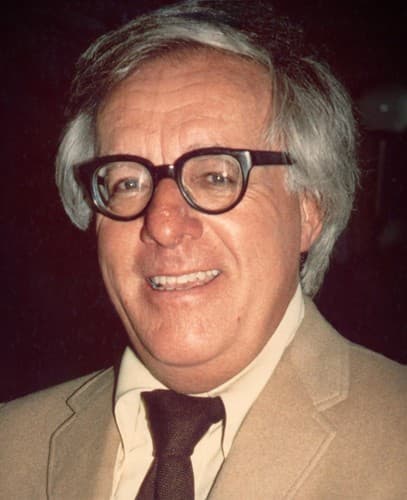
Ray Douglas Bradbury was an American author and screenwriter. One of the most celebrated 20th-century American writers, he worked in a variety of modes, including fantasy, science fiction, horror, mystery, and realistic fiction.







