“One of the most dangerous things in life is to be too sure of anything.”
— Poirot often cautions against premature certainty in his investigations.


Agatha Christie (1935)
Genre
Thriller / Mystery
Reading Time
360 min
Key Themes
See below
Sign in to track this book
A poisoned dart mid-flight turns a seemingly ordinary passenger plane into a high-altitude death trap, leaving Hercule Poirot to unravel a sky-high mystery among a cabin full of suspects.
The story begins on the Prometheus, a commercial airplane flying from Paris to London. Hercule Poirot, Dr. Bryant, the French moneylender Madame Giselle, her daughter Anne Morisot, the wealthy American dentist Daniel Clancy, Jane Grey, Norman Gale, Lady Horbury, her husband Lord Horbury, and the archaeologist Dr. Souchard are passengers. A wasp flies in the cabin. Madame Giselle then slumps in her seat and Dr. Bryant says she is dead. At first, people think it was a wasp sting, but Poirot, who sat across from Giselle, sees a small mark on her neck that looks wrong.
After landing, a closer look at Madame Giselle's body shows a tiny puncture mark on her neck, not like a wasp sting. A native blowpipe dart, with poison, is found under Poirot's seat. This discovery changes the case from an accident to a murder. Poirot, even as a passenger, takes a strong interest, seeing the challenges of a murder in a plane. The police, with Chief Inspector Japp, start their investigation, looking at the few suspects on the flight and the unusual weapon.
The investigation quickly shows that Madame Giselle, a known moneylender, had many enemies because of her harsh business dealings. Her daughter, Anne Morisot, seems calm about her mother's death. Other passengers, like Lady Horbury, owe Giselle a lot of money. Daniel Clancy, the dentist, is questioned, as is Dr. Souchard. Jane Grey, who had been a beautician, and Norman Gale, a young dentist, also come under scrutiny. Poirot and Japp start connecting Giselle's relationships and money problems with her fellow passengers, each of whom seems to have a reason to want her dead.
The blowpipe found in the hat-rack above Poirot's seat is an important clue. The small, foreign weapon is traced to a collection owned by Daniel Clancy, the American dentist and amateur archaeologist. Clancy says he owned such a blowpipe but that it was stolen. This makes him a suspect, though he denies involvement. Police also learn that Dr. Souchard, another passenger, studies native cultures and poisons, giving him the knowledge and access for such a weapon and poison. The investigation now focuses on who could have taken Clancy's blowpipe and used it secretly on the plane.
Anne Morisot, Madame Giselle's daughter, continues to act distant about her mother's murder. Poirot finds her lack of feeling suspicious. Meanwhile, the work connection between Norman Gale and Daniel Clancy, both dentists, is examined. Gale had worked for Clancy. This creates a possible link, raising questions about whether one could have involved the other, or if their shared job offered a cover. The specific knowledge needed to use a poisoned dart and blowpipe also points to someone with a science or medical background, keeping the dentists and Dr. Souchard under close watch.
The investigation becomes more serious when Dr. Souchard, the archaeologist, is found dead in his apartment. He was stabbed with a native dagger, like the blowpipe dart. This second murder suggests Souchard was either the original killer being silenced, or someone who knew too much about Giselle's murder and was killed to stop them from talking. Poirot thinks the murderer is trying to hide their tracks, making the case more complex and dangerous. The police now have two murders with foreign weapons to solve, and they need to find the killer before another crime happens.
Under police pressure and having a history of mental problems, Daniel Clancy confesses to killing Madame Giselle and Dr. Souchard. He says he stole his own blowpipe and used it on Giselle, then killed Souchard to keep him from revealing his knowledge of native poisons. Soon after confessing, Clancy kills himself with sleeping pills. The police are ready to close the case, believing Clancy is the killer. However, Hercule Poirot is not convinced. He finds Clancy's confession too convenient and his suicide suspicious, thinking it is another trick by the real murderer.
Poirot continues his private investigation, carefully re-examining every detail of the flight. He focuses on the first 'wasp' incident, realizing it was a diversion. He concludes that the blowpipe dart was not fired directly from a seat but from the back of a seat by a spring, timed with the wasp distraction. This explains how the murder could happen without being seen. He also considers the hat-rack where the blowpipe was found, seeing it as a key place for the killer to get or hide the weapon secretly.
A major discovery happens when Poirot looks into Madame Giselle's past. He finds that the woman known as Madame Giselle was not who she seemed. She was, in fact, Lady Horbury's long-lost mother, whom she had left as a child. This news gives Lady Horbury a strong new reason, either to get a lot of money, or to stop a scandal that would harm her husband's political career. The victim's real identity adds family drama and a deep personal reason that was hidden by Giselle's reputation as a harsh moneylender.
Through his careful thinking, Poirot names the real killer: Norman Gale, the young dentist. Gale had planned the whole scheme, including the fake 'wasp' incident as a distraction. He used a spring device to fire the poisoned dart, getting the blowpipe later from the hat-rack. He then killed Dr. Souchard to silence him and tricked Daniel Clancy into confessing and killing himself, using Clancy's known mental instability. Gale's reason was to inherit Giselle's money, as he was secretly with Anne Morisot, Giselle's daughter, and would gain much from her death. His plan, though clever, had flaws Poirot found.
Poirot brings everyone together and presents his evidence, carefully explaining Gale's method, reasons, and the later murders to hide his tracks. Faced with Poirot's logical and clear explanation, Norman Gale finally breaks and confesses to killing Madame Giselle, Dr. Souchard, and manipulating Daniel Clancy's suicide. His confession shows Poirot's skill and his understanding of human nature and criminal cleverness. The case, which seemed closed with Clancy's death, is now fully solved, bringing justice.
With Norman Gale arrested, the passengers of the Prometheus can move on. The truth about Giselle's identity and her link to Lady Horbury adds a sad note to the ending. After the investigation, Jane Grey and Inspector Japp start a romance. Jane, a witness and minor suspect, finds comfort with the inspector. The novel ends with justice served, but also a reminder of the complex and often dark reasons that drive people, and how life continues after tragedy.
The Protagonist
Poirot's arc is less about personal change and more about demonstrating his unparalleled deductive abilities in a unique setting, culminating in the exposure of an ingenious killer.
The Victim
Her arc is primarily as the catalyst for the plot, with her hidden past and true identity revealed posthumously, adding layers of motive to the crime.
The Antagonist
Gale's arc involves maintaining his facade of innocence until Poirot systematically dismantles his alibi and exposes his meticulously planned crimes.
The Supporting
Jane transitions from a potential suspect to an active observer, eventually finding romance and closure after the traumatic events.
The Supporting
Japp's arc involves working through a complex case, initially accepting a false confession, but ultimately trusting Poirot's superior intellect to find the true killer. He also finds personal happiness with Jane Grey.
The Supporting
Lady Horbury's arc involves the gradual unraveling of her secrets, from her debts and drug use to the shocking revelation of her true parentage, making her a sympathetic figure despite her flaws.
The Supporting
Clancy's arc is tragic, as he is manipulated into a false confession and suicide, becoming a victim of the true killer's elaborate plot.
The Supporting
Anne's arc involves maintaining a facade of indifference and innocence until her secret relationship with the killer is exposed, revealing her indirect involvement in the crime.
The Supporting
Dr. Souchard's arc is brief but pivotal, moving from a suspect to a victim, highlighting the killer's desperate attempts to cover their tracks.
The Mentioned
Lord Horbury's arc is largely off-stage, his role being to illustrate the societal pressures and potential motives for Lady Horbury.
The novel often uses the idea that things are not as they seem. Norman Gale, the seemingly normal dentist, is a killer. Daniel Clancy, the odd and troubled archaeologist, appears guilty but is a pawn. Madame Giselle's real identity and her link to Lady Horbury are hidden by her public image as a strict moneylender. Poirot's skill is in seeing past what is shown to find the truth, showing that first impressions and easy answers are often wrong.
“''It is the little things that are the most important. One little detail, overlooked, can bring down the whole structure of a case.''”
The airplane setting creates a 'closed world' where the suspects are few and close together. This makes the mystery more intense, as the killer must be among the passengers or crew. The small space makes murder seem impossible without being seen, yet it happens. This theme shows how even in tight places, human cleverness can find a way, and how the setting's limits can be used by a smart mind. It also shows the stress among passengers, knowing a killer is with them.
“''A murder committed in an aeroplane, mademoiselle, is a very peculiar thing. It is a murder committed in a closed house, in the air, with no possibility of escape.''”
Money and avoiding debt are main reasons in the novel. Madame Giselle, as a moneylender, has many debtors, many of whom are on the flight and have strong reasons to want her dead. Lady Horbury's huge debt and her husband's political career are at risk, while Norman Gale's reason is to inherit Giselle's money through Anne Morisot. This theme shows how much money problems can push people to extreme acts, and how money can cause complex webs of lies and violence.
“''Money, mademoiselle, is a powerful motive. It has been the cause of many a crime.''”
The novel explores finding justice and truth, often comparing Poirot's careful methods with standard police work. When Daniel Clancy confesses and dies, the police are ready to end the case, happy with a seemingly solved outcome. But Poirot's strong desire to find the complete truth, even when hard, finally reveals the real killer. This theme shows the importance of thorough investigation and not accepting easy answers, stressing that real justice needs the full truth, no matter how complex.
“''It is not enough to find a culprit, mademoiselle. One must find the right culprit, and understand how and why.''”
A murder occurs in a confined space with a limited number of suspects.
The entire murder investigation takes place within the confines of a commercial airplane, making all passengers and crew immediate suspects. This classic Agatha Christie device creates intense psychological drama, as everyone is trapped with a killer. The limited pool of suspects allows Poirot to meticulously examine each individual's motives, alibis, and behaviors, making the deduction process a tightly focused exercise in logic. The airplane setting is particularly ingenious, as it adds the challenge of how a murder could be committed so discreetly in such a public yet enclosed space.
A seemingly innocuous event designed to distract and mislead the investigation.
The 'wasp' incident, where a wasp is seen buzzing around the cabin just before Madame Giselle's death, serves as a major red herring. It initially provides a plausible, natural explanation for the death, diverting attention from the true method of murder. Poirot later realizes this was a deliberate distraction, orchestrated by the killer to coincide with the firing of the poisoned dart. This device highlights the killer's cunning and their ability to exploit everyday occurrences to cover their tracks, emphasizing the importance of looking beyond the obvious.
A false confession and suicide designed to prematurely close the case.
Daniel Clancy's confession to the murders and subsequent suicide is a masterful double bluff by the true killer, Norman Gale. It is designed to appear as the definitive resolution, allowing the police to close the case and the real murderer to escape scrutiny. Poirot's refusal to accept this convenient ending is crucial, as he senses the manipulation behind it. This device showcases the killer's psychological manipulation and their understanding of how to exploit human vulnerability and the desire for a quick resolution, making Poirot's persistence all the more vital.
A blowpipe and poisoned dart as the murder weapon.
The use of a native blowpipe and poisoned dart as the murder weapon is a distinctive plot device. It immediately adds an element of the unusual and points towards someone with specialized knowledge or access, initially implicating characters like Daniel Clancy and Dr. Souchard. The exotic nature of the weapon makes the murder more sensational and challenging to solve, diverting attention from the more mundane aspects of the killer's plan. It also allows for a discreet method of killing within the confined space of the plane, as the dart is small and easily hidden.
“One of the most dangerous things in life is to be too sure of anything.”
— Poirot often cautions against premature certainty in his investigations.
“The human mind is a strange and devious thing.”
— Reflecting on the complexities of human motivation and deception.
“Every little detail is important. You never know which one will be the key.”
— Poirot's meticulous approach to gathering evidence.
“It is the little things that give people away, Mademoiselle.”
— Poirot explaining how small inconsistencies can reveal truth.
“To hide something, you must put it in the most obvious place.”
— A paradoxical observation about human psychology and hiding things.
“One should always have a logical mind. It helps to keep one's head in a crisis.”
— Poirot advocating for rational thought under pressure.
“There are always motives. Some are strong, some are weak, but they are always there.”
— Discussing the universality of motives behind actions.
“The truth, like a cat, will always find its way out.”
— A metaphorical assurance that truth cannot be permanently suppressed.
“It is often the unexpected that happens, not the expected.”
— Highlighting the unpredictable nature of events and human actions.
“Everyone has a secret, my friend. Some are innocent, some are not.”
— A general reflection on the private lives of individuals.
“The facts are like pieces of a jigsaw puzzle. You must fit them together correctly.”
— Poirot describing his method of reconstructing events from evidence.
“A man's character is often revealed by his reaction to the unexpected.”
— Observing how people's true selves emerge in surprising situations.
“The little grey cells, they do not fail me.”
— Poirot's famous reference to his brainpower and deductive reasoning.
“Do not look for the obvious. Look for the unusual.”
— A key piece of advice for solving mysteries, often overlooked.
Ready to see how well you understood this book? Take our interactive quiz with 10 questions.
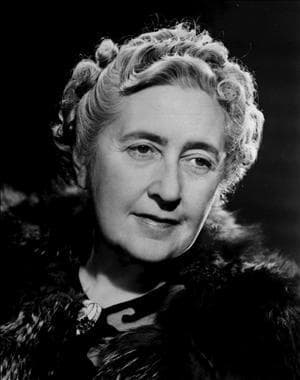
Dame Agatha Mary Clarissa Christie, Lady Mallowan, was an English writer known for her 66 detective novels and 14 short story collections, particularly those revolving around fictional detectives Hercule Poirot and Miss Marple. She also wrote the world's longest-running play, the murder mystery The Mousetrap, which has been performed in the West End since 1952. A writer during the "Golden Age of Detective Fiction", Christie has been called the "Queen of Crime". She also wrote six novels under the pseudonym Mary Westmacott. In 1971, she was made a Dame (DBE) by Queen Elizabeth II for her contributions to literature. Guinness World Records lists Christie as the best-selling fiction writer of all time, her novels having sold more than two billion copies.







