“The memory of the dead is a heavy burden, but also a source of strength.”
— Reflecting on the disappearances and the impact on the villagers.

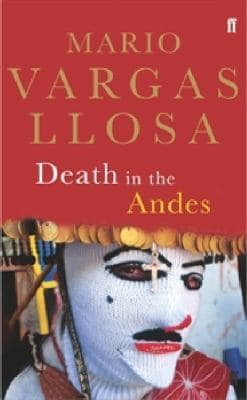
Genre
Literary Fiction / Historical Fiction / Mystery
Reading Time
8-10 hours
Key Themes
See below
Sign in to track this book
In a remote Andean village plagued by disappearances, a jaded corporal hunts for Shining Path guerrillas while the town whispers of ancient cannibalistic rituals, all set against a backdrop of surreal love stories and Peru's violent history.
Corporal Lituma, a character from previous Vargas Llosa novels, is stationed in the isolated Andean mining settlement of Naccos with his deputy, Tomás. Three men – Pedrito Tinoco, a mute, Casimiro Huarcaya, a foreman, and Demetrio Chanca, a road engineer – have vanished. The local population, mainly indigenous Quechua speakers, is superstitious and attributes the disappearances to malevolent mountain spirits or 'apus,' and some fear a local legend of pishtacos, legendary killers who extract human fat. Lituma, a man from the coast, is skeptical, convinced that the Shining Path Maoist guerrillas are responsible, given the region's political instability.
Lituma and Tomás begin their investigation, facing silence and fear from the villagers. They interview Dionisio, the owner of the local tavern, and his wife, Doña Adriana, who are central figures in the community. Dionisio, a charismatic but enigmatic man, often makes cryptic remarks about the 'apus' and local legends. The villagers are reluctant to speak openly, fearing both the Shining Path and supernatural forces. Lituma struggles to reconcile his rational, military perspective with the deep indigenous beliefs and the palpable dread in Naccos. Tomás, meanwhile, tries to lighten the mood by recounting stories of his past love affairs.
As the investigation slowly progresses, Tomás distracts Lituma with a detailed and often humorous account of his past love life. He describes his intense and complicated relationship with Mercedes, a woman he met in Piura. Their romance was marked by passionate encounters, jealousy, and frequent separations. Tomás’s narrative, full of vivid descriptions and emotional ups and downs, contrasts with the bleak and violent reality of Naccos. His stories offer Lituma a temporary escape from the grim atmosphere and reveal Tomás's own vulnerability and longing, providing insight into his character beyond his role as a deputy.
The investigation takes a grim turn when the body of Pedrito Tinoco, the mute, is found near the village. This discovery terrifies Naccos and confirms the villagers' worst fears. The body shows no clear signs of guerrilla violence, further fueling the local belief in supernatural explanations or the legendary pishtacos. Lituma is frustrated by the lack of conventional evidence and the villagers' unwavering adherence to their superstitions. The discovery intensifies the pressure on Lituma and Tomás to find answers, while also making them question the true nature of the threats in this isolated region.
Shortly after Tinoco's discovery, the body of Casimiro Huarcaya, the foreman, is also found. Like Tinoco, his death is mysterious and lacks clear signs of Shining Path involvement. The cumulative evidence, or lack thereof, makes Lituma doubt his initial assumption about the guerrillas. He starts to consider the possibility that the disappearances are not politically motivated but stem from something darker and more ingrained within the local community. The villagers' fear and their whispers about ancient rituals and sacrifices become more prominent in Lituma's thoughts, forcing him to confront a reality far removed from his urban experiences.
Lituma's suspicions increasingly turn towards Dionisio and Do༚ Adriana, the tavern owners. He observes them engaging in strange, ritualistic practices, particularly involving animal sacrifices and offerings to the 'apus.' These observations, coupled with their cryptic remarks and their central position in the community, make them prime suspects in Lituma's eyes. He grapples with the idea that the disappearances could be linked to ancient, possibly cannibalistic, indigenous rituals, a concept that challenges his rational worldview and the military's understanding of the conflict. The true nature of their activities remains veiled, adding to the growing sense of unease.
Under interrogation by Lituma, Dionisio eventually confesses to the murders of Pedrito Tinoco, Casimiro Huarcaya, and Demetrio Chanca. He reveals that the killings were not random acts of violence but ritualistic sacrifices intended to appease the 'apus' and restore balance to the community, which he believed was suffering due to the disruption caused by modern development and political conflict. Dionisio explains that he and Do༚ Adriana, acting as intermediaries between the human and spiritual worlds, believed these sacrifices were necessary to prevent greater calamities from befalling Naccos. His confession intertwines ancient beliefs with a desperate attempt to protect his people.
Dionisio further elaborates on the nature of the sacrifices, revealing the horrifying detail that the rituals involved a form of cannibalism, where parts of the victims were consumed. This revelation profoundly shocks Lituma, pushing him to the limits of his comprehension. Dionisio explains that this act was not for sustenance but a sacred communion, a way to fully integrate the sacrifice into the earth and appease the mountain gods. The confession paints a chilling picture of a belief system that demands extreme measures, exposing the stark cultural chasm between Lituma's modern, Westernized perspective and the deep-seated indigenous traditions of the Andes.
As the truth about the murders unfolds, the novel continuously weaves in the broader political context of Peru during the Shining Path insurgency. While the immediate cause of death is ritualistic sacrifice, the underlying desperation and breakdown of social order that enabled such acts are directly linked to the violence and instability brought by the guerrillas and the state's counter-insurgency. The novel suggests that the Shining Path's presence, the abandonment by the state, and the resultant chaos pushed the indigenous communities to revert to ancient beliefs and extreme measures in their search for order and meaning, highlighting the complex interplay between tradition and modern conflict.
With Dionisio's confession, the immediate mystery of the disappearances is solved, though the profound implications linger. Lituma and Tomás prepare to leave Naccos, their mission seemingly accomplished. However, Lituma is deeply disturbed by what he has witnessed and learned. The experience has forced him to confront the limits of his understanding and the brutal realities of a culture vastly different from his own, where ancient beliefs hold sway amidst modern conflict. Tomás's stories of love and loss, though a stark contrast, have also provided a human counterpoint to the horror, emphasizing the enduring human need for connection even in the darkest of times.
The Protagonist
Lituma begins as a rational investigator focused on political violence, but his worldview is shattered as he uncovers the ritualistic nature of the murders, forcing him to acknowledge the power of ancient beliefs.
The Supporting
Tomás remains consistent in his romantic nature, his stories serving as a stable emotional core against the backdrop of chaos.
The Antagonist/Supporting
Dionisio transforms from a cryptic local figure into the confessor of ritualistic murders, revealing the depth of his belief and desperation to maintain cultural balance.
The Supporting
Doña Adriana's arc is less explicit, but she remains a steadfast partner to Dionisio, embodying the communal commitment to their ancient beliefs.
The Mentioned
As a victim, Tinoco's arc is static, serving primarily as a catalyst for the plot.
The Mentioned
As a victim, Huarcaya's arc is static, serving primarily as a plot point.
The Mentioned
As a victim, Chanca's arc is static, serving primarily as a plot point.
The Mentioned
Mercedes's character arc is not directly portrayed but exists through Tomás's evolving memories and interpretations of their relationship.
The novel portrays the stark conflict between modern, rational, Westernized thought (represented by Lituma) and ancient, spiritual, indigenous beliefs (represented by the villagers, especially Dionisio and Adriana). Lituma struggles to understand the villagers' adherence to 'apus' and pishtaco legends, initially dismissing them as superstition. However, the revelation of ritualistic cannibalism forces him to confront a reality beyond his comprehension, highlighting the profound cultural chasm and the inability of one worldview to fully grasp another. This theme is central to the entire investigation, as Lituma's initial assumptions are systematically dismantled.
““There are things that happen, Corporal, that have nothing to do with the police or the military.””
The novel explores multiple facets of violence: the political violence of the Shining Path insurgency, the historical violence of colonial subjugation, and the ritualistic violence rooted in ancient beliefs. Initially, Lituma attributes the disappearances to the Shining Path, reflecting the pervasive political conflict in Peru. However, the true nature of the murders, driven by Dionisio's desire to appease the 'apus' and restore cosmic balance, reveals a different, more ancient form of violence. The novel suggests that the chaos of modern political violence might even push communities back towards these older, more primal forms of sacrifice, blurring the lines between different types of societal breakdown.
““Every time men disappear like this, the guerrillas are behind it. Or the army.””
Tomás's constant recounting of his love affairs, particularly with Mercedes, serves as a crucial thematic counterpoint to the grim reality of Naccos. His stories are a form of escapism, providing Lituma with a temporary relief from the horrors of the investigation, but also a reminder of enduring human connection and desire. Storytelling is also evident in the villagers' legends of pishtacos and 'apus,' which shape their understanding of events. The novel illustrates how narratives – both personal and mythical – are essential for making sense of the world, for preserving identity, and for coping with unbearable truths.
““A man without stories is a man without a soul, Corporal.””
The novel examines identity, particularly for the indigenous Quechua people of the Andes. They are caught between their ancient traditions and the encroaching modern world, represented by mining operations, roads, and the state's military presence. Their identity is deeply intertwined with the land, the 'apus,' and their traditional beliefs, which they cling to as a source of meaning and order amidst chaos. Lituma, as a coastal 'outsider,' struggles with his place in this world, highlighting the sense of alienation and the difficulty of truly belonging to a culture not your own. The sacrifices performed by Dionisio are an extreme expression of a desperate attempt to preserve their identity and connection to their ancestral land.
““The mountains are alive, Corporal. They demand their due.””
Corporal Lituma represents rationality and scientific deduction, constantly seeking logical explanations for the disappearances, initially attributing them to the Shining Path. However, the unfolding events in Naccos systematically challenge and ultimately shatter his rational framework. The discovery of ritualistic cannibalism, motivated by ancient beliefs in appeasing mountain gods, pushes Lituma to the very edge of his comprehension. The novel argues that not all phenomena can be explained through modern logic, and that some realities, especially those rooted in deep cultural and spiritual traditions, lie beyond the grasp of conventional reason, highlighting the limitations of a purely rational worldview.
““What kind of savages are these, Tomás? What kind of country is this?””
Tomás's personal anecdotes and love stories serve as a narrative counterpoint to the main plot.
Tomás's frequent and detailed recounting of his past love affairs, especially with Mercedes, functions as a frame narrative within the larger mystery. These stories interrupt the grim investigation, providing moments of levity, human connection, and emotional depth. This device offers a stark contrast to the bleak and violent reality of Naccos, highlighting the enduring human capacity for love and desire amidst chaos. It also serves to develop Tomás's character and provides Lituma, and the reader, a temporary escape from the psychological weight of the disappearances, emphasizing the resilience of the human spirit.
The villagers' explanations of the disappearances are steeped in superstition and fear, challenging Lituma's rational investigation.
The villagers' explanations for the disappearances are heavily influenced by local legends, superstitions about 'apus' (mountain spirits), and fears of pishtacos. Their accounts, while genuinely held beliefs, are often cryptic, contradictory, and not based on empirical evidence, making them 'unreliable' from Lituma's rational perspective. This device creates a sense of mystery and confusion for both Lituma and the reader, forcing them to question what is real and what is folklore. It also underscores the cultural clash and the difficulty of uncovering truth when confronted with deeply ingrained, non-Western worldviews.
Dionisio's ambiguous statements about the 'apus' and necessary sacrifices hint at the true nature of the crimes.
Throughout the early parts of the investigation, Dionisio makes numerous cryptic remarks about the 'apus' demanding sacrifices, the need to restore balance, and the dangers of disturbing ancient ways. These statements, initially dismissed by Lituma as superstitious ramblings, serve as significant foreshadowing. They subtly hint at Dionisio's deeper involvement and the ritualistic nature of the murders, preparing the reader for the eventual shocking confession. This device builds suspense and allows the author to gradually reveal the profound cultural and spiritual motivations behind the crimes.
The stark contrast between coastal Peruvian culture and Andean indigenous culture.
The novel constantly juxtaposes the modern, Western-influenced coastal culture, represented by Lituma, with the ancient, indigenous Quechua culture of the Andes. This device highlights the profound differences in worldview, belief systems, and social structures. Lituma's rational, legalistic approach clashes with the villagers' spiritual explanations and traditional customs. This juxtaposition is central to the novel's themes, illustrating the cultural chasms within Peru and the challenges of governance and understanding across such divides. It underscores how different groups interpret reality and respond to crisis.
“The memory of the dead is a heavy burden, but also a source of strength.”
— Reflecting on the disappearances and the impact on the villagers.
“In the Andes, even the stones seem to have eyes and ears.”
— Describing the pervasive sense of surveillance and ancient mysteries in the mountains.
“Truth is a dangerous thing in a place where everyone has something to hide.”
— A character's cynical observation about the local community's secrets.
“Fear has many faces, and in the mountains, it often wears the mask of superstition.”
— Exploring the blend of political violence and indigenous beliefs.
“The past is never truly past; it simply waits for the right moment to resurface.”
— A recurring theme as old crimes and injustices come to light.
“Justice, like the mountain air, is thin and hard to grasp here.”
— A character lamenting the difficulty of achieving justice in a remote and corrupt region.
“There are wounds that time can never heal, only cover with a thin scab.”
— Discussing the enduring trauma of political violence and personal loss.
“The highest peaks are often the loneliest, and the most revealing.”
— A metaphorical reflection on isolation and the clarity that comes with it.
“Every silence holds a story, especially in a town that has learned to keep them.”
— Investigating the unspoken truths and collective amnesia of the villagers.
“To forget is a luxury that few in these parts can afford.”
— The constant reminder of past atrocities and the need to remember victims.
“The line between the living and the dead is blurrier here than anywhere else.”
— Reflecting on the spiritual beliefs of the Andean people and the presence of ancestors.
“Violence leaves its mark not just on bodies, but on the very soul of a place.”
— Observing the psychological and cultural impact of sustained conflict.
“Even in the darkest corners, there is always a flicker of humanity, however small.”
— A hopeful note amidst the grim discoveries and moral ambiguities.
“The mountains watch, and they remember what men try to bury.”
— Emphasizing the enduring nature of the landscape as a witness to human actions.
Ready to see how well you understood this book? Take our interactive quiz with 10 questions.
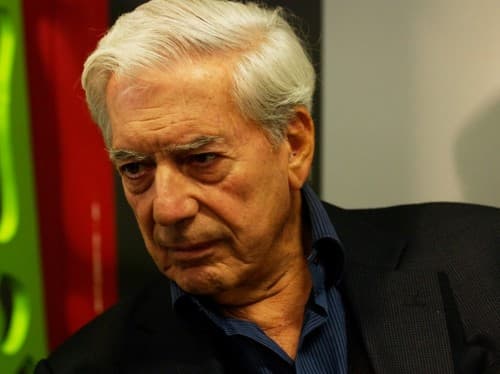
Jorge Mario Pedro Vargas Llosa, 1st Marquess of Vargas Llosa, more commonly known as Mario Vargas Llosa, is a Peruvian novelist, journalist, essayist and former politician, who also holds citizenship of Spain and the Dominican Republic. Vargas Llosa is one of Latin America's most significant novelists and essayists, and one of the leading writers of his generation. Some critics consider him to have had a larger international impact and worldwide audience than any other writer of the Latin American Boom. In 2010 he won the Nobel Prize in Literature, "for his cartography of structures of power and his trenchant images of the individual's resistance, revolt, and defeat." He also won the 1967 Rómulo Gallegos Prize, the 1986 Prince of Asturias Award, the 1994 Miguel de Cervantes Prize, the 1995 Jerusalem Prize, the 2012 Carlos Fuentes International Prize, and the 2018 Pablo Neruda Order of Artistic and Cultural Merit. In 2021, he was elected to the Académie française.







