“For death comes as the end of all things, the final answer to every question.”
— A philosophical reflection on mortality early in the novel.

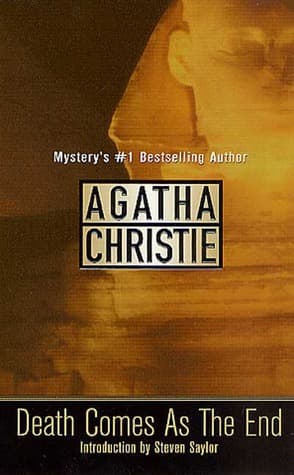
Agatha Christie (1944)
Genre
Thriller / Historical Fiction / Mystery
Reading Time
277 min
Key Themes
See below
Sign in to track this book
In ancient Egypt, a priest's new concubine ignites family jealousy and murder, showing that human ambition can be deadly.
The story begins in ancient Egypt, at the estate of Imhotep, a wealthy mortuary priest. His household already has simmering resentments among his children: the eldest, Yahmose; the ambitious Sobek; the resentful Ipy; and the daughters, Renisenb and Satipy. Into this volatile mix, Imhotep brings Nofret, a young, beautiful, and manipulative concubine. Nofret quickly takes control, openly mocking the family and subtly undermining their positions with Imhotep. Her presence worsens existing jealousies and creates new tensions, especially when she hints at influencing Imhotep's will, threatening the children's inheritances and social standing. Renisenb, recently widowed, watches these developments with growing unease, feeling her family's fragile peace break.
The family's hatred for Nofret reaches a peak. One morning, Nofret's body is found at the foot of a cliff near the estate. Initially, her death is ruled an accident, a tragic fall while walking. However, the suspicious circumstances and the family's clear relief quickly lead to whispered accusations. Renisenb, in particular, questions the official explanation, remembering Nofret's manipulative nature and the extreme dislike she caused. The family, though outwardly grieving, privately breathes a sigh of relief, believing themselves free of her disruptive influence and the threat to their inheritances. Yet, the question of who, if anyone, was truly responsible for her death remains unspoken.
Hori, Imhotep's wise and loyal scribe, a man of quiet wisdom and sharp observation, does not accept the accident verdict. He begins a quiet, yet pointed, investigation, questioning family members and servants. His inquiries make everyone uneasy, as they realize their relief might be premature and that a murderer could still be among them. Renisenb, who trusts Hori completely, confides in him, sharing her observations and fears. The family's initial sense of freedom is replaced by a chilling realization: if Nofret was murdered, the killer is still at large and could strike again. The atmosphere in Imhotep's household becomes thick with suspicion and dread.
The family's fragile peace breaks once more when Satipy, Sobek's wife, dies suddenly. She drinks from a cup of cosmetic water, believing it to be wine, and collapses, clearly poisoned. This second death shocks the household, confirming Hori's suspicions that Nofret's death was indeed murder. Panic sets in, as it becomes clear that a killer is systematically targeting family members. The motive remains unclear, but the method suggests a calculated, intimate crime. Renisenb is deeply disturbed, realizing that anyone could be next, and she begins to scrutinize her relatives with a new, fearful intensity, trying to find the killer's identity and aim.
The wave of terror continues as Sobek, Imhotep's son and Satipy's widower, is found drowned in the Nile. His death is made to look like an accident, but the family knows better. This third murder solidifies the pattern: the killer is systematically eliminating family members, and the methods are varied, designed to mislead. The household descends into open fear and paranoia. Accusations, both subtle and overt, fly between the remaining family members. Renisenb feels an increasing sense of claustrophobia within her own home, trapped with a murderer. She clings to Hori, her only source of reassurance, as the body count rises and the truth seems ever more elusive.
Amidst the escalating murders, Kama, a beautiful and spirited woman from Imhotep's past, arrives at the estate. Her unexpected appearance adds another layer of complexity to the already strained family dynamics. Kama quickly becomes a point of contention and suspicion. Some family members resent her presence, fearing she might be another Nofret, while others are drawn to her charm. Her past connection to Imhotep raises questions about her motives for returning now, and whether she could be connected to the ongoing murders. Renisenb, though wary, finds herself somewhat intrigued by Kama's independent spirit, even as she wonders if Kama is another victim or, more chillingly, another suspect.
The relentless murders continue with the death of Ipy, Imhotep's youngest son, found dead in his bed, having ingested poison. This fourth death plunges the household into even deeper despair and fear. The family members begin to speak openly of a curse, a malevolent force targeting them, as the logical explanations for so many 'accidents' and poisonings dwindle. The only remaining children of Imhotep are Yahmose and Renisenb, and the fear that they are next is clear. Hori intensifies his investigation, now desperate to unmask the killer before more lives are lost. Renisenb, increasingly isolated, feels the net tightening around her and her remaining family.
As the body count rises, Renisenb, guided by Hori's subtle observations and her own growing intuition, starts to notice a pattern. She recalls seemingly insignificant details – a specific type of cosmetic, a particular mannerism, a subtle shift in conversation – that point towards a shocking truth. The killer is not targeting specific individuals out of immediate spite, but rather systematically eliminating anyone who stands in the way of a long-held, deeply hidden ambition. Renisenb realizes the true motive is not just greed for inheritance but a deeper, psychological manipulation. The horror of this realization begins to dawn on her, making her question everyone she thought she knew.
Through Hori's careful deduction and Renisenb's growing understanding, the killer's identity is finally revealed. The murderer is Yahmose, Imhotep's eldest son. His motive was not merely the inheritance of his father's estate, but a deeper, more insidious desire for power and control. He orchestrated the deaths of Nofret, Satipy, Sobek, and Ipy to clear his path to becoming the sole heir and head of the family, eliminating anyone he saw as a rival or an obstacle. The revelation shocks the remaining household, as the depth of his treachery and the cold calculation of his crimes are fully exposed. Renisenb is devastated by her brother's betrayal.
Yahmose's guilt is confirmed through a clever trap set by Hori, exposing his manipulative nature and his willingness to sacrifice his own family for power. Faced with clear evidence, Yahmose attempts to flee, but is caught. The family is left reeling from the profound betrayal. Imhotep, devastated by his eldest son's monstrous acts, is forced to confront the dark truth within his own lineage. The murders cease, but the scars on the family are deep. Renisenb, though heartbroken, finds a new sense of resilience and clarity. The household, purged of its malevolent force, can begin the long process of healing, guided by Hori's wisdom and Renisenb's quiet strength, as they navigate a future forever marked by loss and betrayal.
The Protagonist
From a passive observer, Renisenb grows into an active participant in uncovering the truth, finding her voice and strength amidst tragedy.
The Supporting
Imhotep's initial obliviousness gives way to profound sorrow and the painful realization of his family's dark undercurrents.
The Supporting
Hori maintains his steadfast wisdom throughout, serving as the moral compass and intellectual engine of the investigation.
The Antagonist (initial victim)
Nofret's arc is brief but impactful; her arrival and death set the stage for all subsequent events.
The Antagonist
Yahmose's seemingly benign character is gradually revealed as the ruthless, calculating murderer.
The Supporting
Satipy's character does not undergo significant development, serving as a victim who underscores the killer's ruthless nature.
The Supporting
Sobek's character remains largely static before his murder, serving as another casualty of the family's internal strife.
The Supporting
Ipy's character does not develop, serving as a representation of the family's internal weaknesses and as a victim.
The Supporting
Kama's character remains consistent, serving as an intriguing red herring and a source of new dynamics.
The main theme is how unchecked greed for inheritance and deep envy can corrupt individuals and destroy family bonds. Nofret's arrival directly threatens the children's legacies, fueling their existing jealousies. The subsequent murders are all driven by a desire to eliminate rivals for wealth and status, as seen in Yahmose's systematic elimination of his siblings. The story shows how these vices, when not controlled, can lead to unspeakable acts, tearing apart families and leaving a trail of death. The entire household is poisoned by the pursuit of material gain.
“What had been a house of peace and goodwill had become a house of hate and murder.”
The novel carefully shows the true nature of a family that seems harmonious but hides bitter resentments and animosities. Before Nofret's arrival, the family appears stable, if strained, but her presence acts as a catalyst, exposing the deep-seated hatreds between siblings and towards their father. Each character has private grievances and desires, proving that superficial peace can easily break under pressure. The murders force Renisenb and Hori to confront the uncomfortable truth that the greatest danger often lies within the closest circles, making the home a place of terror rather than safety.
“It was impossible to believe that any of them could be a murderer. But one of them was.”
Despite the pervasive evil and the cycle of death, the theme of justice and the restoration of moral order supports the story. Hori, with Renisenb's help, works to uncover the truth, driven by a strong sense of right and wrong. The pursuit of the killer is not just about identifying a criminal, but about restoring balance to a world thrown into chaos by dark deeds. The eventual revelation and confrontation of the murderer, Yahmose, signifies the triumph of truth over deception and the reassertion of moral boundaries, even if the cost is immense. The story ultimately affirms that evil cannot go unpunished.
“Justice will be done. The truth will out.”
Christie explores the chilling nature of evil, not as an external monstrous force, but as something that can reside within ordinary individuals, even within one's own family. Yahmose's calculated and cold-blooded murders show how ambition and a lack of empathy can transform a son and brother into a ruthless killer. The novel suggests that evil can hide behind a polite facade, making it all the more insidious and difficult to detect. Renisenb's struggle to reconcile the brother she knew with the murderer he became highlights the shocking capacity for darkness within human nature, especially when driven by self-interest.
“It was a horror, a horror to realize what a human being could be capable of.”
A limited number of suspects, all confined to a single location.
This classic Agatha Christie device is central to 'Death Comes as the End.' The entire series of murders takes place within Imhotep's isolated estate, with all primary suspects being members of his immediate family and household. This confinement intensifies the tension and suspicion, as characters are forced to live in close proximity with a potential murderer. It allows for deep psychological exploration of each suspect and forces the reader to scrutinize every interaction within the confined setting. The limited pool of suspects makes every revelation more impactful.
Misleading clues or characters designed to distract the reader from the true culprit.
Christie masterfully employs red herrings throughout the narrative. Nofret's universally hated status makes many family members seem equally capable of her murder. Subsequent victims often have their own motives for murder, diverting suspicion. For example, the initial focus on Nofret's various enemies, and later the arrival of Kama, are designed to make the reader suspect multiple characters, leading them away from the true, less obvious culprit. These misdirections keep the reader guessing and add layers of complexity to the mystery.
The killer is ultimately revealed to be a character who initially appears innocent or beyond suspicion.
A signature Christie trope, the killer in 'Death Comes as the End' is Yahmose, Imhotep's eldest son, who initially appears responsible and stable, making him seem less likely to be the serial murderer compared to his more volatile or obviously resentful siblings. This device plays on the reader's expectations and biases, proving that appearances can be deceiving and that evil can reside in the most unexpected places. The shock of his revelation is amplified because he was not the obvious choice, forcing a re-evaluation of all previous interactions.
The murders are driven by deep-seated psychological factors rather than simple opportunism.
Unlike some mysteries driven by spur-of-the-moment crimes, the murders in 'Death Comes as the End' are meticulously planned and executed, stemming from a profound psychological motivation: a relentless desire for power and control. The killer's systematic elimination of family members is not random but strategic, designed to clear a path to sole inheritance and dominance. This focus on the killer's warped mental state and long-term planning adds a chilling depth to the narrative, making the villain more terrifying and the resolution more complex than a simple 'whodunit'.
“For death comes as the end of all things, the final answer to every question.”
— A philosophical reflection on mortality early in the novel.
“The past is never dead. It's not even past.”
— A character's observation on how past events continue to influence the present.
“It is always the simple things that are the most difficult to understand.”
— Hori's reflection on the complexity hidden within apparent simplicity.
“Love can be a terrible thing, my child, when it is not returned.”
— A warning about the destructive nature of unrequited love.
“Men are like children, they need to be guided and protected.”
— A woman's perspective on the role of women in managing men.
“There are many kinds of prisons. Some have walls of stone, others have walls of fear.”
— A metaphorical discussion about different forms of confinement.
“The heart has its reasons, which reason knows nothing of.”
— A character's justification for irrational emotional decisions.
“Even the strongest chain has a weak link.”
— A proverb used to highlight vulnerability in seemingly strong systems or people.
“A lie, however small, can fester and grow into something monstrous.”
— A reflection on the destructive power of deceit.
“When the gods wish to punish us, they answer our prayers.”
— A cynical view on the ironic fulfillment of desires.
“It is not the eye that sees, but the mind.”
— A statement emphasizing perception over mere observation.
“To forgive is divine, but to forget is foolish.”
— A pragmatic view on forgiveness, advocating caution.
“Silence can be a more powerful weapon than words.”
— A character's realization about the strategic use of quietness.
“Grief is a strange thing. It makes you do things you never thought you would.”
— A comment on the unpredictable behavior induced by sorrow.
Ready to see how well you understood this book? Take our interactive quiz with 10 questions.
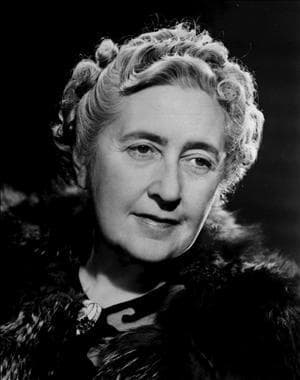
Dame Agatha Mary Clarissa Christie, Lady Mallowan, was an English writer known for her 66 detective novels and 14 short story collections, particularly those revolving around fictional detectives Hercule Poirot and Miss Marple. She also wrote the world's longest-running play, the murder mystery The Mousetrap, which has been performed in the West End since 1952. A writer during the "Golden Age of Detective Fiction", Christie has been called the "Queen of Crime". She also wrote six novels under the pseudonym Mary Westmacott. In 1971, she was made a Dame (DBE) by Queen Elizabeth II for her contributions to literature. Guinness World Records lists Christie as the best-selling fiction writer of all time, her novels having sold more than two billion copies.







