“Every time I hear the word God, I picture the old guy from the movie 'Oh, God!' with George Burns. I guess that’s as good a picture as any.”
— Tess reflecting on her perception of God after Zoe's death.

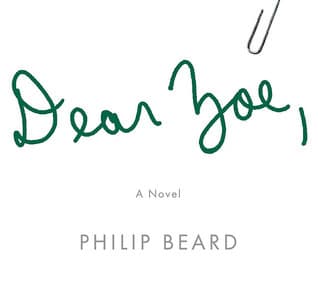
Phillip Beard (2005)
Genre
Young Adult
Reading Time
150 min
Key Themes
See below
Sign in to track this book
After her younger sister dies in a hit-and-run on 9/11, a teenage girl privately deals with grief and guilt, finding comfort and healing by writing letters.
On September 11, 2001, as the world focuses on terrorist attacks, thirteen-year-old Tess DeNunzio's family faces a personal disaster. Her three-year-old sister, Zoe, is killed in a hit-and-run in their suburban neighborhood. Tess, who was supposed to be watching Zoe, feels overwhelmed by guilt and grief. The novel begins with Tess writing letters to Zoe, years after the event, to process her trauma and the deep silence in her family. She describes the immediate aftermath, where the national tragedy overshadows their private one, leaving them feeling alone in their sorrow. Her mother, Maria, becomes withdrawn and depressed, while her father, David, struggles to cope, creating tension in their home.
After Zoe's death, the DeNunzio household is full of unspoken grief. Tess watches her parents, Maria and David, grow apart, unable to comfort each other or their surviving children. Maria withdraws into depression, often staying in bed, while David tries to act normal, but his efforts are strained. Tess's older sister, Emily, away at college, tries to help but also struggles with her own grief and guilt, wishing she had been home. The lack of open talk and inability to express their pain creates a suffocating atmosphere, leaving Tess feeling isolated and misunderstood within her family, which increases her sense of responsibility for Zoe's accident.
Overwhelmed by the grief at home and the constant tension between her parents, Tess decides to move in with her biological father, Nick, whom she has not seen in years. Nick lives in a working-class neighborhood, a sharp contrast to her suburban life. This move is a desperate attempt to escape her mother's emotional paralysis and her stepfather David. Nick, though imperfect and a bit rough, offers Tess a sense of freedom and a less emotionally charged environment. His practical approach, while not always sensitive, allows Tess to breathe and process her grief in a different way, away from the constant reminder of Zoe's absence in her mother's house.
Living with Nick, Tess starts a new school and meets a diverse group of kids. She becomes close friends with Carla, an outgoing girl who introduces her to a different social scene. During this time, Tess also meets Jimmy Mancini, an older boy with a troubled past but a kind heart. Their relationship quickly becomes Tess's first love. Jimmy, understanding loss in his own way, offers Tess a connection and comfort she has not found elsewhere. These new relationships distract Tess from her grief and give her a sense of belonging, allowing her to explore her identity beyond Zoe's death.
In her letters to Zoe, Tess constantly revisits the moments before the accident, replaying them in her mind. She carries a huge burden of guilt, convinced that if she had been more careful, Zoe would still be alive. This guilt shows up in self-blame and a reluctance to feel joy. Even with her new friends and relationship with Jimmy, the shadow of her perceived responsibility is present. She struggles to tell anyone about the depth of her self-blame, fearing judgment and more isolation. This internal struggle drives her narrative, as she tries to understand and, eventually, forgive herself.
As Tess spends more time with Nick and builds relationships with Carla and Jimmy, she slowly starts to face the silence around Zoe's death. While she does not explicitly tell everyone about her guilt, writing to Zoe allows her to express her feelings. Nick, in his gruff way, provides a stable presence, and Jimmy's acceptance creates a safe space for her. She begins to realize that her family's silence has been as damaging as the event itself. This period is a key step in her healing, as she moves from keeping her pain inside to carefully exploring ways to express it, even if it is mainly through her letters.
Tess's letters to Zoe become a confession, letting her process raw emotions she cannot share with her immediate family. Her relationship with Jimmy grows, and he becomes a confidant, offering a different view on loss and resilience. She finds comfort in his quiet strength and understanding. Carla's personality and friendship also provide Tess with much-needed lightness and a sense of normalcy. Even Nick, with his unconventional parenting, offers unconditional love and practical support, allowing Tess to feel accepted despite her grief. These connections, formed outside the stifling atmosphere of her mother's home, are vital to Tess's emerging sense of self and healing.
Later in the story, Tess uncovers more details about the hit-and-run that killed Zoe. She learns that the driver was a distracted teenager who panicked, and that the circumstances were more complex than her initial, self-blaming story. This revelation does not erase her pain or initial guilt, but it begins to change her perspective. It helps her understand that the tragedy was not solely her fault, and that many factors contributed to it. This new information, while painful, is a key step in her journey toward self-forgiveness and accepting the random, cruel nature of the accident. It allows her to slowly let go of the overwhelming burden of individual responsibility.
As Tess continues to write to Zoe, her tone gradually shifts from despair to cautious hope. She starts to see that healing is possible, even if the pain of loss will always remain. Her relationships with Jimmy and Carla, and the stability from Nick, help her realize that life continues, and that she deserves happiness. She begins to make plans for her future, thinking about college and what she wants from life. While Zoe's memory is always present, Tess starts to integrate her grief into her identity rather than letting it completely define her. This marks a significant turning point in her emotional journey, showing her readiness to embrace life again.
Towards the end of her narrative, Tess starts to mend her relationship with her mother, Maria, and stepfather, David. While full reconciliation is a long process, there are moments of shared understanding and tentative communication. Tess also begins to forgive herself for Zoe's death, recognizing that she was a child herself and not solely responsible for the tragedy. The letters to Zoe, which started as an outlet for guilt, become a sign of lasting love and a way to find peace. Tess's journey ends with accepting her loss, finding healing through connection, and moving forward with her life, carrying Zoe's memory not as a burden, but as a cherished part of her.
The Protagonist
Tess transforms from a withdrawn, guilt-ridden girl into a more self-aware young woman who begins to forgive herself and embrace life again.
The Mentioned
Zoe's memory serves as a catalyst for Tess's emotional journey and healing process.
The Supporting
Maria struggles with profound grief, eventually showing small signs of re-engagement, though her healing is a long process.
The Supporting
David attempts to maintain normalcy but ultimately succumbs to the strain, his relationship with Maria deteriorating, before a slow, difficult path towards reconnection.
The Supporting
Nick provides a stable, grounding presence for Tess, allowing her to begin healing and grow more independent.
The Supporting
Jimmy helps Tess navigate her grief and experience first love, contributing significantly to her emotional growth.
The Supporting
Carla becomes a vital source of friendship and normalcy for Tess, helping her to re-engage with life.
The Supporting
Emily grapples with her own grief and guilt from afar, her struggle mirroring Tess's in some ways.
The main theme of the novel is the complex nature of grief and loss. Tess's deep sorrow over Zoe's death, along with her family's inability to cope, forms the emotional core. The story explores how grief can appear differently in people—Maria's depression, David's strained attempts at normalcy, Tess's intense guilt. It highlights how isolating grief can be, especially when communication breaks down, as seen in the silence in the DeNunzio household. The narrative also shows the long, non-linear process of healing, where loss is built into one's identity rather than just overcome, as Tess learns to live with Zoe's memory.
“Sometimes I think the only reason I'm writing these letters is so I won't forget what her voice sounded like.”
Tess's intense guilt over Zoe's death is a major theme. As the older sister who was supposed to be watching Zoe, Tess blames herself, believing she is solely responsible for the accident. This guilt emotionally paralyzes her and stops her from moving forward. The novel explores the heavy weight of perceived responsibility, especially in children, and the difficulty of self-forgiveness. Tess's journey involves facing this guilt, understanding the complex reasons for the accident, and finally learning to free herself from its suffocating hold, a key process for her healing.
“I was supposed to be watching her. That's what everyone said. That's what I said to myself a million times.”
The novel strongly contrasts the destructive nature of silence with the healing power of communication. After Zoe's death, the DeNunzio family falls into an 'impenetrable silence,' unable to express their grief or support each other. This silence breaks their relationships and worsens their individual pain. Tess's letters to Zoe are her desperate attempt to break this silence and express her unspoken thoughts and feelings. Her relationships with Nick, Jimmy, and Carla, where open communication and acceptance are possible, show the vital role of sharing one's pain in the healing process. The story argues that true healing begins when one finds a voice for their sorrow.
“The hardest part wasn't the crying or the screaming. It was the silence. The silence that swallowed everything.”
Tess's story is a coming-of-age narrative set against a backdrop of deep tragedy. At thirteen, she must deal with adult themes of death, loss, and her family's breakdown. Her move to Nick's house, her new school, and her first romantic relationship with Jimmy are important steps in her personal development. She learns about resilience, the complexities of human relationships, and the difficult process of forming her own identity separate from her grief. Her journey shows how traumatic events can speed up maturity, forcing a young person to grow up quickly and find their own path to self-discovery and independence.
“I was learning that you can't just stop living because someone you love is gone. You just have to learn how to live differently.”
Feeling isolated and misunderstood within her grieving family, Tess subconsciously searches for connection and belonging. She finds this not in her immediate family, but in her estranged biological father, Nick, and in her new friends, Carla and Jimmy. These relationships offer her acceptance, understanding, and emotional support that is missing in her mother's home. The novel emphasizes the human need for real connection, especially during times of great pain, and how finding one's 'tribe' can be crucial for healing and moving forward. It highlights that belonging can be found in unexpected places and with unexpected people.
“Sometimes, the people who understand you best are the ones who don't even try to fix you.”
The entire novel is written as a series of letters from Tess to her deceased sister, Zoe.
This device allows for an intimate, first-person narrative, giving readers direct access to Tess's raw thoughts, emotions, and memories. It serves as Tess's primary coping mechanism and a private confessional, enabling her to process her grief and guilt without the pressure of external judgment. The letters create a powerful sense of immediacy and emotional authenticity, making Zoe a constant, albeit silent, presence. It also highlights Tess's isolation and her desperate need to communicate with the one person she feels truly understands her, even in death.
Tess frequently revisits and re-examines the day of Zoe's accident and earlier memories.
This device underscores Tess's trauma and her obsessive rumination on the events leading to Zoe's death. The non-linear structure of her memories, as she jumps between past and present in her letters, reflects the disjointed nature of grief and the way traumatic events can haunt one's mind. It allows the reader to gradually piece together the full story of the accident and understand the depth of Tess's guilt, while also showcasing her attempts to make sense of an unbearable past.
The recurring theme of silence within Tess's family after Zoe's death.
Silence is used as a powerful symbol of unaddressed grief, emotional paralysis, and fractured communication within the DeNunzio family. It represents the inability or unwillingness of family members to talk about their pain, creating a suffocating atmosphere that pushes Tess away. The 'impenetrable silence' is explicitly contrasted with Tess's epistolary efforts to break it, highlighting the destructive nature of unspoken sorrow and the vital role of finding a voice for one's pain in the healing process.
Zoe's death occurs on the same day as the 9/11 terrorist attacks, creating a powerful backdrop.
This plot device serves to amplify Tess's sense of isolation and the feeling that her personal tragedy is overshadowed by a national catastrophe. The world's focus on a larger, more public grief makes her family's private sorrow feel unheard and insignificant, intensifying their silence. It underscores the novel's exploration of how personal tragedies can be lost in the context of grander events, and how different scales of grief coexist. It also provides a specific, memorable date that anchors Tess's trauma in a universally recognized moment of collective loss.
“Every time I hear the word God, I picture the old guy from the movie 'Oh, God!' with George Burns. I guess that’s as good a picture as any.”
— Tess reflecting on her perception of God after Zoe's death.
“It’s funny how you can live your whole life with someone and never really know them. And then they’re gone.”
— Tess thinking about her sister, Zoe, after the accident.
“Sometimes the world just doesn’t make sense. And you have to be okay with that.”
— Tess grappling with the irrationality of the accident that killed Zoe.
“I think maybe the best thing you can do for someone who’s hurting is just be there. Not try to fix them, just be there.”
— Tess observing her father's quiet support.
“It’s weird how some memories are so sharp, like a photograph, and others are blurry, like a dream.”
— Tess recalling fragmented memories of Zoe.
“Grief is a funny thing. It comes in waves. Sometimes it’s a tsunami, sometimes it’s just a ripple.”
— Tess describing the unpredictable nature of her sorrow.
“You can’t rewind life. You can only move forward, even when you don’t want to.”
— Tess realizing the irreversibility of her loss.
“I guess sometimes you have to find your own way to remember. Your own way to say goodbye.”
— Tess developing her own rituals for coping with Zoe's death.
“It’s like the world keeps spinning, even when yours has stopped.”
— Tess observing the indifference of the world around her after the tragedy.
“I think maybe the hardest part about losing someone isn’t just that they’re gone, but that everything keeps going without them.”
— Tess struggling with the continuation of normal life after Zoe's death.
“Sometimes the quiet is the loudest sound.”
— Tess experiencing the profound silence in her home after Zoe's absence.
“Maybe love isn’t about never letting go, but about knowing when to.”
— Tess reflecting on the process of grieving and moving forward.
“I wish I could write to Zoe. I wish I could tell her everything. But I can’t. So I write to you instead.”
— Tess explaining the premise of her letters to her distant relative.
“It’s strange how something so small can change everything.”
— Tess contemplating the butterfly effect of the car accident.
Ready to see how well you understood this book? Take our interactive quiz with 10 questions.