“I'm not a monster. I'm just a girl who happens to kill people.”
— Opening line, introducing Kit's unique perspective.

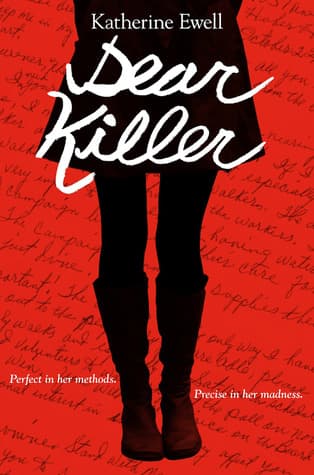
Katherine Ewell (2014)
Genre
Thriller / Mystery / Young Adult
Reading Time
7-8 hours
Key Themes
See below
Sign in to track this book
A teenage assassin, guided by moral nihilism, faces a crisis when a mysterious letter makes her question the rules that define her deadly life.
Kit, known as London's 'Perfect Killer,' gets a letter telling her to kill Mr. Arthur Finch. She stalks him, watching his habits and planning her attack. She believes in a world without inherent right or wrong, guided only by the letters and her own rules. After a precise attack in an alley, she leaves a letter in Finch's pocket, explaining his perceived transgression and why he 'deserved' his fate. She then collects her payment from a secret mailbox and returns to her normal life as a high school student living with her aunt and uncle.
Kit finds a new letter in her secret mailbox. This one is different; it's on distinctive blue paper and lacks the usual cash. More importantly, the target is Lily, a girl from her school. This breaks Kit's unwritten rule against killing people she knows or those not 'judged' by the anonymous writer. The letter is also more personal and accusatory than previous ones, making Kit feel uneasy and challenging her detached worldview. She struggles with the implications of this unusual request.
Instead of planning Lily's death, Kit observes her. She sees Lily as an ordinary girl, not the 'villain' previous targets were. Kit attends Lily's soccer games, watches her with friends, and even has a brief, awkward encounter with her. These observations chip away at Kit's nihilistic facade, making her question her rules and the 'justice' she gives out. Killing Lily becomes increasingly difficult, creating a moral dilemma Kit has never faced.
Detective Inspector Miller, a seasoned and cynical detective, is assigned to the 'Perfect Killer' case. He works with his younger, more idealistic partner, Detective Davies. The police are baffled by the killer's precision and lack of clear motive, with the only consistent clue being the letters at each crime scene. Miller reviews the evidence, trying to find a pattern or psychological profile. They are aware of the killer's unique methods and the public's growing fear.
Days later, another blue letter arrives, even more unsettling. It scolds Kit for delaying Lily's death and contains veiled threats, suggesting the sender knows more about Kit than she'd like. The letter implies that if Kit doesn't comply, there will be consequences, possibly for her or those around her. This increases Kit's internal conflict, forcing her to confront the possibility that she is not as anonymous or in control as she believed. The sender's manipulation becomes clearer, making Kit feel like a pawn.
Under the pressure of the blue letters, Kit starts having unsettling flashbacks and fragmented memories of her early childhood. She remembers her mother, who taught her the 'rules' and a detached worldview, emphasizing self-reliance and the absence of objective morality. These hazy, disturbing memories suggest a traumatic past that shaped Kit into who she is. She begins to question the foundation of her entire existence, realizing her rules might not be entirely her own.
Through careful deduction, Kit realizes the blue letters are from her aunt, Aunt Grace. She confronts Grace, who reveals she has been orchestrating the 'Perfect Killer' persona since Kit was a child, using the letters to manipulate Kit into committing murders. Grace explains she believed she was 'protecting' Kit from the world's injustices, following a twisted ideology inherited from Kit's mother. This revelation shatters Kit's sense of identity and autonomy, exposing the horrifying truth behind her life.
Meanwhile, Detective Inspector Miller and Detective Davies identify Aunt Grace as a person of interest due to her connections to some victims and her peculiar behavior. They prepare to apprehend her, believing they are closing in on the 'Perfect Killer.' Unbeknownst to them, Grace has anticipated their move and has a contingency plan: to frame Kit for all the murders, ensuring her own escape and the continuation of her twisted legacy through Kit.
Faced with the threat to Lily and the horrifying truth about her aunt's manipulation, Kit makes a radical decision. She chooses to break her fundamental 'Rule One' – that nothing is right, nothing is wrong. She decides to save Lily, even if it means exposing herself or going against everything she's ever known. This choice marks a significant shift in her character; she embraces a nascent sense of morality and takes control of her own destiny for the first time, rejecting her past programming.
The climax unfolds as Kit confronts Aunt Grace, leading to a brutal physical and psychological struggle. The police, led by Miller and Davies, arrive, witnessing the confrontation. During the chaos, Kit exposes Grace's manipulation and her role in orchestrating the 'Perfect Killer' murders. The detectives are stunned by the revelation, realizing the extent of Grace's depravity and Kit's unwilling involvement. The confrontation is violent and emotionally charged, forcing everyone to face the shocking reality.
Aunt Grace is apprehended, and the full scope of her manipulation comes to light. Kit, though a victim of circumstance, is not entirely absolved. She faces legal consequences for the murders she committed, though her unique situation as a manipulated minor is considered. The resolution is complex; Kit is no longer the 'Perfect Killer,' but she must now grapple with her actions and past trauma. She is on a path towards rehabilitation, her nihilistic worldview shattered and replaced by a fragile hope for a different future.
The Protagonist
Kit evolves from a programmed, nihilistic killer into an individual capable of moral choice, breaking free from manipulation and seeking redemption.
The Antagonist
Grace remains a static character in her villainy, maintaining her manipulative control until her downfall.
The Supporting
Lily's arc is less about personal development and more about serving as a pivotal figure in Kit's journey towards self-awareness and morality.
The Supporting
Miller begins as a detective pursuing a clear-cut villain but eventually gains a more nuanced understanding of the complex circumstances surrounding the 'Perfect Killer'.
The Supporting
Davies grows in experience and understanding through his work on the complex 'Perfect Killer' case.
The Mentioned
Her influence is static, though its impact on Kit's life is revealed gradually.
The novel explores whether good and evil are inherent or learned. Kit's life is built on the idea that 'nothing is right, nothing is wrong,' a nihilistic view taught by her mother and reinforced by her aunt. She sees her murders as morally neutral, simply following instructions. However, when she considers killing Lily, an innocent, the lines blur, and she feels genuine moral conflict. This suggests an innate human capacity for empathy that goes beyond learned ideology. This theme culminates when Kit actively chooses to protect Lily, defying her lifelong 'rules.'
“Rule One—Nothing is right, nothing is wrong.”
A central theme is the extent to which an individual's actions are truly their own, especially after lifelong manipulation. Kit believes she acts out of her own free will, following a chosen code. But the revelation that her Aunt Grace orchestrated her life as the 'Perfect Killer' shatters this illusion. Kit's journey becomes one of reclaiming her autonomy, moving from a puppet to an agent capable of independent moral choice. The 'blue letters' symbolize this external control, forcing Kit to question the source of her directives.
“The letters are the law.”
Kit's identity is tied to her role as the 'Perfect Killer.' Without it, she doesn't know who she is. The novel traces her painful process of self-discovery as her world falls apart. When she realizes her life has been a lie, she must confront who she is beneath the layers of training and manipulation. Her decision to save Lily and defy her aunt marks a moment in forging a new, authentic identity, independent of the 'rules' and 'letters.' This journey is messy and full of internal conflict, showing the difficulty of shedding a deeply ingrained persona.
“I was the Perfect Killer. It was all I knew how to be.”
The story shows how extreme ideologies, especially when passed down through generations, can lead to devastating consequences. Kit's mother and Aunt Grace subscribe to a warped philosophy that justifies murder as justice, creating a 'Perfect Killer' to enforce their rules. This ideology blinds them to their victims' humanity and the psychological damage inflicted on Kit. The novel warns against absolute beliefs that disregard individual lives and moral complexities, showing how rigid systems can justify heinous acts.
“We were doing good, Kit. Protecting people from the rotten ones.”
Anonymous instructions that dictate Kit's targets and actions.
The letters are the primary mechanism driving the plot. Initially, they represent the 'law' Kit adheres to, providing her with targets and reinforcing her detachment. The shift to the 'blue letters' signals a change in the power dynamic, as they become a tool of direct manipulation and threat from Aunt Grace. They serve as both a narrative device to introduce conflict and a symbolic representation of the external control over Kit's life, until she ultimately defies their authority.
Brief, unsettling memories that reveal Kit's traumatic past.
Throughout the story, Kit experiences short, often disturbing flashbacks to her childhood and her mother. These fragments gradually piece together the origin of her 'rules' and the psychological conditioning she underwent. This device builds suspense, provides backstory, and allows the reader to understand the roots of Kit's character without immediate exposition. They are crucial for revealing the extent of her manipulation and the true nature of her relationship with her mother and aunt.
Kit's carefully constructed existence as a normal student and a secret killer.
Kit's double life highlights the theme of identity and secrecy. Her ability to seamlessly switch between being a high school student and a ruthless killer underscores her detachment and the depth of her conditioning. This device creates dramatic irony, as the reader is privy to her inner world while those around her remain oblivious. The tension of maintaining this facade eventually contributes to her internal breakdown as her two worlds collide.
Kit's detached, nihilistic perspective initially shapes the reader's understanding.
For a significant portion of the novel, Kit's internal monologue presents a world where morality is nonexistent, and her actions are justified by her 'rules.' This perspective initially makes the reader question the nature of good and evil alongside Kit. As the truth about her manipulation is revealed, Kit's perception is shown to be a construct, making her an unreliable narrator regarding the 'justice' of her actions, thereby enhancing the themes of manipulation and self-discovery.
“I'm not a monster. I'm just a girl who happens to kill people.”
— Opening line, introducing Kit's unique perspective.
“Some people collect stamps. I collect secrets.”
— Kit reflecting on her methods of gathering information.
“The best way to hide a lie is between two truths.”
— Kit's philosophy on deception and manipulation.
“Love is just another word for leverage.”
— Kit's cynical view on relationships and their utility.
“Every hero needs a villain. And every villain needs an audience.”
— Kit considering her role in the ongoing drama of her life.
“It's not about being caught. It's about not being caught *again*.”
— Kit's pragmatic approach to avoiding detection.
“The city is a puzzle, and I'm just trying to fit all the pieces together.”
— Kit's analytical mind at work, piecing together clues.
“Sometimes the only way to get what you want is to take it.”
— Kit's justification for her actions and desires.
“Fear is a powerful motivator. But so is curiosity.”
— Kit weighing different human impulses.
“I don't make mistakes. I make choices.”
— Kit's refusal to see her actions as errors, but deliberate decisions.
“The truth is rarely simple, and never convenient.”
— Kit's understanding of the complexities of uncovering facts.
“Most people live their lives in black and white. I prefer shades of crimson.”
— Kit's unique and often violent perspective on the world.
“There's a fine line between genius and madness. I walk it daily.”
— Kit acknowledging her own unusual mental state and abilities.
“To truly understand someone, you have to know what they're willing to lose.”
— Kit's insight into human vulnerability and motivation.
Ready to see how well you understood this book? Take our interactive quiz with 10 questions.







