“I was not a juvenile delinquent. I was a juvenile delinquent in training.”
— Jack's self-assessment early in the book, setting the tone for his mischievous but well-meaning nature.

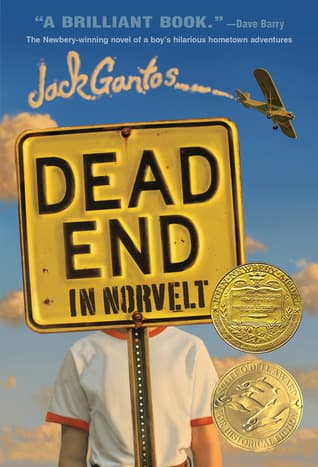
Jack Gantos (2011)
Genre
Children's / Historical Fiction / Mystery / Young Adult
Reading Time
300 min
Key Themes
See below
Sign in to track this book
Grounded for the summer and prone to nosebleeds, young Jack finds his summer plans upended when he types obituaries for his utopian town's founders, uncovering murder, molten wax, and historical secrets that bring the past dangerously to life.
It is the summer of 1962, and young Jack Gantos looks forward to a break from school in Norvelt, Pennsylvania. However, his summer plans vanish when his parents, Bunny and Big Jack, argue over their property line and a Japanese Zero airplane model. Jack's father, angry, grounds him for life, ending his plans to attend a demolition derby and visit the local pool. To make things worse, Jack has frequent and severe nosebleeds, which tend to start during stress or excitement. This nosebleed is so bad it needs an emergency room visit, adding to his parents' frustration and his own helplessness.
With Jack grounded and his mother, Bunny, feeling bad, she arranges for him to help their elderly neighbor, Miss Volker, a former nurse and the town's obituary writer. Miss Volker is a peculiar but kind woman, known for her knowledge of Norvelt's history and its residents. Jack's first job is to type obituaries for her, as her arthritis makes it hard to use a typewriter. He quickly learns these are not normal obituaries; they are detailed historical accounts of the dead, often including detailed, sometimes scandalous, stories of the town's founding and its people. This task becomes the unexpected focus of Jack's grounded summer.
As Jack starts working for Miss Volker, he sees a troubling pattern: several elderly women, all friends of Miss Volker, have recently died. The first obituary he types is for Mrs. Huffer. While typing, he learns that Miss Volker often brings food to her elderly friends. Soon after, another friend, Mrs. Huffer's sister, Mrs. LaRue, also dies. Jack's suspicions grow because of the strange details Miss Volker includes in their obituaries, especially about their last meals. He begins to wonder if Miss Volker, despite her kind nature, might be accidentally (or even on purpose) involved in their deaths, especially when he remembers her wide knowledge of poisons from her nursing days.
Miss Volker tells Jack about Norvelt's strange history, including a 'dancing plague' that affected many of its first settlers. She describes how people would dance without control until they fell, a phenomenon she blames on a fungal contamination. This historical story adds to the town's already odd atmosphere. Jack also meets a group of local troublemakers called the 'X-Men,' led by a boy named Weasel. The X-Men often cause problems in Norvelt, doing small acts of vandalism and threatening younger kids. Their presence adds a layer of youthful mischief and possible danger to Jack's otherwise quiet summer.
The list of dead elderly women continues to grow, and Jack's unease increases. He notices that Miss Volker, despite her age, is also a dedicated Girl Scout cookie salesperson. A chilling connection starts in Jack's mind: all the recently dead women were customers of Miss Volker's Girl Scout cookies. He begins to suspect that the cookies, or something Miss Volker adds to them, might be the cause of their deaths. This idea, though it seems strange, becomes more likely to Jack as he watches Miss Volker's odd habits and her detailed knowledge of various illnesses and cures.
Trying to be helpful, Jack tries to assist Miss Volker with melting wax for candles. However, his lack of experience and her instructions lead to a chaotic and dangerous situation. The wax overheats and spills, almost causing a serious fire in Miss Volker's home. The local volunteer fire department, made up of several quirky Norvelt residents, comes to the scene. This event shows Jack's good intentions but often clumsy nature, and further confirms his reputation for attracting trouble, especially around Miss Volker. It also introduces more of Norvelt's eccentric characters.
Through Miss Volker's obituaries and personal stories, Jack learns about Norvelt's unique history. It was founded as a New Deal experimental community, a utopian idea for displaced coal miners and their families, with Eleanor Roosevelt herself visiting the town. Miss Volker's stories show the idealism and struggles of the original settlers, and the lasting impact of their dreams. This historical context helps Jack understand the town's oddities and strong community, even among the strange deaths and local quirks. Jack begins to see Norvelt not just as his boring hometown, but as a place with a rich and complex past.
As summer continues, Norvelt becomes even stranger. A mysterious man on a motorized tricycle, called the 'Trike Man,' starts appearing around town, causing small disruptions and adding to the odd atmosphere. At the same time, a group of Hells Angels bikers unexpectedly rides into Norvelt, further unsettling the residents. Their presence, along with the ongoing deaths and the X-Men's actions, creates a feeling of increasing chaos and unpredictability. Jack, caught in the middle of these events, feels more and more overwhelmed by the bizarre happenings in his small town, which is anything but boring now.
Driven by his suspicions, Jack finally confronts Miss Volker, or rather, puts together the truth through her stories and his own observations. He learns that the elderly women were not being poisoned, but were suffering from various age-related illnesses and, in some cases, were making a pact to end their lives on their own terms, often with Miss Volker's quiet understanding and help. Miss Volker's 'poison' knowledge was used for euthanasia or to ease suffering, not malicious murder. The Girl Scout cookies were simply a way to deliver their chosen remedies or final wishes, not a poison. This discovery changes Jack's view of Miss Volker from a possible murderer to a compassionate, though unusual, caregiver.
As summer ends, Jack's father, Big Jack, finally finishes his long-term project: a homemade airplane. The first flight is a big event for the family and the town. Jack, having spent the summer immersed in Norvelt's history and its strange present, has a new appreciation for his hometown and its residents. His experiences with Miss Volker have broadened his understanding of life, death, and human nature. He is no longer just a grounded kid with nosebleeds but a young man who has seen the complexities of his community and dealt with moral problems, gaining a deeper sense of self and empathy.
The Protagonist
Jack transforms from a self-absorbed, grounded boy into a more empathetic and understanding young man, gaining a deeper appreciation for history and the complexities of life and death.
The Supporting
Her character is revealed over time, transforming from a mysterious potential villain to a wise and compassionate figure who understands life and death on her own terms.
The Supporting
Her arc is subtle, showing her growing understanding and acceptance of Jack's unique summer experiences.
The Supporting
He remains largely consistent, driven by his ambition, but shows moments of paternal pride and connection with Jack.
The Supporting
He serves as a recurring antagonist, never fully changing, but providing external conflict for Jack.
The Supporting
Mertle remains a wild, unpredictable force, providing continuity and unexpected moments.
The Mentioned
Her influence is a constant, shaping the historical backdrop of Norvelt.
The Supporting
He remains a consistent, quirky figure representing the town's unique services.
Jack's summer in Norvelt is a time of growth. Initially frustrated, his forced work with Miss Volker shows him the complexities of life, death, and morality. He learns about history, human nature, and his own ability for empathy. His journey from a self-centered boy to one who deals with big questions about his community and himself is key to the story, leading to a deeper appreciation for his world. This is clear as he moves from disliking his 'grounding for life' to actively engaging with Miss Volker's stories and the town's mysteries.
““I was grounded for life, but I was also learning how to live.””
The novel shows how important stories, both personal and historical, are in forming identity and understanding. Miss Volker's obituaries are not just records of death but stories that bring Norvelt's past to life, showing the town's utopian beginnings, its unique characters, and the struggles of its founders. Through these stories, Jack connects with his heritage and understands his community better. The way Miss Volker weaves history into every obituary shows how the past always affects the present, guiding Jack's moral and intellectual growth.
““History is not a burden on the memory but an illumination of the soul.””
A main theme is the balance between life and death, especially with aging and end-of-life choices. The mysterious deaths of Miss Volker's elderly friends make Jack, and the reader, face difficult questions about compassion, suffering, and the ethics of euthanasia. Miss Volker's actions, at first seen as sinister, are eventually revealed as acts of mercy and respect for individual choice. The book handles these topics with care, showing them through the eyes of a small, close-knit community where personal values often meet larger moral problems, as seen when Jack understands her 'poison' was for comfort.
““There are some things worse than death, Jack, like living when you have no life left to live.””
Norvelt itself is like a character, a town full of quirky people and strange historical stories. From the dancing plague to the various odd residents, the novel celebrates the unique charm and lasting spirit of a small, unusual community. The town's eccentricities show that even in seemingly ordinary places, extraordinary stories and characters can be found. This theme is explored through the detailed descriptions of Norvelt's founding, its unusual inhabitants like the Trike Man, and the shared memory of its residents, creating a sense of belonging among the oddities.
““In Norvelt, the past was present, the present was confusing, and the future was completely up in the air.””
Jack deals with feelings of guilt throughout the summer, from his first suspicions about Miss Volker and his own accidental mishaps. He feels responsible for the wax incident and fears his thoughts about Miss Volker are unfair. At the same time, Miss Volker carries a subtle burden of responsibility for her friends' final wishes. The theme explores how individuals, especially in a close community, handle their duties to others and the moral weight of their actions, both seen and real. Jack's journey involves learning to tell true guilt from unfounded suspicion and to understand the complexities of adult responsibilities.
““I was beginning to understand that being responsible for someone could be a heavy thing.””
Obituaries reveal history and advance the mystery.
Miss Volker's obituaries serve as the primary vehicle for revealing Norvelt's history and for slowly unraveling the central mystery of the elderly women's deaths. Each obituary is a detailed historical account, not just of the deceased, but of the town's past, its founders, and the various peculiar events that shaped it. Jack's task of typing these obituaries forces him to engage with the town's collective memory, providing clues and context that he uses to piece together the truth about Miss Volker's actions. This device brilliantly blends historical exposition with plot progression, making the act of writing central to the story.
A physical manifestation of Jack's emotional state and a source of comic relief.
Jack's frequent and severe nosebleeds function as a physical barometer for his emotional state. They erupt whenever he experiences stress, excitement, fear, or surprise, often at inconvenient or comical moments. This recurring ailment adds a layer of vulnerability and humanity to Jack's character, while also providing moments of lightheartedness amidst the darker themes of death and mystery. The nosebleeds also serve as a recurring obstacle, grounding him literally and figuratively, and forcing him into situations he might otherwise avoid, like his summer job.
A symbol of dreams, ambition, and the passage of time.
Big Jack's ongoing project of building a homemade airplane in their backyard serves as a symbolic backdrop to Jack's summer. It represents his father's dreams, his often-frustrated ambition, and the slow, arduous process of creation. The airplane's completion at the end of the summer parallels Jack's own journey of growth and discovery, marking the passage of time and the culmination of his transformative experiences. It also provides a contrasting, more tangible 'project' compared to Jack's intellectual and emotional work with Miss Volker.
Grounds the fantastical elements in a realistic historical context.
The novel frequently references real historical figures and events, particularly Eleanor Roosevelt and the New Deal programs that led to the creation of towns like Norvelt. These allusions provide a strong historical foundation for the story, lending credibility to the otherwise eccentric and sometimes fantastical elements of Norvelt's past and present. By grounding the narrative in actual history, the author makes the unique circumstances of Norvelt and its inhabitants feel more authentic, blurring the lines between historical fact and imaginative fiction, and enriching the overall world-building.
“I was not a juvenile delinquent. I was a juvenile delinquent in training.”
— Jack's self-assessment early in the book, setting the tone for his mischievous but well-meaning nature.
“Norvelt was a town where history was as thick and sticky as the tar on a hot summer road.”
— Describing the pervasive historical atmosphere of the town, which Mrs. Gantos constantly reminds Jack of.
“You can't write about what you don't know, so you have to know what you're writing about.”
— Mrs. Gantos's advice to Jack about writing, emphasizing the importance of research and experience.
“The truth is a very powerful thing, Jack. Sometimes it's so powerful it can kill you.”
— Mrs. Gantos delivering a serious warning to Jack about the dangers of uncovering certain truths.
“Every time you write something, you're taking a risk.”
— Another piece of writing wisdom from Mrs. Gantos, linking writing to vulnerability and courage.
“My life was a series of unfortunate events, punctuated by moments of extreme boredom.”
— Jack's often-exaggerated but relatable view of his summer, highlighting his longing for excitement.
“History is not just dates and names, Jack. It's people. It's what they did and why they did it.”
— Mrs. Gantos trying to make history more engaging and personal for Jack.
“There are two kinds of people in the world, Jack. Those who read books and those who don't.”
— A simple but profound observation from Mrs. Gantos about the dividing line between people.
“Sometimes the best thing you can do is just keep your mouth shut and your eyes open.”
— Practical advice given to Jack, especially relevant in the context of the town's mysteries.
“A good story needs a good ending, but it also needs a good beginning and a good middle.”
— Mrs. Gantos's holistic view on storytelling, applicable to both writing and life.
“You can't escape history, Jack. It's like your shadow. It follows you everywhere.”
— Emphasizing the inescapable influence of the past, particularly in Norvelt.
“I was learning that sometimes the best way to get through a bad situation was to write about it.”
— Jack's growing understanding of writing as a coping mechanism and a way to process experiences.
“Norvelt was a place where everybody knew everybody else's business, and if they didn't, they made it up.”
— A humorous but accurate description of the small-town gossip and close-knit community.
“The dead can't tell their own stories, Jack. It's up to us, the living, to remember them.”
— Mrs. Gantos's powerful statement about the responsibility of remembering and honoring the past.
Ready to see how well you understood this book? Take our interactive quiz with 10 questions.

Biography coming soon.

Dan Gemeinhart
4.5
Kate O'Hearn
4.4

Jeanne Birdsall
4.4

Jen Wang
4.4

Wendelin Van Draanen
4.3

John Marsden
4.3

Chris Van Allsburg
4.3
Jennifer A. Nielsen
4.2