“The building was on fire, and it wasn't my fault.”
— Dresden's typical opening to a chaotic situation.

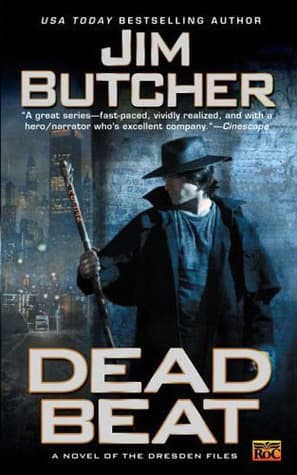
Jim Butcher (2006)
Genre
Fantasy / Mystery
Reading Time
10-12 hours
Key Themes
See below
Sign in to track this book
To save his friend's career, wizard detective Harry Dresden must outwit six necromancers and a manipulative vampire to acquire a dark magical text before Halloween unleashes an army of the undead upon Chicago.
Harry Dresden, a wizard and private investigator in Chicago, is contacted by Mavra, a powerful Red Court vampire. She has compromising photos of Karrin Murphy, head of Chicago PD's Special Investigations, showing her in a magical situation. To protect Murphy's career, Mavra demands Harry retrieve the Word of Kemmler, a dangerous necromantic text, before Halloween. Harry, not knowing the Word's true nature, agrees to investigate. He realizes whatever Mavra wants must be powerful and potentially catastrophic. His immediate goal is to understand what the Word is and why it is wanted, while also trying to find an alternative to Mavra's blackmail.
Harry begins his investigation by seeking information about Kemmler and his forbidden text. He visits the Archive, a living record of all human knowledge, currently embodied by a young girl named Ivy. Ivy, with her immense power, confirms the Word of Kemmler is a dangerous grimoire containing the ritual for Darkhallow, a rite that can turn a necromancer into a god-like entity by consuming the spirits of the dead. She warns him against it but provides no direct help due to her neutrality. Later, Harry meets the Alphas, a group of college students who are also werewolves, led by Billy. They become his allies, offering help as Harry investigates the necromantic underworld.
Following a lead, Harry infiltrates a low-level necromancer's hideout, learning that a group of Kemmler's former apprentices, known as Kemmlerites, are also seeking the Word. These necromancers, including Cowl and Kumori, are powerful and ruthless. During his investigation, Harry is ambushed by ghouls, creatures that feed on corpses. He barely escapes, realizing the danger and the dark forces he is against. This encounter shows him that the search for the Word is a race against several formidable and malevolent factions, all eager to use its power for their own ends.
The White Council of Wizards, fearing the return of Kemmler's power, sends representatives to warn Harry off the case. Later, they try to forcibly remove him from Chicago. They believe Harry, by pursuing the Word, is helping the necromancers. However, Harry refuses to back down, understanding the dire consequences if he fails. He receives unexpected assistance from Shiro, one of the three Knights of the Cross, who wields Fidelacchius, a holy sword. Shiro, recognizing the grave threat of the Darkhallow, offers his combat skills and spiritual guidance, becoming an important ally in Harry's struggle against the necromancers.
Harry's skull-dwelling spirit of intellect, Bob, begins to act strangely, prompting Harry to investigate Bob's past. He discovers that Bob was once bound to Kemmler himself and contains much of Kemmler's knowledge, including the Darkhallow ritual. This puts Bob in great danger from the Kemmlerites, who seek his knowledge. Realizing time is short and the necromancers are closing in, Harry makes a desperate decision: to use Bob's knowledge to find the Word of Kemmler first, not to use it, but to keep it out of the hands of those who would unleash its power.
With Bob's reluctant guidance, Harry, Shiro, and the Alphas race across Chicago, following clues left by Kemmler. They encounter magical traps and confront more of Kemmler's followers, including undead creatures. The necromancers, led by Cowl and Kumori, are always close behind or even ahead, creating a tense chase. Harry realizes the full scope of the Kemmlerites' plan: they intend to perform the Darkhallow on Halloween night, using the spiritual energy of Chicago's dead to become god-like, unleashing horror upon the world.
On Halloween night, all parties meet at Graceland Cemetery, the chosen site for the Darkhallow ritual. The Kemmlerites, led by Cowl and Kumori, begin the ritual, summoning a vast army of the dead. Harry, Shiro, the Alphas, and even Murphy (who has been informed) fight a desperate battle against the necromancers and their undead hordes. The fighting is intense and chaotic, with casualties on both sides. During the battle, Harry sees the true horror of the Darkhallow as the number of spirits involved threatens to overwhelm the entire city.
In a battle, Shiro makes a heroic sacrifice, using Fidelacchius to break a powerful magical barrier, allowing Harry to get closer to Cowl. Shiro's death deeply affects Harry. During the confrontation, Kumori's true identity is revealed: she is Elaine Mallory, Harry's former love and fellow apprentice, whom he believed to be dead. Elaine reveals she is working with Cowl, not out of malice, but from a misguided belief that the Darkhallow can be used for good, to bring back the dead without suffering. Her revelation adds a layer of personal tragedy and moral complexity to the conflict.
Facing an impossible situation and the Darkhallow's imminent completion, Harry makes a desperate and risky move. He unleashes a massive, uncontrolled burst of raw magical energy, channeling his own life force and the surrounding environment into a devastating attack. This plan is meant to disrupt the ritual and scatter the accumulating spiritual energy, even if it means sacrificing himself. The force of his magic temporarily overwhelms Cowl and causes a massive magical explosion, disrupting the ritual and preventing the Darkhallow from fully manifesting, though at great personal cost to Harry.
Harry barely survives his magical outburst, left severely weakened. The Darkhallow is averted, but Cowl and Kumori escape. Afterward, Mavra appears, revealing her true intentions. She never wanted the Word of Kemmler for herself; she wanted Harry to find it and disrupt the Kemmlerites' plan, creating an opening for her to seize a different, still-dangerous magical artifact from the chaos. She collects her blackmail photos of Murphy, but not before issuing a new threat: she has placed a 'death curse' on Harry that will slowly kill him over time, unless he can find a way to break it. The battle is over, but Harry's fight for survival has just begun.
The Protagonist
Harry is forced to confront the ultimate evil of necromancy and make difficult choices, leading him to tap into raw, dangerous power and face the consequences of his actions.
The Supporting
Murphy is put in a vulnerable position but ultimately proves her unwavering courage and dedication to fighting evil, even when outmatched.
The Antagonist
Mavra successfully manipulates Harry and other factions to achieve her own hidden agenda, establishing herself as a persistent and dangerous enemy.
The Supporting
Bob is revealed to have a dark past connected to Kemmler, forcing him to confront his own nature and the potential for misuse of his knowledge.
The Antagonist
Cowl orchestrates the Darkhallow ritual, demonstrating his immense power and ruthless ambition, though he is ultimately thwarted.
The Antagonist/Supporting
Kumori's true identity is revealed, exposing her misguided idealism and the tragic choices she made in her pursuit of a benevolent necromancy.
The Supporting
Shiro serves as a moral guide and powerful ally, ultimately making the ultimate sacrifice to ensure the Darkhallow is stopped.
The Supporting
Ivy provides crucial information to Harry, highlighting her burden of knowledge and the ethical constraints she operates under.
The Supporting
The Alphas grow in their understanding of the supernatural world and prove their loyalty and bravery in a major battle.
The novel explores how the pursuit of immense power, especially necromantic power, corrupts those who seek it. The Word of Kemmler and the Darkhallow ritual represent the ultimate temptation for necromancers, promising godhood at the cost of countless lives and spiritual integrity. Characters like Cowl are consumed by this ambition, becoming ruthless. Even Kumori/Elaine, driven by a desire to alleviate suffering, falls into a dangerous ideology that justifies horrific means. Harry himself grapples with the allure of using raw, destructive magic, showing the constant internal battle against corruption, as seen when he unleashes his powerful, uncontrolled magical burst.
“Power always comes with a price, Harry. Always.”
Sacrifice is a recurring idea, especially in protecting others and fighting evil. Shiro's sacrifice to let Harry confront Cowl is a moving example, showing the selflessness needed against overwhelming darkness. Harry constantly makes personal sacrifices, risking his life, reputation, and even his soul to protect his friends and the innocent. Kumori/Elaine's misguided actions, while villainous, come from a desire for redemption and to undo past suffering, showing how even noble intentions can lead to catastrophic choices. The willingness to sacrifice for a greater good, or the tragic misuse of that principle, drives much of the narrative.
“Greater love hath no man than this, that a man lay down his life for his friends.”
The book examines the complex and often blurry lines between good and evil, particularly through characters like Kumori/Elaine and Bob. Elaine believes she is acting for good, seeking to end suffering through necromancy, blurring the traditional understanding of 'evil' acts. Bob, as a spirit of intellect who served Kemmler, embodies amoral knowledge, forcing Harry to confront the idea that knowledge itself is neither good nor evil; its application makes it so. Harry constantly struggles with his own capacity for destructive magic, showing the internal battle to remain good, even when forced to use dark means to fight darker threats. The novel suggests that intent and consequence are crucial in defining morality.
“There's a difference between a bad person and a person who's doing something bad.”
Loyalty is a basic element in Harry's relationships, especially with Murphy, the Alphas, and Bob. Their unwavering support, even in great danger, is crucial to Harry's survival and success. Conversely, betrayal drives much of the conflict. Mavra's initial blackmail and subsequent double-cross show her treacherous nature. The revelation of Kumori's true identity as Elaine Mallory, Harry's former love, is a personal betrayal, forcing him to confront the past and the painful reality that someone he cared for has embraced a destructive path. These themes highlight the personal stakes and emotional weight of the supernatural conflict.
“You never betray a friend, not for any reason.”
A legendary grimoire containing the ritual for the Darkhallow.
The Word of Kemmler serves as the central MacGuffin of the novel. It is a powerful, forbidden necromantic text that all factions are seeking. Its contents, particularly the Darkhallow ritual, promise unimaginable power to anyone who can successfully perform it. The Word drives the entire plot, forcing Harry into a race against time and a confrontation with dangerous necromancers. Its existence raises the stakes significantly, as its misuse could lead to a catastrophic event, turning a necromancer into a god-like entity by consuming the spiritual energy of the dead.
A necromantic ritual to ascend to godhood by consuming spirits.
The Darkhallow is the ultimate goal of the Kemmlerites and the catastrophic event Harry is trying to prevent. It is a ritual described within the Word of Kemmler that allows a necromancer to absorb the spiritual energy of all the dead within a certain area, transforming them into a powerful, god-like being. This ritual acts as the primary ticking clock and the ultimate threat of the story, creating immense pressure on Harry to stop it before Halloween night. Its potential to unleash unimaginable horror provides the climax of the narrative.
The catalyst for Harry's involvement and a lingering threat.
Mavra's blackmail of Harry using compromising photos of Karrin Murphy serves as the initial inciting incident, forcing Harry into the dangerous pursuit of the Word of Kemmler. This personal stake immediately establishes high emotional and professional consequences. Later, after the main conflict, Mavra places a death curse on Harry. This curse transforms a resolved plot point into a new, long-term threat for Harry, setting up future conflicts and challenges for the character, effectively acting as a cliffhanger and a continuous source of tension.
A revelation that provides crucial information and personal danger.
The revelation that Bob, Harry's skull-dwelling spirit of intellect, was once bound to Kemmler, the notorious necromancer, is a significant plot device. This twist provides Harry with crucial, otherwise inaccessible, information about the Word and the Darkhallow ritual. However, it also puts Bob in extreme danger from the Kemmlerites who seek his knowledge. This plot device deepens the mystery around Bob's character, adds a personal stake for Harry in protecting his companion, and provides a direct link to the antagonist's history and motives, propelling the narrative forward.
“The building was on fire, and it wasn't my fault.”
— Dresden's typical opening to a chaotic situation.
“A good plan violently executed now is better than a perfect plan next week.”
— Dresden's philosophy on action versus overthinking.
“I can take more than I can give. But I'll give everything I've got.”
— Dresden's resilience and commitment to fighting for others.
“The first rule of magic: do not meddle with things you do not understand.”
— A foundational warning about the dangers of magic.
“There are some things worth dying for. And some things worth killing for.”
— Dresden's internal struggle with morality and necessity.
“You can't buy true love, but you can rent it for a while.”
— Dresden's cynical observation on human relationships.
“Just because you're paranoid doesn't mean they aren't out to get you.”
— Dresden's constant state of vigilance and suspicion.
“I don't believe in coincidences. I believe in patterns.”
— Dresden's detective mindset, always looking for connections.
“Power is a funny thing. It can corrupt the best of men, and it can bring out the best in the worst of men.”
— Reflection on the dual nature and influence of power.
“Sometimes, the only way to win is to break all the rules.”
— Dresden's willingness to disregard conventions when necessary.
“Never underestimate the power of a good, old-fashioned, completely irrational fear.”
— Dresden on the effectiveness of psychological tactics.
“The only thing worse than a truly evil wizard is a truly evil wizard who's also a bureaucratic genius.”
— Dresden's frustration with the Black Council's organization.
“Life is a journey, not a destination. Unless you're a zombie. Then it's a destination, and it's six feet under.”
— Dresden's morbid humor regarding the supernatural.
“I’m not a bad guy. I’m just a guy who does bad things sometimes to stop worse things from happening.”
— Dresden's self-justification for his morally grey actions.
Ready to see how well you understood this book? Take our interactive quiz with 10 questions.

Biography coming soon.







