“Hope was a thing with feathers, but life was a thing with teeth.”
— A general reflection on the harsh realities of their world, contrasting hope with the brutality of existence.

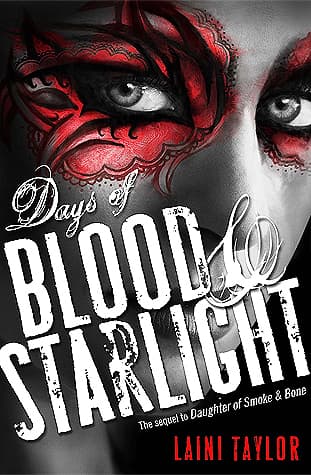
Laini Taylor (2012)
Genre
Fantasy / Young Adult / Romance
Reading Time
9-10 hours
Key Themes
See below
Sign in to track this book
After betrayal shatters her world, a resurrected chimaera artist must choose between fueling an ancient war for revenge or forging an impossible path to redemption with the seraphim who broke her heart.
After learning of Akiva's role in the seraphim genocide of the chimaera, Karou is filled with grief and a strong desire for revenge. She returns to Loramendi, the chimaera stronghold, a bleak world scarred by war and covered in the bones of her people. She confronts her dying mentor, Brimstone, and learns the full extent of the seraphim's cruelty. Karou, now fully aware of her past life as Madrigal and Akiva's betrayal that led to her death and the massacre, commits herself to the chimaera cause, using her resurrection abilities to rebuild their shrinking army. Her love for Akiva turns into bitter hatred, strengthening her resolve to make the seraphim pay.
Akiva is burdened by guilt over the genocide he unknowingly caused. He is on Eretz, the seraphim homeworld, where many of his kind see him as a traitor. He believes the only way to make amends is to find a path to peace between angels and chimaera, a task that seems impossible. He tells his siblings, Hazael and Liraz, who are also struggling with the war's horrors. Akiva discovers the history of the Stelians, an ancient race known for making portals, and starts researching ways to open new paths between worlds, hoping to find a safe place for the chimaera or a way to end the conflict without more bloodshed. His actions are driven by his deep love for Karou and a desperate hope to fix what he has done.
With Brimstone's death, Karou reluctantly takes his place, becoming central to the chimaera's resistance. She uses the teeth she inherited to resurrect fallen chimaera warriors, but the process is hard and emotionally draining. Each resurrection needs a soul, and Karou struggles with the ethics of bringing soldiers back to fight in a war they might not want. She works closely with Thiago, the strong chimaera general who was her former lover, though their relationship is now strained by his ambition and her lingering anger. Karou's power grows, but so does her awareness of the heavy responsibility she carries, making her a figure of both hope and fear for her people.
Emperor Jael, Akiva's father, is a cruel and calculating leader set on destroying the chimaera. He sees Akiva's attempts at peace as weakness and treason. Jael uses brutal methods, including the systematic killing of chimaera and using stolen chimaera magic. He is obsessed with finding a way to permanently close the portals between worlds, trapping the chimaera on Loramendi for annihilation. His son, Joram, a high-ranking general, shares his father's cruelty and enforces the seraphim's genocidal policies. The Emperor's schemes push the war to new levels of brutality, making any hope of peace seem farther away.
Akiva, Hazael, and Liraz, frustrated by the ongoing war and their father's stubbornness, look deeper into the Stelian history. They find that the Stelians not only built portals but also could control them. Their research leads them to a hidden Stelian portal on Eretz, one that has been inactive for centuries. They believe this portal could be the key to finding a new world for the chimaera or a way out of the current conflict. The siblings work in secret, knowing their discovery could bring salvation or be twisted by their father for his destructive goals. Their efforts are dangerous and constantly risk exposure.
Thiago, Karou's former lover and the current chimaera general, becomes increasingly controlling and power-hungry. He resents Karou's growing influence and her past with Akiva. It is revealed that Thiago exposed Madrigal's love for Akiva in their past lives, leading to her execution and the subsequent massacre. He wants to control Karou and her resurrection abilities, seeing her as a tool for his own ambitions. He manipulates the chimaera council and promotes deep hatred for the seraphim, making reconciliation impossible under his leadership. Karou slowly realizes the extent of his betrayal and his true, manipulative nature.
During a desperate raid for supplies in a human city on Earth, Karou and Akiva unexpectedly meet. The encounter is filled with strong emotions—love, betrayal, and a huge sense of loss. Karou's hatred is clear, but Akiva's pain and true desire for peace are also visible. They speak briefly, exchanging veiled threats and pleas. Akiva tries to explain his actions and his current search for a solution, but Karou is too focused on her people's suffering to trust him. This short, painful reunion shows the deep divide between them, yet also hints at the lasting connection that still ties their fates, despite the war.
Emperor Jael, having found the chimaera stronghold, launches a full attack on Loramendi. The seraphim forces, led by Joram, are relentless, causing many casualties. Karou and the chimaera army fight bravely, but they are outnumbered. In the chaos, Karou uses her resurrection powers more than ever, bringing back warriors in a desperate attempt to defend her people. The battle is a brutal example of the war's savagery, pushing Karou to her physical and emotional limits. Loramendi is destroyed, and the chimaera are pushed to the edge of annihilation, forcing Karou to consider extreme measures for their survival.
After the seraphim attack, Thiago takes the chance to gain more power. He stages a coup, making Karou seem weak and indecisive. He uses his influence with the chimaera council to imprison Karou, planning to control her resurrection abilities for his military goals. He shows his true, tyrannical nature, mirroring the oppressors they fight. Karou, stripped of her freedom, realizes the depth of his betrayal and her dangerous situation. Her imprisonment shows the internal conflict within the chimaera ranks, proving the enemy is not only external.
Having learned of Karou's capture and the dire situation on Loramendi through their informant, Akiva, Hazael, and Liraz go on a dangerous mission to rescue her. They sneak into the devastated chimaera stronghold, risking their lives to save the woman Akiva still loves. Their journey is full of danger as they navigate the war-torn land and avoid both seraphim and chimaera patrols. This mission shows Akiva's strong dedication to Karou and his belief that she is vital for any hope of peace. The siblings work together, putting aside their differences for a greater cause.
Akiva and his siblings successfully find and free Karou. A fierce fight happens between Akiva and Thiago, where Akiva reveals Thiago's past betrayal. In the confusion, the Stelian portal Akiva had been researching activates, opening a new gateway to an unknown world. This portal offers a possible escape for the surviving chimaera, a chance for a new start, free from the endless war. The portal's activation marks a key moment, offering a glimpse of hope amid the destruction, and making both Karou and Akiva think about a future beyond the current conflict.
With the seraphim forces closing in and Thiago's betrayal exposed, Karou decides to lead the surviving chimaera, including her adopted family, through the newly opened Stelian portal. Akiva, Hazael, and Liraz, having helped them escape, stay behind to face the results of their actions and continue their fight for peace on Eretz. The portal closes behind the chimaera, leaving their destination and future unknown. The ending is bittersweet, with a fragile hope for a new beginning mixed with the unresolved war and the painful separation of Karou and Akiva. Peaceful coexistence remains a distant dream, but the portal offers a chance for survival.
The Protagonist
Karou transforms from a heartbroken and vengeful individual into a reluctant leader, accepting the weight of her past and her powers, and ultimately choosing hope and survival over endless war.
The Co-protagonist/Antagonist (initially)
Akiva evolves from a conflicted warrior bound by duty to a defiant rebel, actively seeking to dismantle the war machine and forge a new future based on peace and understanding.
The Antagonist
Thiago descends further into villainy, his true manipulative and power-hungry nature fully revealed as he betrays Karou and seeks to dominate the chimaera.
The Supporting
Hazael moves from a supportive, secondary role to an active participant in Akiva's rebellion, fully committing to the pursuit of peace.
The Supporting
Liraz transitions from a hardened, vengeful warrior to an ally in the quest for peace, her loyalty to her brothers outweighing her ingrained hatred.
The Antagonist
Jael remains a static antagonist, unwavering in his genocidal ambition, serving as the embodiment of the war's destructive nature.
The Supporting/Mentioned
Brimstone completes his arc as a mentor, passing on his legacy and knowledge to Karou before his death, enabling her to lead the chimaera.
The Supporting
Zuzana's character remains consistent as a steadfast and supportive friend, adapting to Karou's supernatural world without losing her core humanity.
The Antagonist
Joram remains a static antagonist, serving as a direct military threat and embodying the relentless cruelty of the Seraphim empire.
The novel explores the destructive cycle of revenge and the hard path to forgiveness. Karou initially wants revenge against Akiva and the seraphim for her people's genocide, believing it's the only way to honor their memory. Her actions, like resurrecting soldiers for war, come from this need. Akiva, however, seeks forgiveness and redemption for his past actions, trying to break the cycle of violence. The story questions if true justice comes from endless retaliation, or if a different, more difficult path of understanding and peace is needed for healing. This theme is central to Karou and Akiva's strained relationship, as they represent these opposing ideas.
““There are many kinds of strength, not all of them as obvious as a sword.””
Both Karou and Akiva deal with the huge responsibility placed on them. Karou, as the new 'Brimstone,' must make tough decisions about her people's lives and souls, bringing them back for a war she wishes wasn't hers to fight. She feels responsible for their survival. Akiva, as a prince, feels responsible for the suffering his people have caused and tries to find a solution to the war, despite his father's opposition. The novel shows the isolation and moral compromises that come with leading people during a crisis, forcing characters to grow up and make sacrifices for the greater good, often at a personal cost.
““Hope, like a candle, flickers, but it does not die.””
The lasting power of love, even after deep betrayal, is a main theme. Karou's love for Akiva is shattered by his perceived betrayal, leading to her intense hatred and desire for revenge. However, their connection remains, forming a complex emotional core to the story. The novel shows how love can be twisted by circumstances and how betrayal can leave lasting scars, yet also how it can last and even drive change. Thiago's betrayal of Madrigal in their past lives further illustrates the devastating impact of treachery, contrasting with Akiva's genuine, though flawed, love for Karou.
““It was not a lover’s kiss, but a soldier’s. A forgiveness, a farewell, and a promise.””
Karou's journey is one of self-discovery, as she fully accepts her past life as Madrigal and her chimaera heritage. She grapples with who she is, considering her human upbringing and her true, magical lineage. This theme extends to Akiva, who must redefine himself not as a loyal seraphim soldier, but as someone seeking peace and defying his family's legacy. The characters must confront their pasts, understand their true natures, and choose which identity they will embody moving forward, often leading to painful discoveries and difficult personal changes. This struggle for identity is tied to their roles in the war.
““We are not what we were. We are what we make ourselves.””
The ability to restore life using teeth and souls.
Karou's unique chimaera ability to resurrect the dead using 'wishes' (teeth) and souls is a central plot device. It drives the chimaera's ability to rebuild their army, but also presents significant moral dilemmas for Karou. Each resurrection comes with a cost, both physical and emotional, forcing her to confront the ethics of bringing back individuals to fight in a war they may not have chosen. This power is highly coveted and feared by both sides, making Karou a crucial, yet burdened, figure in the conflict. It directly fuels the chimaera's resistance and Thiago's ambition.
Ancient gateways between worlds, crucial for escape and new beginnings.
The Stelian portals, remnants of an ancient, advanced race, serve as a critical plot device for creating new possibilities in the war. Akiva's research into these portals reveals their potential to open pathways to new, uninhabited worlds, offering a sanctuary for the chimaera or a means to escape the endless conflict on Eretz and Loramendi. The activation of a Stelian portal at the climax provides a literal escape route for the chimaera, representing hope for a new beginning and a way to break the cycle of destruction, even if its destination is unknown.
The historical massacre of the chimaera by the Seraphim.
The genocide of the chimaera by the Seraphim, orchestrated by Emperor Jael and inadvertently facilitated by Akiva's past actions, is the foundational conflict and driving force of the entire narrative. This past event fuels Karou's vengeance, Akiva's guilt, and the ongoing war. It establishes the high stakes and the deep-seated hatred between the two races. The memory of the fallen chimaera constantly looms over the characters, informing their decisions and making reconciliation seem almost impossible, shaping the motivations and actions of nearly every character.
A classic romance trope where two lovers are destined for tragedy due to external forces.
The relationship between Karou (Madrigal) and Akiva embodies the star-crossed lovers trope. Their love defies the ancient war between their races, but it ultimately leads to tragedy and fuels the ongoing conflict. Their separation and the perceived betrayal are central to the emotional core of the story. This device heightens the dramatic tension, as their personal feelings are constantly at odds with their loyalties to their respective peoples, making their quest for peace both deeply personal and universally significant for their worlds.
“Hope was a thing with feathers, but life was a thing with teeth.”
— A general reflection on the harsh realities of their world, contrasting hope with the brutality of existence.
“Once upon a time, there was a girl who was made of starlight.”
— Describing Lazlo and the unique nature of his dreams/visions, particularly related to Sarai.
“The greatest weapon against a lie is the truth. The greatest weapon against the truth is a lie.”
— Exploring the propaganda and misinformation used by both sides of the war.
“To be human is to be a monster.”
— A dark realization about the capacity for cruelty within both human and godspawn races.
“We are all made of stardust and dreams, and maybe a little bit of magic.”
— A more hopeful and poetic reflection on the inherent wonder and potential within beings.
“There are no good wars, only necessary ones.”
— A pragmatic view of the ongoing conflict, acknowledging its grim necessity.
“Love isn't a choice, it's a destiny.”
— Reflecting on the powerful and seemingly fated connection between Sarai and Lazlo.
“Sometimes, the only way to save someone is to let them go.”
— A painful realization about sacrifice and the limits of intervention in desperate situations.
“Even the darkest night will end and the sun will rise.”
— A classic message of hope and endurance amidst severe hardship.
“Fear makes monsters of us all.”
— Exploring how fear drives characters to commit terrible acts, blurring the lines between good and evil.
“The past is a ghost, and the future is a dream.”
— A poignant reflection on the transient nature of time and the focus on the present moment.
“What is a god without followers? Just a lonely voice in the dark.”
— A commentary on the nature of power, divinity, and the need for belief.
“Some wounds never heal, they just scar over.”
— Addressing the lasting impact of trauma and loss on the characters.
“Every secret comes with a price.”
— Highlighting the consequences and burdens of keeping vital information hidden.
Ready to see how well you understood this book? Take our interactive quiz with 10 questions.

Biography coming soon.







