“Never shall I forget that night, the first night in camp, which has turned my life into one long night, seven times cursed and seven times sealed.”
— Wiesel's reflection on his arrival at Auschwitz, describing the trauma that defined his existence.


Elie Wiesel (1988)
Genre
Historical Fiction / Spirituality
Reading Time
120 min
Key Themes
See below
Sign in to track this book
Haunted by the Holocaust, a survivor grapples with the meaning of life and the specter of death after a New York City accident forces him to confront his shattered faith and the burden of memory.
The unnamed narrator, a successful journalist and Holocaust survivor living in New York City, is struck by a taxi. The impact leaves him critically injured and unconscious. As he lies in the hospital, hovering between life and death, his physical pain is mirrored by a deep spiritual and existential crisis. He feels an odd detachment, a sense of being an observer to his own suffering, and a deep weariness with life itself. This accident is a catalyst, plunging him into a series of vivid memories, philosophical reflections, and imagined conversations that force him to confront his past, his trauma, and his reasons for continuing to exist. His initial reaction is one of indifference, almost welcoming the possibility of death as an escape from his unbearable existence.
While in the hospital, the narrator's mind wanders through fragmented memories of his life before and after the Holocaust. He recalls his time in the concentration camps, the loss of his family, and the deep void left by those experiences. He also vividly remembers Sarah, a woman he met after the war who, like him, carries the scars of the Holocaust. Their relationship was one of deep understanding and shared trauma, a silent communication of pain and resilience. Sarah represents a connection to life and a fragile hope, even as the narrator grapples with his internal demons. Her memory is a source of both comfort and torment, reminding him of the possibility of human connection he often feels unworthy of.
Dr. Russell, the attending physician, recognizes that the narrator's struggle is not merely physical. He senses the despair within his patient and attempts to engage him, not just medically, but philosophically. Dr. Russell, though not explicitly understanding the depths of the Holocaust trauma, tries to offer reasons for living, appealing to the narrator's intellect and humanity. He encourages the narrator to fight for his life, to choose survival. These interactions, though often met with the narrator's internal resistance and cynicism, begin to plant seeds of doubt in his desire for death, forcing him to articulate, even if only to himself, his arguments for and against existence.
Kathleen, a woman from the narrator's current life in New York, visits him in the hospital. She is part of the 'normal' world he has struggled to inhabit since the war, a world largely untouched by the horrors he experienced. Her presence, while well-intentioned, highlights the chasm between his internal world and external reality. She represents a potential future, a connection to the present, but also an inability to fully comprehend the weight of his past. Her concern is genuine, but her inability to truly understand his unique pain shows his isolation and the difficulty of bridging the gap between his survivor's experience and the lives of others.
As his body heals, the narrator's mind continues its relentless philosophical interrogation. He engages in an internal debate with himself, with unseen forces, and even with God, questioning the purpose of his survival. He grapples with the injustice of the Holocaust, the silence of God, and the burden of memory. He contemplates the concept of a 'chosen people' who were chosen for suffering, and the nature of evil. This internal monologue is filled with rhetorical questions, cynical observations, and a deep sense of abandonment, reflecting the spiritual crisis that has plagued him since the camps. He wonders if life after such an experience can ever truly be lived, or if it is merely a prolonged death sentence.
The narrator's memories frequently return to the concentration camps, depicting the atrocities he witnessed and endured. These flashbacks are not merely recollections but re-experiencings of the terror, the starvation, the dehumanization, and the systematic murder of his people. He recalls specific incidents and the faces of those he lost, particularly his family. These vivid memories are the root of his loss of faith, his inability to reconcile a benevolent God with the Holocaust, and his persistent questioning of human nature. The camps stripped him of his innocence, his family, and his spiritual certainties, leaving him with an indelible mark of suffering and a deep sense of cosmic injustice.
A recurring theme in the narrator's thoughts is the burden of being a survivor and a witness. He feels compelled to remember and to speak, yet also isolated by the uniqueness of his experience. He questions the purpose of bearing witness when the world seems to move on, and when the horror is too vast to be fully conveyed or understood by those who were not there. This responsibility weighs heavily on him, contributing to his weariness with life. He feels caught between the imperative to remember and the desire to forget, between the duty to the dead and the struggle to live among the living, constantly battling the feeling that his words are inadequate to the task.
As his physical condition improves, the narrator is confronted with the ultimate choice: to actively embrace life or to allow himself to surrender to death, even if not through direct suicide, then through a lack of will to recover. This is not a passive choice but an active struggle within his soul. He weighs the arguments for and against existence, the pain of memory against the possibility of future joy, the burden of the past against the unknown of the future. He acknowledges the absurdity of his survival and the difficulty of finding meaning in a world that allowed such evil to occur. The decision is agonizing, a battle between ultimate despair and a faint, almost imperceptible glimmer of hope.
In a moment of delirium or deep introspection, the narrator experiences a vision or memory of Sarah. Her presence, though spectral, is powerful. She does not offer easy answers but embodies a quiet strength and a shared understanding of their collective suffering. Through her, or through his memory of her, he begins to find a reason to choose life, not necessarily for happiness, but for the sake of remembering, for the sake of those who perished, and for the simple act of existing. Her silent affirmation, her enduring spirit, helps him tip the scales towards survival, suggesting that even in darkness, there can be a fragile, defiant assertion of being.
The narrator finally regains full consciousness, having made the silent, internal decision to live. He is still deeply scarred by his past and the questions that plague him remain unanswered, but he has chosen to continue. The novel ends not with a triumphant resolution, but with a quiet, somber affirmation of life despite everything. He understands that the pain will always be a part of him, but he has, for now, decided that existence itself is a form of resistance. He will carry his memories, his questions, and his wounds, but he will continue to breathe, to observe, and to bear witness to the day.
The Protagonist
From a state of profound despair and indifference towards life, he ultimately makes a conscious, albeit difficult, choice to continue living, embracing the burden of memory as a form of resistance.
The Supporting
Though mostly a memory, her enduring spirit and shared suffering serve as a catalyst for the narrator's eventual choice to live.
The Supporting
He remains steadfast in his medical and humanistic duty, guiding the narrator towards physical recovery while subtly nudging him towards a will to live.
The Supporting
She remains a static character, representing an aspect of the narrator's present life that he struggles to fully connect with.
The Mentioned
No arc; serves purely as a plot device.
The Mentioned
No arc; they are part of theapeutic setting.
The Antagonist/Supporting
The narrator's relationship with the concept of God shifts from utter despair and accusation to a fragile, unrequited questioning.
The Supporting
Their presence remains constant, serving as the ultimate justification for the narrator's internal struggle and his eventual choice to live as a testament.
The novel explores the psychological and spiritual weight carried by Holocaust survivors. The narrator feels immense guilt for surviving while his family and millions perished, leading to a deep sense of unworthiness and isolation. He grapples with the responsibility of bearing witness to horrors, feeling that his words are inadequate and that the world cannot truly comprehend his experience. This burden manifests as a constant internal struggle, making everyday life feel insignificant and often unbearable, as seen in his internal debates about the purpose of continuing to live.
“To forget would be not only dangerous but offensive; to remember would be to acknowledge a crime against humanity.”
A central theme is the narrator's crisis of faith in the aftermath of the Holocaust. He struggles to reconcile the existence of a benevolent God with the systematic extermination of his people. His internal monologues are filled with accusations against God for His silence and inaction during the atrocities. This loss of faith extends beyond traditional religious belief to a questioning of any inherent meaning or justice in the universe, contributing to his existential despair and his contemplation of suicide. He feels abandoned by both man and God, reflecting the spiritual void left by the camps.
“Where was God? How could He allow this to happen?”
The entire narrative revolves around the narrator's internal struggle to choose between embracing life or succumbing to death. The accident forces this choice to the forefront, making him actively weigh the value of existence against the allure of oblivion. His arguments for death stem from weariness, the burden of memory, and the perceived meaninglessness of life after such trauma. His eventual, fragile choice for life is not a joyful embrace but a defiant act of remembrance and resistance, suggesting that choosing to live, even in pain, is a form of honoring the dead and asserting humanity.
“To live is to betray the dead. To die is to betray the living.”
Memory is not merely recollection but a living, often tormenting force in the narrator's life. Flashbacks to the concentration camps are vivid and intrusive, constantly pulling him back to the source of his trauma. These memories are not just personal but collective, representing the historical trauma of his people. The novel explores how trauma shapes identity, distorts perception, and makes it almost impossible to fully integrate into a 'normal' world. The narrator's struggle is fundamentally a struggle with how to live with an inescapable and agonizing past.
“To remember is to open the wound.”
The narrator experiences isolation, feeling that his suffering is unique and ultimately incommunicable to those who did not share his experiences. This is evident in his interactions with Dr. Russell and Kathleen, who, despite their good intentions, cannot truly understand the depth of his trauma. This isolation reinforces his sense of being an outsider, a ghost among the living, and contributes to his despair. Even with Sarah, a fellow survivor, their understanding is often silent, showing the limits of language in conveying such immense pain.
“How can one explain to the living what it means to die?”
The primary narrative mode, revealing the narrator's unfiltered thoughts and philosophical debates.
The novel is largely driven by the narrator's internal monologue, a stream of consciousness that allows the reader direct access to his fragmented memories, philosophical questions, and existential despair. This device is crucial as the physical plot (the hospital stay) is minimal; the real 'action' occurs within his mind. It creates an intimate and intense portrayal of his psychological state, blurring the lines between past and present, reality and delusion, as he grapples with his trauma and decision to live or die. It makes the reader a direct participant in his intellectual and spiritual struggle.
Non-linear narrative elements that reveal the source of the narrator's trauma.
The narrative frequently shifts between the present hospital setting and vivid, often abrupt, flashbacks to the narrator's experiences in the concentration camps and his life immediately after. These non-linear insertions are not chronological but triggered by his thoughts or external stimuli, mirroring the intrusive nature of PTSD. They serve to reveal the profound source of his current despair and existential crisis, explaining his loss of faith and his burden of survival. These memories are not just recollections; they are re-experiencings, shaping his perception of the present moment.
A catalyst for the narrator's profound existential crisis and internal debate.
The taxi accident serves as the primary plot device, acting as a literal and metaphorical collision that forces the narrator to confront his deepest existential questions. It is not merely an unfortunate event but a catalyst that pushes him to the brink of death, where he can no longer avoid the choice between living and dying. Metaphorically, it represents the sudden, arbitrary nature of suffering and the precariousness of life, echoing the senselessness of the Holocaust itself. It creates the physical context for his internal, spiritual journey.
Contrasting light and darkness to represent life/death and understanding/ignorance.
Though the title is 'Day,' the novel frequently employs the symbolism of day and night. 'Night' represents the darkness of the Holocaust, the despair, and the spiritual void. 'Day' symbolizes the struggle to live, to find meaning, and to bear witness in the aftermath. The narrator's internal battle often takes place in a liminal state, blurring these two. The gradual return to 'day' (consciousness and choosing life) is not a triumph of light over darkness, but an acceptance of living within the lingering shadows of the past, suggesting a nuanced and painful continuation of existence. The specific title 'Day' also alludes to its place as the third part of Wiesel's trilogy, moving from the literal 'Night' of the camps to the 'Dawn' of finding meaning, and finally to the 'Day' of living with the consequences.
“Never shall I forget that night, the first night in camp, which has turned my life into one long night, seven times cursed and seven times sealed.”
— Wiesel's reflection on his arrival at Auschwitz, describing the trauma that defined his existence.
“There are victories of the soul and spirit. Sometimes, even if you lose, you win.”
— A philosophical insight on spiritual resilience amidst suffering.
“We must take sides. Neutrality helps the oppressor, never the victim. Silence encourages the tormentor, never the tormented.”
— A call to moral action and against indifference in the face of injustice.
“The opposite of love is not hate, it's indifference.”
— A profound statement on human relationships and the dangers of apathy.
“For the survivor, death is not the problem. Death was an everyday occurrence. We learned to live with Death. The problem is to adjust to life, to living.”
— Reflecting on the psychological struggle of survivors after the Holocaust.
“I pray to the God within me that He will give me the strength to ask Him the right questions.”
— Wiesel's spiritual struggle and search for meaning in suffering.
“There is divine beauty in learning... To learn means to accept the postulate that life did not begin at my birth. Others have been here before me, and I walk in their footsteps.”
— Emphasizing the importance of history and learning from past generations.
“Just as man cannot live without dreams, he cannot live without hope. If dreams reflect the past, hope summons the future.”
— A reflection on the human need for hope to envision a better future.
“We must not see any person as an abstraction. Instead, we must see in every person a universe with its own secrets, with its own treasures, with its own sources of anguish, and with some measure of triumph.”
— Advocating for empathy and recognizing the complexity of every individual.
“The witness has forced himself to testify. For the youth of today, for the children who will be born tomorrow. He does not want his past to become their future.”
— Wiesel's motivation for sharing his story to prevent future atrocities.
“In the beginning there was faith—which is childish; trust—which is vain; and illusion—which is dangerous.”
— A critical view of naive beliefs in the context of traumatic experiences.
“One more stab to the heart, one more reason to hate. One less reason to live.”
— Describing the cumulative effect of suffering and loss during the Holocaust.
“To forget the dead would be akin to killing them a second time.”
— Stressing the moral imperative to remember and honor those who perished.
“I have not lost faith in God. I have moments of anger and protest. Sometimes I've been closer to him for that reason.”
— Wiesel's complex relationship with faith, acknowledging doubt as part of spiritual journey.
Ready to see how well you understood this book? Take our interactive quiz with 10 questions.
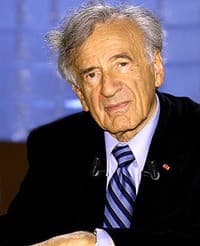
Biography coming soon.







