““There is no word for what we are. No word for people who have been through what we have been through.””
— One of the young women reflects on their shared trauma and unique experience.

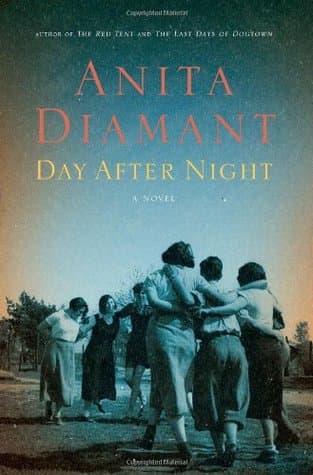
Anita Diamant (2009)
Genre
Historical Fiction
Reading Time
360 min
Key Themes
See below
Sign in to track this book
In a 1945 Israeli internment camp, four young women, each bearing the scars of the Holocaust, form a sisterhood as they reclaim their identities and dream of a future.
In 1945, Jewish refugees, Holocaust survivors, arrive by ship in Palestine, only to be detained by British Mandate authorities at the Atlit internment camp. Among them are four young women who become central to the story: Shayndel, an independent Polish Zionist who fought with partisans; Leonie, a sophisticated French woman haunted by her past; Tedi, a quiet Dutch woman with a hidden sorrow; and Zorah, a Czech woman who survived Auschwitz. They are processed, stripped of their belongings, and assigned to crowded barracks, where they begin to face the realities of their new, temporary home, filled with uncertainty and the weight of their individual traumas.
Life in the Atlit barracks is different from the horrors the women have endured, yet it presents its own challenges. The food is meager, conditions are basic, and privacy is nonexistent. Shayndel, pragmatic, quickly adapts, observing the camp's dynamics. Leonie struggles with the loss of her former life, clinging to remnants of her elegance. Tedi remains withdrawn, often lost in thought, while Zorah, despite her suffering, carries a quiet strength. During shared meals and mundane tasks, the women, along with others like the practical Hungarian woman Atara, begin to communicate, sharing small gestures of kindness and fragments of their stories, slowly forming a fragile community.
Shayndel, an activist, cannot sit idly by. Her Zionist beliefs, formed in the Polish resistance, drive her to seek action within Atlit. She quickly contacts members of the Hagana, the Jewish paramilitary organization, who work secretly within the camp. She offers her skills and determination, volunteering to help undermine the British Mandate and facilitate the 'illegal' immigration of Jews into Palestine. Her involvement gives her a renewed sense of purpose, a contrast to the passive waiting endured by many other detainees.
Leonie, with her refined manner, initially keeps her past guarded. However, she eventually seeks out Dr. Schein, the compassionate camp doctor, not for physical ailments but for the emotional burden she carries. Leonie reveals that she was forced into prostitution by the Nazis to survive, a truth that fills her with shame and despair. Dr. Schein, a survivor himself, listens with empathy and offers comfort, reminding her that survival is a testament to her strength, and her past does not define her worth. This revelation shows the diverse and often unspeakable traumas carried by the Atlit detainees.
Tedi's quiet presence hides immense grief. Through quiet conversations and her internal thoughts, it is revealed that she lost her entire family—her parents and younger sister—in the Holocaust. Her silence is a protective shell, a way to cope with the overwhelming pain of being the sole survivor. She carries their memories, especially those of her sister, with a sense of responsibility and sorrow. Her struggle to articulate her loss, and her desire to simply forget, resonates with the other women, who understand the crushing weight of such an experience.
Zorah, who bears the physical and emotional scars of Auschwitz, is an example of human strength. Despite her harrowing past, she has a quiet dignity and an unwavering hope for the future in Palestine. She speaks of her determination to build a new life, to contribute to the nascent Jewish state, and to honor the memory of those who perished by living fully. Her experiences give her a unique perspective, allowing her to offer comfort and practical advice to her fellow detainees, especially in moments of despair. She becomes a quiet anchor for the group, embodying endurance and the possibility of renewal.
As political tensions between the British Mandate and the Jewish Yishuv increase, the Hagana finalizes a plan to free the detainees from Atlit. Shayndel, deeply involved in the underground, becomes a key player in coordinating the escape. The plan involves breaching the camp's defenses under cover of darkness, with the help of external Hagana units. News of the impending escape spreads through the barracks, creating a mix of fear and excitement among the detainees. Preparations are made in secret, with each woman wrestling with the risks involved and the implications of choosing freedom.
On the chosen night, a thick fog descends, providing crucial cover for the escape. The Hagana, both inside and outside the camp, act. Barbed wire fences are cut, and British guards are neutralized. The detainees, including Shayndel, Leonie, Tedi, and Zorah, move stealthily through the darkness, guided by their Hagana escorts. The air is thick with tension, their footsteps muffled by the fog and the urgency of their flight. There are moments of panic and near-discovery, but the collective will to be free propels them forward, past the camp's perimeter and into waiting trucks.
Once outside Atlit, the escapees are quickly loaded onto trucks and taken to various kibbutzim and settlements across Palestine. The journey is dangerous, as British patrols are actively searching for the fugitives. However, the Hagana's planning and the solidarity of the Yishuv ensure their safe passage. As the women travel, a sense of relief and excitement washes over them, mixed with apprehension about what their new lives will hold. The landscape of Palestine, though foreign, represents a promise of belonging and a future free from persecution.
The women settle into their new lives in Palestine. Shayndel, true to her Zionist ideals, finds her place in a kibbutz, dedicating herself to building the land. Leonie, though still carrying her past trauma, begins to explore new possibilities, perhaps even finding love. Tedi, while still reserved, slowly starts to open up, finding comfort in the community and the rhythm of agricultural life. Zorah, with her spirit, becomes an inspiration, embodying the hope for a new generation. While the physical chains of Atlit are broken, the emotional scars of the Holocaust remain, but they are now faced in a land that offers them a future.
The Protagonist
Shayndel evolves from a lone wolf survivor to a key figure in the Atlit escape, finding a collective purpose within the Hagana and the burgeoning Jewish state.
The Protagonist
Leonie moves from a state of guarded despair and self-blame to tentative self-acceptance and a desire to build a new life, finding solace in shared vulnerability.
The Protagonist
Tedi gradually moves from withdrawn grief and a desire to forget to a cautious re-engagement with life and the possibility of new connections.
The Protagonist
Zorah's arc is less about transformation and more about her steadfast embodiment of hope and resilience, inspiring those around her.
The Supporting
Dr. Schein remains a consistent figure of compassion and wisdom, embodying the quiet strength needed to care for others in the aftermath of trauma.
The Supporting
Atara maintains her role as a grounding and nurturing presence, a testament to the resilience of the human spirit in adverse conditions.
The Antagonist
The British Guards remain an external, opposing force, their authority challenged and ultimately circumvented by the Hagana and the detainees.
The Supporting
The Hagana members consistently represent the organized, proactive force for liberation and national self-determination.
The novel shows the deep psychological and emotional scars left by the Holocaust on its survivors. Each woman carries unique burdens: Leonie's shame, Tedi's silent grief, Zorah's strength forged in horror, and Shayndel's fierce drive. The trauma appears not just in memories but in their guardedness, their struggles with intimacy, and their desperate search for meaning. The camp itself, though safer, acts as a temporary continuation of their displacement, showing that liberation from concentration camps did not mean immediate freedom from suffering.
“What do you do with a memory that won't let you go? You bury it. You dig a hole and you bury it deep.”
In the harsh, uncertain environment of Atlit, the bonds formed between the women become a vital source of healing and strength. Despite their diverse backgrounds and individual traumas, Shayndel, Leonie, Tedi, and Zorah gradually form a deep connection. They share meager rations, offer silent comfort, listen to unspoken pain, and provide practical support. This sisterhood offers a sense of belonging and mutual understanding that helps them navigate their shared predicament and begin rebuilding their lives. Their collective strength is crucial to their survival and eventual escape.
“They were sisters now, not by blood, but by fire.”
A central theme is the longing for a home and a place of belonging after years of displacement and persecution. For the Jewish refugees, Palestine represents not just a place but a spiritual and ideological home—a safe haven where they can finally rebuild their lives without fear. Atlit, as a detention camp, symbolizes the frustrating delay and denial of this longed-for home. The escape from Atlit is not just an escape from captivity but a determined step towards claiming their right to a homeland and forging a new identity as part of the nascent Jewish state.
“A home. A place where they could live without fear, without papers, without questions.”
Despite enduring horrors, the characters in 'Day After Night' show an incredible capacity for strength and a will to survive. From Shayndel's active resistance to Zorah's quiet determination, each woman finds a way to endure. Their strength is not about forgetting but about finding the will to carry on, to hope, and to rebuild. This theme appears in their daily struggles within the camp, their ability to find moments of joy or connection, and ultimately, their collective courage to participate in the dangerous escape to freedom.
“To live was an act of defiance. To hope, an act of revolution.”
A physical and symbolic barrier representing continued displacement and the denial of freedom.
Atlit serves as more than just a setting; it's a critical plot device. Physically, it's a barrier preventing the survivors from reaching their promised land, creating a tangible conflict with the British Mandate. Symbolically, it extends the period of their statelessness and trauma, forcing them to confront their pasts while their future remains uncertain. The camp's harsh conditions and strict rules drive the characters' internal and external conflicts, ultimately leading to the desperate need for escape and the forging of deep bonds among the detainees.
The external force of hope and action that orchestrates the path to freedom.
The Hagana acts as the primary catalyst for the plot's resolution. Their clandestine operations within and outside Atlit provide the means for the detainees' eventual escape. They represent the active resistance against the British Mandate and the organized effort to build a Jewish state. Shayndel's involvement with the Hagana integrates the personal narratives with the larger historical context, giving her a sense of purpose and providing the practical mechanism for the climax of the story – the daring escape from Atlit.
Narrative techniques used to reveal the characters' traumatic pasts and inner lives.
The novel frequently employs flashbacks and internal monologues to delve into the individual histories of the women. These devices are crucial for understanding the depth of their trauma and the specific horrors they endured during the Holocaust. Rather than a linear recounting, these fragmented memories and reflections reveal the non-linear nature of trauma and allow the reader to gradually piece together each character's past, providing motivation for their present actions and emotional states. This deepens characterization and enhances the emotional impact of their journey.
““There is no word for what we are. No word for people who have been through what we have been through.””
— One of the young women reflects on their shared trauma and unique experience.
““They had survived, but survival was not a destination, only a path.””
— The survivors begin to understand that their ordeal is not over, but has changed them forever.
““Hope was a small, stubborn flame that refused to be extinguished.””
— Despite their dire circumstances, a glimmer of hope persists among the women.
““Memory was a kind of prison, but also a kind of freedom.””
— A character contemplates the dual nature of remembering their past.
““They learned to read each other's silences, to understand the unspoken words.””
— The women develop a deep bond and understanding through their shared experience.
““The world had changed, and they had changed with it, whether they wanted to or not.””
— Acknowledging the irreversible impact of their experiences on their lives.
““To live was to remember, and to remember was to carry the weight.””
— The burden of their past is a constant companion for the survivors.
““The future was a blank page, terrifying and exhilarating all at once.””
— Facing an uncertain future after their liberation.
““Even in the darkest places, human kindness could bloom.””
— Witnessing acts of compassion amidst the brutality of their captivity.
““They were fragments, broken pieces, trying to fit themselves back into a whole that no longer existed.””
— The challenge of rebuilding their lives after profound loss and trauma.
““The sea was a promise, a gateway, a vast unknown.””
— Looking towards the Mediterranean Sea as a potential escape route to a new life.
““Every breath was a victory, every sunrise a miracle.””
— Appreciating the simple act of living after enduring so much.
““They had lost everything, but they had found each other.””
— The profound bond formed between the women becomes their most valuable possession.
““The past was a shadow that lengthened with every step they took towards the light.””
— The enduring presence of their past even as they try to move forward.
““Freedom was not a gift, but something they had to claim, day after night.””
— Emphasizing the ongoing effort required to truly be free, beyond mere liberation.
Ready to see how well you understood this book? Take our interactive quiz with 10 questions.

Anita Diamant is a bestselling author and storyteller, best known for her historical novel "The Red Tent." Her work often explores the lives of women in biblical times and their spiritual journeys. Diamant also writes non-fiction, offering practical guidance on Jewish rituals and life passages.







