“The wind was a friend, and the leaves whispered secrets. The trees were my family.”
— Fainne's deep connection with the natural world, particularly the forest.

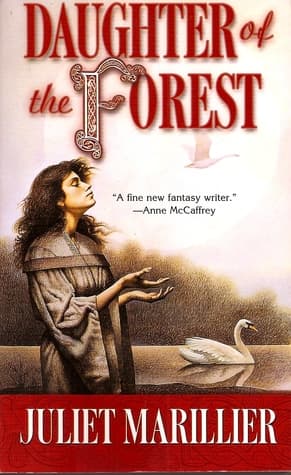
Juliet Marillier (1999)
Genre
Fantasy / Historical Fiction / Young Adult / Romance
Reading Time
12-15 hours
Key Themes
See below
Sign in to track this book
To break the enchantment silencing her six beloved brothers, Sorcha must weave six shirts of stinging starwort, enduring years of voiceless exile and brutal trials, all while navigating a forbidden love in a foreign land.
Sorcha, the seventh child and only daughter of Lord Colum of Sevenwaters, has an idyllic childhood with her six loving older brothers: Liam, Diarmid, Cormack, Conor, Finbar, and Padraic. Their mother died when Sorcha was young, leaving the brothers protective of their younger sister. They live in a land of ancient magic and tradition, bordering a mysterious forest inhabited by the Fair Folk. Sorcha has a deep connection to the forest and its creatures. Her days are filled with learning about herbs, nature, and her people's lore, always watched by her devoted siblings, who ensure her happiness and safety.
The peace of Sevenwaters ends when Lord Colum, still grieving his late wife, brings home a new bride: the enchanting but sinister Lady Oonagh. From the moment she arrives, Oonagh has an unsettling aura. Sorcha senses her ill intent immediately, noticing her strange eyes and how she manipulates her father. Oonagh quickly takes control of the household, isolating Lord Colum from his children and trying to control every part of their lives. Her presence brings tension and fear to Sevenwaters, especially among Sorcha and her brothers, who become wary of their stepmother.
One night, Oonagh reveals her true, wicked nature. She lures Sorcha's six brothers into a hidden chamber and, through dark magic, transforms them into wild swans. Sorcha witnesses part of this transformation and, in her terror, flees to the forest. There, the Lady of the Forest, a powerful Fair Folk entity, appears to her in a vision. The Lady reveals that the only way to break the curse is for Sorcha to weave six shirts of starwort, a painful nettle, and sew them without speaking a single word until the task is complete. If she utters a sound, the spell will be permanent, and her brothers will die.
Bound by her vow of silence and the desperate need to save her brothers, Sorcha escapes Sevenwaters, knowing she cannot remain under Oonagh's rule. She seeks refuge in the deepest parts of the forest, far from human contact, to begin her impossible task. The starwort nettles cause her hands to bleed and swell, but she endures the pain, driven by her love for her brothers. Her only companions are the silent forest creatures and occasional visits from her brothers in their swan form, who watch over her from afar. This period is marked by extreme solitude, physical suffering, and emotional toll as she struggles to survive and maintain her resolve.
While gathering starwort near the coast, Sorcha's solitary life is interrupted. She is discovered and captured by a group of British raiders, enemies of Sevenwaters, led by a warrior named Red. Unable to speak or cry out, she is helpless as they abduct her, taking her across the sea to Britain. This turn of events puts Sorcha in an even more dangerous situation. She is now a captive in a foreign land, far from the forest where her brothers visit, and her mission to complete the shirts becomes much more difficult. Her silence is interpreted as stubbornness or madness by her captors.
In Britain, Sorcha is taken to the stronghold of Lord Hugh of Northwoods, a powerful leader. Because she cannot speak and her origins are mysterious, she is initially treated with suspicion and pity, assigned to menial tasks. However, her quiet dignity, gentle demeanor, and skill with herbs gradually earn her respect. Hugh, a kind and observant man, is intrigued by her. He notices her scarred hands and the sadness in her eyes, sensing there is more to her silence than meets the eye. Despite the language barrier and her vow, a silent understanding begins to grow between them.
Despite her captivity and the constant pressure of her task, Sorcha finds a sense of belonging in Northwoods. Hugh's kindness and protective nature offer her comfort she hasn't known since leaving Sevenwaters. He provides her with a quiet space to work on her nettle shirts, though he doesn't understand their purpose. Their relationship deepens into a profound, unspoken affection. Sorcha is torn between her duty to her brothers and the love she feels for Hugh. She struggles with the pain of her silence, wishing she could explain her plight to him, yet knowing she cannot break her vow.
The fragile peace Sorcha finds in Northwoods is threatened by Simon, Hugh's cousin and rival. Simon is ambitious, manipulative, and resents Hugh's position and influence. He views Sorcha with suspicion and contempt, often trying to provoke her or expose what he perceives as her madness. Simon's animosity towards Hugh extends to anyone Hugh cares for, making Sorcha a target for his cruel schemes. His presence adds danger and intrigue to Sorcha's precarious situation, as she fears his actions could jeopardize her mission or harm Hugh, complicating her quest.
To protect Sorcha from Simon's actions and to solidify her place by his side, Hugh marries her, despite her continued silence and mysterious past. Shortly after their marriage, political circumstances require Hugh's return to Ireland, his ancestral home. Unbeknownst to Hugh, this journey brings Sorcha closer to Sevenwaters and the completion of her vow. She continues to work tirelessly on the nettle shirts, now with added urgency, as the sixth shirt nears completion. The journey has challenges, but Sorcha's resolve remains strong, fueled by her love for her brothers and her growing affection for Hugh.
As Hugh's ship approaches the shores of Ireland, Sorcha's brothers, in their swan forms, are attacked by Oonagh's forces, who seek to prevent the spell from being broken. Sorcha, sensing their peril, works quickly on the final stitches of the last shirt. Just as her brothers are about to be killed, she finishes the shirts. She rushes to them, throwing the nettle shirts over their swan forms. In a flash of magic and pain, her brothers are restored to their human shapes, though one remains with a wing due to an incomplete sleeve. Sorcha, finally free to speak, tells her story to a stunned Hugh and her overjoyed brothers, breaking her six-year silence.
With the spell broken and her voice restored, Sorcha is reunited with her brothers. Lord Colum, freed from Oonagh's enchantment, is devastated by his actions and the suffering his children endured. Oonagh's evil is exposed, and she is banished. Sorcha's brothers, though bearing the scars of their transformation, are overjoyed to have their sister back and the curse lifted. Sorcha, now a strong and resilient woman, navigates her return to Sevenwaters. She shares her story with Hugh, who understands and supports her completely. The family begins the long process of healing and rebuilding, with Sorcha finding her place as both a daughter of Sevenwaters and the wife of Hugh of Northwoods.
Having fulfilled her vow and saved her brothers, Sorcha fully embraces her life with Hugh. She returns to Northwoods as his beloved wife, bringing with her the wisdom and strength gained from her ordeal. She and Hugh work to bridge the cultural differences between Sevenwaters and Northwoods, encouraging understanding and peace. Sorcha's connection to the Fair Folk and her healing abilities become an important part of her new role. Together, they face the future, building a family and a legacy that honors both their Irish and British heritage, forever bound by their extraordinary love and the trials they overcame.
The Protagonist
Sorcha transforms from a cherished, protected girl into a self-sacrificing, powerful woman who finds her voice and true love after immense hardship.
The Love Interest / Supporting
Hugh learns to trust his instincts and love beyond conventional understanding, accepting Sorcha's mysterious past.
The Antagonist
Oonagh's reign of terror ultimately leads to her downfall and banishment, confirming her as an irredeemable villain.
The Supporting
Liam endures the curse with unwavering hope, eventually returning to his role as a strong leader of Sevenwaters.
The Supporting
Padraic matures through the ordeal, retaining his spirit but gaining a deeper understanding of sacrifice and love.
The Supporting
Colum experiences a painful awakening from enchantment, leading to deep remorse and a commitment to heal his family.
The Supporting / Mentor
The Lady of the Forest remains a constant, guiding force, embodying the timeless power and wisdom of the Fae.
The Antagonist / Supporting
Simon's schemes ultimately fail, leading to his defeat and reinforcing Hugh's rightful leadership.
The central theme is about the great sacrifices Sorcha makes out of love for her brothers. Her six years of silence, the pain of working with nettles, and her solitary life are all driven by unwavering family love. This theme is clear when she endures the physical agony of her hands bleeding while weaving the shirts, and the emotional torment of being unable to speak or defend herself, especially when captured by the Britons. Her love for Hugh also presents a painful choice, forcing her to sacrifice personal happiness for her duty, proving that love can overcome even the most impossible barriers.
“She would not fail them. Not her brothers, who had loved her and protected her all her life. She would not fail them, no matter the cost.”
Sorcha's enforced silence is a strong symbol throughout the novel, representing both her vulnerability and her strength. It is her greatest burden, preventing her from communicating her plight or expressing her feelings, especially to Hugh. Yet, her silence also forces others to look beyond words, to understand her through her actions and expressions. The breaking of her silence, after years of mute suffering, is a deeply cathartic moment, symbolizing her triumph over adversity and the reclaiming of her identity and power. The theme explores how meaning can be conveyed without words, and the importance of finding one's true voice.
“Six years of silence. Six years of watching and listening, and learning to speak without words.”
The ancient forests of Sevenwaters and the Fair Folk who live there are important to the story, representing powerful, untamed magic that is both benevolent and dangerous. Sorcha's connection to nature, her knowledge of herbs, and her ability to communicate with animals are crucial to her survival and her quest. The curse itself is an act of dark magic, while the Lady of the Forest provides the magical solution. The natural world is not just a setting but an active character, providing refuge, resources, and mystical guidance. This theme emphasizes the lasting power of old ways and the deep, often unseen, forces that shape the world.
“The forest was her oldest friend, her sanctuary, her confidante. It spoke to her in ways no human ever could.”
The novel explores the friction and eventual understanding between the ancient, magical culture of Sevenwaters (representing pagan Ireland) and the more practical, often Christian, culture of the Britons. Sorcha's journey from Ireland to Britain forces her to confront cultural differences, where her silence and strange ways are initially met with suspicion. Hugh, a British lord, shows how these divides can be bridged, learning to appreciate Sorcha's background and the magic she represents. This theme highlights the challenges of prejudice and the triumph of empathy and acceptance in forming alliances and love across different worlds.
“He knew nothing of her world, and she, little of his. Yet, in their silence, they built a bridge.”
A magical transformation spell that turns Sorcha's brothers into swans.
This is the central inciting incident and driving force of the plot. The curse, cast by Lady Oonagh, transforms Sorcha's six brothers into swans, bound to this form until Sorcha completes an impossible task. This device creates immediate conflict, forcing Sorcha into a desperate quest. It establishes the high stakes – the lives of her beloved brothers – and dictates the specific, challenging conditions for its reversal, which in turn shapes Sorcha's entire journey and character development. It also introduces the element of ancient, powerful magic into the narrative.
Sorcha's self-imposed muteness as a condition for breaking the curse.
The vow of silence is a crucial plot device that directly dictates Sorcha's actions and interactions. It prevents her from communicating her plight, leading to misunderstandings, vulnerability, and increased hardship, particularly during her captivity in Britain. This device heightens the emotional tension and forces Sorcha to develop non-verbal communication skills, emphasizing her resilience and inner strength. It also makes her eventual ability to speak a powerful symbol of her triumph and the breaking of her emotional and physical bonds, creating a dramatic climax.
The specific magical components required to reverse the swan curse.
The requirement to weave six shirts from starwort nettles is a tangible representation of Sorcha's sacrifice and suffering. The nettles cause physical pain and scarring, symbolizing the arduous nature of her task and the literal cost of her love. This device provides a clear, measurable goal for Sorcha, allowing the reader to track her progress. It grounds the magical quest in a physical, visceral reality, making her struggle more immediate and poignant. The incomplete seventh shirt for Padraic adds a poignant detail, showing the lingering effects of the curse.
Supernatural beings who guide and interact with Sorcha.
The Fair Folk, personified by the Lady of the Forest, act as a supernatural guiding force. They provide the initial instructions for breaking the curse and offer subtle, mystical support throughout Sorcha's journey. This device establishes the fantasy elements of the story, grounding it in Celtic folklore. The Lady of the Forest serves as a benevolent, albeit distant, mentor figure, representing the ancient magic and destiny that shapes the world of Sevenwaters. Their presence reinforces the idea that Sorcha's quest is not just a personal one but part of a larger, mystical tapestry.
“The wind was a friend, and the leaves whispered secrets. The trees were my family.”
— Fainne's deep connection with the natural world, particularly the forest.
“Love does not conquer all. It's a myth. It's a lie. Love does not always win.”
— Sorcha's bitter reflection on the limitations of love in the face of immense hardship.
“Sometimes, the only way to save a life is to sacrifice your own.”
— Sorcha's understanding of the ultimate price of her vow and her brothers' lives.
“There are some wounds that time can never heal, only make less raw.”
— A reflection on enduring grief and trauma.
“Silence can be a shield, a weapon, or a prison.”
— Sorcha's experience with her enforced silence and its various implications.
“The heart has its own reasons, which reason knows nothing of.”
— Sorcha's conflicted feelings and the inexplicable draw she feels towards Hugh.
“Even the strongest chains can be broken, if the will is fierce enough.”
— Sorcha's determination to complete her task despite overwhelming odds.
“Hope is a fragile thing, easily crushed, but it is also the most resilient.”
— Sorcha's internal struggle to maintain hope throughout her trials.
“To be truly free, one must first be true to oneself.”
— A broader theme of self-acceptance and authenticity.
“The greatest magic is not in spells or charms, but in the strength of the human heart.”
— Emphasizing the power of inner strength over supernatural abilities.
“A promise is a sacred thing, binding both the giver and the receiver.”
— Highlighting the weight and importance of Sorcha's vow.
“Sometimes, the most beautiful things are born from the greatest pain.”
— A reflection on the transformative power of suffering.
“The forest remembers. It holds our secrets, our joys, and our sorrows.”
— Reiterating the deep, almost sentient connection between the characters and the forest.
“It is not the speaking that matters, but what is said.”
— A subtle commentary on the power of communication beyond mere words, relevant to Sorcha's silence.
Ready to see how well you understood this book? Take our interactive quiz with 10 questions.

Biography coming soon.







