“Hers was the kind of beauty that could make you forget to breathe.”
— Describing Karou's striking appearance, particularly her blue hair and tattoos.

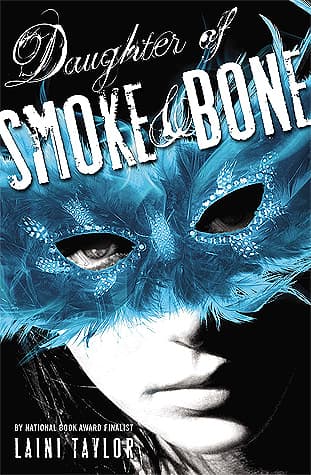
Laini Taylor (2011)
Genre
Fantasy / Young Adult / Romance
Reading Time
9-10 hours
Key Themes
See below
Sign in to track this book
A blue-haired art student in Prague, whose sketchbooks teem with monsters, discovers her true identity is entwined with an ancient, violent war between angels and devils, sparked by a forbidden love that transcends worlds and time.
Karou, a seventeen-year-old art student in Prague, lives a seemingly normal life, attending classes and sketching creatures in her notebook. Her reality is more complex. She has bright blue hair and speaks multiple languages, some non-human. Periodically, Brimstone, a chimaera who is her guardian, summons her for 'errands' through magical portals. These errands involve collecting human teeth, which Brimstone uses as currency for his wish-granting magic. Karou travels to various bizarre and sometimes dangerous locations, gathering teeth while trying to maintain a normal life with her human best friend, Zuzana.
A new, ominous development begins across the globe: black, scorched handprints appear on doorways. Winged beings, later revealed as angels, leave these marks as they cross into the human world through rifts in the sky. During an errand in Marrakesh, Karou meets one such angel, Akiva, in a dark alley. Their first meeting is violent. Akiva, an angel warrior, hunts chimaera and is drawn to Karou's unusual presence. He leaves a distinctive burning mark on her hand, signifying her as a chimaera, though she doesn't understand its meaning then.
Despite the initial hostile encounter, Karou and Akiva are drawn to each other. Akiva stalks Karou, observing her from a distance, fascinated by her beauty and mystery. Karou, though wary, is also captivated by the handsome, melancholic angel. Their interactions become more frequent, often in secret, and a powerful, forbidden attraction blossoms. Akiva reveals he is an angel, an ancient enemy of the chimaera, and searches for answers about the recent resurgence of chimaera activity and the black handprints, which are part of a larger, escalating war.
As Karou's errands become more urgent due to Brimstone's dwindling supply of teeth, she questions the true nature of his magic. She eventually presses him for answers. Brimstone reveals the grim truth: the teeth he collects are not merely currency, but the essence of chimaera souls. He uses them in his resurrection magic, crafting new bodies for fallen chimaera warriors. This revelation deeply disturbs Karou, forcing her to confront the moral implications of her role and the true cost of her 'family's' survival, shaking her understanding of her own identity and purpose.
Akiva, haunted by his past and the escalating war, confides in Karou. He reveals the black handprints are left by angels searching for chimaera to kill, a brutal reprisal for past conflicts. He also shares his weariness with the endless war between angels and chimaera. During one of their clandestine meetings, Akiva confesses his love for Karou, a love that transcends the ancient hatred between their peoples. However, their fragile bond shatters when Karou discovers Akiva has been secretly tracking her and her chimaera family, leading to deep betrayal and heartbreak for her.
The angels, led by Akiva's siblings Liraz and Hazael, find Brimstone's hidden den. A fierce and bloody battle ensues, with the angels unleashing their full might against the chimaera. Many chimaera are killed, and the sanctuary, Karou's only home, is destroyed. Brimstone, though powerful, is gravely wounded. Karou witnesses the devastation firsthand, her world crumbling. This attack solidifies her resolve to fight for her chimaera family, intensifying her hatred for the angels, including Akiva, whom she believes is responsible for the destruction and loss.
After the attack, a dying Brimstone finally reveals the truth of Karou's origin. He shows her a memory, a vision of her past life: she was Madrigal, a powerful chimaera warrior and healer, who fell in love with an angel general, Akiva. Their forbidden love led to a devastating betrayal and her execution by the angels. Brimstone, who was Madrigal's mentor, resurrected her as Karou, erasing her memories to protect her. This revelation shatters Karou's understanding of herself, explaining her blue hair, her affinity for chimaera, and her connection to Akiva.
The narrative shifts to a flashback, detailing the history of Madrigal and Akiva's romance. Madrigal, a chimaera healer and warrior, fell deeply in love with Akiva, an angel general, despite the brutal war between their peoples. Their secret relationship blossomed, fueled by a shared desire for peace. Their love was discovered, leading to Madrigal's capture and a public execution by the angels for treason, orchestrated by Akiva's brother Jael. Akiva, heartbroken and powerless to save her, was forced to watch, a trauma that has haunted him since. This backstory provides context for their present connection and the depth of their past tragedy.
Akiva, realizing the full extent of the damage he has caused and the truth of Karou's identity, is consumed by grief and regret. He understands that he has, again, been instrumental in the destruction of Madrigal's life. He desperately seeks out Karou, trying to explain his actions and his enduring love. Karou, grappling with her newly restored memories and the pain of the present, is torn between her love for Akiva and her loyalty to her chimaera family, now decimated. She must decide if she can forgive him and if their love can survive the weight of their shared, tragic history and the ongoing war.
The villainy of Jael, Akiva's brother and the leader of the angels, comes to light. He orchestrated Madrigal's execution not just out of hatred for chimaera, but as a calculated move to escalate the war and consolidate his power. He also reveals his ultimate plan: to use the human world as a new battleground and to exploit its resources for the angels' benefit. He is specifically interested in the human teeth, having learned of their power in chimaera resurrection. This discovery adds another layer of danger, as the human world is now directly threatened by the otherworldly conflict.
Consumed by grief and a desire for revenge for her fallen chimaera family, Karou confronts the angels responsible for the attack. In a moment of raw power and sorrow, she reclaims the bag of teeth, the very souls of her chimaera brethren, from the angels. This act is a symbolic reclamation of her heritage and a declaration of war. She also uses her understanding of Brimstone's magic to make a devastating choice, setting the stage for a new phase of the conflict and indicating her path towards becoming a powerful figure in the chimaera resistance.
With her memories fully restored and her identity as Madrigal embraced, Karou makes a definitive choice. She refuses to allow her chimaera family to be extinguished. She understands that Brimstone's magic, fueled by the teeth, is the key to their survival. She sets out on a new path, determined to learn and master the resurrection magic herself, becoming the new 'Brimstone' for her people. Akiva, recognizing his past mistakes and the sincerity of his love, pledges to help her, hoping to find a way to end the war and forge a future where angels and chimaera can coexist, even if it means betraying his own kind.
The Protagonist
Karou begins as an innocent, amnesiac girl and develops into a self-aware chimaera warrior, embracing her past and taking on the responsibility of her people's future.
The Love interest, Deuteragonist
Akiva starts as a dutiful but conflicted warrior and evolves into a revolutionary, willing to defy his family and species for love and peace.
The Supporting
Brimstone remains steadfast in his role but ultimately passes on his knowledge and responsibility to Karou, ensuring the chimaera's continuation.
The Supporting
Zuzana begins as an ordinary human friend and evolves into a trusted confidante, accepting Karou's supernatural life.
The Supporting
Liraz remains largely unchanged in her convictions, serving as a foil to Akiva's evolving perspective.
The Supporting
Hazael, like Liraz, mostly maintains his established character, supporting Akiva while adhering to Seraph principles.
The Antagonist
Jael solidifies his role as the primary antagonist, revealing his true malicious intentions and expanding the scope of the conflict.
The Supporting
Yasri remains a consistent, supportive character, embodying the chimaera's resilience and community.
The novel explores identity through Karou's journey. Initially, she feels like an outsider in the human world, with her blue hair and secret errands, and questions who she is. This struggle for self-discovery culminates in the revelation that she is Madrigal, a resurrected chimaera. Her acceptance of this dual identity – human and chimaera, Karou and Madrigal – is central to her development. The chimaera's constant need for resurrection and their existence in hidden dens also shows their struggle for a place to belong in a hostile world, contrasting with the angels' sense of inherent superiority and claim to the world.
“Once upon a time, an angel and a devil fell in love. It did not end well.”
The star-crossed romance between Karou/Madrigal and Akiva is the heart of this theme. Their love transcends the ancient, brutal war between their species, forcing them to defy their families and traditions. Madrigal's original sacrifice of her life for loving Akiva, and Akiva's subsequent torment, highlight the immense cost of their forbidden connection. In the present, their renewed love faces similar obstacles, forcing Akiva to consider betraying his own kind and Karou to reconcile her love with the destruction his people have wrought. Their willingness to risk everything for each other shows the power of love to challenge ingrained hatreds.
“He was a soldier, but she was a warrior. He was a Seraph, and she was a Chimaera. They were enemies. They were lovers. And they were doomed.”
The novel portrays the devastating and seemingly endless cycle of war between the angels and the chimaera. Generations of conflict have ingrained deep hatred and prejudice into both races, making peace seem impossible. The black handprints symbolize the angels' aggressive expansion and the chimaera's desperate fight for survival. Akiva's weariness with the war and his desire for a different path contrast with figures like Jael, who actively perpetuate and escalate the violence. The story suggests that understanding and breaking this cycle requires courage and a willingness to defy tradition, as shown by Madrigal and Akiva's attempts to forge a truce.
“The world was a cruel joke, a cosmic comedy in which the punchline was always 'war'.”
This theme explores characters' attempts to defy or fulfill their destiny. Karou's journey to uncover her past as Madrigal suggests a fated reunion with Akiva, yet both characters actively make choices that challenge their predetermined roles as enemies. Madrigal's initial love for Akiva was an act of free will against the backdrop of war, and Karou's decision to embrace her chimaera identity and take on Brimstone's role demonstrates her agency in shaping her future. The narrative questions whether their love is a repetition of a tragic past or an opportunity to forge a new, hopeful future, emphasizing that choices, even those made under immense pressure, can alter destiny.
“History is a wheel, for the most part. What's happened before will happen again.”
Human teeth are used by Brimstone to resurrect fallen chimaera.
The collection of human teeth is a central plot device. Initially presented as a mysterious currency for Brimstone's 'wishes,' it is later revealed that these teeth are the essence of chimaera souls, used in a powerful form of resurrection magic. This magic allows fallen chimaera warriors to be reborn into new bodies, sustaining their dwindling race against the Seraphim. The dwindling supply of teeth creates urgency for Karou's errands and highlights the precarious existence of the chimaera. The device also serves to reveal Karou's own past as a resurrected chimaera, Madrigal, and ultimately becomes the key to her taking on a leadership role for her people.
A magical necklace that allows Karou to travel between worlds.
Karou's wishbone necklace is the physical manifestation of her ability to travel between the human world and the chimaera's hidden domains. Each wishbone acts as a portal, allowing her to instantly transport to various locations across the globe or to Brimstone's den. This device facilitates Karou's mysterious errands and her secret life, enabling the global scope of the story. It also symbolizes her connection to the otherworldly and her unique position between two worlds. The necklace's functionality is directly tied to Brimstone's magic, and its eventual destruction during the angel attack underscores the severity of the threat to the chimaera's sanctuary.
Karou's amnesia about her past life as Madrigal is gradually revealed.
Karou's initial amnesia regarding her past life as Madrigal is a crucial plot device, driving much of the mystery and suspense in the first half of the book. Her fragmented memories, inexplicable skills, and the mysterious nature of her existence create a compelling 'who am I?' narrative. The gradual restoration of her memories, triggered by her interactions with Akiva and Brimstone's final revelation, serves as a major turning point in the plot. This device allows for a dramatic reveal of the tragic backstory and fundamentally reshapes Karou's understanding of herself, her connection to Akiva, and her role in the ongoing war.
Scorched handprints left by angels, signaling their presence and hunt.
The black handprints are an ominous and recurring symbol introduced early in the novel. These scorched marks, appearing on doorways around the world, are left by the Seraphim as they hunt down chimaera. This device effectively builds tension and foreshadows the escalating conflict. It serves as a visual representation of the angels' intrusion into the human world and their relentless pursuit of their enemies. For Karou, these marks are a direct threat to her 'family' and eventually lead her to her first confrontational encounter with Akiva, setting the stage for their complicated relationship and the unraveling of her past.
“Hers was the kind of beauty that could make you forget to breathe.”
— Describing Karou's striking appearance, particularly her blue hair and tattoos.
“If you don't fight for what you want, you deserve what you get.”
— A driving philosophy for Karou, reflecting her proactive nature.
“Hope was a thing with feathers, but it was also a thing with fangs.”
— Reflecting on the duality of hope, its potential for both good and harm.
“Once upon a time, an angel and a devil fell in love. It did not end well.”
— The opening line of the book, immediately setting a tone of tragic romance.
“The world was a book, and those who did not travel read only one page.”
— Karou's perspective on the importance of experiencing different places and cultures.
“He did not know he was a fool until she left him. And even then, he was not entirely convinced.”
— A reflection on the blindness of love and the pain of its loss.
“To be loved was to be known. To be known was to be exposed. To be exposed was to be vulnerable. To be vulnerable was to be hurt.”
— Karou's internal musings on the risks inherent in deep emotional connection.
“The heart, she’d learned, was a tool, like any other. And it could be put to good use, or to ill.”
— A more cynical take on emotions, viewing them as instruments that can be wielded.
“It was impossible to be angry at someone who was trying to make you laugh.”
— Highlighting the power of humor to defuse tension and build connection.
“Every soul is a world. In each world, there is a star. And that star is hope.”
— A poetic and hopeful sentiment about the inherent light within every being.
“There was a darkness in the world, and it was not just in the shadows.”
— Acknowledging the pervasive nature of evil and its presence even in unexpected places.
“Sometimes, the only way to save a life was to take one.”
— A morally ambiguous statement reflecting the tough choices characters face in wartime.
“Love was a dangerous thing. It could make you do things you never thought you would.”
— A warning about the transformative and sometimes destructive power of love.
“He was a beautiful ruin. A magnificent disaster.”
— Describing Akiva, capturing his complex and troubled nature.
“The past was a ghost, always there, always watching.”
— Reflecting on the inescapable influence of history and past events on the present.
Ready to see how well you understood this book? Take our interactive quiz with 10 questions.

Biography coming soon.







