“The Force is a being, Plagueis. It has a will, and it has chosen me.”
— Palpatine's realization about his own connection to the Force and the Force's will.

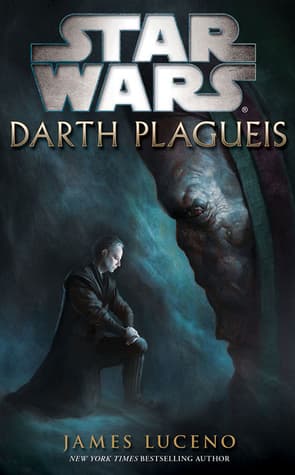
James Luceno (2012)
Genre
Fantasy / Science Fiction
Reading Time
630 min
Key Themes
See below
Sign in to track this book
Explore the chilling origin of Palpatine's master, Darth Plagueis, as he ruthlessly pursues immortality through the dark side, only to sow the seeds of his own betrayal by his ambitious apprentice, Darth Sidious.
Hego Damask, a young Muun from Mygeeto, is secretly the apprentice of the Bith Sith Lord, Darth Tenebrous. During a mission to Bal'demnic to investigate a cortosis mining operation, a rival criminal organization sabotages Tenebrous's ship. The ship crashes, trapping Tenebrous, who is severely injured. Damask, who has been studying the Force's connection to midi-chlorians and life creation, uses the Force to crush Tenebrous's skull, fulfilling the Sith Rule of Two. He claims the mantle of Darth Plagueis, vowing to surpass his master's limitations and achieve immortality through the Force. This ambition drives his every action and shapes his understanding of the dark side.
Darth Plagueis, now a powerful Sith Lord, travels to Naboo, drawn by a powerful disturbance in the Force. He encounters Sheev Palpatine, a young, ambitious, and resentful son of a prominent political family. Plagueis senses Palpatine's immense raw power in the dark side, fueled by his hatred for his father and his desire for control. Recognizing Palpatine as the ideal apprentice to aid his long-term plans for galactic domination and his pursuit of immortality, Plagueis subtly manipulates events, eventually orchestrating the death of Palpatine's family. Palpatine, now freed from his past and embracing his hidden darkness, pledges himself to Plagueis, taking on the Sith name Darth Sidious.
Under Plagueis's guidance, Darth Sidious begins his ascent through the galactic political ranks, starting as a Senator for Naboo. They meticulously plan the downfall of the Galactic Republic and the Jedi Order, identifying key figures to manipulate and institutions to corrupt. Plagueis focuses on his scientific and mystical research into the midi-chlorians, attempting to unlock the secrets of life and death, while Sidious establishes a public persona as a benevolent politician. They discuss their ultimate goal: not just to rule the galaxy, but to fundamentally alter the nature of the Force itself, believing the dark side to be the true path to ultimate power and control over existence.
Darth Plagueis dedicates himself to his forbidden research, studying ancient Sith lore and conducting experiments on living beings, attempting to manipulate midi-chlorians to create life and prevent death. He develops a deep understanding of the Force's connection to biological processes. During this period, the Force itself seems to react to his unnatural meddling, creating a 'Vergence.' Many Sith acolytes interpret this as a counter-response to Plagueis's actions. It is implied that his direct influence on the midi-chlorians ultimately results in the virgin birth of Anakin Skywalker on Tatooine, a powerful being conceived by the Force itself, though Plagueis is unaware of the specific outcome of his influence.
Darth Sidious, under Plagueis's direction, manipulates the political landscape to empower the Trade Federation. He guides the election of Nute Gunray as its new Viceroy, exploiting Gunray's greed and cowardice. Sidious, through his identity as Darth Sidious, communicates directly with Gunray, promising him immense power and wealth in exchange for his cooperation. This manipulation is a step in their plan to destabilize the Republic, as the Trade Federation's growing influence and eventual blockade of Naboo will serve as the catalyst for the Clone Wars and the ultimate downfall of the Republic, all while deflecting suspicion from Sidious's true identity.
Darth Sidious orchestrates the Yinchorri Uprising, a conflict designed to test the Jedi Order's readiness and capabilities, and to erode public trust in the Republic's ability to maintain peace. The Yinchorri, a species resistant to the Force, are armed and incited to rebellion by Sidious's agents. The Jedi Council dispatches multiple Jedi Masters to quell the uprising, suffering casualties. This event serves multiple purposes: it distracts the Jedi, highlights the Republic's weaknesses, and allows Sidious to gauge the Jedi's strategic thinking and combat prowess, providing valuable intelligence for their future plans of annihilation.
As the Republic continues its slow decline, Sidious exploits various political crises in the Mid-Rim, subtly encouraging discontent and secessionist movements. During this period, he observes Jedi Master Dooku, sensing his disillusionment with the Jedi Order and the Republic. Sidious recognizes Dooku's immense power, strategic mind, and growing affinity for the dark side. While not yet recruiting him, Sidious lays the groundwork for future contact, anticipating Dooku's eventual departure from the Jedi and his potential to become an asset in their plan to create a separatist movement that would plunge the galaxy into civil war, further weakening the Jedi and the Republic.
Driven by his own ambition and a desire for an active weapon, Darth Sidious secretly takes on a second apprentice, a Zabrak male named Maul. Sidious trains Maul intensely in the ways of the dark side and lightsaber combat, shaping him into a brutal, loyal assassin. Maul is unaware of Plagueis's existence, believing Sidious to be the sole Dark Lord. This deception by Sidious highlights his growing independence and his willingness to break Sith tradition, as the Rule of Two dictates only one master and one apprentice. Plagueis remains largely unaware of Maul's existence and training, focused intently on his own research into immortality.
Darth Sidious, with Plagueis's approval, orchestrates the Trade Federation's blockade and invasion of Naboo. This manufactured crisis creates a power vacuum and public sympathy for Senator Palpatine. Through political maneuvering and the manipulation of key senators, Palpatine is nominated and successfully elected as the Supreme Chancellor of the Galactic Republic. This election is a turning point in the Sith's plan, placing Sidious in a position of power and authority within the Republic, giving him control over its military and political apparatus, while still maintaining his secret identity as a Sith Lord.
During the Naboo Crisis, the Jedi Council, led by Masters Yoda and Mace Windu, are aware of a dark presence but fail to identify the true Sith Lord orchestrating events. They encounter Darth Maul, who reveals himself as a Sith, but mistakenly believe him to be the sole threat. The Jedi are unable to sense Plagueis's presence, as his mastery of the Force and his unique connection to life allow him to mask himself effectively. Their focus on Maul and their inability to perceive the deeper conspiracy allows Sidious to operate unchecked, consolidating his power and continuing to manipulate events from within the Republic's highest office, demonstrating their growing detachment from the Force.
As the Naboo Crisis unfolds and Sidious solidifies his political power, Plagueis feels he is close to achieving true immortality, believing he has mastered the ability to influence midi-chlorians to create life and prevent death. He confides his progress to Sidious, sharing his plans for a new, eternal Sith Order. Sidious, however, sees Plagueis's growing confidence as a weakness and an opportunity. He has surpassed his need for Plagueis's guidance and views his Master's continued existence as a threat to his own ultimate power. The Rule of Two demands the apprentice surpass and destroy the master, and Sidious prepares to fulfill this ancient tradition.
On the night of his election as Supreme Chancellor, Darth Sidious visits Darth Plagueis in his Coruscant apartment. Plagueis, exhausted and in a deep, Force-induced sleep after celebrating their perceived victory and the near-completion of his immortality research, is vulnerable. Sidious, filled with glee and dark power, unleashes a torrent of Force lightning upon his unsuspecting Master. He continues the assault, slowly draining Plagueis's life force, ensuring his demise. With Plagueis dead, Sidious officially becomes the sole Dark Lord of the Sith, ready to execute the final stages of their grand plan, now entirely on his own terms and without competition for ultimate power.
The Protagonist/Antagonist
From an ambitious apprentice who kills his master to a powerful Sith Lord who nears his goal of immortality, only to be betrayed and murdered by his own apprentice.
The Antagonist/Protagonist (co-lead)
From a resentful nobleman with hidden dark potential to a master manipulator who rises to Supreme Chancellor and ultimately betrays and kills his master to become the sole Dark Lord.
The Supporting
Introduced as Plagueis's master, he is quickly eliminated to establish Plagueis's rise to power.
The Supporting
From a feral child to a highly trained Sith assassin, serving as Sidious's enforcer.
The Mentioned/Supporting
Portrayed as a respected Jedi Master slowly being drawn towards the dark side by disillusionment and Sidious's subtle manipulations.
The Mentioned
His mysterious birth is shown as a potential consequence of Plagueis's experiments.
The Supporting
Rises to power within the Trade Federation through Sidious's manipulation, becoming a key instigator of galactic conflict.
The Supporting
Remain largely static, serving as the unwitting obstacles and victims of the Sith's machinations.
The novel shows how unchecked ambition and the pursuit of ultimate power lead to corruption and self-destruction within the Sith. Darth Plagueis's relentless quest for immortality blinds him to his apprentice's treachery. Sidious's own ambition drives him to betray his master, even as he simultaneously plans to dominate the galaxy. This theme is clear when Sidious murders Plagueis, showing that the Sith's doctrine of seizing power at any cost makes betrayal an inherent part of their existence. This is seen in the final scene where Sidious unleashes Force lightning upon his sleeping master.
““The dark side of the Force is a pathway to many abilities some consider to be unnatural.””
Manipulation and deception are central to the Sith's strategy for galactic conquest. Darth Plagueis and Darth Sidious meticulously craft a long-term plan, using political intrigue, economic leverage, and misinformation to destabilize the Republic and discredit the Jedi. Sidious excels at maintaining a dual identity as the benevolent Senator Palpatine while secretly orchestrating chaos as Darth Sidious. The entire plot hinges on their ability to deceive not only the Republic and the Jedi but also each other, as shown by Sidious secretly training Darth Maul and ultimately betraying Plagueis. This constant web of lies shows the Sith's fundamental nature.
““There is no doubt that the Force wants to be free of the Jedi.””
The novel explores the philosophical nature of the Force, especially through Plagueis's perspective. He views the Force not as a mystical guide but as a raw power to be understood, controlled, and even reshaped. His experiments with midi-chlorians challenge the traditional Jedi understanding of the Force's will, blurring the lines between creation and destruction. The Force's mysterious 'Vergence' that results in Anakin Skywalker's birth is presented as a direct reaction to Plagueis's unnatural meddling, suggesting that the Force itself strives for balance and will react against those who seek to pervert its natural order. This highlights the dangers of attempting to 'master' something beyond one's comprehension.
““The Force is a river, and we are its engineers.””
The 'Rule of Two' – one master, one apprentice – is a foundational tenet of the Sith that dictates the apprentice will eventually betray and kill the master. This theme is established at the beginning with Plagueis's murder of Darth Tenebrous and culminates in Sidious's betrayal of Plagueis. The novel portrays this cycle not just as a tradition but as a self-destructive flaw within the Sith philosophy. Each master's pursuit of ultimate power makes them vulnerable, and each apprentice's ambition ensures their master's downfall. It's a never-ending loop of power, paranoia, and patricide, proving that even the most powerful Sith cannot escape this violent legacy.
““The apprentice grows strong, the master grows weak. It is the way of the Sith.””
The Sith doctrine of one master and one apprentice, ensuring power transfer through assassination.
The Rule of Two is a central tenet of the Sith, established by Darth Bane. It dictates that there can only be two Sith Lords at any given time: a master to embody power and an apprentice to crave it. This rule serves as a driving force for the plot, as it necessitates the apprentice's eventual betrayal and murder of the master. It frames the entire relationship between Plagueis and Sidious, creating an inherent tension and an inevitable conclusion. The rule ensures that each successive Sith Lord is stronger and more cunning than the last, leading to the ultimate downfall of the Jedi and the Republic, but also guaranteeing the self-destruction of any Sith Lord who becomes too complacent.
Plagueis's unique ability and obsession to influence the Force's connection to life.
Midi-chlorian manipulation is Darth Plagueis's defining ability and his ultimate obsession. It allows him to influence the microscopic organisms that connect living beings to the Force, granting him the power to create life and prevent death. This plot device is crucial because it gives Plagueis his unique power, sets him apart from other Sith, and directly leads to events like the potential creation of Anakin Skywalker. His experiments and understanding of midi-chlorians provide a scientific, almost biological, dimension to the Force, challenging traditional mystical interpretations and driving a significant portion of the narrative's exploration of the dark side's ultimate potential.
The Sith's long-term strategy of destabilizing the Republic from within.
Political intrigue and manipulation are the primary tools used by Darth Sidious, under Plagueis's guidance, to achieve galactic domination. This plot device involves a complex web of schemes, including the manipulation of the Trade Federation, the orchestration of conflicts like the Yinchorri Uprising, and Sidious's own rise through the political ranks from Senator to Supreme Chancellor. It highlights the Sith's patience and their understanding of how to exploit the Republic's weaknesses and democratic processes. This slow, insidious approach allows them to dismantle the existing power structures from within, rather than through direct military conquest, making their threat largely invisible to the unsuspecting Jedi and the galaxy at large.
Subtle hints that Plagueis's experiments led to the creation of the 'Chosen One'.
The novel employs foreshadowing, particularly regarding the birth of Anakin Skywalker. While Anakin is not a character in the book, his conception is heavily implied to be a direct or indirect consequence of Darth Plagueis's unprecedented experiments with midi-chlorian manipulation to create life. The Force's 'Vergence' is discussed, a powerful anomaly that many Sith interpret as a counter-response to Plagueis's unnatural actions. This subtle linking of Plagueis's dark side research to Anakin's virgin birth serves as a powerful piece of foreshadowing, connecting the events of this novel directly to the larger Star Wars saga and establishing the ironic consequence of Plagueis's quest for ultimate power.
“The Force is a being, Plagueis. It has a will, and it has chosen me.”
— Palpatine's realization about his own connection to the Force and the Force's will.
“Is it possible to learn this power?”
— Anakin Skywalker's famous question to Palpatine, referencing the ability to save Padmé.
“Ironic. He could save others from death, but not himself.”
— Palpatine's retelling of the Tragedy of Darth Plagueis the Wise to Anakin.
“To die is to become one with the Force. To cheat death is to make the Force your slave.”
— Plagueis's philosophical view on life, death, and the Force.
“The dark side is a path to many abilities some consider to be unnatural.”
— Palpatine explaining the potential of the dark side to Anakin.
“There is no such thing as 'natural' in the Force, only what is willed.”
— Plagueis's belief that the Force can be manipulated to any extent.
“The Force is a river, and the Jedi are merely trying to dam it. We are trying to reroute it.”
— Plagueis's metaphor for the Sith's approach to the Force versus the Jedi's.
“Power is not given. It is taken.”
— A core tenet of Sith philosophy, often echoed by Plagueis and Palpatine.
“The dark side is not merely an absence of light; it is a presence, a living entity that hungers.”
— Plagueis's understanding of the dark side as an active force.
“The Jedi believe they are the guardians of peace and justice. They are merely the guardians of stagnation.”
— Plagueis's criticism of the Jedi Order's resistance to change and progress.
“The Force did not create life; it merely sustains it. We will be the ones to create it.”
— Plagueis's ultimate ambition to master life creation through the Force.
“To conquer the fear of death, one must first conquer death itself.”
— Plagueis's motivation behind his experiments with midi-chlorian manipulation.
“The galaxy will be remade, and I will be at its heart.”
— Palpatine's vision for his future role in the galaxy, as he rises to power.
“A Sith Lord's greatest weapon is not the lightsaber, but cunning and manipulation.”
— Plagueis teaching Palpatine the true nature of Sith power.
Ready to see how well you understood this book? Take our interactive quiz with 10 questions.

Biography coming soon.







