“The Force is strong with the origami Yoda. A great warrior he is.”
— Dwight's observation about Origami Yoda's power.

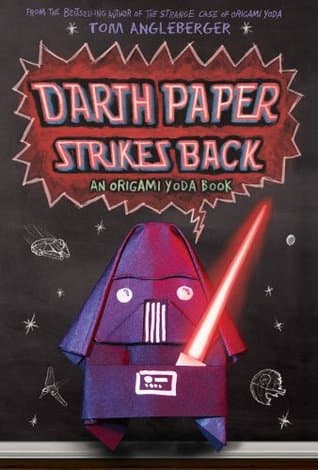
Tom Angleberger (2011)
Genre
Fantasy / Children's / Young Adult
Reading Time
90 min
Key Themes
See below
Sign in to track this book
When Origami Yoda's creator is suspended, a group of middle schoolers must gather evidence to clear their friend's name and stop Darth Paper's mischief.
The story begins with Tommy Lombardo introducing the 'Case File: The Strange Case of Dwight and Origami Yoda vs. Harvey and Darth Paper.' Tommy explains that Dwight, Origami Yoda's quirky creator, is suspended from McQuarrie Middle School and faces expulsion. This means no more Origami Yoda for advice. The kids believe Dwight is innocent and that Harvey, Darth Paper's creator, is behind Dwight's problems. Tommy, with his friends Kellen and Mike, starts collecting testimonials and evidence from classmates to prove Dwight's innocence and bring back Origami Yoda. They hope to present a strong argument to Principal Rabbski.
Tommy explains how Harvey, Dwight's rival, began a campaign against Origami Yoda, saying it made kids dependent. Harvey created Darth Paper, a puppet meant to cause trouble and give bad advice. Harvey then accused Dwight of being a bad influence, citing incidents like a messy lunchroom and a poorly done school play. These accusations, with Darth Paper's disruptive presence, got Principal Rabbski's attention. The students suspect Harvey deliberately caused events to get Dwight in trouble, clearing the way for Darth Paper.
One key incident leading to Dwight's suspension is a chaotic lunchroom scene. Harvey said Dwight and Origami Yoda encouraged students to make a mess, causing a food fight. However, testimonials from students like Sara and Rhondella tell a different story. They say Dwight, guided by Origami Yoda, was trying to organize the lunch line and help clean. The situation got out of control due to a misunderstanding and general student rowdiness, not Dwight's bad intentions. Harvey, though, twisted the story to make Dwight seem responsible, further convincing the principal.
Another piece of evidence against Dwight is his part in the school play, 'Grease.' Harvey claimed Dwight caused a power outage during a performance, ruining the show. But students in the play, like Caroline and Lance, say otherwise. They explain that Dwight, guided by Origami Yoda, was trying to fix a faulty spotlight backstage. The power outage was an accident, a result of his clumsy but well-meaning efforts, not sabotage. Harvey again used this to make Dwight look like a disruptive force, eroding the principal's trust.
Principal Rabbski, influenced by Harvey's complaints and the seemingly chaotic events around Dwight, starts her own investigation. She sees Dwight as a strange, possibly problematic student whose influence, especially through Origami Yoda, harms school order. She takes Harvey's accusations seriously, seeing them as valid concerns about student behavior. Her view is shaped by the visible disruptions and Harvey's convincing arguments, leading her to think Dwight's expulsion might be needed to restore order and discipline. The students know they need a strong counter-argument to change her mind.
The case file has sections describing Darth Paper's bad nature and Harvey's manipulation. Students like Quavando and Lena explain how Darth Paper, unlike Origami Yoda, gives bad advice, encourages mischief, and spreads negativity. They recall times when Darth Paper's suggestions led to arguments, pranks, and unhappiness. It becomes clear that Harvey uses Darth Paper to undermine Dwight and control things. The testimonials show the contrast between Origami Yoda's wisdom and Darth Paper's destructive influence, highlighting Harvey's role in Dwight's situation.
Throughout the case file, many students offer testimonials that show Dwight as kind-hearted, though socially awkward. They recall how Origami Yoda's advice, through Dwight, helped them with problems, from bullies to tests. For example, Kassidy explains how Origami Yoda helped her with stage fright. These stories show that Dwight's actions, even with unintended results, were always meant to help his classmates. The students want to show Principal Rabbski that Dwight's quirks should not overshadow his positive effect on the school.
As the students put together their case file, Principal Rabbski is in a difficult position. She values order but also cares about her students. She receives both Harvey's complaints and growing support for Dwight. The testimonials start to challenge her initial belief that Dwight is a problem. She has to reconsider, weighing the visible disruptions against the strong evidence of Dwight's positive influence and the community's wish for Origami Yoda's return. Her internal conflict shows how hard it is to make fair judgments with limited information.
With all testimonials and evidence collected, Tommy, Kellen, and Mike finish their case file. They organize the accounts to present a clear and strong argument for Dwight's innocence and Origami Yoda's positive effect. They understand that success depends on convincing Principal Rabbski to look past the surface incidents and see Dwight's true character and value to the school. Anticipation builds as they get ready for the important meeting, hoping their efforts will save their friend and bring back the beloved Origami Yoda.
During the presentation, Tommy and his friends present their case. Principal Rabbski listens closely, reading the detailed testimonials. The many positive accounts and logical explanations for the incidents Harvey blamed on Dwight begin to change her mind. She sees the students' genuine concern and affection for Dwight. Ultimately, convinced by the evidence, Principal Rabbski decides not to expel Dwight. Instead, she creates a new policy, allowing Origami Yoda to return with guidelines for school order. This brings relief and joy to the students, and Dwight is reinstated.
The Protagonist
Tommy develops from a passive observer to an active advocate, finding his voice and leadership skills in defending his friend.
The Protagonist
Dwight's character remains consistent in his quirky nature, but his value to the school community is finally recognized and appreciated.
The Supporting
Origami Yoda's influence is challenged and ultimately reaffirmed, solidifying his place as a beloved school figure.
The Antagonist
Harvey's malicious intentions are exposed, and his efforts to undermine Dwight ultimately fail, though he remains unrepentant.
The Supporting
Darth Paper's destructive influence is recognized and ultimately rejected by the majority of the student body.
The Supporting
Principal Rabbski shifts from a strict disciplinarian to someone who understands the nuanced positive impact of an unconventional student.
The Supporting
Kellen's loyalty and collaborative spirit are central to the group's success in defending Dwight.
The Supporting
Mike, like Kellen, demonstrates the power of collective action in defending a friend.
This theme explores the conflict between allowing unique people like Dwight to express themselves and the pressure to fit into school norms. Dwight, with his quirks and Origami Yoda, represents individuality. Harvey and Principal Rabbski (at first) represent the wish for conformity and order. The book shows that individuality, even if unusual, can help a community, as seen in Origami Yoda's advice. The students' fight to save Dwight is a fight for the right to be different.
“Just because someone's weird doesn't mean they're bad. Sometimes, weird is exactly what you need.”
The book's entire premise is the students' search for justice for Dwight. Tommy and his friends actively support Dwight, putting together a detailed case file to prove he is innocent. This theme shows how important it is to speak up for those misunderstood or unfairly accused. It demonstrates how working together and presenting clear, evidence-based arguments can challenge authority and lead to a fair result, even against people like Harvey and the principal's initial judgment.
“We had to prove Dwight was innocent. Not just to save him, but to show that good things, even weird good things, deserve to stick around.”
The novel shows how different views can change how events are understood. Harvey presents a biased view of Dwight's actions, leading Principal Rabbski to a negative conclusion. But many testimonials from other students offer different views, showing Dwight's true, positive intentions behind seemingly chaotic incidents. The book teaches that it's important to consider multiple views before judging, showing how a narrow view can lead to unfairness, and how a broader understanding leads to empathy and a fair solution.
“It all depends on how you look at it. One person's disaster is another person's attempt to help.”
This theme is shown by the two paper puppets: Origami Yoda represents good influence, wisdom, and helpfulness, and Darth Paper represents bad influence, mischief, and harm. The students' experiences with both puppets clearly show the effect of positive and negative forces in a community. Origami Yoda inspires kindness and problem-solving, while Darth Paper causes chaos and conflict. Origami Yoda's eventual win means positive influence wins over destructive forces, reinforcing that good deeds and intentions ultimately succeed.
“Yoda always tries to help. Darth Paper just makes everything worse.”
The entire story is presented as a compilation of student testimonials and evidence.
The novel uses a unique framing device: it is presented as a 'case file' compiled by Tommy and his friends. This includes written testimonials, drawings, and occasional commentary from Tommy. This device allows for multiple perspectives on the central conflict, giving voice to various characters and building a comprehensive picture of events. It also immerses the reader directly into the students' investigative process, making them feel like participants in the effort to save Dwight. This structure cleverly reflects the real-world process of gathering evidence to prove a point.
The story is told through the varied accounts of many different students.
Instead of a single narrator, the plot unfolds through a series of testimonials from various students at McQuarrie Middle School. Each student offers their personal account of Dwight, Origami Yoda, Harvey, and Darth Paper, providing different angles and filling in details of the incidents leading to Dwight's suspension. This device builds a richer, more nuanced understanding of the characters and events, showcasing the 'power of perspective' and allowing the reader to piece together the truth alongside Tommy and his friends.
Origami Yoda and Darth Paper symbolize opposing forces of good and evil influence.
The origami puppets themselves serve as powerful symbols. Origami Yoda symbolizes wisdom, guidance, positive influence, and the quirky individuality that makes life interesting. Darth Paper, conversely, symbolizes negativity, mischief, destructive influence, and the forces of conformity. Their contrasting natures drive the central conflict and make the abstract concepts of good and evil, and helpfulness versus harm, tangible and relatable for the young audience. Their presence underscores the impact that even small, seemingly insignificant figures can have.
“The Force is strong with the origami Yoda. A great warrior he is.”
— Dwight's observation about Origami Yoda's power.
“Do or do not. There is no try. Unless it's a really hard test, then maybe try a little.”
— Origami Yoda's modified advice for Tommy.
“It is your destiny. To make a new Origami Yoda. One that does not give bad advice.”
— Tommy's internal struggle and realization about his role.
“The dark side is strong. But the power of friendship is stronger.”
— A common theme emphasized throughout the book.
“Never underestimate the power of a good paper airplane.”
— Dwight's practical advice, often overlooked.
“Sometimes the best way to solve a problem is to make a really cool folding puppet.”
— Dwight's unique approach to complex situations.
“Fear leads to anger. Anger leads to hate. Hate leads to ... well, mostly just bad grades.”
— Origami Yoda's adaptation of a famous Star Wars quote.
“The Force is not just about moving things with your mind. It's about being kind.”
— A profound lesson learned by the characters.
“Even a small piece of paper can change the galaxy.”
— Reflecting on the impact of Origami Yoda.
“When in doubt, consult the tiny paper puppet.”
— Tommy's go-to strategy for difficult decisions.
“The most important thing is to believe in yourself, even if you're a weird kid who folds paper.”
— A message of self-acceptance and individuality.
“True friendship is like a good origami fold: it holds together, even when things get creased.”
— A metaphor for the resilience of friendship.
“Sometimes, the best advice comes from the most unexpected places.”
— The overarching theme of the series, especially with Origami Yoda.
Ready to see how well you understood this book? Take our interactive quiz with 10 questions.

Biography coming soon.







