“The thing is, nobody *knows* what's going on. We just pretend we do.”
— Sim's internal thoughts about the adult world and its pretensions.


William Golding (1979)
Genre
Literary Fiction / Historical Fiction / Mystery
Reading Time
272 min
Key Themes
See below
Sign in to track this book
A scarred survivor of the London Blitz seeks redemption, his path leading him to a fiery confrontation with two destructive twins.
During the London Blitz, a German incendiary bomb hits a house in Regent's Park. A child, Matty, emerges naked and alive from the fire, but is horribly burned on one side of his body. Two elderly women, Miss Pringle and Miss Stella, find and take him in. Matty's origins are unknown; he is a war orphan with no memory of his past. His unique appearance and quiet nature set him apart. He undergoes extensive hospital treatment for his burns, a painful process that further isolates him and shapes his view of the world as a place of both suffering and strange survival.
Matty attends Greenfield boarding school, where his severe facial and body scars make him an outcast. The other boys are repulsed by his appearance, calling him 'Freak.' He endures constant bullying and is mostly ignored by staff. This isolation pushes Matty inward, where he develops a rich inner world. He experiences visions and hears voices, which he interprets as spiritual messages. He shows an unusual connection to nature and a detached way of observing people. Despite the hardship, he begins to feel a sense of purpose, though its nature remains unclear to him.
After leaving Greenfield, Matty tries to join society by becoming an apprentice at a general store. He works hard but remains an outsider, still dealing with his disfigurement and inner world. His visions and spiritual encounters become more intense and frequent, often involving a sense of an important task ahead. He tries to reconcile these deep internal experiences with the everyday reality of his life. This time is marked by his growing belief that he is meant for something beyond the ordinary, a calling he cannot yet name but feels with increasing urgency.
Driven by an inner force, Matty leaves England for Australia. He works odd jobs, living a nomadic life and continuing his spiritual quest. He meets various people, but none truly understand his unique perspective or struggles. He spends time in the wilderness, developing his connection to nature and his spiritual sensitivity. This journey is more about an internal pilgrimage than finding a specific place, a time of self-discovery and an attempt to understand his survival and visions. He returns to England feeling that the answers he seeks are still elusive, but his resolve has grown stronger.
At the same time, the story introduces Toni and Sophy, beautiful, identical twin sisters who grew up in the same wealthy London suburb as Matty. Despite their outward charm and privilege, both girls are deeply troubled and morally corrupt. Toni is intellectual but nihilistic, involved in radical politics and terrorism, seeking to control the world through violence. Sophy is sexually manipulative and emotionally cold, using her beauty to control others and find sadistic pleasure in their suffering. Their upbringing, though seemingly ideal, created an emptiness and a capacity for cruelty that contrasts with Matty's spiritual quest.
Toni becomes deeply involved with a group of young, disillusioned radicals, embracing their revolutionary ideas. She helps plan acts of political violence, driven by a cold, intellectual belief that society needs to be overthrown. Her actions lack genuine empathy, fueled by a detached sense of superiority and a desire to see her theories cause destruction. She sees violence as a necessary tool for change, welcoming the chaos it promises. Her journey shows the dangerous appeal of extremist ideologies when combined with a lack of moral guidance and a deep inner emptiness.
Sophy, unlike Toni, acts with cruelty on a more personal scale. She uses her striking beauty and sexual appeal to trap and control men, finding satisfaction in their subservience and humiliation. She is a master manipulator, exploiting weaknesses for her own amusement and power. Her relationships are transactional and lack real affection, showing a deep pathology. Her actions reveal a different kind of 'darkness visible,' hidden beneath charm and superficial perfection, yet equally destructive to herself and others.
Matty eventually returns to England, feeling an even stronger pull toward an unknown destiny. His spiritual experiences become more intense, leading to a clear sense of a mission he must complete. He believes he is a 'spirit' or 'daemon' sent to perform a specific, redemptive act. He begins to feel a strong connection to the twins, Toni and Sophy, sensing that their paths will intersect. He is now less a wanderer and more a guided figure, moving with quiet determination toward a destined encounter that will fulfill his purpose.
Toni and her co-conspirators finalize their plan to kidnap Prince Fahad, a wealthy Arab boy whose family is in London. Their motive is both political and financial, aiming to use the ransom to fund their revolutionary activities. Unknown to Toni, Sophy has also become involved with a man connected to the Prince's family, Mr. M. This involvement inadvertently draws Sophy into the kidnapping plot, setting the stage for the three main characters to meet. The plan is elaborate, cold-blooded, and designed to cause maximum disruption and fear.
On the night of the kidnapping, Matty, guided by his powerful inner visions and a strong sense of urgency, finds himself drawn to the house where Prince Fahad is being held. He does not understand the specifics, but he knows he must be there. The house becomes the point where the separate stories of Matty, Toni, and Sophy finally connect. His presence is not by chance; it is the culmination of his life's journey, bringing him to the moment of his fated act, ready to intervene in the unfolding darkness.
Inside the house, the kidnapping is happening. Toni and her accomplices have Prince Fahad. Sophy is also present, having been drawn there by her own actions. Matty, sensing the extreme danger to the innocent boy, bursts into the scene. Despite his disfigurement, he confronts the terrorists. In a final act of self-sacrifice, Matty throws himself onto a grenade or similar explosive device, detonating it and saving Prince Fahad's life. His act is selfless, a pure expression of his long-sought purpose, fulfilling his destiny as a 'spirit' or 'daemon' of good, bringing light to the darkness.
Matty's sacrifice leaves the surviving characters, especially Toni and Sophy, deeply shaken. Toni is arrested, her revolutionary ideals broken by the violence she caused and the unexpected intervention. Sophy is also implicated, her manipulative world collapsing. The event forces them to confront their own moral emptiness. Matty, though physically gone, leaves a powerful spiritual legacy. His act of pure, selfless love and redemption contrasts with the darkness in the twins' lives, prompting reflection on good and evil, and the unseen forces in the world.
The Protagonist
Matty transforms from an isolated, scarred wanderer to a self-aware spiritual agent, culminating in a selfless act of sacrifice that fulfills his destiny.
The Antagonist
Toni's path leads her further into radicalism and violence, culminating in her involvement in a kidnapping and her subsequent arrest, forcing her to confront the consequences of her actions.
The Antagonist
Sophy's trajectory involves increasingly manipulative and cruel acts, leading her to be inadvertently caught up in Toni's plot and facing the collapse of her carefully constructed world.
The Mentioned
His arc is static; he is a symbol whose danger catalyzes the climax.
The Supporting
Her arc is static; she fulfills her role as Matty's initial rescuer and caregiver.
The Supporting
Her arc is static; she fulfills her role as Matty's initial rescuer and caregiver.
The Supporting
His arc is static; he is a tool in Sophy's manipulations, leading to a plot development.
The Mentioned
Their arc is static; they serve as a collective antagonist during Matty's school years.
The novel contrasts Matty's goodness and spiritual purity with the moral corruption of Toni and Sophy. Matty, despite his disfigurement and suffering, embodies selfless love and a search for meaning. The twins, beautiful and privileged, show different sides of human depravity: Toni's intellectual nihilism leading to political violence, and Sophy's sexual manipulation and sadistic control. Golding explores how evil can appear in both obvious, destructive acts and subtle, internal corruption, while goodness can come from the most unexpected places. The final confrontation is a literal battle between these forces.
“The darkness was visible. It was not a metaphor, but a fact.”
This theme is central to the novel, especially through Matty and the twins. Matty's hideous physical appearance hides an inner spiritual beauty and moral clarity, making him an outcast but also a figure of redemptive power. In contrast, Toni and Sophy have striking physical beauty and charm, which conceals their deep inner emptiness, cruelty, and moral decay. Golding challenges the reader to look beyond surface impressions, suggesting that true 'darkness' or 'light' lives not in outward form but in the soul and intentions of people. The world often misjudges based on what is 'visible.'
“He was the visible darkness, and they were the invisible light.”
Matty's entire life is a journey to understand and fulfill a spiritual calling. From his miraculous survival to his visions and nomadic life, he is driven by an inexplicable sense of purpose. He believes he is a 'spirit' or 'daemon' meant to perform a specific, redemptive act. His disfigurement can be seen as a sign of his unique spiritual status, separating him from the ordinary. His ultimate sacrifice is the culmination of this calling, a selfless act that redeems himself and, symbolically, the world from the darkness shown by the twins' actions. It suggests that true redemption often requires sacrifice and a connection to something beyond oneself.
“He knew he was a spirit. Not a man. A spirit.”
The novel begins with Matty's 'birth' from the literal fire of the London Blitz, making the war a foundational trauma. His physical scars are a permanent reminder of this origin, symbolizing the lasting damage of conflict. This trauma isolates him and shapes his identity, forcing him into an internal world. While Matty's scars are physical, the novel also hints at the psychological scars of a post-war generation, represented by the twins' moral emptiness, perhaps a result of a world that experienced such devastation. The Blitz is not just a backdrop but a crucible from which Matty emerges, marked but also, paradoxically, purified.
“The fire had given him life, and taken his face.”
Fire as both destructive and cleansing, a source of birth and scarring.
Fire is a potent symbol throughout the novel. Matty is literally 'born' from fire during the Blitz, making it a destructive force that also gives him life and his unique, scarred identity. It marks him as distinct and sets him on his spiritual path. The novel culminates in another fiery conflagration (the grenade explosion) where Matty makes his ultimate sacrifice, again linking fire to both destruction and a form of purification or redemption. It represents the chaotic forces of the world but also the transformative power of suffering and self-sacrifice.
The identical twins, Toni and Sophy, represent mirrored but distinct forms of evil.
The identical twins, Toni and Sophy, serve as a doppelgänger motif, highlighting different manifestations of human darkness. Their physical identicality contrasts sharply with their distinct moral corruptions: Toni's intellectual, politically-driven evil versus Sophy's sensual, manipulative evil. They are two sides of a coin, both representing a profound spiritual emptiness that stands in stark opposition to Matty's spiritual fullness. Their twinning emphasizes the pervasive nature of evil and its varied forms, suggesting that it can be both outwardly destructive and inwardly corrosive.
Matty's disfigurement makes him an outcast, allowing for unique spiritual insight.
Matty's severe disfigurement immediately positions him as an outsider or pariah figure in society. This isolation, forced upon him by others' revulsion and fear, paradoxically allows him to develop a profound inner life and unique spiritual insights. Unburdened by social norms or expectations, he becomes a detached observer, capable of seeing truths that others miss. His status as an outsider is crucial to his development as a spiritual agent, enabling him to fulfill his redemptive role without the corrupting influences of conventional society.
The twins, Toni and Sophy, act as foils to Matty's spiritual journey.
Toni and Sophy serve as direct foils to Matty. While Matty is physically hideous but spiritually pure, the twins are physically beautiful but spiritually corrupt. Matty seeks redemption and meaning through self-sacrifice and connection to a higher purpose; the twins seek power and gratification through destructive, selfish acts. Their contrasting paths highlight the central themes of good versus evil and the true nature of 'darkness visible.' Their presence emphasizes Matty's unique goodness and the profound spiritual stakes of his existence.
“The thing is, nobody *knows* what's going on. We just pretend we do.”
— Sim's internal thoughts about the adult world and its pretensions.
“He was a boy who had been burned, and the fire had not gone out of him.”
— Describing Matty's enduring trauma and its impact on his character.
“We are all of us, in some sense, accidents.”
— Matty reflecting on his own existence and the arbitrary nature of life.
“Evil is not a thing. It is the absence of good.”
— A philosophical discussion within the narrative about the nature of evil.
“The darkness was visible, not because it was light, but because it was so profoundly, intensely dark.”
— A key thematic statement about the nature of the book's title and its meaning.
“There are some things you cannot unsee, and some things you cannot unknow.”
— Matty's realization after experiencing a profound and disturbing event.
“The world was full of people who thought they knew best, and most of them were wrong.”
— Sim's cynical observation about the arrogance of others.
“What is a soul, if not the sum of our experiences and our reactions to them?”
— A character's musing on the definition of the human soul.
“He carried his past like a physical burden, a weight that never lessened.”
— Describing Matty's continuous struggle with his traumatic history.
“The deepest wounds are often invisible.”
— A character's reflection on the hidden suffering of individuals.
“To be human is to be flawed, to be forever striving and often failing.”
— A general reflection on the human condition.
“There was a kind of terrible beauty in absolute destruction.”
— A character observing the aftermath of a devastating event.
“Children see more than we give them credit for, and understand less.”
— An observation about the perceptive yet naive nature of children.
“The future is a thing we invent, not discover.”
— A character's thought on agency and the construction of one's destiny.
Ready to see how well you understood this book? Take our interactive quiz with 10 questions.
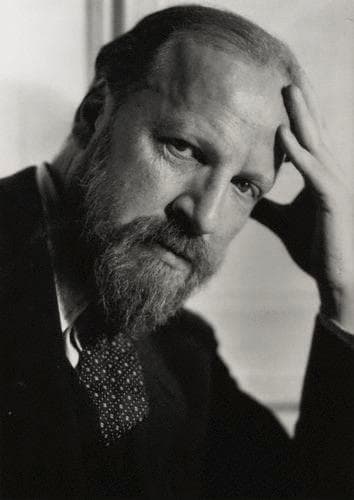
Sir William Gerald Golding was a British novelist, playwright, and poet. Best known for his debut novel Lord of the Flies (1954), he published another twelve volumes of fiction in his lifetime. In 1980, he was awarded the Booker Prize for Rites of Passage, the first novel in what became his sea trilogy, To the Ends of the Earth. He was awarded the 1983 Nobel Prize in Literature.







