“We are all broken, that's how the light gets in.”
— Reflection on human resilience and vulnerability.

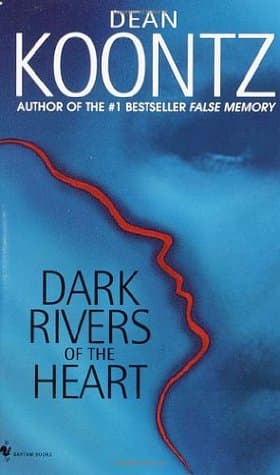
Dean Koontz (1993)
Genre
Thriller / Fantasy / Mystery / Science Fiction
Reading Time
1200 min
Key Themes
See below
Sign in to track this book
After stepping through a mysterious red door, Spencer Grant is plunged into a relentless chase, hunted by a shadowy agency and an 'Angel of Death,' all while battling a fragmented memory and the terrifying resurgence of his own buried inner demons.
Spencer Grant, a reclusive computer programmer living in California, is drawn to a bar with a distinctive red door. Inside, he meets Valerie Keene, an enigmatic and beautiful woman with whom he feels an instant, powerful connection. They spend the night together at Valerie's bungalow. The next morning, their budding romance is violently interrupted when a SWAT-like team raids the bungalow. Valerie, displaying incredible agility and combat skills, helps Spencer escape through a hidden tunnel. They are pursued relentlessly, and Spencer realizes Valerie is no ordinary woman and he is now entangled in a deadly conspiracy he doesn't understand. His quiet life is irrevocably shattered, and he finds himself a wanted man.
As Spencer and Valerie evade their pursuers, they begin to piece together the puzzle of their situation. Valerie reveals little about herself, only that she is being hunted by a powerful, shadowy organization. Spencer, meanwhile, experiences vivid, disturbing flashbacks to a traumatic event from his childhood involving his parents' deaths and a mysterious 'red door.' He also discovers that Valerie possesses extraordinary abilities, including precognition and enhanced physical prowess. Their journey takes them through various hideouts and close calls, solidifying their bond while deepening the mystery surrounding both their pasts and the identity of their relentless enemies.
Spencer and Valerie identify their primary pursuer as the 'Watchers,' a clandestine organization operating outside government oversight, and their chief operative, a chillingly efficient man named Jack Twist, known as the 'Angel of Death.' Twist believes he is doing God's work by eliminating those he deems a threat to humanity. Valerie explains that she was once part of a similar, but benevolent, network that opposes the Watchers. Spencer's fragmented memories continue to surface, hinting at a deep personal connection to the Watchers and a traumatic event related to his parents' deaths, which he now suspects was not an accident but an orchestrated murder linked to this secret world.
Valerie leads Spencer to a hidden sanctuary, a high-tech underground complex populated by others like her – individuals with enhanced abilities, known as 'prodigies.' Here, Spencer begins to understand the full scope of the conflict. He learns that his parents were also prodigies, involved in a secret project to develop a new form of human consciousness, and were murdered by the Watchers to prevent their work from being completed or falling into the wrong hands. Spencer himself possesses dormant prodigy abilities, activated by his recent experiences. The Watchers seek to control or eliminate all prodigies, believing them a threat to the established order.
At the sanctuary, Spencer learns that prodigies are individuals born with latent psionic abilities, including telepathy, precognition, and enhanced physical attributes. The Watchers, led by a powerful and ruthless man named Max, believe these individuals represent an evolutionary leap that could destabilize society. Their goal is to either control prodigies for their own purposes or eradicate them entirely, ensuring humanity's 'natural' progression. Spencer's parents were trying to create a safe haven and cultivate a network of prodigies, which put them directly in the Watchers' crosshairs. Spencer realizes his entire life has been a carefully constructed lie to hide his true potential and protect him.
The sanctuary is compromised by a traitor from within, forcing Spencer and Valerie to flee once more, narrowly escaping Jack Twist and his operatives. During their escape, Spencer's memories solidify. He remembers the 'red door' from his childhood as a symbolic threshold, a portal to a different state of consciousness or a hidden reality that his parents were exploring. He also realizes the red door at the bar was a deliberate lure, a signal meant to draw him into this conflict. The betrayal at the sanctuary makes it clear that the Watchers have infiltrated deep into the prodigy network, making trust a scarce commodity.
With their allies scattered and their sanctuary compromised, Spencer and Valerie realize they cannot continue to run. They decide the only way to end the persecution is to confront the Watchers' leader, Max, directly. Spencer, now more aware of his own burgeoning prodigy abilities, begins to actively train and hone them with Valerie's guidance. Their love deepens amidst the constant danger, becoming a source of strength. They gather what resources they can, using Spencer's computer expertise and Valerie's network of contacts, to track Max's location and devise a plan to infiltrate his heavily guarded compound.
Spencer and Valerie successfully infiltrate Max's hidden fortress. Spencer confronts Max, who reveals the full extent of his twisted ideology. Max believes that humanity is inherently flawed and that prodigies represent an uncontrolled, dangerous mutation. He intends to use advanced technology and psychological manipulation to 'reprogram' humanity, creating a docile, controllable society free from the chaos of free will and individual thought. He reveals that the 'red door' is not just a symbol but a conceptual gateway to a collective consciousness or an altered reality that his parents sought to access, which Max intends to control for his own ends.
A fierce battle erupts within Max's compound. Valerie, utilizing her full range of abilities, fights alongside Spencer against Max's well-trained operatives. Jack Twist, the 'Angel of Death,' confronts Spencer. During their intense struggle, Spencer uses his newly awakened telepathic abilities to show Twist the truth of Max's malevolent vision, forcing him to question his deeply held beliefs. Twist, realizing he has been a pawn in a destructive scheme, has a crisis of conscience and, in a surprising act of redemption, turns against Max, helping Spencer and Valerie to defeat the Watchers' leader and dismantle his operation.
With Max defeated and the Watchers' network severely crippled, Spencer and Valerie emerge victorious. Twist, having played a role, disappears, his fate uncertain. The immediate threat is neutralized, but the world is still largely unaware of the prodigies and the secret war that has been fought. Spencer and Valerie, now fully embracing their identities as prodigies, decide to dedicate themselves to protecting their kind and guiding humanity towards a more enlightened future. They commit to each other, ready to face whatever challenges lie ahead, their love a beacon in the newly revealed, complex world.
The Protagonist
Transforms from a reclusive, amnesiac programmer into a confident prodigy, accepting his powers and destiny.
The Protagonist/Love Interest
Evolves from a solitary warrior to finding a partner in Spencer, sharing her burdens and building a future.
The Antagonist/Conflicted Figure
Begins as a zealous antagonist but experiences a moral crisis, leading to a surprising act of redemption.
The Antagonist
Remains steadfast in his villainous ideology, ultimately defeated by Spencer and Valerie.
The Mentioned
Their past actions and tragic deaths drive the narrative and Spencer's character arc.
The Supporting
Causes a critical plot point through their betrayal, forcing the protagonists into greater danger.
The novel explores Spencer Grant's journey to uncover his true identity. Initially living a mundane life, he is forced to confront suppressed memories and the shocking truth of his lineage as a 'prodigy.' His fragmented past, the trauma of his parents' deaths, and the activation of his latent abilities all contribute to a transformation. This theme is also reflected in Valerie, who has fully embraced her identity but helps Spencer navigate his own awakening. The 'red door' is a symbolic gateway to Spencer's deeper self and the hidden truths of his existence.
“He had been living a lie, a carefully constructed illusion designed to keep him safe from the very truth that was now consuming him.”
Koontz explores the idea that reality is more complex and malleable than commonly perceived. The existence of prodigies with psionic abilities challenges conventional understanding. The 'red door' itself is not just a physical object but a conceptual gateway to altered states of consciousness or other dimensions, which Spencer's parents were exploring. Max's plan to 'reprogram' humanity also touches on manipulating perception and creating a controlled reality. The book suggests that there are 'dark rivers' beneath the surface of everyday life, hinting at hidden truths and potentials.
“Sometimes, the world you think you know is merely a veil, behind which lies a truth both terrifying and wondrous.”
The conflict between the benevolent prodigies and the malevolent Watchers forms the core of the novel's good vs. evil dynamic. The line is often blurred. Jack Twist, the 'Angel of Death,' believes he is doing God's work, showing how easily conviction can be twisted into evil. Max, the leader of the Watchers, genuinely believes his actions are for humanity's betterment, albeit through totalitarian control. This explores the complexities of morality, where intentions can be pure but methods destructive, and where redemption is possible even for the most ruthless.
“Evil often wears the mask of righteousness, convincing itself that its atrocities serve a higher, purer purpose.”
The burgeoning love between Spencer and Valerie is a central theme, acting as both a driving force and a powerful defense against the overwhelming threats they face. Their instant, inexplicable connection transcends mere romance, becoming a bond of mutual trust, understanding, and shared purpose. In a world where betrayal is rampant and danger constant, their love provides solace, strength, and motivation to fight. It is a force that can ground them amidst chaos and empower them to face impossible odds, showing its transformative and protective qualities.
“In the heart of the storm, their love was the only lighthouse, guiding them through the dark rivers of fear and uncertainty.”
Max and the Watchers embody the dangers of unchecked power and totalitarian control. Their goal is not just to eliminate prodigies but to reshape humanity itself, creating a docile, compliant society devoid of free will. This theme explores the terrifying implications of a world where individuality and freedom are sacrificed for a perceived 'order' or 'safety.' The Watchers' methods, including surveillance, manipulation, and violence, are a stark warning against authoritarian regimes and the suppression of human potential.
“Order without freedom is a cage, no matter how gilded its bars may seem.”
A recurring symbol representing hidden truths, portals, and Spencer's suppressed memories.
The 'red door' functions as both a literal and symbolic plot device. Initially, it's the specific door of the bar where Spencer meets Valerie, drawing him into the narrative. More profoundly, it represents a symbolic threshold to hidden knowledge, altered states of consciousness, and Spencer's suppressed past related to his prodigy parents. It's a key to unlocking his memories and understanding the true nature of his world. Its recurrence throughout the novel emphasizes the idea of hidden realities and personal gateways to self-discovery, serving as a powerful visual and thematic anchor for the story.
A narrative technique used to gradually reveal Spencer's traumatic past and true identity.
Spencer's fragmented memories of his parents' deaths and the 'red door' are a central plot device. This technique creates mystery and suspense, as the reader (and Spencer) slowly piece together the truth. The gradual unveiling of his past is directly tied to his character development and the activation of his prodigy abilities. It allows Koontz to control the flow of information, building tension and providing shocking revelations at key moments. This device highlights the psychological impact of trauma and the mind's capacity to protect itself by burying painful truths, only for them to resurface under extreme pressure.
A science fiction element establishing a race of enhanced humans and the central conflict.
The concept of 'prodigies' – individuals born with latent psionic abilities – is the foundational science fiction element of the plot. It establishes the nature of Spencer and Valerie's powers and justifies the Watchers' motivation for hunting them. This device allows for extraordinary abilities to drive the action and creates a distinct group of characters around whom the conflict revolves. It explores themes of evolution, human potential, and the fear of the 'other,' providing a unique framework for the thriller elements and the philosophical underpinnings of the story.
A classic thriller trope creating an omnipresent, formidable antagonist.
The Watchers represent a quintessential shadowy organization, a powerful, clandestine group operating outside the law with vast resources and influence. This device creates an ever-present sense of threat and paranoia, driving the protagonists' flight and increasing the stakes. Their unknown reach and seemingly limitless capabilities make them a formidable antagonist, embodying the fear of hidden powers controlling society. This trope allows for widespread conspiracy, infiltration, and a sense of being hunted, essential for a high-stakes thriller narrative.
“We are all broken, that's how the light gets in.”
— Reflection on human resilience and vulnerability.
“The past is a ghost, the future a dream, and all we ever have is now.”
— Character contemplating the nature of time and existence.
“Fear is the mind-killer. But courage is the heart's answer.”
— A moment of facing overwhelming danger and finding inner strength.
“In the darkness, we find our true selves.”
— During a tense, shadowy confrontation.
“Technology can save us or enslave us; the choice is ours.”
— Discussion about the dual nature of advanced technology in the story.
“Love is the only force capable of transforming an enemy into a friend.”
— Reflecting on a relationship that defies odds.
“The river of time flows only forward, but memory is its tributary.”
— Philosophical musing on memory and progress.
“Sometimes the most ordinary things are the most extraordinary.”
— Noticing beauty in mundane moments amidst chaos.
“Evil wears many masks, but its eyes are always the same.”
— Describing a deceptive antagonist.
“Hope is the anchor of the soul in stormy seas.”
— During a desperate escape or survival scenario.
“The heart has its reasons, which reason does not know.”
— Exploring irrational yet powerful emotional drives.
“In the end, we are all stories. Make yours worth telling.”
— A motivational thought about legacy and purpose.
“Darkness cannot drive out darkness; only light can do that.”
— A lesson about overcoming negativity with positivity.
“The truth is a river, sometimes clear, sometimes murky, but always flowing.”
— Discussing the elusive nature of truth in the mystery.
Ready to see how well you understood this book? Take our interactive quiz with 10 questions.
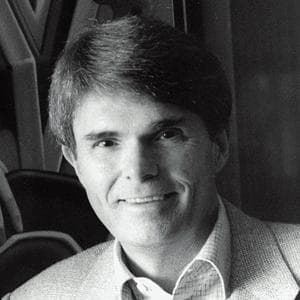
Dean Koontz is a prolific American author best known for his suspenseful thrillers and horror novels. His works often blend elements of the supernatural, science fiction, and detective fiction, exploring themes of good versus evil and the human condition. Notable books include 'Life Expectancy,' 'The Bad Place,' and 'Strangers,' which have garnered international acclaim and bestseller status.







