“There are no dragons in Derkholm, and there are no elves, and no dwarves, and no ogres.”
— The Archmage's initial, frustrating declaration to the newly arrived pilgrims.

Diana Wynne Jones (1998)
Genre
Fantasy / Children's / Young Adult
Reading Time
6-8 hours
Key Themes
See below
Sign in to track this book
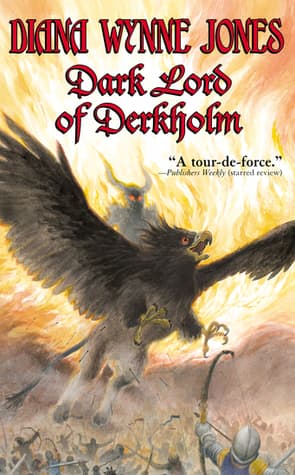
A grumpy wizard and his griffin-riding son, reluctantly cast as this year's Dark Lord and Wizard Guide, must rally a fed-up fantasy world to break free from the annual, demon-backed 'Grand Tour' of insufferable tourists.
The story opens at Derk's Farm, a chaotic but generally peaceful place inhabited by the wizard Derk, his family of human and griffin children, and various magical creatures. Derk is a powerful but reclusive wizard who prefers farming to grand magical tasks. One day, the Oracles of the world announce the roles for the upcoming Grand Tour, an annual event where people from Derk's world must act out fantasy roles for tourists from another dimension, led by the showman Mr. Chesney. To everyone's shock and dismay, Derk is chosen to be the Dark Lord, his eldest son Blade is chosen as the Wizard Guide, and many of his griffin children are designated as Winged Minions and even the Evil Enchantress. The entire family is thrown into disarray, as they dislike the disruption and artificiality of the Tours.
Derk, as the Dark Lord, must build a suitably menacing fortress, which he constructs with the help of his griffin children and various magical spells. The result is a surprisingly comfortable, if unconventional, structure. Blade, tasked with guiding the tourists, struggles with the expected heroic persona, preferring practicality over drama. The griffin children, particularly Lyra (the designated Evil Enchantress) and the Minions, find the costumes and forced villainy absurd. Meanwhile, the supporting cast for the Tour, including kings, queens, elves, and soldiers, also resent their roles, having been forced into repetitive, clichéd performances for years. The general feeling is one of weariness and a desire for the Tours to end.
The first Pilgrim Parties arrive, led by Mr. Chesney and his assistants. The tourists, loud and demanding, expect a thrilling, pre-packaged fantasy adventure. Derk, playing the Dark Lord, finds his attempts at menace often undermined by his genuine concern for his family and the impracticality of some 'evil' requirements. Blade, as the Wizard Guide, struggles to deliver the expected heroic speeches and often gives blunt, factual explanations, much to the tourists' confusion. The griffin Minions, meant to be terrifying, are often more interested in their own activities or in subtly disrupting the Tour. The manufactured drama of the Tour constantly clashes with the real personalities and desires of the performers.
As the Tour progresses, Derk and Blade, along with other key players like the King and Queen, start to understand the true purpose of the Pilgrim Parties. They discover that Mr. Chesney is not just a travel agent; he is systematically draining the magical energy and resources from their world, using the Tours as a cover. The forced adherence to specific fantasy roles is designed to prevent any genuine magical development or deviation that might challenge his control. The 'rewards' for good performance are often small and meant to maintain dependence. The performers realize they are not just actors, but victims of an elaborate, magical exploitation scheme.
Frustrated and enlightened, Derk calls a secret meeting of the key players: the King, Queen, elves, dwarves, and other main characters forced into annual roles. They share their complaints and realize how deeply Mr. Chesney has manipulated them. They decide that simply going through the motions is no longer an option; they must find a way to permanently stop the Grand Tours. Blade, with his practical mind, becomes important in planning the resistance. Lyra, the griffin Evil Enchantress, uses her cunning to gather information and cause trouble among Chesney's operatives. The shared desire for freedom becomes a powerful, unifying force.
The Pilgrim Parties, driven by Mr. Chesney's marketing, demand increasingly dramatic and specific events, pushing the performers to their limits. Derk, as the Dark Lord, uses his magical cleverness to subvert these demands without overtly breaking character. For instance, when a dragon is required, he conjures a friendly, rather than terrifying, creature. Blade, as the Wizard Guide, subtly misdirects tourists and gives unhelpful 'guidance.' The griffin Minions, instead of being menacing, often confuse or amuse the tourists, further disrupting the carefully constructed fantasy. These small acts of rebellion slowly begin to weaken Mr. Chesney's control.
Lyra, in her role as the Evil Enchantress, uses her intelligence and magical abilities to investigate Mr. Chesney's operations more deeply. She discovers that Mr. Chesney is not just a human businessman but is backed by a powerful, ancient demon. This demon is the true architect of the Grand Tours, using Chesney as a front to exploit Derk's world for its magical resources and to maintain a steady supply of 'fantasy' for its own amusement and power. This revelation strengthens the performers' resolve, as they realize they are fighting a much larger, more dangerous foe than they initially imagined. Lyra relays this critical information to Derk and the others.
The climax arrives when Derk, Blade, Lyra, and their allies orchestrate a grand, coordinated disruption of the final Pilgrim Party. Instead of performing the expected heroic defeat of the Dark Lord, they reveal the truth to the tourists, exposing Mr. Chesney's deception. Derk and his powerful magic, combined with the collective will of the other characters, directly challenge Mr. Chesney and his demonic backer. The confrontation involves a spectacular display of magic, wit, and unexpected alliances, as the characters refuse to play their assigned roles any longer.
In a climactic magical battle, Derk uses his deep understanding of magic and the world's inherent properties to outwit and ultimately defeat the demon behind Mr. Chesney. The demon, reliant on the predictable patterns of the Tours, is thrown into disarray by the performers' refusal to conform. Mr. Chesney is left powerless and exposed. The magical drain on Derk's world ceases, and the portal to the tourists' dimension is effectively closed, ensuring that the Grand Tours can never happen again. The characters celebrate their hard-won freedom and the return of their world's independence.
With the Grand Tours ended, Derk's world begins a slow but steady recovery. The magical energy that was being siphoned off returns, leading to a revitalization of the land and its creatures. The characters, no longer forced into rigid roles, are free to pursue their own destinies and develop their true potentials. Derk returns to his farm, now a hero but still preferring his quiet life. Blade and Lyra, along with their siblings, continue to grow and explore the possibilities of their unconstrained world. The experience leaves them with a stronger sense of community and a new appreciation for genuine magic and freedom.
The Protagonist
Derk transforms from a reluctant participant in the Grand Tours to the cunning orchestrator of their downfall, embracing his full magical potential to protect his world.
The Supporting
Blade evolves from a frustrated participant to a key strategic mind in the fight against Mr. Chesney, proving that intelligence and practicality are as vital as magic.
The Supporting
Lyra transforms her enforced 'evil' role into an opportunity for intelligence gathering and strategic subversion, becoming a crucial operative in the resistance.
The Antagonist
Mr. Chesney is exposed as a pawn and ultimately defeated, losing all his power and influence.
The Antagonist
The Demon is ultimately outsmarted and defeated by Derk's unconventional magic and the united will of the world's inhabitants, losing its hold on the world.
The Supporting
The King moves from resignation to active rebellion, reclaiming his agency as a true ruler.
The Supporting
The Queen transitions from passive suffering to active participation in the rebellion, asserting her desire for genuine freedom.
The Supporting
The griffins assert their individuality and agency, refusing to be mere props in a manufactured fantasy, and become active participants in their world's liberation.
The novel constantly explores the tension between the 'real' magical world of Derk and his family, and the artificial, performative reality created by Mr. Chesney's Grand Tours. Characters are forced to play roles that conflict with their true selves, showing how external expectations can distort genuine identity. The tourists' inability to tell the difference between the two realities highlights the theme, as they demand clichés over authenticity. Derk's ultimate victory comes from refusing to play along and forcing a collision between the two, revealing the Tours for the manipulative illusion they are.
“"It was a relief to be evil in a proper way, instead of the silly, made-up evil that the Pilgrim Parties expected."”
The Grand Tours are an allegory for colonialism and exploitation. Mr. Chesney and the Demon systematically drain the magical resources of Derk's world, treating its inhabitants as props and its environment as a commodity for entertainment. The forced roles, the denial of genuine development, and the imposition of external narratives all reflect colonial practices. The characters' rebellion is a fight for self-determination and the right to exist outside the exploitative gaze of another culture, showing the damage done when one culture imposes its will and takes resources from another.
“"You have been systematically plundering this world for years, Mr. Chesney. And you call it entertainment."”
A central theme is the struggle of individual characters against the rigid stereotypes imposed upon them by the Grand Tours. Derk, an unconventional wizard, is forced to be a generic 'Dark Lord.' Blade, practical and grounded, must be a 'heroic Wizard Guide.' The griffins, with their distinct personalities, are reduced to 'Winged Minions.' The novel celebrates the inherent value and power of individual identity, showing how true strength emerges when characters embrace who they genuinely are rather than conforming to predefined roles. Their refusal to conform is what ultimately breaks the cycle of the Tours.
“"The worst part was that you had to pretend to be a character, not yourself. And the characters were always so boring."”
The book shows how stories can be used for control and manipulation. Mr. Chesney and the Demon maintain their power by forcing Derk's world into a predictable, repetitive fantasy narrative. They dictate the roles, the plot points, and the expected outcomes, thereby controlling the reality of the performers. The rebellion begins when the characters reclaim their agency and refuse to follow the script. By creating their own story, one of genuine resistance and unexpected turns, they dismantle the oppressive narrative and assert their freedom to shape their own future.
“"They don't want real magic. They want the magic they've read about, the magic they expect."”
An annual, forced fantasy adventure for tourists from another dimension.
The Grand Tour is the central plot device, driving the entire narrative. It is a recurring event where inhabitants of Derk's world are assigned stereotypical fantasy roles (Dark Lord, Wizard Guide, Evil Enchantress, King, Queen, etc.) and forced to act out pre-scripted adventures for paying tourists from another dimension. This device creates immediate conflict for the characters, who resent the disruption and artificiality. It also serves as the mechanism through which Mr. Chesney and the Demon exploit the world's magical resources, making its termination the primary goal of the protagonists.
Mysterious entities that announce the roles for the Grand Tour.
The Oracles are an ancient, powerful, and seemingly impartial force in Derk's world. They are responsible for announcing who will play which role in the upcoming Grand Tour each year. Their pronouncements are considered absolute and unchangeable, initially creating a sense of inescapable destiny for the characters. However, their role also highlights the systemic nature of the exploitation, suggesting that even powerful entities can be manipulated or made complicit. The question of whether the Oracles are truly impartial or influenced by the Demon adds a layer of mystery and systemic oppression to the narrative.
The magical link between Derk's world and Mr. Chesney's world.
The existence of a portal or the ability for interdimensional travel is the foundational plot device that allows the Grand Tours to occur. It enables Mr. Chesney's tourists to enter Derk's world, creating the premise for the entire conflict. The portal represents the intrusion of an outside force and the vulnerability of Derk's world. Its eventual closure signifies the world's liberation and the severing of the exploitative connection, marking the end of the external manipulation and the beginning of self-determination.
The underlying magical mechanism of exploitation.
This plot device is the true, hidden engine behind the Grand Tours. It's revealed that Mr. Chesney isn't merely running a tourism business; he's part of a magical contract with a powerful demon that systematically drains the inherent magic and vitality from Derk's world. The forced adherence to fantasy tropes and predictable narratives is part of this magical siphon, preventing the world from evolving or developing in ways that might challenge the demon's power. Unraveling and breaking this magical drain is the ultimate objective, transforming the conflict from a simple annoyance into a battle for the world's very essence.
“There are no dragons in Derkholm, and there are no elves, and no dwarves, and no ogres.”
— The Archmage's initial, frustrating declaration to the newly arrived pilgrims.
“The trouble with you, young man, is that you are trying to be too original. Originality is a very dangerous thing.”
— The Archmage's 'advice' to Eldred as he tries to make sense of the new world.
“You can't just go around changing people's destinies. It's unethical. And it's probably illegal.”
— Marcia's pragmatic (and slightly exasperated) view on interfering with the 'plots'.
“Being a hero is mostly a matter of not thinking too much.”
— Snout's cynical but somewhat accurate observation about heroic action.
“Most people, if they don't get what they want, think they're unhappy. But you don't actually know what you want until you get it.”
— Blade's philosophical musing on desire and happiness.
“I am not an Orc, and I am not a Goblin, and I am not a Troll. I am a farmer, and my name is Eldred.”
— Eldred asserting his true identity against the expectations of the 'pilgrims'.
“Magic, my dear boy, is simply a matter of knowing the right words and the right actions.”
— The Archmage explaining the 'simplicity' of magic, often to Eldred's bewilderment.
“You're supposed to be evil. You're the Dark Lord. It's in the contract.”
— Marcia reminding Eldred of his contractual obligations as the 'Dark Lord'.
“It's a wonder any of them survive, with the amount of stupidity they're forced to act out.”
— Marcia's commentary on the 'pilgrims' and their often-ridiculous plotlines.
“Being a Dark Lord is mostly about paperwork and trying to keep your minions from killing each other.”
— Eldred's jaded perspective on the reality of his 'evil' role.
“There are times when you have to choose between being sensible and being happy.”
— A character's reflection on difficult life choices.
“You don't just 'do' an epic quest. You have to prepare for it, train for it, get the right equipment...”
— A character's realistic take on the practicalities of a fantasy adventure.
“The whole point of a pilgrimage is to find something you weren't looking for.”
— An insightful observation about the true nature of a journey.
“It's not about being the strongest, or the cleverest. It's about being the one who keeps going.”
— A motivational quote about perseverance.
Ready to see how well you understood this book? Take our interactive quiz with 10 questions.
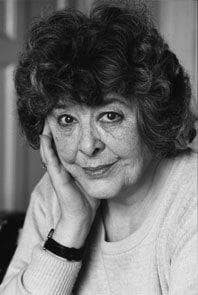
Diana Wynne Jones was a celebrated British author renowned for her witty and imaginative fantasy novels for children and young adults. Her most famous works include "Howl's Moving Castle," "Dark Lord of Derkholm," and "Chrestomanci" series. Jones's writing is characterized by its intricate plots, quirky characters, and clever use of magic, earning her critical acclaim and a dedicated readership.







