“The magic was in the stitches, and the stitches were in her blood.”
— Emphasizing the inherent, generational magic of the Larks' embroidery.

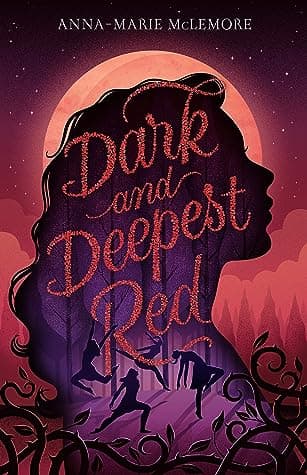
Anna-Marie McLemore (2020)
Genre
Fantasy / Historical Fiction / Young Adult
Reading Time
6-7 hours
Key Themes
See below
Sign in to track this book
In a lush, dual-timeline tale, a 16th-century dancing plague in Strasbourg entwines with a modern girl cursed by enchanted red shoes, as both women fight to break free from a haunting historical betrayal and a magic that demands they dance until they die.
In Strasbourg, Summer 1518, Frau Troffea begins to dance uncontrollably in the town square. Her dance first draws attention, then becomes a spectacle, and finally, a source of worry as she shows no sign of stopping. Lavinia, a young Roma girl living near the city with her family, watches with fear and interest. Her family, known for their embroidery skills and unique life, already faces suspicion from many townspeople. As more people join Frau Troffea's dancing, a strange sickness grips the city, turning initial bewilderment into panic and whispers of demonic influence or witchcraft.
Five centuries later, Rosella Oliva, a talented seamstress, finds a pair of embroidered red shoes in a vintage shop. Drawn to their beauty, she tries them on, and they instantly seal to her feet. To her horror, the shoes force her to dance non-stop, mirroring the historical dancing plague. Rosella's family, also skilled in textiles, recognizes the connection to past stories. Her frantic search for answers leads her to Emil, a boy whose family, the Eulers, has a long, painful history with the 1518 dancing plague, having been wrongly accused of witchcraft.
Back in 1518, as the dancing plague worsens and more women succumb to the uncontrollable urge to dance, often to their deaths, the town's fear grows. The authorities, desperate for an explanation, look for scapegoats. Lavinia's family, with their Roma heritage and knowledge of herbs and 'charms' (intricate embroideries), become targets. Lavinia has a gift for enchanting her needlework, making her creations powerful. Her family's protective embroideries are misunderstood as dark magic, fueling accusations of witchcraft that threaten them and the entire Roma encampment.
In the modern timeline, Rosella, trapped by the red shoes, finds an ally in Emil. Emil, a descendant of the Eulers, carries the burden of his family's past, their name stained by witchcraft accusations during the 1518 plague. He has a deep knowledge of the historical events, having researched his ancestors' plight. He explains how his family was persecuted and driven from Strasbourg, their lives shattered by the hysteria. He recognizes the shoes as a manifestation of old magic and trauma, but he is wary of Rosella, fearing a repeat of the past and the reawakening of a dangerous power.
Lavinia's grandmother, a wise weaver, reveals a deeper truth about the dancing plague. It is not witchcraft in the traditional sense, but a manifestation of suppressed emotions and unspoken desires, particularly among Strasbourg women, amplified by a specific, magical thread. The Roma community, through their connection to the land and their craft, has long balanced weaving protection and understanding. Lavinia learns her family's embroidery is not just protective; it can also channel and influence these unseen forces. She realizes the responsibility that comes with her gift and her family's legacy.
As Rosella continues to dance, growing weaker, she and Emil delve deeper into the red shoes' mystery. They discover the shoes are not merely cursed objects but vessels, imbued with past magic and trauma. Their research uncovers inconsistencies in historical accounts, suggesting a cover-up or misdirection. They realize the shoes are connected to the threads and dyes used by Lavinia's family centuries ago. Emil's knowledge of historical accounts, combined with Rosella's connection to the shoes, helps them piece together the story, revealing the true perpetrators and victims of the 1518 events.
With accusations against the Roma growing and the dancing plague claiming more lives, Lavinia faces an impossible choice. The town council, driven by fear and prejudice, demands a solution. To save her family and prevent a massacre, Lavinia must use her weaving abilities not just to protect, but to contain and redirect the plague's destructive energy. This requires a personal sacrifice, as she must sever a part of her connection to the magic, effectively sealing away a powerful aspect of her gift and the family's legacy, embodying their protective role, even if misunderstood.
The red shoes, imbued with the echoes of Lavinia's sacrifice and the dancers' suffering, become more demanding. Rosella understands the shoes are not just forcing her to dance, but compelling her to complete an unfinished story. They represent a tale that needs telling, a wrong that needs righting. Through her connection to the shoes, she begins to understand the specific 'payment' or 'action' required to break their hold. This involves not just understanding the past, but actively participating in its resolution, an act of empathy and truth-telling that can bring peace to the restless magic.
Working together, Rosella and Emil uncover the full truth: the 1518 dancing plague was not solely supernatural but worsened by the deliberate actions of powerful individuals in Strasbourg, who used the hysteria to consolidate power and persecute marginalized communities, particularly the Roma. The red shoes are a manifestation of the collective trauma and silenced stories of those who suffered. They realize the shoes' magic is connected to the suppressed desires and unacknowledged grief of the women, and to Lavinia's family's attempt to soothe and redirect this energy, which was then twisted and used against them.
Armed with knowledge of the past, Rosella prepares for a final confrontation with the red shoes. She understands that breaking their hold requires more than just removing them; it demands acknowledging and honoring the history they represent. Through an act of empathy and a re-interpretation of Lavinia's original protective magic, Rosella uses her skills as a seamstress to re-weave the narrative, literally and metaphorically. She finds a way to integrate the shoes' magic, not to suppress it, but to transform it, allowing the silenced voices to be heard and the lingering pain to be released. This act frees her and brings peace to the ancient curse.
The Protagonist
Rosella transforms from a victim of a curse into an active participant in unraveling and re-weaving a historical injustice, discovering her own inner strength and connection to ancient magic.
The Protagonist
Lavinia matures from a gifted girl into a tragic heroine, making a profound sacrifice to save her family and community from persecution, forever intertwining her magic with the fate of the dancing plague.
The Supporting
Emil moves from being a detached historian of his family's trauma to an active participant in rectifying a historical injustice, finding closure and a new sense of purpose alongside Rosella.
The Supporting
Her arc is largely static as a wise elder, serving as a fount of knowledge and moral guidance for Lavinia, ensuring the continuation of their traditions amidst peril.
The Mentioned
Frau Troffea's arc is tragic and brief, symbolizing the initial, uncontrollable outbreak of the plague and the suffering of its first victims.
The Antagonist
Their 'arc' is one of escalating fear and injustice, demonstrating how societal prejudice can be weaponized during times of crisis.
The Plot Device/Antagonist
The shoes' 'arc' is revealed as Rosella understands their purpose: to force the telling of a forgotten truth and to find a final release from the curse they carry.
The novel shows how history is shaped and often distorted, and the impact of telling and re-telling stories. The dancing plague of 1518 is presented not just as a historical event, but as a narrative that has been obscured. Rosella and Emil's quest is about uncovering the 'true' story, challenging official accounts, and giving voice to the marginalized. Lavinia's embroideries are also a form of storytelling, weaving intentions and protections into fabric, preserving her family's history and magic. The red shoes are a physical manifestation of a story that demands to be heard and resolved, showing that unacknowledged histories can haunt the present.
“History is not what happened, but what is remembered and what is forgotten.”
A central theme is how easily fear and ignorance lead to prejudice and the scapegoating of 'others.' In 1518 Strasbourg, the Roma community, including Lavinia's family, are targeted and accused of witchcraft due to their different customs, appearance, and perceived 'magic' (their craft). This historical persecution mirrors the societal biases Emil's family still experiences. The novel highlights how during crises, fear often turns into hostility against minority groups, leading to injustice and violence. The dancing plague becomes an excuse for existing prejudices to erupt.
“It was easier to blame the different than to understand the inexplicable.”
Both protagonists deal with their ancestral legacies. Rosella inherits her family's talent for sewing and, through the red shoes, the unfinished business of Lavinia's past. Emil carries the burden of his family's historical persecution, feeling compelled to redeem their name and understand the truth of 1518. Lavinia, in turn, inherits her grandmother's magic and the responsibility of her community's protective role. The novel explores how the past, both its triumphs and traumas, passes through generations, influencing identity, purpose, and even physical manifestations like the red shoes. It asks what it means to carry the burdens and gifts of those who came before.
“Some stories are sewn into your skin, passed down through the blood and the thread.”
The novel blurs the lines between magic, skilled craftsmanship, and art. Lavinia's embroidery is depicted as magic, imbued with intention and power, capable of protection and influence. Rosella's modern seamstress skills are shown to be a continuation of this magical connection to textiles. Creating with one's hands, particularly with fabric and thread, is elevated to a sacred and powerful art form. This theme suggests that true magic lies in the deep connection between creator and creation, and that traditional crafts hold an intrinsic power that can both heal and harm, depending on intent and understanding. The red shoes themselves are a product of this magical artistry.
“A needle can be a wand, and thread can be a spell.”
Alternating chapters between 1518 Strasbourg and the modern day.
The novel employs a dual narrative structure, alternating between Lavinia's story in 1518 Strasbourg and Rosella's story in the present day. This allows the reader to experience the origin of the dancing plague and its magical underpinnings firsthand, while simultaneously following Rosella's quest to understand and break the curse in the modern era. The juxtaposition highlights parallels between the past and present, emphasizing the enduring nature of prejudice, the power of magic, and the way historical events continue to resonate. The two timelines gradually converge, revealing their deep interconnectedness as the mystery unfolds.
A cursed magical artifact that binds Rosella to the past.
The red shoes serve as the central magical plot device, acting as a physical manifestation of the 1518 dancing plague and Lavinia's ancestral magic. They directly connect Rosella to the past, compelling her to dance and forcing her to confront the unresolved history. The shoes are more than a curse; they are a vessel for silenced stories and unacknowledged trauma, demanding to be understood and released. Their intricate embroidery suggests their connection to Lavinia's craft, making them a symbolic link between the two protagonists and their respective timelines.
The act of sewing and threadwork as a source of power and protection.
Throughout the novel, weaving, embroidery, and general textile work are depicted not just as crafts but as a potent form of magic. Lavinia's family imbues their needlework with intentions, creating protective charms and influencing events. Rosella's own skills as a seamstress give her an innate understanding of the red shoes' magic. This device elevates traditional craft to a powerful, mystical art form, suggesting that the act of creation itself can be a conduit for magic, protection, and the preservation of history and identity. It is through this 'thread magic' that the curse is both created and ultimately unraveled.
Grounding the fantastical elements in a real historical event.
The novel uses the real-life historical event of the Dancing Plague of 1518 in Strasbourg as its foundation. By weaving fantastical elements and a magical explanation into a documented historical phenomenon, the author grounds the story in a sense of reality while exploring themes of mass hysteria, societal fear, and the search for meaning in the inexplicable. This device adds a layer of eerie plausibility to the magic, making the fantastical elements feel more profound and the historical context more vivid and resonant, inviting readers to consider the 'unseen' forces behind historical mysteries.
“The magic was in the stitches, and the stitches were in her blood.”
— Emphasizing the inherent, generational magic of the Larks' embroidery.
“There were some stories that had to be told, even if they were dangerous.”
— Rosella's determination to uncover and share the truth about her family's past.
“Some things are not meant to be forgotten, even if they are painful.”
— The importance of remembering history, both good and bad, through the lens of the Larks.
“He knew what it was to be made of something beautiful and terrible, both at once.”
— Harry's self-awareness of his own complex nature and the magic within him.
“The threads of their lives were tangled, knotted, and impossible to untangle, and maybe that was how they were meant to be.”
— Describing the intricate and fated connections between the characters across time.
“Every stitch was a prayer, a wish, a piece of a story that wouldn't be lost.”
— Highlighting the Lark family's magical embroidery as a way to preserve their history and magic.
“Sometimes the greatest magic was just surviving, just making it through another day.”
— A reflection on the resilience required to endure hardship, particularly in historical settings.
“The world had a way of twisting beauty into something grotesque, if you weren't careful.”
— A commentary on how prejudice and fear can distort perceptions of unique individuals or gifts.
“He had always known that the stories were real, because he carried them in his own skin.”
— Harry's personal connection to the historical narratives and the magic that flows through him.
“To be seen, truly seen, was a kind of magic all its own.”
— The profound impact of acceptance and understanding between characters.
“The past wasn't dead; it was just sleeping, waiting for someone to wake it up.”
— A metaphor for how historical events and their consequences continue to affect the present.
“She learned that fear could be a thread, too, weaving through a family, generation after generation.”
— Rosella's realization about the lingering effects of historical trauma and fear on her family.
“Some things needed to burn to be understood, to be truly seen for what they were.”
— A powerful statement about destruction and revelation, often in the context of the dancing plague.
“The magic wasn't always gentle, wasn't always kind. Sometimes it was a force that consumed.”
— Acknowledging the darker, more uncontrollable aspects of the magic in the story, especially with the dancing.
Ready to see how well you understood this book? Take our interactive quiz with 10 questions.

Anna-Marie McLemore is a renowned author celebrated for their magical realism and lyrical prose, often exploring themes of identity, family, and folklore. Their notable works include the award-winning "When the Moon Was Ours" and the critically acclaimed "Dark and Deepest Red." McLemore's writing is lauded for its rich imagery and authentic representation of diverse experiences within the young adult fiction genre.







